

Player gear is engineered for match-day performance, while fan merchandise is built for everyday comfort, durability, and a price point that makes sense for the stands. Knowing how fan merchandise differs from player gear saves you money, prevents sizing regrets, and tells you exactly what you’re holding before you buy it.
Here are the fastest signals to check before you spend:
- Badge texture: Heat-bonded badges (smooth, slightly raised, no thread) signal player editions. Embroidered badges with visible stitching mean fan/replica.
- Fabric feel: Player gear feels thin, almost papery, and textured. Fan merch feels heavier and softer.
- Fit: Player cuts run slim and short. Fan cuts sit closer to a regular T-shirt silhouette.
- Hem and seams: Player editions often have a dropped or curved hem with minimal seam bulk. Fan versions have standard, reinforced seams.
- Internal tag language: Look for words like “Authentic,” “Vapor,” or “HEAT.RDY” on the inside label. Those terms belong to player-grade product lines from Nike and Adidas respectively.
For seller verification, cross-reference the retailer against the Better Business Bureau before buying from an unknown reseller. Rnkapparel also publishes product specs and customization details directly on its product pages, so you always know what you’re ordering.
Key Takeaways
The clearest rule in sports merchandise: buy player gear to play or collect, buy fan merchandise to wear and wash.
| Point | Details |
|---|---|
| Badge type is the fastest tell | Heat-pressed means player edition; embroidered means fan/replica. |
| Player cuts run slim | Size up at least one size when ordering player editions; measure your chest first. |
| Care determines longevity | Player gear needs cold wash, inside out, no dryer; fan merch tolerates standard cycles. |
| Price reflects engineering | Player editions typically cost $90–$200+; fan replicas run $40–$100 at most retailers. |
| Rnkapparel fills the gap | Custom performance hockey gear from Rnkapparel gives teams player-grade fit and fabric at bulk-order pricing. |
Table of Contents
- How fan merchandise differs from player gear at a glance
- What “player gear” actually means when you see that label
- What “fan merchandise” means and when it’s the smarter buy
- The full feature-by-feature breakdown
- How to spot authentic player editions before you buy
- Sizing and buying advice: which should you choose?
- Where Rnkapparel fits between player and fan options
- How player and fan merchandise evolved over decades
- A note from the people who make the gear
- Custom performance gear built for hockey teams and fans
- Sources
How fan merchandise differs from player gear at a glance
The table below captures the core fan gear vs. player gear differences in one pass.
| Feature | Player Gear | Fan Merchandise |
|---|---|---|
| Fit / cut | Slim, athletic, shorter hem | Regular, relaxed, true-to-size |
| Fabric / weight | Lightweight, textured performance knit | Heavier double-knit polyester or cotton blend |
| Branding / logos | Heat-pressed or heat-bonded | Embroidered or woven |
| Tags / authenticity | “Authentic,” “Vapor,” style codes, gold tags | Standard brand tags, no special authenticity markers |
| Price | Higher for major leagues | Lower for most retail options |
| Use case | Playing, collecting, match-day accuracy | Casual wear, gifting, kids, long-term daily use |
Pro Tip: The single fastest tell is the badge. Run your thumb across it. If it’s smooth and slightly raised with no thread, you’re holding a player edition. If you feel stitching, it’s a replica.
Fan merchandise is sold through mass retail channels, department stores, and online marketplaces. Player editions typically move through official team stores, brand flagship sites, and a smaller number of authorized specialty retailers.
What “player gear” actually means when you see that label
The terms “player edition,” “authentic,” and “match” all point to the same thing: a garment built to the same specification the team wears on the field, ice, or court. These aren’t marketing labels. They reflect real engineering choices.
Player-version shirts are lighter, use body-mapped ventilation, and carry heat-pressed badges rather than embroidered ones. The fabric is typically a fine-gauge performance knit designed to wick sweat fast and minimize weight during physical exertion. Ventilation zones are placed at high-heat areas like the underarm and back panels, not distributed evenly across the garment.
Key attributes of player gear:
- Engineered lightweight fabric (often under 150 gsm for jerseys)
- Body-mapped ventilation panels at sweat zones
- Slim athletic cut with a shorter, curved hem
- Heat-bonded or heat-pressed badges and sponsor logos
- Limited production runs, especially for match-issued pieces
- Internal tags referencing product lines like Nike’s “Vapor” or Adidas’s “HEAT.RDY”
- Style codes that can be verified on the manufacturer’s authenticity page
Player-version shirts are issued to squads and carry authenticity markers that collectors use to confirm provenance. A gold or silver authenticity patch on the hem, combined with a matching style code on the manufacturer’s website, is the standard verification chain. That combination is what makes player editions retain collector value over time.
The intended buyer is a professional or serious amateur athlete, a collector who wants match-grade specs, or a fan who specifically wants what the players wore, not a close approximation.
What “fan merchandise” means and when it’s the smarter buy
Fan merchandise, also called replica or stadium gear, is designed to look like what the team wears without replicating the performance engineering underneath. For most buyers, that’s the right call.
Fan jerseys use a heavier double-knit polyester, embroidered badges, and a relaxed cut that fits more like a standard shirt. The seams are reinforced for durability, the fabric survives machine washing without special handling, and the embroidered logos hold up through repeated laundering far better than heat-pressed alternatives.
Fan merch makes the most sense when:
- You’re buying for a child who will outgrow it in a season
- The garment is a gift and the recipient’s exact measurements are unknown
- You plan to wear it to games, around the house, or on weekends
- Budget is a real factor and you want something that lasts years, not months
- You want to machine wash it without reading the care label every time
Most fans are best served by replica versions: they look nearly identical from ten feet away, hold up better under casual laundering, and cost substantially less. Player editions make sense for collectors or people who will actually play in them.
Fan merchandise is widely available through major retailers, team-licensed online stores, and platforms like Fanatics. Brands including Nike, Adidas, and Puma all produce replica lines alongside their player editions, and the replica lines are what fill most retail shelves. For hockey-specific fan apparel options, the complete fan guide at Rnkapparel covers the main categories worth knowing.
The full feature-by-feature breakdown
Fit and cut
Player cuts are slim and run short. The hem often sits above the hip, the chest tapers toward the torso, and the sleeves are cut close to the arm. Player editions run noticeably smaller than fan cuts, and many buyers need to size up one full size, sometimes two, when ordering a player edition. Fan cuts follow standard sizing charts and sit closer to a regular-fit shirt.
Fabric and weight
Player gear uses fine-gauge performance knits, often with a slightly textured surface that aids moisture transfer. Performance polyester in player editions is engineered to pull sweat away from the skin and dry fast. Fan jerseys use a denser double-knit construction that feels softer and warmer but holds moisture longer. The weight difference is noticeable when you hold both side by side.
Branding and logos
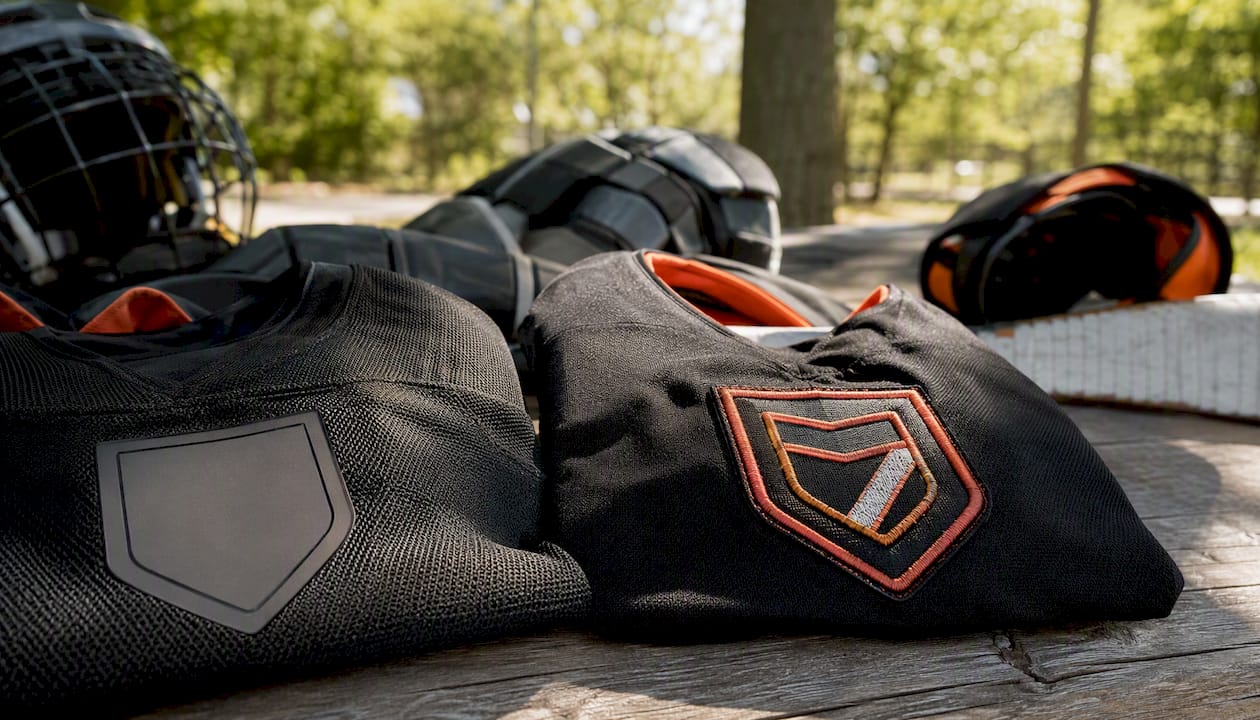
Heat-pressed and heat-bonded badges are the standard for player editions across Nike, Adidas, and Puma. The logo sits flush against the fabric with a smooth surface and no thread. Fan versions use embroidered or woven badges, which feel raised and textured. Embroidery is more durable under repeated washing but adds visible bulk that player editions deliberately avoid.
Tags, style codes, and authenticity markers
Product titles and retailer descriptions often include keywords like “Player,” “Authentic,” “Replica,” or “Stadium”, but those labels alone aren’t enough. The reliable check is the style code on the inside tag, cross-referenced against the manufacturer’s authenticity page. Nike uses gold authenticity patches and internal wording tied to its Vapor line. Adidas uses HEAT.RDY labeling for its player-grade products. Puma’s player editions carry their own internal markers. Manufacturers publish hem patches, gold or silver tags, and internal label language specifically so buyers can verify what they have.
Price and availability
Player editions from major leagues typically retail at a higher price point than fan replicas, reflecting their advanced materials and design features. Player editions are sold through official team stores, brand flagship sites, and a narrow set of authorized specialty retailers. Fan merch moves through mass retail, department stores, and broad online distribution.
Durability and care
Player gear performs better during physical activity but requires gentler care: cold wash, inside out, no tumble drying. Heat-pressed badges and ultralight fabrics degrade faster when exposed to high heat or aggressive wash cycles. Fan jerseys tolerate standard machine washing and tumble drying on low without the same risk of badge lifting or fabric snags.
Pro Tip: Always wash player-edition gear inside out on a cold, gentle cycle. Skip the dryer entirely. A mesh laundry bag adds another layer of protection for the badge edges.
How to spot authentic player editions before you buy
Counterfeits and mislabeled products are a real problem in the sports merchandise market. A few specific checks cut through most of the noise.
Verification checklist:
- Find the style code on the inside tag and enter it directly on the manufacturer’s website (Nike, Adidas, or Puma each have product lookup tools).
- Inspect the badge application. Smooth, flush, no thread = heat-pressed (player). Raised, textured, thread visible = embroidered (fan/replica).
- Look for authenticity patches. Gold or silver hem patches are standard on player editions. Their absence on a product listed as “authentic” is a red flag.
- Confirm the retailer. Official team stores and brand flagship sites are the safest sources. For unknown resellers, check their BBB listing for complaints before purchasing.
- Compare fabric weight. Player editions feel noticeably lighter and more textured than replicas. If a product listed as “player” feels heavy and soft, something is off.
- Cross-check tag language. Words like “Vapor,” “HEAT.RDY,” or “Authentic” on the inside label are manufacturer signals. Their absence on a supposed player edition warrants skepticism.
Brand-specific labels and inside tags are a fast route to verification. Product titles alone can be ambiguous, so always cross-check style codes and tag wording against the manufacturer’s own pages before completing a purchase.
Sizing and buying advice: which should you choose?
The decision comes down to three use cases: playing, collecting, or watching.
Choose player gear if:
- You play at a competitive level and need match-grade performance fabric
- You’re a collector focused on provenance and resale value
- You want exact match-day specs and are prepared to size up
Choose fan merchandise if:
- You’re buying for casual wear, gifts, or kids
- Budget matters and you want something that lasts through regular washing
- You want a relaxed fit without sizing guesswork
Sizing guidance:
Player cuts run slim, so measure your chest and compare it to the brand’s size chart before ordering. Nike’s player cuts tend to run the slimmest; Adidas and Puma vary by product line. A safe rule: if you’re between sizes in a player edition, go up. Fan editions follow standard sizing and usually need no adjustment.
For parents buying for youth players, the youth sports apparel buying checklist at Rnkapparel covers sizing and durability considerations specific to kids’ gear.
Pro Tip: When ordering a player edition online, measure your chest in inches and compare it directly to the brand’s size chart rather than relying on your usual size. Player sizing is its own system.
Where Rnkapparel fits between player and fan options
Custom team gear occupies a practical middle ground that off-the-shelf player editions and mass-market fan merchandise both miss. Rnkapparel builds custom hockey apparel using performance fabrics and tailored cuts, with full customization for team logos, player names, and numbers.
That matters for a few specific situations:
- Team practice kits: A youth or adult hockey team needs gear that performs during practice, fits consistently across a roster, and holds up through a full season of washing. Off-the-shelf player editions are too expensive for bulk orders and sized for individual athletes, not teams. Fan merch doesn’t perform well enough on the ice.
- Youth programs: Kids’ sizing in official player editions is limited and expensive. Custom options through Rnkapparel let coaches order the right sizes across an entire team at a fraction of the cost of branded player editions.
- Bulk orders with personalization: Fan merchandise from major retailers doesn’t offer name and number customization at the team level. Rnkapparel’s custom practice hockey jerseys guide covers exactly what teams should order and why.
The fit and fabric Rnkapparel uses for custom gear reflects the same priorities as player editions: performance polyester, athletic cuts, and durable badge and print application. The difference is that you control the design, the roster, and the quantity.
How player and fan merchandise evolved over decades
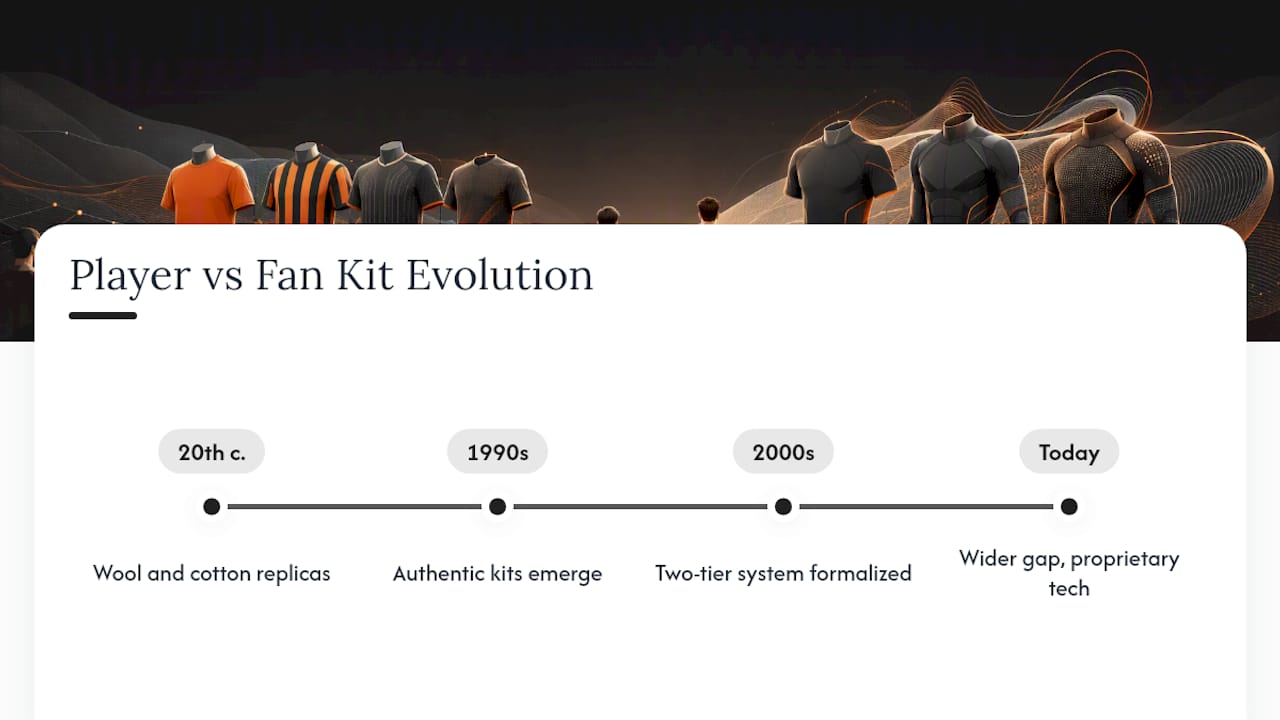
The split between player-grade and fan merchandise didn’t always exist. Through most of the 20th century, fans wore wool jerseys or basic cotton replicas that bore little resemblance to what players wore on the field. The gap was accepted because performance fabrics weren’t commercially available, and most fans weren’t expecting an exact match.
The shift started in the 1990s when synthetic performance fabrics became viable for mass production. Nike, Adidas, and Puma began producing jerseys that actually matched what players wore, and the “authentic” label entered the retail vocabulary. Fans could, for the first time, buy something close to the real thing.
By the 2000s, manufacturers formalized the two-tier system: a player or authentic edition built to match-day specs, and a replica or stadium edition built for fan wear. The price gap widened as player-edition technology advanced, with heat-bonded badges, laser-cut ventilation, and body-mapped construction pushing player editions further from what a replica could replicate.
Today, the gap is wider than ever. Player editions from Nike, Adidas, and Puma use proprietary fabric technologies that are genuinely difficult to replicate at a lower price point. The replica tier has also improved, with better polyester blends and more accurate colorways, but the performance engineering underneath remains the defining difference.
A note from the people who make the gear
Custom apparel makers see both sides of this market every day. The most common mistake buyers make is ordering player-edition sizing without accounting for how slim those cuts actually run. A chest measurement and a brand size chart solve that problem before the package arrives.
For durability, the single most effective habit is washing inside out on cold. That applies to player editions, fan merchandise, and custom team gear equally. Heat is the enemy of badge adhesion and print longevity, whether the badge is heat-pressed or screen-printed.
Rnkapparel’s team tests fit and fabric across its product line before production runs ship. If you’re ordering for a team and need sizing guidance, customer support can walk you through chest measurements and recommend the right cut for your roster.
Custom performance gear built for hockey teams and fans
If you’ve read this far, you know what separates player gear from fan merchandise. The next question is whether either off-the-shelf option actually fits your situation.
For hockey teams, youth programs, and fans who want performance fabric with their own name and number on the back, Rnkapparel offers a direct alternative. Custom hockey graphic t-shirts, performance training gear, and hockey hoodies are all available with team logo uploads, player name and number customization, and bulk pricing that makes sense for a full roster.
You get performance polyester, athletic cuts, and full design control, without paying $150 per jersey for a major-brand player edition. Request a custom quote at Rnkapparel or contact the team directly for sizing help before you order.
Sources
Use these pages to confirm product authenticity, check style codes, and vet sellers before purchasing.
- Player Version vs fan Version football shirts: the real differences — 433FC
- The difference between fan version and player version football shirts — Football Shirt Paradise
- Player Version vs Fan Version: Soccer Jersey Buyer’s Guide | SideJersey
- Player Version vs Fan Version Jersey — Full Guide 2026
- Player Version vs. Fan Version Jersey: The 2026 Buyer’s Guide
