
For most teams, a fully sublimated practice jersey made from breathable air-knit polyester is the right call. It holds color through hundreds of washes, moves with players during drills, and costs less per unit when ordered in bulk. Rnkapparel builds exactly this type of gear for US hockey teams, from youth squads to adult leagues.
Here’s what that recommendation means in practice:
- Best material: 100% polyester air-knit construction with underarm gussets for ventilation
- Best print method: Full sublimation, not screen print, for fade resistance and longevity
- Best fit for practice: Single-layer shoulders for mobility, not the bulkier double-layer game cut
- Immediate next step: Contact Rnkapparel to request an artwork proof or team quote before your season deadline
Table of Contents
- What are the best materials for custom practice hockey jerseys?
- How much can you customize a practice jersey?
- How do you size and order custom jerseys for a whole team?
- How do you keep practice jerseys looking good all season?
- What does it cost, and how long does production take?
- Why does custom practice gear actually improve your team?
- Pre-order checklist: what to confirm before you submit
- Key Takeaways
- Why performance-first practice jerseys are worth the investment
- Rnkapparel makes custom team orders straightforward
- Useful sources
What are the best materials for custom practice hockey jerseys?
The construction choice you make here affects everything: how the jersey breathes, how long the graphics last, and what you pay per unit.
Fully sublimated vs. screen-printed graphics. Sublimated jerseys fuse dye directly into the polyester fibers, so the design becomes part of the fabric rather than sitting on top of it. Screen-printed graphics sit on the surface and will eventually crack or peel with repeated washing and friction. For practice gear worn multiple times a week, sublimation wins on durability every time.
Knit construction matters more than most teams realize. Air-knit (perforated) polyester pulls moisture away from the skin and allows airflow through the fabric structure itself. Flat or double-knit polyester is denser and heavier, which suits game jerseys but traps heat during hard practice sessions. Single-layer shoulders on practice jerseys reduce bulk and increase range of motion compared with the double-layer construction on game cuts.
Fabric specs to check before ordering:
- Body and sleeves: 100% recycled polyester (some manufacturers use recycled polyester panels with blended gussets)
- Underarm gussets: 92% polyester / 8% spandex blend for stretch
- Fabric weight: lighter g/m² for practice, heavier for game use
- Seam construction: flatlock or reinforced seams at stress points
When pinnies or mesh make more sense. Pinnies work for scrimmages where you need quick color differentiation over existing gear. They’re cheaper and easier to store, but they offer zero customization and no identity value. If your team trains together more than twice a week, a full practice jersey is worth the investment.
Pro Tip: Ask your vendor for the fabric weight in g/m² before ordering. A jersey listed as “lightweight” by one manufacturer may be heavier than another’s standard cut. Get the number, not just the label.
How much can you customize a practice jersey?
The short answer: nearly everything, if you go the sublimation route. The longer answer depends on your budget and how you plan to use the gear.
Standard customization elements for team orders:
- Full-sublimation artwork across chest, back, and sleeves
- Chest logo placement (team crest, sponsor logo, or both)
- Back player numbers and names in your chosen font
- Sleeve or shoulder marks (secondary logos, league patches)
- Color selection across the entire garment, not just panels
Design tips that actually matter for practice use. High-contrast color combinations, like white numbers on a dark body, make player identification faster during drills. Large, bold numbers on the back (at least 8 inches tall) let coaches read them from across the ice without squinting. Avoid layered gradients or fine-detail artwork on the number itself; it looks sharp in a mockup but reads poorly at rink distance.
Pro Tip: Limit your color palette to three or fewer colors for the number and name block. More colors in that area add cost and reduce legibility. Save the complex artwork for the chest logo where it has room to breathe.
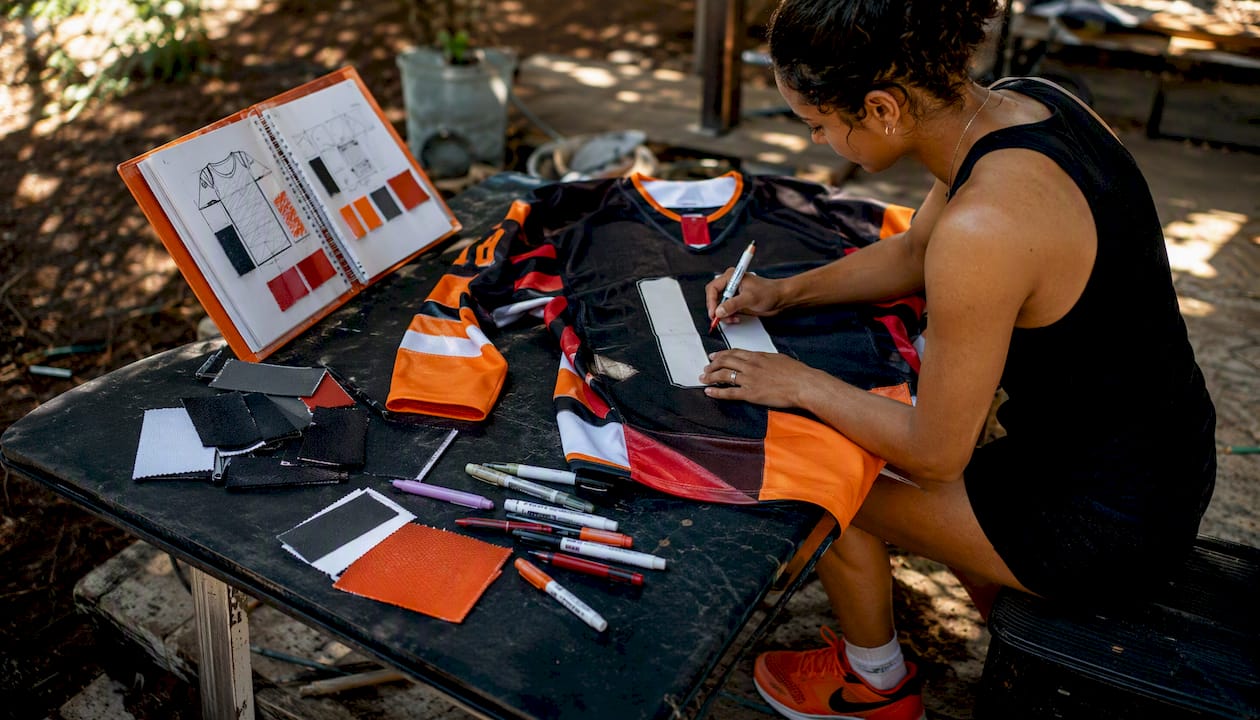
Font choice affects durability too. Block fonts with clean edges hold up better through washing than thin serif fonts, which can show wear at the fine strokes first. Placement rules are simpler than most teams think: chest logo centered or left-chest, number centered on the back, name above the number in a contrasting color.
Sewn patches vs. sublimation. Sewn-on patches or heat-pressed elements add cost and create a raised surface that can catch on equipment. For practice jerseys, full sublimation is almost always the better call. Reserve sewn patches for game jerseys where the premium look justifies the extra cost.
How do you size and order custom jerseys for a whole team?
Getting sizes right the first time is the single biggest variable in whether a team order goes smoothly. One wrong size in a 20-piece order can delay the whole shipment if you need a replacement.
Collecting sizes accurately:
- Send players a size chart from the specific vendor, not a generic one
- Goalies should measure over their chest protector, not bare
- Youth sizing runs differently than adult; some practice jerseys run snug, so check fit notes on the product page
- Collect sizes with a firm deadline, at least two weeks before your order date
For youth teams, a coach’s sizing guide can help parents measure correctly at home and reduce the back-and-forth.
Step-by-step ordering process:
- Confirm jersey type, material, and customization scope with your vendor
- Submit team sizes and finalize artwork files (vector preferred, 300 dpi minimum for raster)
- Review the digital artwork proof; check number placement, name spelling, and color codes
- Request a physical sample if your order exceeds 20 units or if color accuracy is critical
- Approve the proof in writing and confirm payment terms
- Confirm your delivery deadline and ask for a production timeline in writing
Batch ordering logistics. Most custom vendors set minimum order quantities (MOQs) for sublimated jerseys, typically 6–12 units. Order at least two or three extra units beyond your current roster for mid-season additions or replacements. Bulk pricing tiers usually kick in at 6+ units, so adding a few extras often costs less per unit than ordering them separately later.
How do you keep practice jerseys looking good all season?
Sublimated jerseys are low-maintenance compared with screen-printed gear, but a few habits extend their life significantly.
Washing guidelines:
- Cold or warm water only; hot water degrades polyester fibers over time
- Mild detergent without bleach or fabric softener (softener coats fibers and reduces moisture-wicking)
- Turn jerseys inside out before washing to protect the outer surface
- Tumble dry on low or hang dry; high heat causes polyester to shrink and lose shape
Why sublimation holds up better. Because the dye is fused into the fiber rather than printed on top, sublimated graphics resist peeling and cracking even after repeated washing and physical contact. Screen-printed logos typically show wear within a season of heavy practice use.
Durability features worth checking at purchase:
- Reinforced stitching at underarm seams and hem
- Woven neck tape to prevent collar stretch and irritation
- Double-stitched cuffs on long-sleeve cuts
- Fabric weight appropriate for the use frequency
Rotating two sets of jerseys across a season, rather than wearing the same set every practice, roughly doubles the lifespan of each garment. If your budget allows, ordering a second set at the same time as the first is usually cheaper than reordering later.
What does it cost, and how long does production take?
Pricing for custom practice hockey jerseys depends on garment quality, print method, quantity, and customization depth. Entry-level practice jerseys start under $25 each when bought singly, with bulk pricing tiers dropping the per-unit cost—examples include $16.99 for orders of 2+ and $14.99 for 6+ units (for certain styles). Complex customization or rush production adds cost.
What drives cost up:
- Full sublimation with complex multi-color artwork
- Individual player names (adds setup time per unit)
- Rush production (typically adds 20–40% to base cost)
- Physical sample requests before bulk production
Typical production timeline for US orders:
- Artwork proof: 2–5 business days after file submission
- Sample production (if requested): add 7–10 business days
- Bulk production after approval: 10–21 business days depending on quantity and vendor
- US shipping: 3–7 business days standard
Plan for a minimum of three to four weeks from first contact to delivery under normal conditions. Rush orders can compress that, but expect a cost premium. For seasonal teams, submitting orders six to eight weeks before your first practice is the safest buffer.
Why does custom practice gear actually improve your team?
The practical argument for branded practice jerseys goes beyond aesthetics. When every player shows up to practice in the same gear, the team looks organized before a single drill starts.
Benefits coaches and managers see most often:
- Faster player identification during drills and scrimmages
- Consistent appearance builds a professional culture at the rink
- Sponsor logos on practice gear increase visibility beyond game days
- Travel and warmup gear with team branding reinforces identity off the ice
That shift in mindset is real. A player who feels part of something shows up differently than one wearing a mismatched blank. For youth teams especially, branded team spirit wear creates the kind of buy-in that coaches spend months trying to build through other means. Custom gear also opens the door for parent fundraising and sponsor partnerships, since practice jerseys with a sponsor logo get far more impressions than game jerseys worn a dozen times a year.
Pre-order checklist: what to confirm before you submit
Work through this list before sending any files or payment to your vendor.
- Decide jersey type (sublimated full-custom vs. stock with print) and confirm material specs
- Finalize artwork: vector logo files, exact color codes (Pantone or CMYK), and font choices
- Collect all player sizes using the vendor’s size chart, with a firm submission deadline
- Determine total quantity including spares (add at least 2–3 extra units)
- Set your delivery deadline and confirm it fits the vendor’s production timeline
- Request a digital proof and review number placement, name spelling, and color accuracy
- Decide whether you need a physical sample (recommended for orders of 20+ units)
- Confirm minimum order quantities, payment terms, and deposit requirements
- Get the production and shipping timeline in writing before approving
- Communicate size deadlines, payment splits, and pickup/delivery logistics to players and parents
Key Takeaways
Fully sublimated air-knit polyester jerseys give teams the best combination of durability, breathability, and long-term value for regular practice use.
| Point | Details |
|---|---|
| Best material choice | Air-knit 100% polyester with sublimated graphics outlasts screen-print for frequent practice use. |
| Order extras upfront | Add 2–3 units beyond your roster count; reordering individually costs significantly more per unit—bulk pricing examples include $14.99 for 6+ orders per practice jersey, where singles are priced under $25. |
| Proof before you approve | Check number placement, name spelling, and color codes on the digital proof before bulk production starts. |
| Budget and timeline | Allow 3–4 weeks minimum from first contact to delivery; rush orders add cost. |
| Rnkapparel for team orders | Rnkapparel handles custom sublimated jerseys, bulk pricing, and US shipping for youth and adult hockey teams. |
Why performance-first practice jerseys are worth the investment
The conventional wisdom says practice jerseys are just blanks you sweat in. That framing leads teams to underinvest and then wonder why players treat practice differently than games.
The better frame: practice is where identity gets built. A team that trains in gear that looks like theirs, with their numbers and their colors, develops habits and culture faster than one that shows up in mismatched blanks. The gear signals that this session matters.
From a purely practical standpoint, the cost difference between a generic blank and a fully sublimated custom jersey is smaller than most coaches expect, especially at team quantities. The durability advantage of sublimation means the custom jersey often outlasts the cheap blank by two or three seasons of heavy use. That math changes the conversation from “can we afford custom?” to “why would we buy anything else?”
Rnkapparel’s approach to team orders reflects this: artwork proofs, bulk pricing that makes sense at real team quantities, and US shipping that fits seasonal timelines. If you’re ordering for a youth squad, the youth training apparel category is a practical starting point. For adult leagues, the full custom route through Rnkapparel gives you control over every design element without the minimums that make smaller orders painful.
The one thing I’d push back on: don’t over-engineer the design. The teams with the sharpest practice gear usually kept it simple, two or three colors, a clean number, and a chest logo that reads from 50 feet. That’s the version that ages well and looks good in year three as much as year one.
Rnkapparel makes custom team orders straightforward
Teams that want fully sublimated practice jerseys with player names and numbers, without the complexity of managing a large vendor relationship, will find Rnkapparel built for exactly that. Custom hockey shirts, training apparel, hoodies, and accessories are all available with team logos, color selection, and made-to-order production for US delivery.
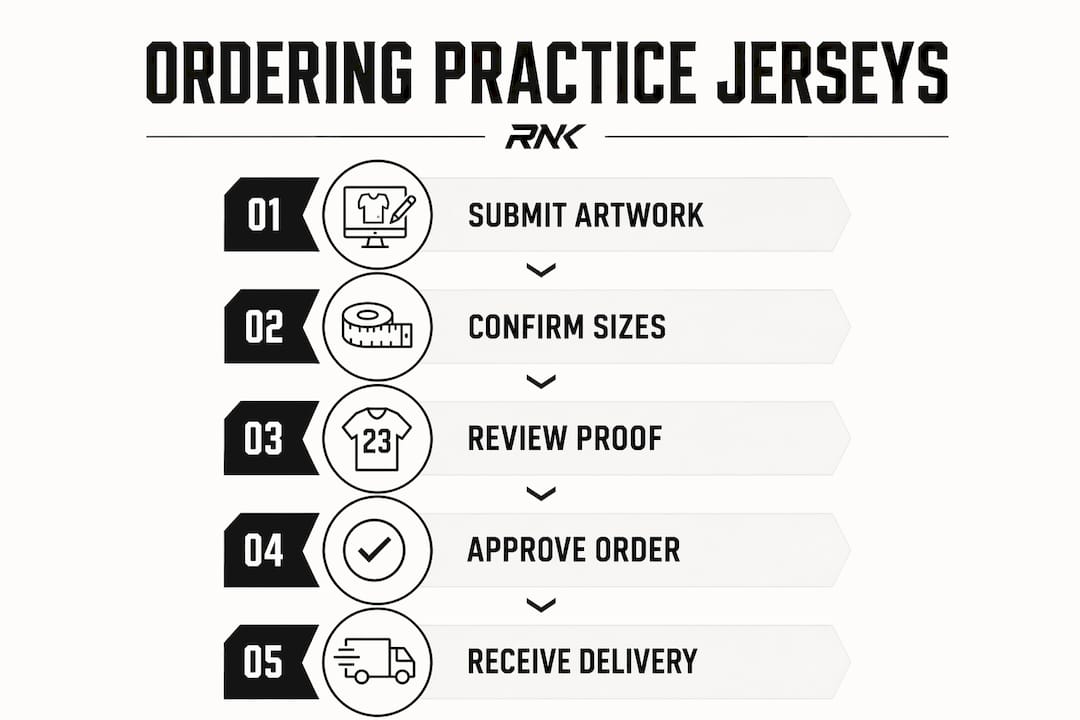
The process is direct: submit your artwork, confirm sizes, review a proof, and approve. Rnkapparel handles bulk pricing for team quantities and ships across the US. For teams that want to round out the kit, custom hockey hoodies and performance training gear pair naturally with practice jerseys for warmups and travel days.
Start your team order or request a quote at rnkapparel.com.
Useful sources
- Rajco USA: Ice Hockey Practice Jerseys — fabric specs, sublimation details, and construction notes
- Sports Unlimited: Adult Hockey Practice Jersey — bulk pricing tiers and single-layer shoulder specs
- Pure Hockey: One Tone Practice Jersey — sizing notes and fit guidance
- Types of Performance Fabrics Guide — deeper background on knit constructions and moisture management
- Rnkapparel: Youth Training Hockey Apparel — youth performance gear for team orders
- Rnkapparel: Custom Hockey Hoodies — team hoodies and travel apparel
