

Youth large sizing is defined as apparel sized for children typically aged 12–14 years, with a chest measurement of 30–34 inches and a height range of 55–64 inches. For parents ordering hockey apparel, that definition is the starting point. Getting the size wrong means your young athlete either can’t move freely on the ice or is swimming in fabric that gets in the way. Neither is acceptable when performance and safety matter.
What does youth large sizing mean in numbers?
A youth large fits children aged 12–14 with a chest of 30–34 inches and a height of 55–64 inches. That translates to numeric sizes 14–16 in most American brands. Those numbers give you a concrete anchor when you’re reading a size chart instead of guessing.
Youth sizes run from small through extra large, and each step covers a meaningful range of body measurements. The table below shows how youth large fits within the full youth sizing spectrum.
| Youth Size | Chest (inches) | Height (inches) | Numeric Equivalent | Typical Age |
|---|---|---|---|---|
| Youth Small (YS) | 23–26 | 44–50 | 6–8 | 5–7 years |
| Youth Medium (YM) | 27–30 | 50–55 | 10–12 | 8–10 years |
| Youth Large (YL) | 30–34 | 55–64 | 14–16 | 12–14 years |
| Youth XL (YXL) | 34–36 | 64–66 | 18–20 | 14–16 years |
One number stands out in that table: the chest overlap between youth large and youth XL. A child at the top of the youth large chest range is already touching youth XL territory. That overlap is exactly why measuring your child directly beats relying on age labels alone.
Key measurements to check before ordering:
- Chest: Measure around the fullest part of the chest, keeping the tape snug but not tight.
- Height: Measure from the top of the head to the floor in bare feet.
- Torso length: Measure from the top of the shoulder to the natural waist for shirt length accuracy.
Pro Tip: Lay a well-fitting shirt flat and measure the chest width from seam to seam, then double it. Compare that number to the brand’s size chart chest column. This method beats age-based guessing every time.
How does youth large differ from adult sizing in hockey apparel?
Youth large and adult sizes share a chest measurement range, but they are cut for completely different bodies. Youth large chest measurements overlap with adult XS at roughly 30–32 inches, yet an adult XS garment runs 4–6 inches longer in the body. That extra length changes everything for a young athlete wearing a hockey hoodie or training shirt.
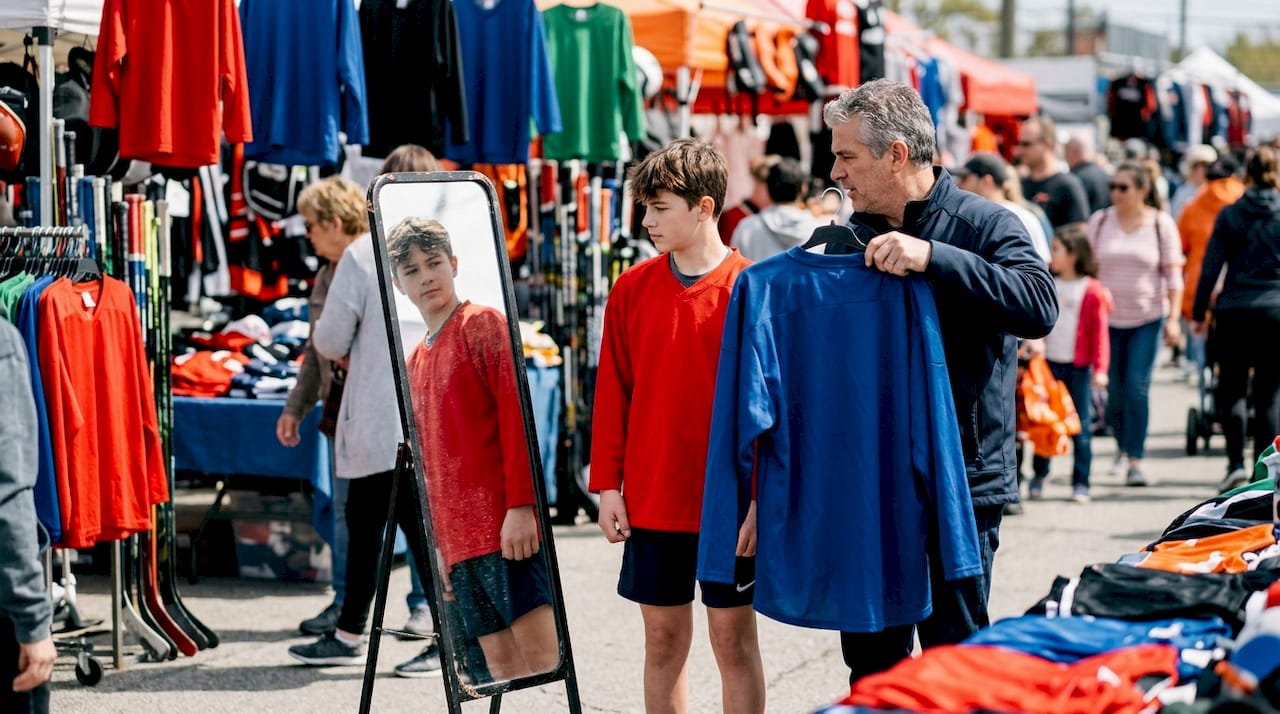
The table below makes the difference concrete.
| Size | Chest (inches) | Body Length (inches) | Shoulder Width |
|---|---|---|---|
| Youth Large (YL) | 30–34 | 22–24 | Narrow, youth cut |
| Adult XS | 30–32 | 26–28 | Wider, adult cut |
| Adult Small | 34–36 | 27–29 | Wider, adult cut |
Youth large apparel is cut shorter and narrower in the shoulders than adult small or XS. That shorter torso and narrower shoulder cut is intentional. It keeps the fabric from bunching under shoulder pads or riding up during skating strides.
Adult garments also have a longer sleeve length and a wider hip opening. On a 13-year-old, those proportions create excess fabric at the wrists and waist. Excess fabric in hockey training wear is not just uncomfortable. It can catch on gear and restrict movement at the wrong moment.
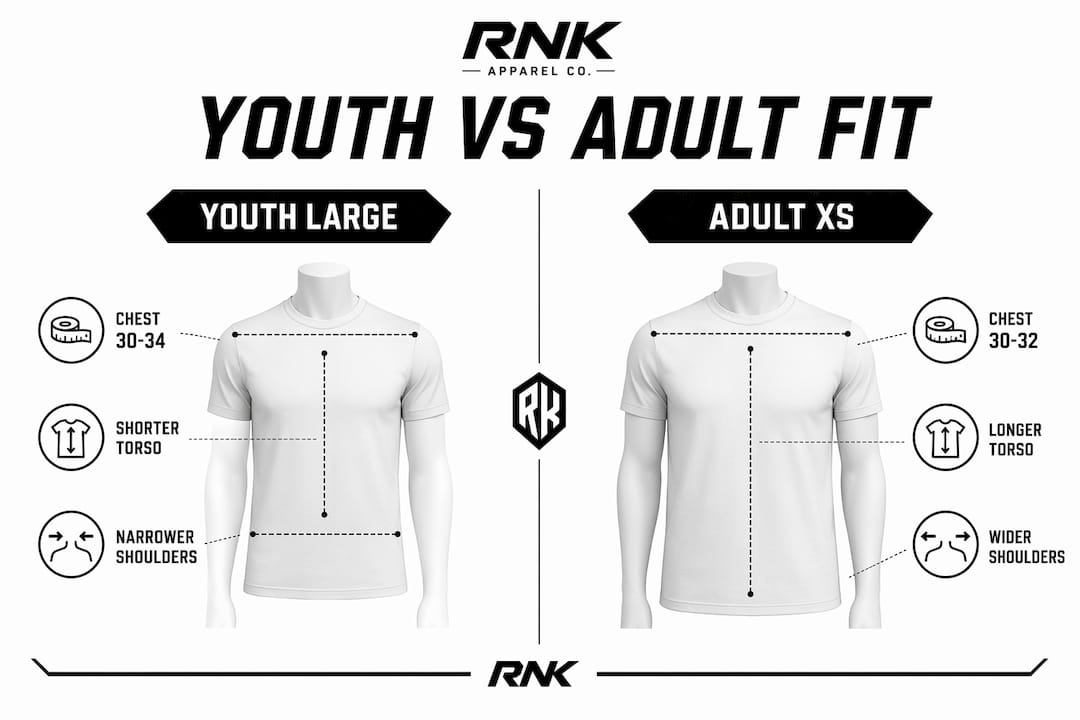
Pro Tip: If your child is right at the top of the youth large chest range and you’re debating between youth large and adult XS, choose youth large. The shorter body length and narrower shoulders will fit a youth athlete’s proportions far better than an adult cut at the same chest measurement.
Why does sizing accuracy matter for youth athletes?
Correct sizing is a functional requirement for youth athletes, not a style preference. Overly tight apparel restricts movement, while loose apparel creates bulk that interferes with sports activity. Both extremes affect how a young player performs and how safe they stay during practice and games.
Hockey training apparel sits close to the body under gear or acts as a base layer. A shirt that pulls across the chest limits arm extension during a shot. A hoodie that hangs past the hips can catch on skate blades or equipment straps. The fit has direct consequences on the ice.
Physical development drives size choice more than chronological age. Two 13-year-olds can easily differ by two full sizes based on their individual growth patterns. Relying on age to pick a size is the most common mistake parents make when ordering team gear.
Here is what to prioritize when evaluating fit for a youth athlete:
- Chest room: The shirt should allow full arm rotation without pulling at the seams.
- Shoulder seams: They should sit at the edge of the shoulder, not drooping down the arm.
- Body length: The hem should reach the natural waist or just below, not mid-thigh.
- Sleeve length: Sleeves should end at the wrist without covering the hand.
“Sizing is a guideline aimed at functional comfort rather than precise math. The goal is a movement-friendly fit without restriction or excess.”
When measurements fall between two sizes, choose the larger size. A slightly larger garment allows for growth and keeps the apparel usable through the season. A too-small garment becomes unwearable within weeks.
How to choose the right youth large size for your young hockey athlete
Picking the right size takes three measurements and a few minutes. Follow these steps before placing any order.
- Measure your child’s chest. Wrap a soft tape measure around the fullest part of the chest, just under the arms. Keep the tape level and snug without pulling.
- Measure height. Have your child stand straight against a wall in bare feet. Mark the top of the head and measure from the floor to the mark.
- Check the brand’s size chart. Brand variation in youth sizing can produce nearly 4 inches of difference in height range for the same labeled size across different companies. Never assume one brand’s youth large matches another’s.
- Measure a well-fitting existing garment. Lay a shirt your child wears comfortably flat on a table. Measure the chest width from seam to seam and double it. Compare that measurement to the brand’s size chart before ordering.
- Account for growth. If your child is mid-season and growing fast, order one size up. Youth athletes in the 12–14 age range can grow an inch or more between september and march.
- Coordinate team orders carefully. When ordering for a full team, collect every player’s chest and height measurements individually. Do not let parents self-report sizes based on age. Individual measurements prevent the common problem of half the team needing exchanges before the first practice.
- Check the athletic cut. Hockey training apparel often uses an athletic cut design that tapers through the torso. An athletic cut youth large will fit differently than a standard youth large, even at the same chest measurement. Confirm the cut style before ordering.
For team orders, Rnkapparel’s youth sizing playbook walks parents and coaches through the full measurement and ordering process. It covers common fit questions specific to hockey training wear.
Key takeaways
Youth large sizing is defined by chest and height measurements, not age, and those measurements differ meaningfully from adult cuts in body length, shoulder width, and garment shape.
| Point | Details |
|---|---|
| Youth large defined by measurements | Youth large fits a 30–34 inch chest and 55–64 inch height, equivalent to numeric sizes 14–16. |
| Youth large is not adult XS | Youth large runs 4–6 inches shorter in body length and narrower in shoulders than adult XS. |
| Age labels are unreliable | Physical development varies widely; always measure chest and height before ordering. |
| Size up when between sizes | Choosing the larger size extends garment usability through growth spurts without sacrificing mobility. |
| Brand charts vary significantly | The same labeled size can differ by nearly 4 inches in height range across brands; always check the specific chart. |
What I’ve learned after watching parents order the wrong size every season
Parents consistently underestimate how much youth sizing varies between brands. I’ve seen teams where half the players show up to the first practice in shirts that are either too short or too wide because someone ordered based on age and assumed all youth larges are the same. They are not.
The single most reliable thing you can do is measure a shirt your child already loves wearing. Not their body. The shirt. Lay it flat, measure the chest width seam to seam, double it, and compare that number to the brand’s size chart. That method accounts for how your child actually prefers their clothes to fit, not just what their body measurements technically allow.
The other mistake I see constantly is ordering tight to avoid bulk. Parents worry that a slightly larger shirt will look sloppy under gear. In reality, a snug youth large that restricts shoulder rotation is far more damaging to performance than a relaxed fit with an extra half inch of room. Hockey requires full arm extension, and a shirt that fights that movement costs your athlete on every shift.
Talk to your coach and your gear supplier before team orders go in. Coaches often know which players are in a growth phase and can flag who needs a size up. Suppliers who specialize in youth team fit can also advise on which cuts run small or large for a specific brand. That conversation takes ten minutes and saves weeks of exchanges.
— Eric
Youth hockey apparel sized right, from Rnkapparel
Rnkapparel builds youth hockey apparel with fit as the starting point, not an afterthought. Every garment in the youth collection is cut for growing athletes, with proportions designed for the shorter torso and narrower shoulders that define youth large sizing.
Parents can shop youth training hockey apparel sized from youth small through youth XL, with custom options for team logos, player names, and numbers. For teams placing bulk orders, Rnkapparel’s customization tools let coaches and parents coordinate sizes individually so every player gets the right fit. Browse the full youth hockey hoodie collection to see sizing options and style choices built specifically for young players.
FAQ
What age wears a youth large?
Youth large typically fits children aged 12–14 years. Because physical development varies, always confirm with chest and height measurements rather than relying on age alone.
Is youth large the same as adult XS?
Youth large and adult XS share a similar chest measurement range of 30–32 inches, but adult XS runs 4–6 inches longer in the body with wider shoulders. They are not interchangeable for youth athletes.
What chest size is a youth large?
A youth large fits a chest circumference of 30–34 inches. This corresponds to numeric sizes 14–16 in most American brands.
How do I know if my child needs a youth large or youth XL?
Measure your child’s chest. If it falls between 30–34 inches, youth large is the right range. If it reaches 34–36 inches, move to youth XL. When measurements fall at the border, choose the larger size for comfort and growth room.
Do youth large sizes vary between brands?
Yes, significantly. Brand variation in youth sizing can produce nearly 4 inches of difference in height range for the same labeled size. Always check the specific brand’s size chart using your child’s actual measurements before ordering.
