

Youth apparel sizing is defined by children’s specific body measurements, not by the familiar S, M, L labels adults recognize from their own wardrobes. Understanding how youth apparel sizing works for parents starts with one key fact: no universal sizing standard exists across brands, which means a Youth Large at one company can fit a completely different child than a Youth Large at another. The most reliable approach is measuring your child’s height, chest, and waist directly, then comparing those numbers against each brand’s own size chart. This guide explains exactly how to do that, why it matters for sports apparel, and what to watch for when buying for a young athlete.
How do youth apparel size charts work for parents?
Youth size charts translate body measurements into size labels using height, chest, waist, inseam, and sleeve length as the primary inputs. Height is the single most consistent metric across brands and regions, making it the best starting point for any sizing decision. That said, height alone is not enough for sports apparel, where fit around the chest and waist directly affects movement and comfort.
Here is what each measurement tells you:
- Height: Sets the general size range and determines torso and sleeve length.
- Chest: Measured around the fullest part of the chest, just under the arms. This is the most critical measurement for shirts, hoodies, and jerseys.
- Waist: Measured at the natural waistline. Determines fit for joggers, shorts, and pants.
- Inseam: Measured from the crotch to the ankle. Controls pant and jogger length.
- Sleeve length: Measured from the shoulder seam to the wrist. Relevant for long-sleeve tees and hoodies.
As a practical reference, a Youth Large typically corresponds to a chest width of 16–18 inches, though this range shifts between brands. That variation is exactly why checking the actual garment measurements on a youth clothing size guide matters more than trusting the label alone.
Pro Tip: Take all five measurements at the same time and write them down. Keeping a running record makes it easy to spot growth spurts before the next gear purchase.
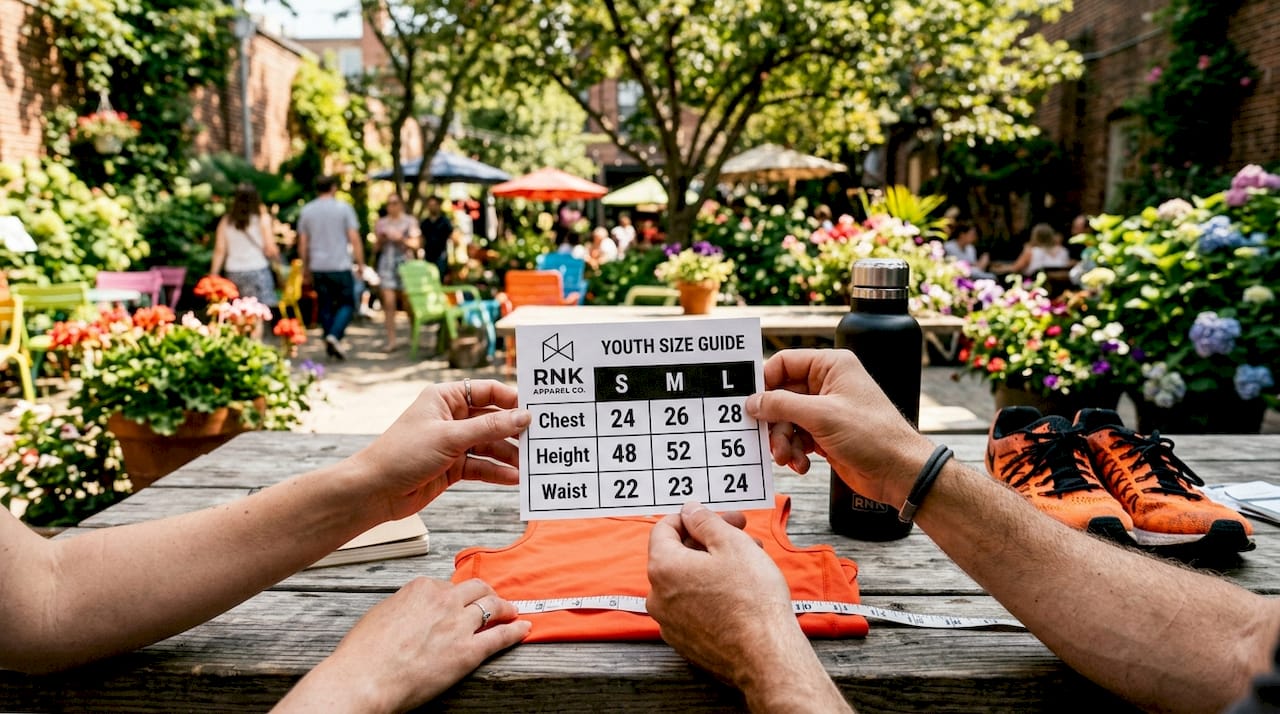
Size charts convert these numbers into labels by grouping measurement ranges. A child who measures 54 inches tall with a 30-inch chest might fall into a Youth Medium by height but need a Youth Large for chest room, especially if they wear a base layer underneath. Sports apparel often requires that extra room because layering and movement needs demand more space than everyday clothing.
Why do youth sizes vary so much between brands?
No regulatory body governs children’s clothing sizes in the United States or Canada. That absence of oversight means brands set their own sizing standards based on internal fit philosophies, target demographics, and manufacturing preferences. The result is significant inconsistency. The same age label can represent height ranges that differ by as much as 10cm across brands. That 10cm gap is roughly the difference between two full size steps, which means a child could be a correct fit in one brand’s Medium and need a Large in another.
Parents run into a specific trap called “label bias.” Label bias is the assumption that a size label corresponds to a consistent body type across all brands. It does not. A child who always wears a Youth Medium in everyday clothes may need a Youth Large in a hockey hoodie designed with a slimmer cut.
Two main sizing systems add to the confusion:
- Age-based sizing: Labels like “8” or “10” suggest the garment fits a child of that age. These are the least reliable because children of the same age vary widely in height and build.
- Height-based sizing: Labels tied directly to a height range in inches or centimeters. These are more consistent and easier to match against a measurement.
The practical fix is straightforward. Always pull up the brand’s specific size chart before ordering. Check the chest and height columns against your child’s current measurements, not last season’s. Consulting brand-specific size charts before every purchase removes most of the guesswork that leads to returns and ill-fitting gear.
What is the difference between youth and junior sizes?
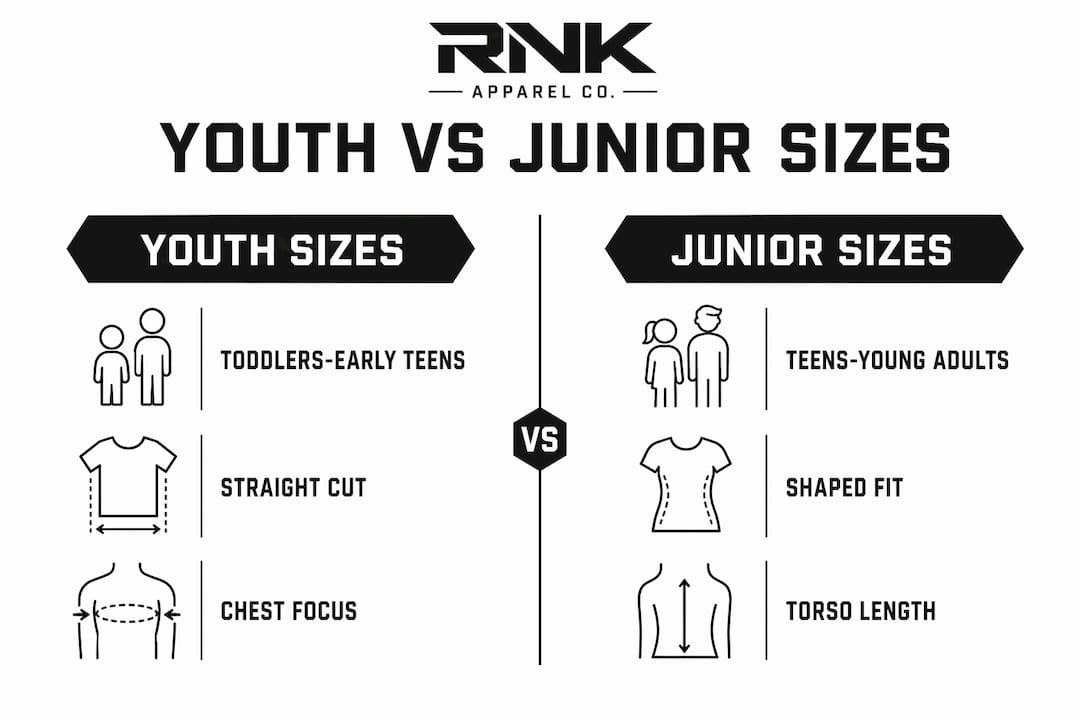
Youth sizes and junior sizes are built for different body shapes, and mixing them up leads to poor fit in sports apparel. Youth sizes are designed for pre-adolescent proportions with shorter torsos, straighter cuts, and less shaping through the waist and hips. Junior sizes are cut slimmer and longer, with more contour through the torso, designed for teenagers and young adults.
The table below shows the key differences:
| Feature | Youth sizes | Junior sizes |
|---|---|---|
| Target age range | Toddlers to early teens | Teens and young adults |
| Torso length | Shorter | Longer |
| Cut style | Straight, relaxed | Slim, contoured |
| Size numbering | Even numbers (6, 8, 10, 12) | Odd numbers (1, 3, 5, 7) |
| Hip and waist shaping | Minimal | More pronounced |
For parents buying sports apparel, this distinction matters in two specific situations. First, a young athlete who is tall for their age but still pre-adolescent in build will likely swim in a junior cut even if the length seems right. Second, a teenager who has started developing a more adult body shape may find youth sizes too boxy and restrictive during play. The right call is to measure the child’s chest and torso length, then compare those numbers against both youth and junior size charts side by side.
Junior sizes also tend to run in women’s or unisex fits depending on the brand, which affects how a hockey shirt or training hoodie sits on the shoulders and chest. When in doubt, a youth XL is often a better choice than a junior Small for athletes who are still growing through the shoulders.
How to measure your child for youth sports apparel
Accurate measurement is a five-step process that takes less than five minutes and saves multiple returns.
- Measure height. Have your child stand straight against a wall without shoes. Mark the top of their head and measure from the floor to the mark in inches.
- Measure chest. Wrap a soft measuring tape around the fullest part of the chest, just under the arms. Keep the tape level and snug but not tight.
- Measure waist. Find the natural waistline, typically just above the belly button. Measure with the tape relaxed, not pulled tight.
- Measure inseam. Have your child stand with feet shoulder-width apart. Measure from the crotch seam of a well-fitting pair of pants down to the ankle.
- Measure sleeve length. Start at the center back of the neck, run the tape over the shoulder, and down to the wrist with the arm slightly bent.
Using a well-fitting garment as a benchmark is the most reliable shortcut. Lay a shirt your child already wears comfortably on a flat surface. Measure the chest width across the front, the body length from shoulder seam to hem, and the sleeve length. Compare those numbers directly to the new item’s listed garment measurements, not the size label.
Pro Tip: For hockey training apparel, add one inch to your child’s chest measurement to account for base layers and freedom of movement during skating or drills.
Parents should update measurements every 3–6 months to keep pace with growth spurts common in youth athletes. A measurement taken in september may be outdated by january, especially for kids aged 8–13 who are in peak growth phases. Skipping this step is the single most common reason sports apparel stops fitting mid-season.
Three mistakes to avoid:
- Ordering based on age labels without checking measurements.
- Assuming last season’s size still fits without re-measuring.
- Forgetting to account for layering when buying hockey shirts, hoodies, or training tops.
For team bulk orders, collect each player’s height and chest measurement rather than asking parents to self-report a size. Self-reported sizes introduce label bias across the whole team and create a patchwork of inconsistent fits that affects both appearance and comfort.
Key Takeaways
Youth apparel sizing requires measuring height, chest, and waist directly because no universal standard exists and brand labels alone cannot guarantee a consistent fit for young athletes.
| Point | Details |
|---|---|
| Measure, don’t guess | Height, chest, and waist measurements are more reliable than age or size labels for any brand. |
| Brand charts vary widely | The same size label can represent a 10cm height difference across brands, so always check each brand’s chart. |
| Youth vs. junior fit | Youth sizes have straight cuts for pre-teens; junior sizes are slimmer and longer for teenagers. |
| Update measurements often | Re-measure every 3–6 months to catch growth spurts before buying new sports apparel. |
| Account for layering | Add room for base layers when sizing hockey shirts, hoodies, and training tops. |
What I’ve learned after years of watching parents size their kids wrong
Parents consistently underestimate how fast youth athletes grow and how much that growth affects fit in sports-specific clothing. I’ve seen it play out the same way every season: a parent orders based on last year’s size, the jersey arrives, and it’s already too short in the torso or too tight across the shoulders. The child plays through it, and the discomfort quietly affects their confidence on the ice.
The real issue is not that parents don’t care about fit. It is that the sizing system gives them false confidence. A label that says “Youth Large” sounds definitive. It isn’t. I tell every parent I work with to treat size labels as a rough starting point and measurements as the actual answer.
One thing I’ve found that genuinely works: keep a small notebook or a phone note with your child’s five measurements updated each season. When you’re ordering youth hockey training apparel at 10pm before a deadline, you don’t want to be hunting down a measuring tape. Having those numbers ready removes the temptation to guess.
The other piece of advice I give parents is to size up when you’re on the fence, especially for hockey. A shirt that’s slightly generous fits through a full season of growth. A shirt that’s slightly too small gets retired in two months. For layered sports apparel, the cost of going one size up is zero. The cost of going one size too small is a new purchase before the season ends.
— Eric
Rnkapparel’s sizing resources for youth hockey parents
Rnkapparel builds its youth hockey apparel with parents in mind, offering detailed size charts calibrated specifically for young athletes rather than generic children’s measurements.
Every product in the youth hockey t-shirt collection includes chest and body length measurements alongside standard size labels, so you can match your child’s numbers directly to the garment. The youth hockey joggers follow the same approach, with inseam and waist measurements listed for each size. Customizable options let teams add player names and numbers without affecting fit. If you’re ordering for a full team, Rnkapparel’s customer support can walk you through collecting the right measurements from each player before you place a bulk order.
FAQ
What measurements matter most for youth sports apparel?
Chest and height are the two most critical measurements for youth sports apparel. Waist and inseam matter for pants and joggers, while sleeve length is relevant for hoodies and long-sleeve shirts.
Why does the same size label fit differently at different brands?
No universal sizing standard exists for children’s clothing, so brands set their own measurement ranges. The same label can cover height ranges that differ by up to 10cm between brands.
When should a child move from youth to junior sizes?
The move from youth to junior sizes makes sense when a child’s torso length and body shape no longer match the straight, shorter cut of youth apparel. Measure chest and torso length and compare against both youth and junior charts to decide.
How often should parents re-measure their child for sports apparel?
Re-measuring every 3–6 months is the standard recommendation, especially for youth athletes aged 8–13 who are in active growth phases.
What is the best way to size for a youth hockey team order?
Collect each player’s actual height and chest measurement rather than relying on self-reported size labels. Using real dimensions for bulk orders prevents mismatches and ensures consistent fit across the team.
