

Designing youth hockey team gear is the process of creating custom uniforms and apparel that build team identity, support player performance, and unify young athletes on and off the ice. Done right, it goes far beyond picking colors. Gear design shapes how your players carry themselves, how families recognize your team in the stands, and how kids feel walking into the rink. This guide walks you through every stage, from choosing materials and templates to locking in your off-ice look, so you can head into the season prepared.
What tools and materials do you need to design youth hockey team gear?
The design process starts with the right resources. Over 70 customizable templates are commonly available online, giving coaches without formal design experience a real starting point. These templates let you drop in team colors, logos, and player numbers without hiring a graphic designer.
Materials matter just as much as the visual design. Youth-specific fabrics prioritize moisture-wicking, breathability, durability, and comfort to support performance during games and practice. Polyester blends with antimicrobial treatments are the standard for youth training gear. They hold up through a full season of sweaty practices and tournament weekends without breaking down.
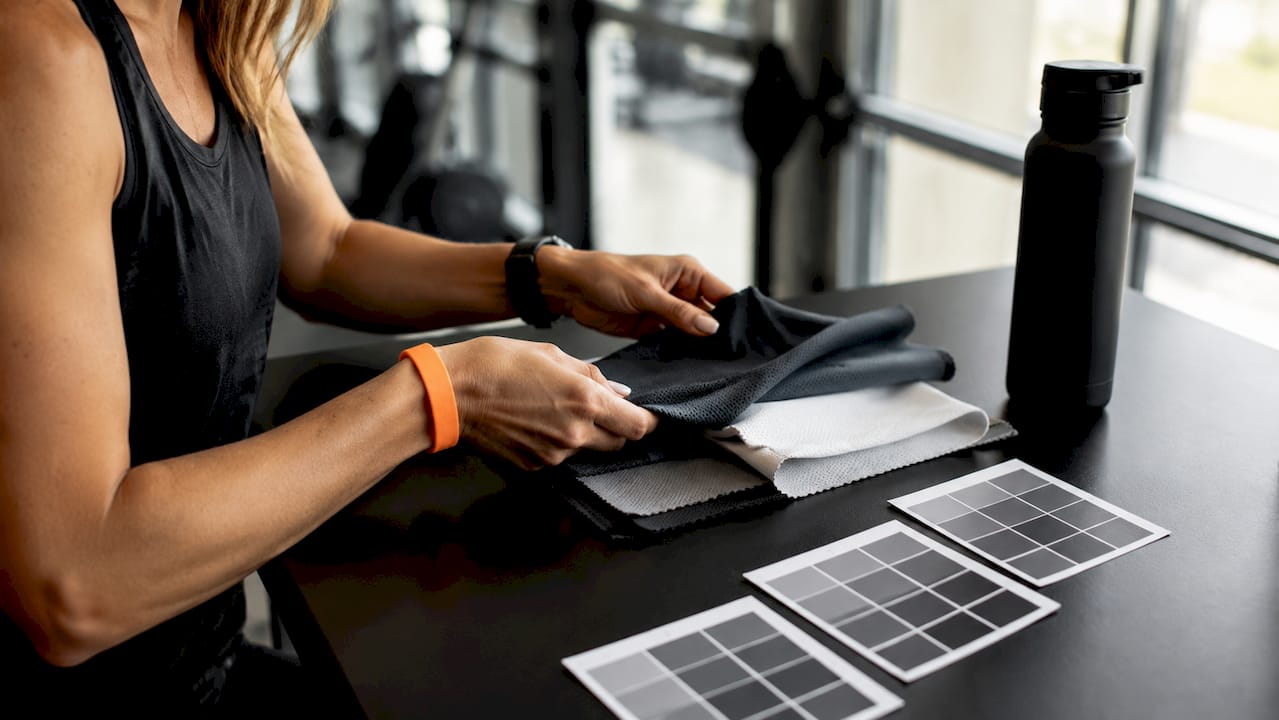
Digital mockup tools let you preview your design before committing to production. Most vendors provide an online builder where you upload your logo, select colors, and see a rendered version of the finished product. Always request a physical or high-resolution digital proof before approving the order.
Pro Tip: When selecting fabrics for young players, prioritize lightweight polyester blends over heavier cotton. Kids skate harder and sweat more than adults relative to their body size, so breathability directly affects comfort and focus during play.
| Design Tool / Material | Durability | Cost Range | Performance Benefit |
|---|---|---|---|
| Online template builders | N/A | Free to low | Fast visual mockups, no design skill needed |
| Sublimated polyester fabric | High | Moderate | Lightweight, full-color, moisture-wicking |
| Embroidered cotton blend | Moderate | Low to moderate | Classic look, less breathability |
| Antimicrobial polyester | High | Moderate to high | Odor control, long-term hygiene |
| Digital proof approval | N/A | Free | Prevents costly production errors |
What are the best practices for designing custom youth hockey uniforms?
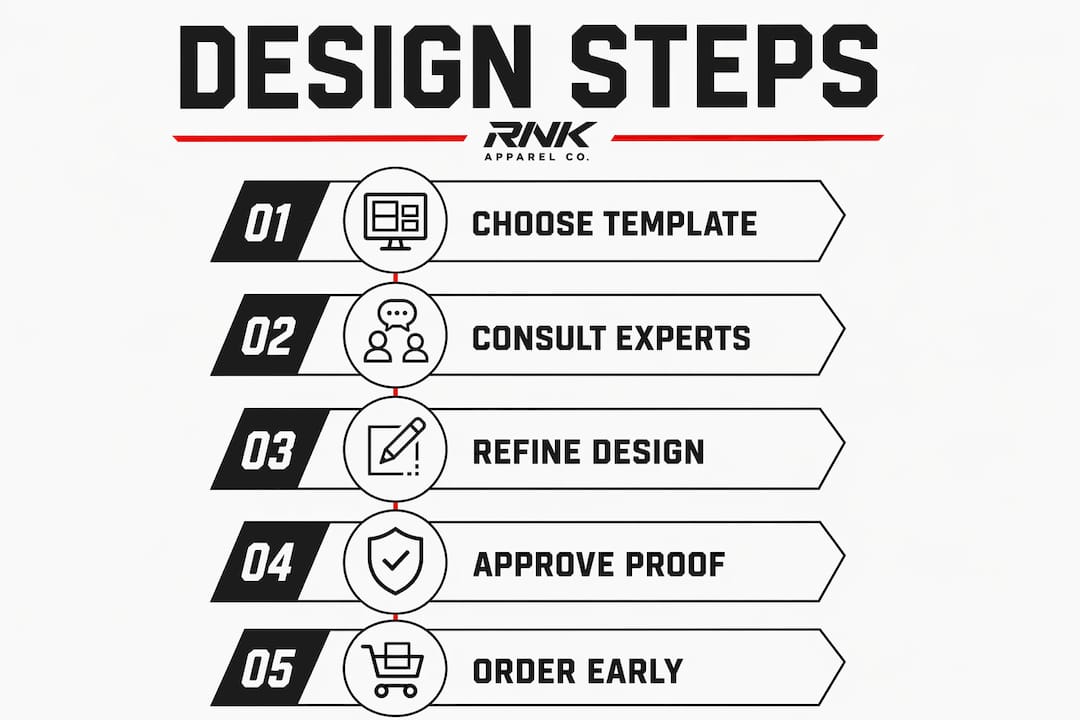
The standard design cycle for youth hockey gear follows six clear steps: initial design and template selection, expert consultation, collaborative refinement, proof approval, production, and delivery with ongoing support. Each step exists for a reason. Skipping any one of them is where most ordering problems start.
Here is how to work through each stage without losing time or money:
- Select a base template. Choose a template that fits your team’s color scheme and style. Most vendors offer sport-specific layouts built for hockey jerseys, hoodies, and warmups.
- Consult with a design expert. Dedicated account managers guide you through the process, flag potential issues with logo resolution or color matching, and reduce the back-and-forth that slows things down.
- Refine collaboratively. Share the draft design with assistant coaches, team parents, or a player representative. Getting input early prevents last-minute change requests after production begins.
- Approve the proof. Proof approval includes confirming player measurements and finalizing the design. This step prevents the most common and costly mistake in team gear orders: wrong sizes.
- Enter production. Once approved, the vendor moves to manufacturing. Timelines vary by vendor and order size, so confirm the production window before signing off.
- Receive and review delivery. Check every item against the approved proof before distributing to players. Address any discrepancies with your vendor immediately.
Common pitfalls include submitting low-resolution logos, skipping the proof review, and ordering too close to the season start. Each one adds days or weeks to your timeline.
Pro Tip: Place your gear order at least 10–12 weeks before your first game. Production alone can take 3–4 weeks, and shipping delays or proof revisions can eat the rest of your buffer fast.
How does off-ice apparel strengthen youth hockey team identity?
Off-ice apparel is not optional for serious programs. Youth hockey hoodies and lifestyle apparel are a growing category that keeps players and families connected to the team brand every day, not just on game days. When a kid wears your team hoodie to school on a Monday, that is free visibility and a daily reminder of belonging.
The design strategy for off-ice gear should mirror your on-ice uniforms. Use the same primary and secondary colors, the same logo placement, and the same font for player names or numbers. Consistency across custom youth hockey hoodies, warmup pants, and casual tees creates a unified look that families and fans recognize instantly.
Matching apparel builds team unity in ways that practice drills cannot. When players look like a team in the parking lot and the locker room, they act like one on the ice. That psychological effect is real and well-documented in youth sports coaching.
Here are the design tips that make off-ice gear work harder for your program:
- Match your hoodie colorway exactly to your jersey. Use Pantone or hex codes to avoid color drift between vendors.
- Place the team logo on the chest or left sleeve, not centered on the back. Back placement reads as fan gear, not team gear.
- Add player numbers to hoodies and joggers when budget allows. Personalization increases how often kids actually wear the gear.
- Choose youth hockey joggers and shorts in the same color family as your warmup pants for a complete off-ice kit.
- Avoid trendy graphic styles that date quickly. Clean, logo-forward designs stay relevant across multiple seasons.
Sublimated vs. embroidered: which customization method fits your budget?
Sublimated printing allows full custom color combinations with durable, lightweight fabrics ideal for youth players. The ink bonds directly to the fabric, so it never cracks, peels, or fades the way heat-transfer prints do. Sublimation gives you the most design freedom of any method, but it works only on polyester fabrics.
Embroidery is the alternative for cotton-blend items like hoodies and hats. It produces a premium, textured look that holds up well through washing. The trade-off is cost per item and design complexity. Embroidery works best for simple logos and text, not full-color graphics or gradient designs.
Budget-friendly options exist that balance customization and performance, including bulk ordering discounts and choosing the right print method for each product type. The smartest approach is to use sublimation for jerseys and performance wear, then use embroidery or screen printing for hoodies and casual items.
| Customization Method | Best For | Cost Per Item | Design Flexibility | Durability |
|---|---|---|---|---|
| Sublimation | Jerseys, performance wear | Moderate | Very high | Excellent |
| Embroidery | Hoodies, hats, casual gear | Moderate to high | Low | Excellent |
| Screen printing | T-shirts, bulk casual items | Low | Moderate | Good |
| Heat transfer | Small runs, accessories | Low | Moderate | Fair |
Bulk ordering is the fastest way to reduce per-item cost across all methods. Most vendors offer tiered pricing, where orders above a set quantity unlock lower unit prices. Coordinate with other teams in your organization to combine orders when possible.
How do you troubleshoot common youth hockey gear design problems?
Sizing errors are the most common problem in youth hockey gear orders. Kids grow fast, and a size chart that worked last season may not apply this year. Collect fresh measurements from every player before submitting your order, not from last year’s records.
Design approval delays are the second most frequent issue. They usually happen when too many stakeholders are involved in the review process. Assign one decision-maker, typically the head coach or team manager, to approve the final proof. Committees slow everything down.
Here is a practical troubleshooting checklist for the most common gear design problems:
- Sizing errors: Collect current measurements from all players. Cross-reference with the vendor’s size chart, not a generic youth sizing guide.
- Low-resolution logos: Request your logo in vector format (SVG or AI file) from whoever created it. Raster images (JPG, PNG) often look blurry when scaled to jersey size.
- Color mismatches: Provide Pantone color codes to your vendor. Describing a color as “dark red” leaves too much room for interpretation.
- Delivery delays: Confirm the production timeline in writing before approving the proof. Ask for a guaranteed ship date, not an estimated one.
- Wrong item quantities: Double-check your roster count against the order form before submitting. Factor in one or two extra units for new players or replacements.
Communication with your vendor is the single biggest factor in avoiding these problems. A vendor with a dedicated account manager, like the model Kukri Sports uses, reduces the chance of miscommunication at every stage.
Key takeaways
Designing youth hockey team gear works best when you follow a structured process, choose performance-appropriate materials, and extend your team brand into off-ice apparel from the start.
| Point | Details |
|---|---|
| Start with the right materials | Use moisture-wicking polyester blends with antimicrobial treatment for youth performance wear. |
| Follow the six-step design cycle | Move from template selection through proof approval before entering production to avoid costly errors. |
| Extend your brand off the ice | Match hoodie and jogger colorways to your jerseys to build team identity beyond game days. |
| Choose the right print method | Use sublimation for jerseys and embroidery or screen printing for casual and lifestyle items. |
| Order early and measure fresh | Place orders 10–12 weeks out and collect current player measurements every season. |
What i’ve learned after years of watching teams get gear wrong
Most coaches treat gear design as a logistics task. Order the jerseys, pick a color, move on. That mindset is why so many youth programs end up with gear that looks generic, fits poorly, and gets abandoned in a bag by February.
The teams I’ve seen build real culture around their gear do one thing differently. They treat the design process as a team-building moment. They involve players in the color vote. They show the kids a mockup before it goes to production. That buy-in makes a difference you can see on the bench.
The off-ice apparel piece is where most coaches leave the most value on the table. A well-designed hoodie that a kid actually wants to wear to school does more for program visibility than any banner in the rink. I’ve watched programs grow their registration numbers just because the gear looked good in the community.
My honest recommendation: start the design process in the summer, not September. The stress of rushing a gear order while also running tryouts and scheduling ice time is avoidable. Give yourself the runway to do it right, and the season starts with momentum instead of chaos.
— Eric
Get your team’s look locked in with Rnkapparel
Rnkapparel makes it straightforward for coaches and managers to put together a complete custom kit for their youth hockey program. From custom hockey t-shirts and team hoodies to hats and hockey accessories, every product is built for personalization. You can upload your team logo, add player names and numbers, and choose from a range of colors and styles that match your on-ice uniforms.
Rnkapparel serves teams across the United States and Canada, with options for youth players at every level. The ordering process is built to reduce the back-and-forth that slows most gear orders down. If you are ready to build a complete off-ice kit that your players will actually wear, Rnkapparel has the product range and the customization tools to get it done right.
FAQ
What is the standard process to design youth hockey team gear?
The standard process follows six steps: template selection, expert consultation, collaborative refinement, proof approval, production, and delivery. Skipping proof approval is the most common cause of sizing and design errors.
How early should i order custom youth hockey uniforms?
Order at least 10–12 weeks before your first game. Production typically takes 3–4 weeks, and proof revisions or shipping delays can consume the remaining time quickly.
What fabric works best for youth hockey apparel?
Polyester blends with antimicrobial treatment are the standard for youth hockey performance wear. They are lightweight, moisture-wicking, and durable enough to handle a full season of use.
Is sublimation or embroidery better for custom hockey uniforms?
Sublimation is better for jerseys and performance wear because it bonds to the fabric and never peels. Embroidery works better for hoodies and hats where a textured, premium finish is the goal.
Why should youth hockey teams invest in off-ice apparel?
Off-ice apparel like hoodies and joggers keeps players connected to the team brand daily and increases program visibility in the community. Matching off-ice gear to on-ice uniforms reinforces team identity beyond the rink.
