

A reliable sizing guide for youth hockey shirts is the difference between a child who skates freely and one who’s tugging at a jersey mid-shift. The industry term for this process is jersey sizing, and it requires three inputs: accurate body measurements, an understanding of brand-specific sizing charts, and an allowance for protective gear. Chest circumference is the single most important measurement, but height, sleeve length, and arm opening all affect how a shirt performs on the ice. This guide walks you through every step, from measuring tape to final order, so you get it right the first time.
1. How to measure your child for youth hockey shirts
Accurate measurement is the foundation of every good sizing decision. Before you open a single sizing chart, you need four numbers: chest circumference, height, sleeve length, and arm opening diameter.
Here is how to take each measurement correctly:
- Chest circumference: Wrap a soft measuring tape around the fullest part of the chest, approximately 1 inch below the armhole. Chest measurement is the cornerstone metric for sizing hockey shirts. Keep the tape snug but not tight, and record the number in inches.
- Height: Have your child stand straight against a wall without shoes. Note the measurement from the floor to the top of the head.
- Sleeve length: Measure from the center back of the neck, across the shoulder, and down to the wrist. This number matters more than most parents realize because short sleeves restrict arm movement during skating strides.
- Arm opening: Measure the diameter of the upper arm at its widest point. A tight arm opening limits mobility even when the chest fits perfectly.
- Measure over base layers and pads when possible. Shoulder pads and chest protectors add 2 to 4 inches to chest circumference. A jersey that fits the bare chest will often be too tight once the player is fully geared up.
Pro Tip: Take measurements at the start of each season, not just once. Youth players grow fast, and a shirt that fit in October may be uncomfortably snug by February.
2. Understanding youth hockey shirt sizes and brand differences
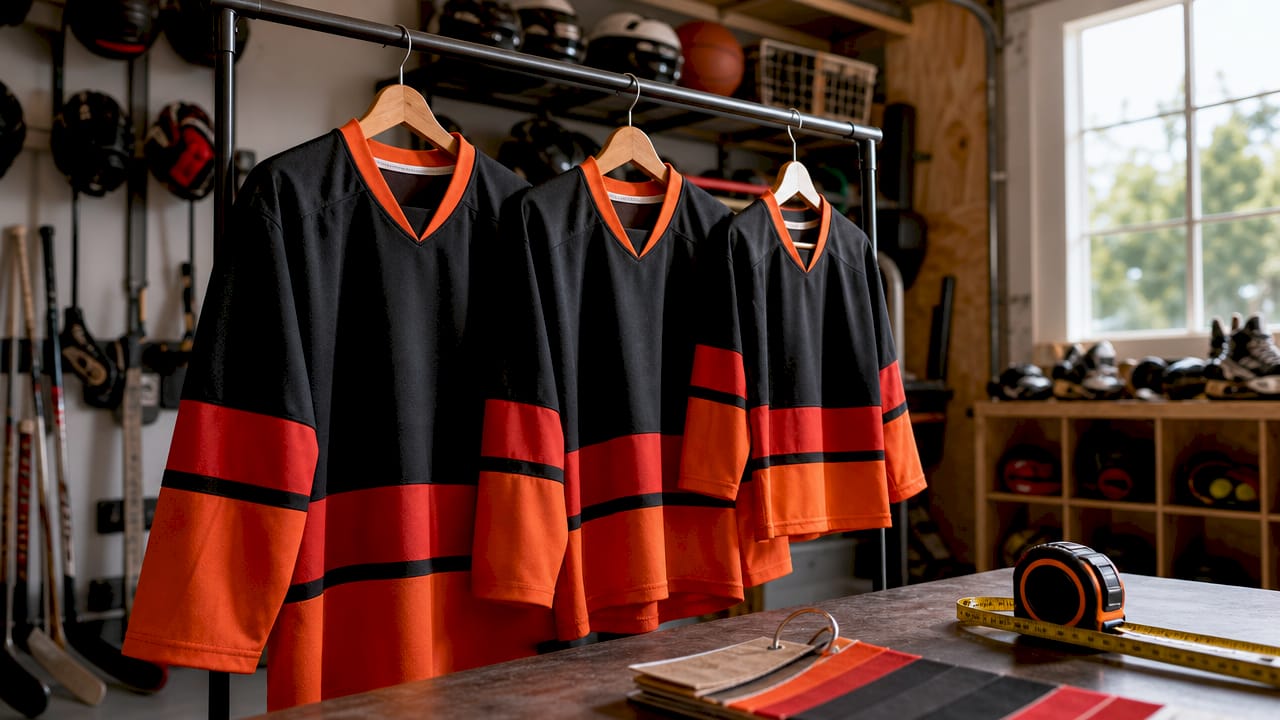
Youth hockey apparel uses three main size categories: Youth, Junior, and Senior. Youth sizes cover the smallest players, typically ages 4 to 10. Junior sizes are transitional, designed for players who have outgrown youth cuts but are not yet ready for adult proportions. Senior sizes cover adult frames.
The confusion starts here: Junior sizes are not standardized across manufacturers, and a Junior Small from one brand may match a Youth Large from another. Always treat the size label as a starting point, not a final answer.
Brand variance is significant. The table below shows how chest measurements differ across common sizing labels:
| Size label | Typical chest range | Typical height range |
|---|---|---|
| Youth Small | 22–24 in | 44–48 in |
| Youth Medium | 24–26 in | 48–52 in |
| Youth Large | 26–28 in | 52–56 in |
| Junior Small | 28–30 in | 56–60 in |
| Junior Medium | 30–32 in | 60–64 in |
These ranges are general. Brand-to-brand variance of up to 5 inches in key measurements is common. A CCM Senior Medium chest measures 24 inches, while a Bauer Senior Medium measures 29 inches. That is a 5-inch gap on the same size label. Always pull the specific brand’s sizing chart before ordering, and cross-reference your child’s chest measurement against it directly.
3. How to choose the right fit: roominess vs. snugness
Fit preference in hockey shirts comes down to one question: what will your child wear under this shirt? For game jerseys worn over shoulder pads and chest protectors, you need significantly more room than for a training tee worn over a base layer.
The standard guidance is clear:
- Loose game fit: Add 5 to 6 inches to your child’s chest measurement (with pads on) to get the target jersey chest size. A loose-fitting jersey allows full arm extension, prevents bunching under pads, and does not restrict breathing.
- Snug training fit: Add 2 to 4 inches to the bare chest measurement for shirts worn during drills or off-ice training. This fit reduces drag and keeps the shirt from riding up.
- Fan or casual wear: No layering allowance needed. Size to the bare chest measurement or size down one for a fitted look.
- Goalie jerseys: Goalies wear significantly more upper-body protection. Size up at least one full size beyond what the standard formula suggests, and confirm with the goalie’s equipment retailer.
- Female players: Many youth sizing charts are built around male body proportions. If your daughter finds standard youth cuts too wide in the shoulders or too boxy in the torso, look for brands that offer gender-specific youth cuts.
Pro Tip: When ordering custom team shirts through a provider like Rnkapparel, request a size sample before placing a bulk team order. One test shirt can prevent a costly resizing situation for the whole roster.
The right fit is not the largest shirt that fits over the pads. It is the smallest shirt that allows full, unrestricted movement with all protective gear in place.
4. Top 5 common mistakes parents make when sizing youth hockey shirts
Sizing errors are more common than most parents expect, and inaccurate sizing risks injury or performance loss on the ice. Here are the five mistakes that show up most often:
- Buying based on age alone. Age-based sizing is a rough estimate at best. Two 8-year-olds can have chest measurements 4 inches apart. Always measure first.
- Ignoring layering when measuring. Measuring a bare chest and then ordering a jersey meant to go over pads is the single most common sizing error. The result is a shirt that restricts movement and can interfere with protective equipment.
- Treating all brands as equivalent. A Youth Large from Athletic Knit is not the same as a Youth Large from Bauer or CCM. Skipping the brand-specific chart is how parents end up with a shirt that does not fit despite ordering the “right” size.
- Over-sizing for future growth. Excessive fabric creates drag and safety risks. A jersey that is two sizes too large can catch on equipment, bunch under pads, and reduce a player’s range of motion. Growth allowance is smart; over-sizing is not.
- Confusing youth and junior size labels. Parents often assume junior means “for juniors” in the age sense. It does not. Junior is a body-frame category. A small 12-year-old may still wear a Youth Large, while a large 9-year-old may need a Junior Small. The label follows the body, not the birthday.
5. Situational tips: when to size up, size down, or ask for help
Not every sizing decision follows the same formula. Here is how to handle the situations that fall outside the standard playbook:
- Size up when: Your child is between two sizes on a brand chart, is in a growth phase, or will wear the shirt for a full season over protective gear. Sizing up between two sizes is the standard recommendation for youth players due to rapid growth, but limit this to one size.
- Size down when: The shirt is for fan wear, casual use, or off-ice events where no pads are involved. A fitted look is fine when there is no safety equipment underneath.
- Ask a coach or equipment retailer when: Your child is transitioning from youth to junior sizing, plays goalie, or has an unusual body proportion (very long arms, broad shoulders for their height). These cases require hands-on fitting, not just a chart.
- Recheck sizing at least once per season. Rapid growth in youth players requires sizing reassessment at least annually. Many coaches recommend checking at the mid-season point as well.
- Use brand customer service. Bauer, CCM, and Athletic Knit all have customer support teams that can walk you through their specific sizing charts. This is especially useful for youth training apparel where fit affects both performance and safety.
For parents managing a full team order, Rnkapparel’s blog covers extra sizes for better fit in team contexts, which is worth reading before you finalize a roster order.
Key takeaways
Accurate chest measurement combined with a brand-specific sizing chart and a layering allowance for protective gear is the most reliable method for sizing youth hockey shirts correctly.
| Point | Details |
|---|---|
| Chest measurement is primary | Measure 1 inch below the armhole, over base layers and pads when possible. |
| Brand charts are not interchangeable | CCM and Bauer Senior Mediums differ by up to 5 inches; always check the specific brand chart. |
| Add inches for layering | Add 5 to 6 inches for game jerseys over pads; add 2 to 4 inches for training shirts. |
| Avoid over-sizing for growth | One size up is a smart buffer; two sizes up creates safety and mobility risks. |
| Recheck sizing every season | Youth players grow fast enough that last season’s perfect fit may not work this season. |
What I’ve learned from sizing youth hockey shirts the hard way
I have seen parents order jerseys in bulk for a youth team, skip the measuring step, and end up with half the roster in shirts that either restricted shoulder movement or draped past the hip pads. Both outcomes are avoidable, and both come from the same root cause: trusting the size label over the tape measure.
The advice I give every parent is this: measure with the pads on. It sounds obvious, but most people measure their child in a t-shirt and then wonder why the jersey feels tight once the shoulder pads go on. The pads change the geometry of the upper body significantly. That 2 to 4 inch addition to chest circumference is not a suggestion. It is the difference between a shirt that works and one that does not.
I also push back on the “buy big so they can grow into it” instinct. I understand the logic. Hockey gear is expensive, and parents want value. But a jersey that is two sizes too large is not just unflattering. It bunches under pads, catches on equipment during play, and can actually reduce the protection those pads provide by shifting them out of position. One size up from the current fit is the right growth buffer. Two sizes up is a safety compromise.
Finally, do not rely on a single sizing chart. Consulting multiple sizing charts significantly improves confidence in the final decision. Pull the chart from the brand, cross-reference it with a general hockey sizing guide, and confirm with your child’s coach if you are still unsure. The extra ten minutes is worth it every time.
— Eric
Get the right fit with Rnkapparel’s youth hockey shirts
Rnkapparel carries a full range of custom hockey t-shirts built specifically for youth players, with sizing options that span Youth Small through Junior sizes. Every shirt is designed to work with the layering realities of hockey, whether your child is wearing it over pads at practice or pulling it on for a post-game team photo. You can add player names, numbers, and team logos directly through the site, and the Rnkapparel team is available to help you match measurements to the right size before you order. If you are outfitting a full team, the bulk ordering process is built to handle mixed sizes across a roster without the guesswork. Browse the youth hockey apparel collection and use your child’s chest measurement as your starting point.
FAQ
What is the most important measurement for youth hockey shirt sizing?
Chest circumference, measured 1 inch below the armhole, is the primary measurement for sizing hockey shirts. All other measurements, including height and sleeve length, are secondary checks.
How much bigger should a hockey jersey be than the chest measurement?
For a game jersey worn over pads, add 5 to 6 inches to the chest measurement for a loose fit, or 2 to 4 inches for a snug fit. For casual or fan wear with no pads, size to the bare chest measurement.
Are youth and junior hockey sizes the same thing?
No. Youth and junior are separate size categories. Junior sizes are transitional frames between youth and adult, and they are not standardized across brands. A junior small from one manufacturer may be equivalent to a youth large from another.
How often should I recheck my child’s hockey shirt size?
Recheck at the start of every season and again at mid-season. Youth players grow quickly enough that a shirt that fit well in the fall may be too small by winter.
Can I use the same size chart for different hockey brands?
No. Brand sizing charts differ significantly. A CCM Senior Medium and a Bauer Senior Medium can differ by up to 5 inches in chest measurement. Always use the specific brand’s chart for every order.
