

Athletic cut is a clothing fit engineered for muscular, active body types by providing extra room through the chest, shoulders, and thighs while tapering at the waist to create a defined, V-shaped silhouette. This fit sits between slim and regular cuts, solving a problem every serious athlete knows: standard sizing either pulls across the chest or hangs loose at the waist. Whether you play hockey, lift weights, or train daily, understanding athletic cut apparel helps you choose gear that moves with your body instead of fighting it.
What does athletic cut mean in clothing design?
Athletic cut, also called athletic fit, is defined by one core design principle: extra room in the upper body paired with a tapered waist that follows the natural V-shape of a trained physique. This is not simply a marketing label. It is a specific pattern construction that adjusts dimensions differently across the chest, shoulders, waist, and thighs compared to slim or regular fits.
The concept appears across every garment category. In suits, athletic fit uses a drop 7 or drop 8 sizing pattern, meaning the chest measurement exceeds the waist measurement by seven or eight inches. This accommodates broader torsos without requiring major tailoring. In dress shirts, the design places lower armholes and a tapered waist to eliminate the excess fabric that balloons around the midsection in standard fits. In t-shirts, the cut allows a full range of motion through the shoulders while keeping the waist shaped rather than boxy.
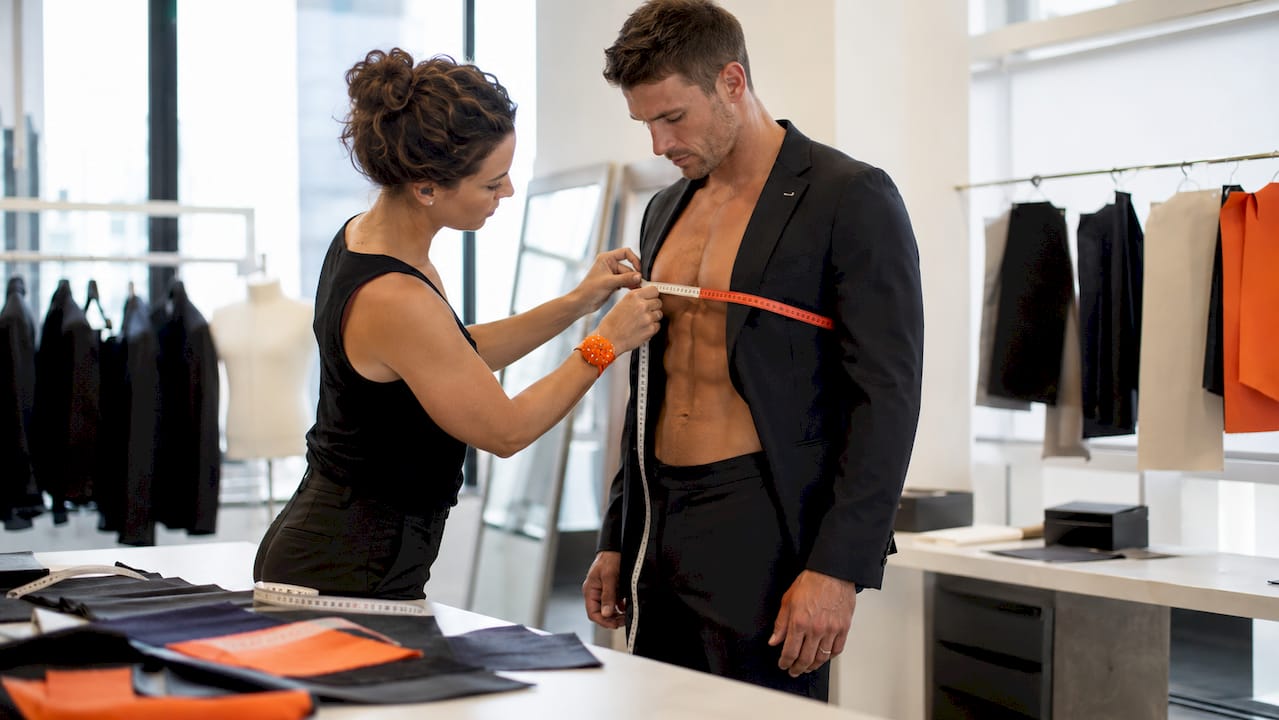
Athletic fit jeans follow the same logic below the waist. They carry extra room in the seat and thighs with a tapered leg opening, so the fabric does not pinch across the quadriceps. This is a detail that matters enormously to anyone who squats regularly or skates hard.
Athletic cut vs regular fit vs slim fit
| Fit type | Chest and shoulders | Waist | Thighs |
|---|---|---|---|
| Regular fit | Generous | Straight, boxy | Straight |
| Slim fit | Narrow | Tapered tightly | Narrow |
| Athletic cut | Generous | Tapered moderately | Extra room |
Regular fit gives you space everywhere but looks shapeless on a muscular frame. Slim fit follows the body closely but restricts movement and pulls across developed muscle groups. Athletic cut takes the best of both: room where your muscles need it, taper where your body naturally narrows.
Pro Tip: If you size up in slim fit to fit your chest, you are wearing the wrong cut. Athletic fit is built for that proportion from the start.
What are the benefits of athletic cut clothing for athletes?
Athletic cut apparel delivers three concrete advantages for anyone with an active physique: freedom of movement, a flattering silhouette, and durability under stress.
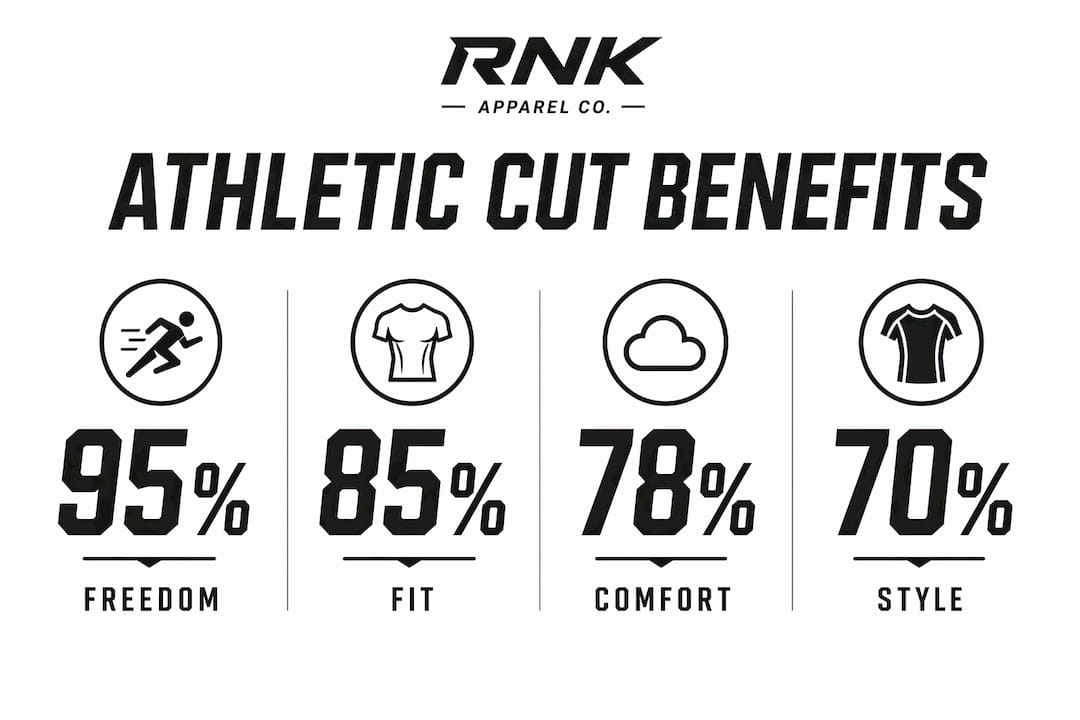
Freedom of movement is the most direct benefit. Athletic cut garments maintain fit through wide ranges of motion like overhead reaches and squats without fabric strain or distortion. When you raise your arms to take a shot on goal or drop into a defensive stance, the shirt moves with you instead of riding up or pulling tight across the back.
The silhouette benefit matters off the ice as much as on it. Athletic fit balances roomy upper body with a slim waist, eliminating the excess fabric that makes standard fits look sloppy on trained bodies. You get a clean, intentional look without the restriction of slim cut.
Durability under stress is the benefit most athletes overlook until a seam fails mid-game. Athletic cut designs prevent seam strain during dynamic sport motions by distributing tension across a properly shaped garment rather than forcing fabric to stretch beyond its design. A shirt that fits your actual proportions simply lasts longer.
Here is what athletic cut clothing does for your training and game-day performance:
- Reduces chafing and restriction across the chest and shoulders during explosive movements
- Keeps fabric smooth against the body, preventing the bunching that disrupts layering under pads or gear
- Maintains a professional appearance when transitioning from training to team meetings or travel
- Accommodates muscular thighs in pants and joggers without sacrificing a tapered lower leg
- Supports layering for cold-weather training without adding bulk at the waist
Pro Tip: For hockey players specifically, athletic cut base layers worn under pads prevent the fabric bunching that causes pressure points during long shifts. Fit the base layer to your body, not your pad size.
How to choose the right athletic cut for your body and sport
Choosing athletic cut apparel correctly requires measuring your body first, then evaluating garments against those numbers rather than trusting the label alone.
-
Measure your chest, waist, and thighs. Use a soft tape measure. Chest measurement goes around the fullest part of your chest. Waist measurement sits at your natural waist, not your hips. Thigh measurement wraps around the fullest part of your upper leg. These three numbers tell you your actual proportions.
-
Calculate your chest-to-waist drop. Subtract your waist measurement from your chest measurement. Assessing your chest-to-waist drop helps determine whether athletic fit suits your proportions or whether a modern or regular fit works better. A drop of six inches or more generally means athletic cut will serve you well. A drop under four inches may mean regular fit is more comfortable.
-
Check the garment’s actual measurements, not just the size label. Most brands publish a size chart with chest width, body length, and sometimes waist measurements. Compare those numbers to your own. A size large in one brand may be cut identically to a size medium in another.
-
Prioritize stretch fabrics for sport-specific use. Polyester blends and four-way stretch materials allow athletic cut garments to accommodate movement without distorting the fit. For hockey training, look for moisture-wicking polyester. For casual wear, a cotton-polyester blend holds shape better than pure cotton.
-
Test the fit through sport-specific movements before committing. Raise both arms overhead. Simulate a skating stride or a squat. If the shirt pulls out of your waistband or the seams pull toward your armpits, the fit is wrong regardless of what the label says.
-
Consider tailoring for dress garments. Athletic cut suits and dress shirts get you 80% of the way there. A tailor can adjust the sleeve length and waist suppression for the final 20%. This is far cheaper than buying custom and far better than wearing something that does not fit.
What are the common misconceptions about athletic fit sizing?
The biggest misconception about athletic cut clothing is that the label guarantees the fit. Athletic fit labeling varies widely across brands and carries no standardized definition. One brand’s athletic fit may be another brand’s slim fit with a different tag.
This creates real problems for athletes shopping online. You order a size large athletic fit shirt expecting room through the chest and a tapered waist. What arrives may be a slim fit with extra marketing copy. The only protection against this is reading the actual garment measurements, not the product description.
A second misconception is that sizing up in a regular or slim fit replicates athletic cut. It does not. In patternmaking, athletic cut adjusts dimensions differently in various zones, so a larger regular fit simply adds fabric everywhere instead of targeting the chest and thighs specifically. You end up with a shirt that fits your chest but swims at the waist and hips.
“Labels like ‘athletic fit’ can be misleading since they depend heavily on brand measurements and marketing rather than strict standards.” The practical solution is to treat the label as a starting point, not a guarantee.
Here is what to watch for when evaluating whether a garment is genuinely athletic cut:
- Shoulder seams that sit at the edge of your actual shoulder, not drooping down the arm
- Armholes positioned high enough to allow arm movement without the whole shirt lifting
- A visible taper from chest to waist when the garment is laid flat
- Thigh panels in pants or joggers that are cut wider than the knee panel
Key takeaways
Athletic cut clothing is defined by a specific pattern construction that adds room in the chest, shoulders, and thighs while tapering at the waist, and no label alone confirms this without checking actual garment measurements.
| Point | Details |
|---|---|
| Core definition | Athletic cut adds upper body room and tapers the waist for a V-shaped fit on muscular builds. |
| Drop sizing in suits | A drop 7 or drop 8 pattern signals true athletic fit in tailored garments. |
| Movement and durability | Properly fitted athletic cut prevents seam strain and maintains shape through dynamic sport motions. |
| Label skepticism | Athletic fit labeling is not standardized, so always check actual garment measurements before buying. |
| Choosing correctly | Measure chest, waist, and thighs, then compare to brand size charts rather than relying on size labels. |
Why athletic cut is the one fit decision worth getting right
I have worked with athletes across multiple sports who spend serious money on training but wear gear that fights their body every time they move. The fit conversation almost never comes up until something tears or chafes badly enough to become a problem. That is backwards.
The athletes I have seen make the biggest difference in how they carry themselves off the ice or out of the gym are the ones who figured out their proportions early and stopped compromising. They stopped buying slim fit because it looked sharp on a mannequin. They stopped sizing up in regular fit because the chest measurement matched. They found the cut that was actually built for their body and stuck with it.
The part that surprises most people is how much a well-fitting athletic cut affects confidence during performance. When your shirt is not pulling across your back on every stride, you stop thinking about it. That mental bandwidth goes back into the game. It sounds like a small thing until you experience the difference.
My honest advice: ignore the label, measure yourself once, and learn two numbers. Your chest measurement and your chest-to-waist drop. Those two numbers tell you more about what fit to buy than any brand’s marketing language. If a brand will not publish their garment measurements, that tells you something too.
— Eric
Gear built for the way you actually move
If you train hard and play harder, your apparel should keep up without making you think about it. Rnkapparel builds athletic cut performance gear specifically for hockey players and active athletes who need clothing that fits a trained body and holds up through real use.
The RNK athletic performance t-shirts are cut with extra room through the chest and shoulders and a tapered waist, made from lightweight breathable polyester that moves with you during training and on the bench. For teams, Rnkapparel offers fully customizable hockey graphic t-shirts with player names, numbers, and team logos built into the athletic cut design. You get the fit your body needs and the look your team deserves, without settling for one or the other.
FAQ
What does athletic cut mean in clothing?
Athletic cut means a garment is designed with extra room in the chest, shoulders, and thighs combined with a tapered waist to fit muscular, V-shaped body types. It sits between slim fit and regular fit in terms of overall volume.
How is athletic fit different from slim fit?
Slim fit is cut narrow throughout the body and restricts movement for muscular builds. Athletic fit provides the same tapered waist as slim fit but adds significantly more room through the chest, shoulders, and thighs to accommodate developed muscle groups.
What is a drop 7 or drop 8 in athletic fit suits?
Drop 7 and drop 8 refer to the difference in inches between the chest and waist measurements in a suit pattern. A drop 7 means the chest is seven inches larger than the waist, which signals a true athletic cut designed for broader torsos.
Does athletic cut work for all body types?
Athletic cut works best for people with a chest-to-waist drop of six inches or more. Those with a smaller drop may find athletic cut too tapered at the waist or too loose through the midsection, making modern or regular fit a better choice.
Why do some athletic fit shirts not fit athletic bodies?
Athletic fit labeling is not standardized across brands, so the label reflects marketing rather than a guaranteed cut. Always compare the brand’s published garment measurements to your own chest, waist, and thigh measurements before buying.
Recommended
- RNK NEWS – RNK Apparel Co.
- Unisex Athletic T-Shirt Polyester - unisex athletic t-shirt polyester | Comfortable, Durable, Active Wear – RNK Apparel Co.
- Youth Training Hockey Apparel | Performance Wear for Young Players – RNK Apparel Co.
- Hockey Workout Apparel | Performance Training Gear – RNK Apparel Co.
