

Hockey training apparel is defined as specialized athletic wear engineered for durability, moisture management, and the full range of motion that hockey players demand during intense practice sessions. Unlike generic gym clothes, the best types of hockey training apparel account for the explosive lateral movements, temperature swings between cold rinks and heated gyms, and the physical punishment that hockey conditioning puts on fabric. A 60/40 cotton-polyester blend has emerged as the preferred ratio for 2026, balancing softness with functional moisture control. This guide covers every major category, from base layers to footwear, so you can build a training wardrobe that actually performs.
1. Types of hockey training apparel: base layers
Base layers are the foundation of any hockey training outfit. They sit directly against your skin and handle the most critical job: pulling sweat away from your body before it chills you during rink sessions or overheats you in the gym.
The two main base layer styles are compression fit and loose fit. Compression base layers wrap tightly around the muscles, which aids recovery and muscle support during high-intensity workouts. Loose-fit base layers trade that support for airflow, making them better suited for lighter dryland sessions or warm environments.
Fabric choice matters more here than in any other category. Moisture-wicking synthetics like polyester and nylon dry faster than cotton alone. A 60/40 cotton-polyester blend gives you enough softness for long sessions without trapping sweat against your skin.
- Compression tops and shorts: Best for heavy lifting, sprint work, and post-skate recovery
- Loose-fit moisture-wicking tees: Better for skill drills and moderate-intensity conditioning
- Long-sleeve base layers: Ideal under pads during on-ice practice in cold arenas
Pro Tip: Layer a compression top under a loose-fit tee for on-ice sessions. The compression layer manages sweat while the outer tee adds warmth without bulk.
2. Outerwear essentials: hoodies, jackets, and long-sleeve tops
Outerwear handles the transition zones in hockey training. Walking into a cold arena, warming up on the bench, or cooling down after a hard skate all require a layer that breathes but still insulates.
Hoodies built for hockey training are not the same as fashion hoodies. Reinforced stitching at stress points is the single most important construction detail. Shoulder seams, underarms, and cuffs take the most abuse during shooting drills and stretching, and cheap stitching fails fast.
Oversized cuts give your shoulders full range of motion during warm-up exercises and shooting mechanics work. A hoodie that pulls tight across the back when you raise your arms is a liability, not an asset. Rnkapparel’s hockey hoodies are built with this exact fit philosophy in mind.
Key outerwear features to look for:
- Breathable fabric blends: Prevents overheating during warm-up sets
- Kangaroo or zip pockets: Keeps hands warm during cold rink walk-ins
- Ribbed cuffs and hem: Locks in warmth without restricting movement
- Durable outer fabric: Withstands repeated washing across a full season
Pro Tip: Keep a lightweight zip-up jacket in your bag for the bench. It’s easier to remove mid-drill than a pullover hoodie, and it keeps your muscles warm between shifts.
Long-sleeve training tops sit between base layers and full outerwear. Rnkapparel’s hockey long-sleeve tees fill this gap well, offering coverage without the bulk of a hoodie.
3. Training bottoms: joggers, shorts, and training pants
The right training bottom depends on your session type, the temperature, and how much you move laterally. Hockey training demands more from bottoms than most sports because of the wide stance, deep knee bends, and explosive lateral pushes involved.
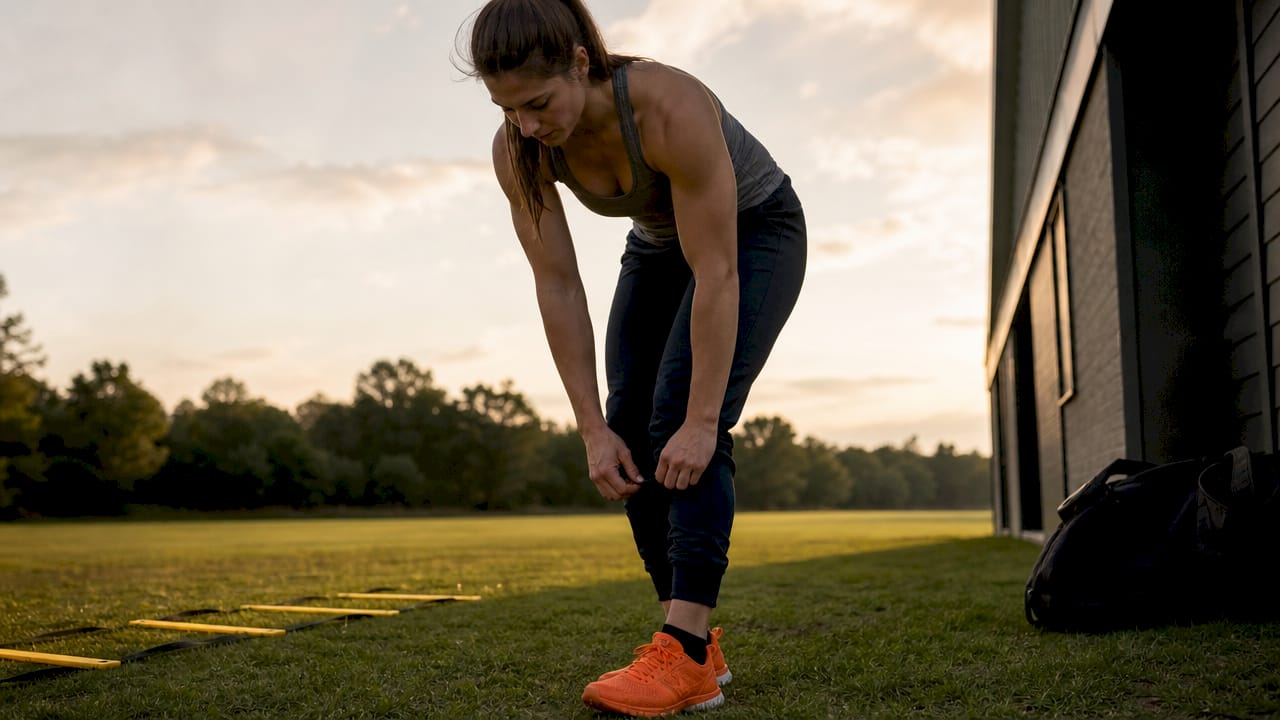
Joggers are the most versatile option. They work for dryland conditioning, gym sessions, and cold arena environments. Look for tapered cuts that don’t bunch around the ankles and fabric blends that stretch without losing shape. Durability in hockey training apparel comes from fabric blends and reinforced seams that handle explosive movement without tearing.
Shorts are the go-to for summer dryland training, sprint work, and slide board sessions. Lightweight polyester shorts dry fast and allow maximum leg movement. Compression shorts worn underneath add muscle support and reduce chafing during long sessions.
| Bottom Type | Best For | Key Feature |
|---|---|---|
| Joggers | Cold rinks, gym sessions | Stretch fabric, tapered fit |
| Training shorts | Summer dryland, sprint work | Lightweight, fast-drying |
| Compression shorts | Under any bottom | Muscle support, chafe prevention |
| Training pants | Outdoor winter conditioning | Wind resistance, insulation |
Fit is non-negotiable. One-size-fits-all apparel consistently fails hockey players because it lacks the specific cut needed for athletic movement. Always size for your hip and thigh width, not your waist alone.
4. Footwear built for hockey dryland training
Footwear is the most overlooked category in hockey training clothes, and it’s also the one that causes the most preventable injuries. Running shoes are not suited for hockey dryland training. They are designed for forward-plane movement and provide almost no lateral support.
Hockey dryland training requires constant lateral shuffles, crossover steps, and edge-loading movements that mimic skating mechanics. A running shoe actively works against those patterns by pushing your foot into a forward-biased position.
Cross-trainers with wide bases, lateral support, and flat soles are the correct choice. The flat sole keeps your foot closer to the ground, which mirrors the low stance of skating. The wide base prevents ankle roll during lateral drills.
What to look for in hockey dryland footwear:
- Low-profile sole: Reduces the heel-to-toe drop that encourages forward lean
- Lateral reinforcement: Prevents ankle roll during shuffle drills
- Wide toe box: Accommodates the natural foot splay of a hockey stance
- Durable upper: Survives slide board and agility ladder work
Pro Tip: Test any training shoe by doing a lateral shuffle in the store. If your ankle feels unstable or the shoe tips inward, it’s the wrong shoe for hockey work.
5. Accessories that improve training quality
Accessories are not optional extras in a serious hockey training wardrobe. They solve specific problems that clothing alone cannot fix.
Slide board socks and booties are the best example. Without them, friction on a slide board is uneven and unpredictable. Proper slide board socks create consistent glide and protect your foot mechanics during edge-loading drills. This is a piece of gear that directly affects the quality of your skating technique work.
Compression garments worn as accessories, like calf sleeves and arm sleeves, extend the recovery benefits of compression beyond a full-body base layer. They’re easy to add or remove depending on how your body feels that day.
Hats and headbands manage sweat during intense sessions. A custom hockey hat keeps sweat out of your eyes during dryland sprints and doubles as team gear for group training sessions. Rnkapparel offers customizable options so your team can train in coordinated gear without paying premium prices.
Other accessories worth including:
- Wrist wraps: Protect joints during heavy lifting phases
- Grip socks: Improve foot stability inside skates during on-ice sessions
- Cooling towels: Speed recovery between high-intensity intervals
6. Building a complete hockey training wardrobe
A functional hockey training wardrobe does not require dozens of pieces. A small rotation of high-quality training shirts, an outer layer for cold walk-ins, and headwear covers the majority of training situations. The key is choosing pieces that work together across different environments.
Start with three to four moisture-wicking base layer tops and two pairs of training bottoms. Add one or two hoodies or training jackets for cold environments. Round out the wardrobe with appropriate footwear and the accessories listed above.
Adjust your combinations based on training type:
- Cold arena on-ice sessions: Compression base layer, long-sleeve top, training joggers, and a hoodie for warm-up and cool-down
- Gym-based dryland conditioning: Moisture-wicking tee, training shorts or joggers, cross-trainers
- Summer outdoor conditioning: Lightweight shorts, breathable tee, cross-trainers, and a hat
- Slide board sessions: Slide board socks, compression shorts, moisture-wicking tee
Budget matters, but cheap or generic options do not survive the demands of hockey conditioning. Spending more on fewer, better pieces beats buying a large volume of low-quality gear that wears out mid-season. Look for apparel with performance fabrics and reinforced construction as your quality benchmark.
Youth players benefit from the same principles. Rnkapparel’s youth training apparel is built for the same performance demands at sizes and price points that work for growing athletes.
Key takeaways
The most effective hockey training wardrobe combines moisture-wicking base layers, reinforced outerwear, purpose-built bottoms, lateral-support footwear, and targeted accessories chosen for your specific training environment.
| Point | Details |
|---|---|
| Fabric blend matters | A 60/40 cotton-polyester blend balances softness and moisture management for variable training intensity. |
| Reinforced construction wins | Look for reinforced stitching at shoulders, underarms, and seams to survive a full season of training. |
| Footwear is critical | Cross-trainers with flat soles and lateral support protect skating mechanics during dryland work. |
| Fit over size | Avoid one-size-fits-all options. Proper fit for hockey movement requires sizing for athletic range of motion. |
| Build smart, not big | A small rotation of high-quality pieces outperforms a large wardrobe of cheap gear every time. |
What I’ve learned about hockey training apparel after years on the ice
Most players treat training apparel as an afterthought. They grab whatever athletic wear is on sale and wonder why it falls apart by january or restricts their movement during skating drills. I’ve made that mistake myself, and it cost me more money in the long run than buying quality gear upfront.
The thing that changed my thinking was watching how quickly cheap hoodies and generic shorts degraded under real hockey conditioning. Explosive lateral movements, repeated washing, and the constant temperature shifts between cold rinks and warm gyms destroy low-quality fabric fast. A hoodie that looks fine after two weeks of casual wear can be pulling at the seams after two weeks of serious training.
Fit is the other factor most players underestimate. Generic athletic wear is cut for a broad population, not for the wide stance and deep knee bend of a hockey player. When your shorts bunch up during a lateral shuffle or your hoodie pulls across your back during a shooting drill, you’re not just uncomfortable. You’re training with a restriction that affects your mechanics.
My honest advice: treat your training apparel as part of your development, not a separate expense. The right gear lets you focus on the work instead of adjusting your clothes every five minutes. That focus compounds over a full season.
— Eric
Gear up for your next training block with Rnkapparel
Rnkapparel builds custom hockey training gear for players and teams across the United States and Canada. Every piece in the workout collection is designed with the performance demands of hockey training in mind, from moisture-wicking tees and reinforced hoodies to joggers cut for athletic movement.
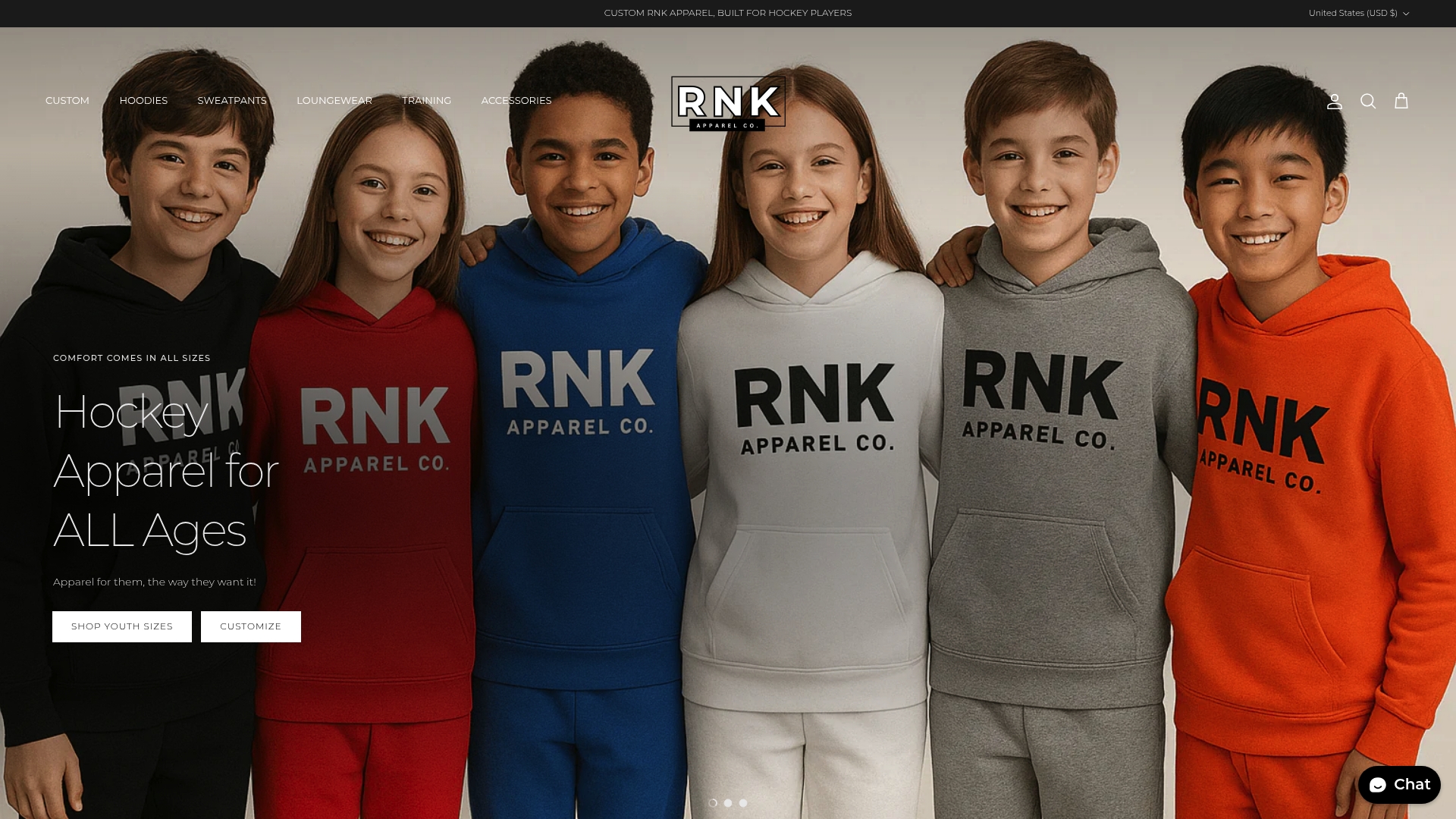
You can customize any piece with your team logo, player name, and number. That means your squad trains in coordinated gear without sacrificing quality or paying premium retail prices. Browse custom hockey shirts, hoodies, joggers, and team accessories to find the right fit for your training intensity and team identity.
FAQ
What fabric is best for hockey training apparel?
A 60/40 cotton-polyester blend delivers the best balance of comfort and moisture management for hockey training. Pure synthetic fabrics dry faster but can feel rough during long sessions.
Are running shoes acceptable for hockey dryland training?
Running shoes are not recommended for hockey dryland training. They lack lateral support and reinforce forward-plane movement patterns that contradict skating mechanics.
What should youth players wear for hockey practice?
Youth players need the same core categories as adults: a moisture-wicking base layer, a training bottom with stretch fabric, and appropriate footwear with lateral support. Sizing for athletic range of motion matters more than age-based sizing charts.
How many training pieces does a hockey player actually need?
A functional wardrobe requires three to four base layer tops, two pairs of training bottoms, one or two outer layers, and appropriate footwear. Quality over quantity is the correct approach.
What accessories are worth buying for hockey training?
Slide board socks, compression garments, and a well-fitted hat are the three accessories with the clearest performance benefit. Slide board socks directly improve the quality of skating mechanics drills.
