

Sublimation wins for photo-quality, all-over prints on polyester. Heat transfer (HTV or transfer paper) wins for cotton, dark garments, or a low-cost start. Both rely on a heat press, but they differ completely in chemistry: sublimation ink turns to gas and dyes the fabric itself, while HTV and transfer paper sit a printed layer on top. Rnkapparel builds team gear around exactly this split, matching jerseys and hoodies to whichever method actually suits the fabric.
TL;DR:
- Sublimation is limited to polyester fabrics and light-colored garments, as it infuses dye into the material and needs a polymer surface.
- Heat transfer methods work on cotton, dark-colored, and blended fabrics, with transferable layers sitting on the fabric surface.
- Sublimation produces a print that resists cracking and peeling and has a longer wash durability compared to standard heat transfer.
- Initial costs for sublimation setups are higher, but they are more cost-effective for large-volume, full-color, all-over designs.
- Choosing the right method depends on fabric type, garment color, design complexity, order volume, and durability needs.
Table of Contents
- Heat Press vs Sublimation: How Each Process Actually Works
- Which Fabrics Work With Each Method?
- Print Quality, Feel, and How Long Designs Last
- What It Costs to Get Started With Each Method
- A Quick Checklist for Choosing Your Method
- Mistakes That Ruin a Batch (and How to Fix Them)
- Rnkapparel’s Approach to Choosing a Printing Method
- Balancing Cost, Speed, and Quality on Real Orders
- Rnkapparel: Order Finished Custom Apparel Instead of Buying a Press
- Sources
Heat Press vs Sublimation: How Each Process Actually Works
A heat press shows up in both workflows, which is exactly why people confuse “heat press vs sublimation” as if they’re two competing machines. They’re not. The heat press is the tool. Sublimation and heat transfer are two different things you do with it.
Heat transfer starts with a design printed onto transfer paper, or cut from heat transfer vinyl (HTV) on a vinyl cutter. DTF, or direct-to-film, is a newer variant that prints onto a special film and applies a powder adhesive before pressing. The basic workflow is: print or cut the design, weed away excess material, position it on the garment, press it under heat and pressure for a set time, then peel the backing and let it cure. The result sits as a thin layer bonded to the surface of the fabric.
Sublimation works differently from the ground up. You print your design with sublimation ink onto special sublimation paper, using a printer loaded with dye-based ink formulated for this exact purpose. When you press that paper against a polyester garment, the heat converts the solid dye into a gas, which then bonds with the polyester fibers themselves before turning solid again as it cools. Dye-sublimation printing actually infuses the color into the material rather than laying it on top.
That distinction drives everything else in this comparison. Heat transfer needs vinyl, transfer paper, and sometimes a separate cutting machine. Sublimation needs a dedicated printer running sublimation ink, sublimation paper, and a heat press capable of holding consistent temperature across the full print area. Both consumable sets are non-negotiable. You can’t swap sublimation ink into a heat transfer workflow or vice versa. The chemistry, not the equipment brand, decides which garments each method can touch.
Which Fabrics Work With Each Method?
Fabric compatibility is where most beginners waste money on the wrong supplies. Sublimation only works on polyester or polymer-coated surfaces. Cotton fibers have no polymer structure for the gasified dye to bond with, so a cotton shirt run through a sublimation press comes out with a faded, washed-out print or nothing at all. Sublimation’s limitation to light-colored polyester also rules out most dark garments, since the dye is transparent and needs a light base to show true color.
Heat transfer methods don’t have that problem. HTV and transfer paper both sit on the surface, so they bond to cotton, poly-cotton blends, dark colors, and just about anything with a flat, pressable surface.
Here’s the quick breakdown for common substrates:
- 100% cotton tees: heat transfer or screen printing, never sublimation.
- Polyester jerseys and performance wear: sublimation for full-color or all-over designs.
- Poly-cotton blends: heat transfer works reliably; sublimation gives faded, muted color because it only bonds to the polyester portion of the weave.
- Dark-colored garments: heat transfer vinyl or opaque transfer paper, since sublimation needs a light or white base.
- Mugs, hard goods, and metal signs: sublimation, but only on items with a polyester or polymer coating made specifically for the process.
If you’re sourcing jerseys for a team, check the fabric content before you commit to a method. A custom practice jersey built in polyester mesh is a straightforward sublimation candidate; a cotton practice hoodie is not.
Print Quality, Feel, and How Long Designs Last
Run your hand over a sublimated shirt and you won’t feel the design at all. That’s the whole point of the process: the dye becomes part of the fiber instead of a layer stacked on top, so sublimated prints resist cracking and peeling in a way surface-level prints never quite match. There’s no edge to catch on a zipper, no texture change between the print and the blank fabric around it.
Heat transfer prints feel different by design. HTV has some thickness to it, and even light transfer paper leaves a faint texture you can feel with your fingertips. That’s not automatically a flaw. Premium vinyl and modern transfer papers have gotten thinner and softer, and higher-quality consumables narrow the hand-feel gap considerably compared to bargain-bin materials. But they don’t erase it. A cheap transfer will crack along stress points after a couple dozen washes, especially at fold lines like the underarm or collar.
Pro Tip: Wash-test your first batch before you commit to a full production run. Machine wash, tumble dry, and inspect the print edges after five cycles. Sublimation should show zero visible change; heat transfer should still be flat with no cracking at the corners.
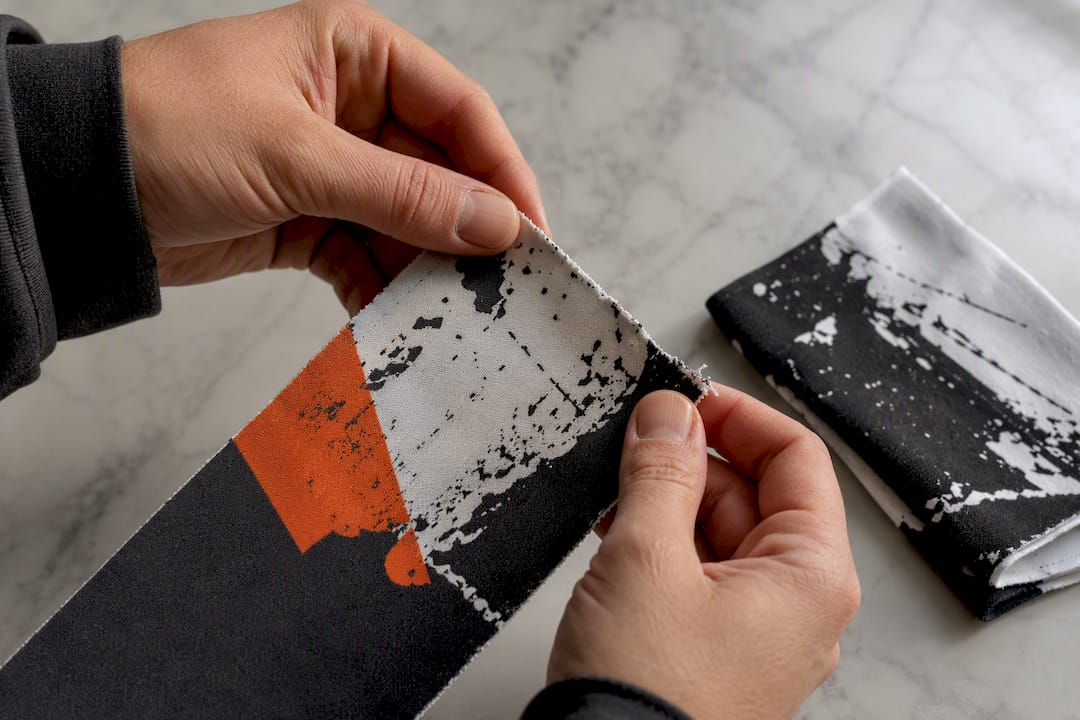
Independent test summaries and buyer guides consistently point to sublimation outlasting standard heat transfer on wash durability, largely because there’s no surface layer left to degrade. That gap narrows with premium HTV, but it never fully closes for high-wash-frequency items like team practice gear that gets laundered dozens of times a season.
What It Costs to Get Started With Each Method
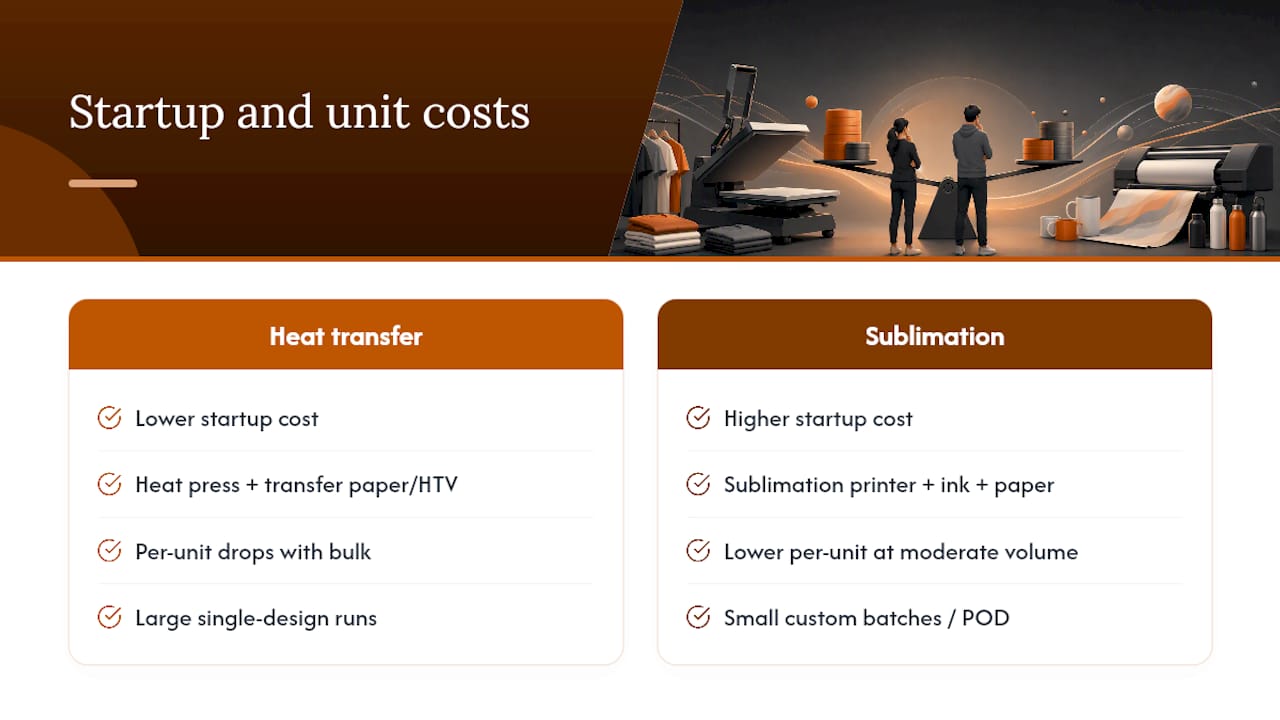
Heat transfer is the cheaper door to walk through. A basic heat press, a supply of transfer paper or HTV, and a vinyl cutter (if you’re going the vinyl route instead of printable paper) can get a hobbyist producing shirts at a modest entry cost. Sublimation asks for more upfront: a printer converted or built for sublimation ink, the ink itself, sublimation paper, and a heat press with even platen pressure across the whole surface. Startup costs for heat transfer setups tend to run notably lower than a full sublimation rig, though the exact numbers shift depending on whether you buy entry-level or commercial-grade gear.
Where sublimation earns its money back is per-unit cost at moderate volume. There’s no screen setup fee, no minimum order tied to vinyl sheet sizes, and ink usage scales directly with how much ink the design actually needs. That’s part of why sublimation dominates among print-on-demand sellers testing dozens of designs without committing to bulk inventory.
Heat transfer’s economics work differently. Material cost per shirt is fairly flat regardless of design complexity, but buying transfer paper or vinyl in bulk rolls drops your per-unit cost meaningfully once you’re producing in volume. Setup time matters too. Weeding vinyl takes longer per design than printing a sublimation sheet, so a shop running high-volume single-color logos might actually move faster with vinyl, while a shop doing complex, full-color, one-off designs moves faster with a sublimation printer that just prints and presses.
The workflow that becomes more cost-effective depends entirely on your order pattern, not just your fabric. Small custom batches with varied designs favor sublimation’s flexibility. Large single-design runs favor heat transfer’s bulk material pricing, or screen printing once volume climbs high enough to justify the setup fee.
A Quick Checklist for Choosing Your Method
Before you buy equipment or place an order, run through these questions:
- What’s the fabric? Polyester points to sublimation; cotton or blends point to heat transfer.
- What’s the garment color? Dark colors rule out sublimation unless you’re working with a specialty light-base blank.
- How complex is the design? Full-color, photo-realistic, or all-over designs favor sublimation; simple one- or two-color logos work fine with vinyl.
- What’s your order size? One-offs and small custom batches favor sublimation’s flat per-unit cost; large single-design runs favor bulk vinyl or transfer paper pricing.
- What’s your budget for equipment? A tighter startup budget points toward a basic heat press and transfer supplies over a full sublimation setup.
- How much wash durability do you need? Game-day jerseys and daily wear favor sublimation’s embedded finish; a one-time event shirt can get by on standard heat transfer.
A few scenarios make the choice obvious. A birthday gift mug or a single photo-print tee is a sublimation job, cheap and fast for a one-off. A youth team ordering forty practice jerseys in team colors on polyester mesh is also a sublimation job, especially if the design covers the whole garment. A local business printing logo tees on a mix of cotton colors is a heat transfer job, full stop, since cotton takes sublimation poorly. All-over patterned leggings or swim gear lean sublimation because the print needs to wrap seams and edges without gaps.
Pro Tip: You don’t have to pick one method for your whole catalog. Plenty of small brands run sublimation for their polyester athletic line and heat transfer or screen printing for their cotton hoodies and tees, matching the process to the fabric instead of forcing one technique to do everything.
Mistakes That Ruin a Batch (and How to Fix Them)
The single most common error is attempting sublimation on a cotton or cotton-blend garment, which produces a faded, blotchy result no amount of pressing time will fix. Second most common: uneven pressure across the platen, which causes ghosting or patchy color, since consistent pressure and temperature are critical for a clean sublimation transfer. Wrong temperature or time settings, skipping the trim step on transfer paper, and using an uncoated blank for a sublimation project round out the usual suspects.
Fix it before it becomes a returned order:
- Run a small test swatch on scrap fabric before pressing a full batch.
- Check your press temperature with a separate thermometer if prints come out inconsistent.
- Trim excess transfer paper close to the design edge to avoid a visible box outline.
- Confirm any hard-good blank (mug, plate, ornament) is polyester-coated before running sublimation on it.
Before shipping, run three checks: wash the sample, feel for cracking or peeling at the edges, and inspect for any lifted corners.
Rnkapparel’s Approach to Choosing a Printing Method
Rnkapparel builds team and fan gear across polyester performance jerseys and cotton-blend hoodies and tees, so the fabric decides the method before design even enters the conversation. A full-color jersey with sponsor logos and player numbers on polyester mesh gets sublimated for a print that survives a full season of practice and laundering. A cotton team hoodie gets heat-transferred or screen-printed logos, since that’s what the fabric actually supports. Anyone comparing heat press vs sublimation for their own team order runs into the same fabric-first logic on a bigger scale.
Balancing Cost, Speed, and Quality on Real Orders
The right call almost always comes down to matching fabric and order volume to the method, not picking a favorite technique and forcing every project through it. Makers running small polyester batches should lean sublimation; anyone working mostly in cotton or mixed colors should default to heat transfer, and outsource the rest when volume outgrows a home setup.
Protect whatever you print by following the care label. Wash cold, skip the dryer’s high heat setting, and turn garments inside out. That single habit adds real years to any print, sublimated or transferred.
— Eric
Rnkapparel: Order Finished Custom Apparel Instead of Buying a Press
Not every team or brand wants to own a heat press, a sublimation printer, and a stack of consumables just to get twenty jerseys made. Rnkapparel gives you a way to skip the equipment entirely and get to finished, wearable gear faster, without eating the learning curve on pressure settings, trimming, or wasted test swatches. You send the logo and roster; the printing method gets matched to the fabric automatically.
Rnkapparel’s catalog covers the exact fabric split this guide walks through:
- Custom hockey t-shirts for fan gear and team merch
- Hockey hoodies in cotton-blend fabric for everyday team wear
- Hockey long sleeve tees for cooler-weather practices
- Hockey accessories to round out a team’s full kit
If you’d rather compare more printing methods first, this printing method guide covers additional options beyond sublimation and heat transfer. When you’re ready to skip the DIY route, request a team quote or browse the collections above to see fabric and pricing for your roster size.
Sources
- Dye-sublimation printing — Wikipedia
- Sublimation vs Screen Printing: Full Comparison 2026 | Merch Titans
- Heat Transfer vs. Sublimation | A Guide — Ninja Transfers
- Sublimation vs Heat Press vs DTF: Full Comparison Chart — Custom Tees Now
