

GSM stands for grams per square meter (g/m²), and it measures the weight, and therefore the relative density, of a fabric. Higher numbers mean heavier, denser fabric with a different feel, drape, and structure than something lighter. For apparel, the practical upshot is simple: GSM tells you roughly how substantial a garment will feel in your hands, how it will hang on a body, and how well it will hold up to printing, embroidery, and repeated washing.
TL;DR:
- Fabric weight alone does not determine warmth, durability, or quality; fiber content, knit structure, and finishing significantly influence performance.
- Manufacturers often quote GSM as a range with a typical tolerance of ±5 to 10 percent, and a single fixed number can lead to misinterpretation or inconsistent batches.
- For clothing, 140–160 GSM feels airy and lightweight, while 300–320 GSM fabrics are substantial enough for hoodies and outerwear, with behavior varying by fiber and finish.
- To select the appropriate GSM, consider the garment’s use, silhouette, decoration method, budget, and desired durability, and always request swatches before bulk ordering.
- When specifying fabric mass per area, include a range, construction details, finishing processes, and request physical samples to prevent discrepancies between design intent and production.
Table of Contents
- What Is GSM in Clothing, and How Do Mills Measure It?
- Directional GSM Ranges for T-Shirts, Polos, Hoodies, and Outerwear
- What GSM Tells You, and What It Doesn’t
- How to Choose the Right GSM for Your Apparel Project
- Specifying GSM in Tech Packs: Ranges, Not Single Numbers
- Why Designers and Brands Actually Talk About GSM
- Order Custom Team Apparel With a Specific GSM in Mind
- Sources
- FAQ
What Is GSM in Clothing, and How Do Mills Measure It?
Understanding GSM in textiles starts with a basic idea: weight per area. A mill or lab cuts a fabric sample, usually a fixed size like a 10 centimeter circle punched with a specialized tool called a GSM cutter, weighs it on a precision scale, then scales that figure up to grams per square meter. That number becomes the fabric’s GSM rating, and it shows up on spec sheets everywhere from cotton jersey to technical fleece.
You’ll see it written as “GSM” or “g/m²” interchangeably. Both mean the same thing, and most tech packs use them side by side without distinction.
A few details matter more than people expect:
- Roll-stock GSM and finished-garment GSM often differ slightly, because washing, dyeing, and softening treatments can shrink or relax the fabric after it leaves the loom or knitting machine.
- Wet processing changes weight. A fabric weighed before it’s dyed and washed almost always reads differently than the same fabric after finishing, since fibers swell, shrink, or lose surface treatments during those steps.
- Suppliers quote ranges, not single numbers, because natural fiber content, humidity, and batch-to-batch variation make an exact figure unrealistic to guarantee. GSM must be specified as a range in tech packs precisely because of this variability, and reputable manufacturers build tolerance into their quotes rather than promising a single fixed weight.
If a supplier hands you one flat number with no tolerance attached, that’s worth a follow-up question. Real production fabric breathes a little.
Directional GSM Ranges for T-Shirts, Polos, Hoodies, and Outerwear
Once you know how GSM is measured, the more useful question is what a given number actually feels like on a body. The apparel industry generally works within five directional bands, and knowing them lets you judge a spec sheet number in seconds instead of guessing.
| GSM Range | Category | Typical Garments | Feel |
|---|---|---|---|
| 140–160 GSM | Light | Summer vests, base layers, sheer tops | Airy, breathable, minimal structure |
| 150–200 GSM | Mid-light | Everyday t-shirts, performance tees | Balanced drape with light body |
| 200–240 GSM | Midweight | Premium tees, polos, fitted activewear | More structure, cleaner print surface |
| 300–320 GSM | Heavyweight | Streetwear tees, structured joggers, lighter hoodies | Substantial hand, holds its shape |
| 400 GSM and up | Ultra-heavy | Hoodies, heavy sweatshirts, outerwear | Warm, sculptural, resists creasing |
These directional bands hold up across most cotton and cotton-blend apparel, though they shift depending on fiber and knit.
A few real-world reference points make this concrete:
- A budget promotional t-shirt often lands around 140–160 GSM, thin enough to feel disposable but cheap enough for giveaways.
- A standard retail tee, the kind you’d buy at a mainstream clothing chain, usually sits closer to 180 GSM.
- A premium streetwear tee with a boxy fit and heavier drape often runs 220–240 GSM, dense enough to hold a crisp screen print without show-through.
- Most retail hoodies cluster around 300 to 320 GSM, a band that balances warmth, structure, and wearability without tipping into stiff or cumbersome territory.
- Heavy winter fleece or outerwear liners can push past 400 GSM, where warmth and shape retention matter more than breathability.
Here’s the part that trips people up: the same GSM number can behave completely differently depending on fiber and finish. A 300 GSM cotton fleece hoodie feels dense and warm. A 300 GSM brushed polyester hoodie can feel noticeably lighter and softer to the touch, even though the scale says they weigh the same per square meter. Weight alone doesn’t capture texture, stretch, or how a fabric moves. That’s the limit of the number, and it’s worth sitting with before you spec anything off GSM alone.
What GSM Tells You, and What It Doesn’t
GSM measures mass per unit area. That’s it. It is not a direct measure of quality, warmth, or durability, even though people frequently treat it that way when shopping or specifying garments.
Two fabrics can carry the same GSM and perform in completely different ways. Fiber content, knit or weave structure, and finishing determine warmth, durability, drape, and printability just as much as raw weight does, sometimes more.
Consider a direct comparison: a heavy cotton fleece at 320 GSM traps air in its brushed interior loops and feels genuinely warm. A polyester interlock at the same 320 GSM is knitted tighter and denser, with almost no air pocket structure, so it can feel cooler against skin despite weighing exactly the same per square meter. Same number, different garment experience entirely.
That’s why evaluating a fabric properly means looking past the GSM figure to three other variables:
- Fiber content — cotton, polyester, modal, and blends all carry heat, moisture, and stretch differently at identical weights.
- Construction — single jersey, French terry, piqué, and interlock knits each create different surface textures and stretch behavior.
- Finishing — brushing, garment washing, and softening treatments change hand-feel and appearance without changing the underlying GSM number at all.
Pro Tip: When a spec sheet only lists GSM, ask for the knit construction and fiber blend too. A 240 GSM piqué polo and a 240 GSM ring-spun cotton tee will wear, wash, and print in noticeably different ways, even though they’d sit in the exact same weight category on paper.
How to Choose the Right GSM for Your Apparel Project
Picking a GSM number in isolation is a guessing game. Picking it against a checklist of real variables turns it into a decision you can defend to a teammate, a client, or a bulk buyer asking why you chose what you chose.
Before requesting swatches, run through these questions:
- What season and use case is this for? Practice gear for summer skates wants breathability in the 150–200 GSM range. Off-ice team hoodies for cold rinks want 300 GSM or higher.
- What silhouette are you going for? A boxy, structured streetwear cut needs enough weight (250 GSM or more) to hold its shape. A relaxed, drapey tee can go lighter.
- How will the garment be decorated? Heavy screen printing or puff embroidery needs a denser base fabric, usually 200 GSM and up, so the design sits flat instead of distorting the material underneath.
- What’s the target price point? Heavier fabric generally costs more per yard, so GSM decisions and budget constraints need to happen in the same conversation, not sequentially.
- What durability do you actually need? A one-season youth team jersey has different demands than a hoodie meant to survive three winters of practice bags and washing machines. Our durability checklist for team apparel walks through how weight interacts with wash performance over time.
Once you’ve answered those, the ordering workflow is straightforward: request swatches with a specific GSM range attached, confirm the knit construction and finish in writing, run a sample wash and fit test before committing to bulk, then lock the final tech pack with both the GSM range and its tolerance spelled out.
Pro Tip: Never approve a bulk order off a digital spec sheet alone. A physical swatch in your hands will tell you more about drape and hand-feel in ten seconds than a GSM number will tell you in ten minutes of reading.
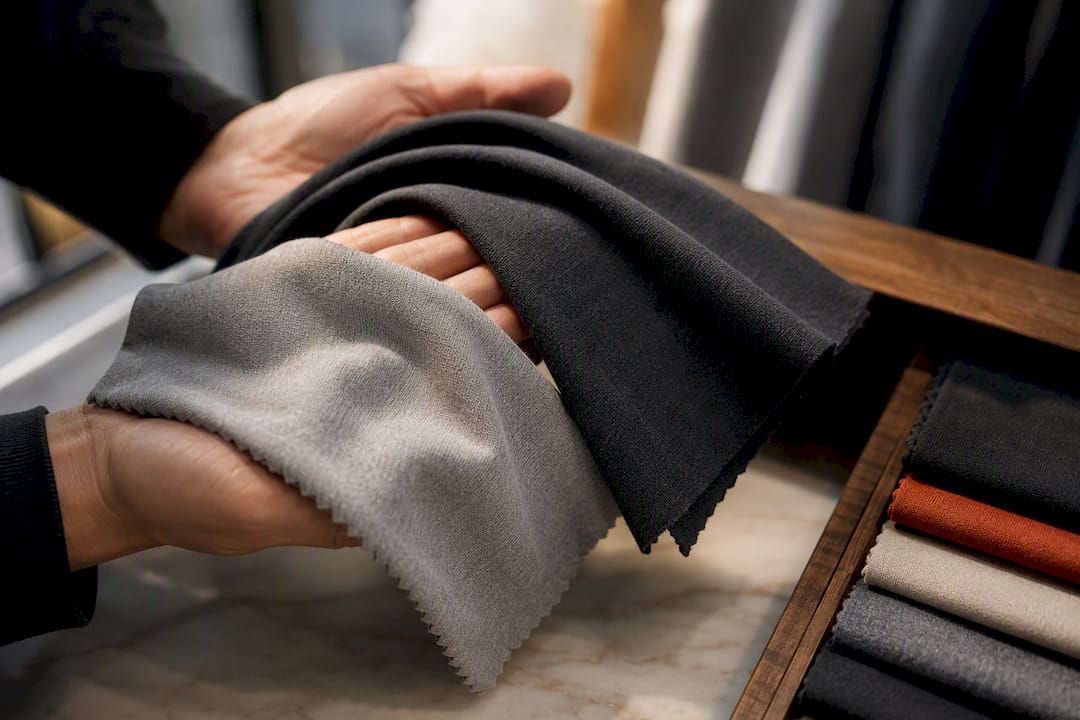
If you’re specifying fabric for jerseys specifically rather than hoodies or tees, our guide to jersey fabric weight bands breaks down the GSM ranges that matter most for that category. Training apparel brands like the ones covered in Tombo Sportswear’s teamwear guide tend to favor the lighter end of the spectrum for exactly this reason: movement matters more than structure during active training.
Specifying GSM in Tech Packs: Ranges, Not Single Numbers
Every tech pack should state fabric weight as a range, never a single figure. Write it as “220–240 GSM,” not “230 GSM.” A single number invites a supplier to hit the bottom of what they can produce cheaply, and it gives you no room to push back when a batch comes in lighter than expected.
Beyond the range itself, a complete GSM specification needs three more lines:
- The exact fabric construction (interlock, French terry, single jersey, and so on).
- The finishing process applied (brushed, garment-washed, enzyme-washed, mechanically compacted).
- A request for physical swatches before bulk production, ideally from the actual mill run you’ll be using, not a generic reference sample.
Industry tolerance commonly runs around ±5 to 10 percent on either side of the quoted range, a margin driven largely by wet processing and finishing steps that happen after the raw fabric leaves the knitting machine. That’s a normal, expected variance, not a red flag on its own.
What a clear range does is remove ambiguity from the supplier relationship. Vague specs invite substitutions, whether intentional cost cutting or genuine miscommunication about what “medium weight” means to two different factories. A specific range with tolerance attached leaves far less room for that kind of drift between sampling and bulk production.
Why Designers and Brands Actually Talk About GSM
GSM works as shorthand for design intent. When a brand says a hoodie is 350 GSM, they’re really saying “this should feel substantial and hold its shape,” not just reciting a lab measurement. Higher GSM often reads as more premium when fiber and construction stay constant, which is exactly why streetwear and premium teamwear brands lean into heavier fabric on purpose.

Some apparel brands use GSM bands to guide conversations with team managers who often don’t know the term but absolutely know what they want: a hoodie that survives a full season of practice bags, or a tee light enough for August tryouts. Translating that into a weight range makes ordering faster and reduces disagreements later.
One takeaway worth carrying forward: never let GSM travel alone. Pair the number with construction and finish every time, and you’ll spec fabric that actually performs the way the number implied.
— Eric
Order Custom Team Apparel With a Specific GSM in Mind
Once you know the weight range you want, the next step is finding a supplier who will actually put it in writing. Some custom hockey apparel suppliers accept GSM specifications and swatch requests as part of the ordering process.

When outfitting a team or ordering training gear, customers may be able to request a target GSM range and receive swatches before committing to a bulk run. Browse the custom hockey hoodie collection to see the heavier weight options built for team wear, or check the hockey t-shirt lineup if you’re speccing something lighter for practice or travel. Reach out with your GSM target and construction preferences, and start the sample process before you commit to a full team order.
Sources
- Fabric GSM Guide for Apparel Bulk Orders and Brand Positioning
- GSM Fabric Guide: What Fabric Weight Means for Your Clothing Brand | Blanklines
- What Is GSM in Hoodies and Why Does It Matter? - Fexwear
FAQ
Is 300 GSM Heavy for a Shirt?
Yes, 300 GSM is on the heavy end for a t-shirt. It falls into the heavyweight band typically reserved for structured streetwear tees or lighter hoodies rather than everyday casual shirts.
Is a 400 GSM Shirt Good?
A 400 GSM shirt is unusually dense for a standard tee and sits closer to outerwear or heavy sweatshirt territory. It can be excellent for cold-weather wear, but it will feel stiff and warm for everyday summer use.
Is 200 GSM Fabric Thick?
200 GSM sits at the boundary between mid-light and midweight fabric. It has noticeably more body than a basic 150 GSM tee, but it’s still far from what most people would call thick.
What Does 400 GSM Mean in Fabric?
A 400 GSM fabric weighs 400 grams per square meter, placing it in the ultra-heavy category typically used for winter hoodies, heavy sweatshirts, and structured outerwear rather than lightweight apparel.
