

Fleece is the better call when you need standalone warmth and a plush, insulated feel. French terry wins when you need breathability and a lighter sweatshirt that layers well. Weight and fiber blend can shift that answer, so check the GSM and content before you order for a team.
TL;DR:
- Heavier fleece, especially over 380 GSM, is the best choice for sideline and winter team hoodies due to its superior heat retention.
- Midweight French terry around 300 to 360 GSM is ideal for three-season wear, offering breathability and moisture management.
- Fabric weight and finishing process, not just fabric name, determine warmth and performance, requiring careful specification checks.
- Printing and decoration are more effective on French terry because of its flatter surface, while fleece’s nap can shadow fine detail.
- Always request a physical swatch and specify fiber blends and GSM to avoid surprises and ensure fabric suits intended activity and season.
Table of Contents
- Fleece vs French Terry: The Quick Comparison
- What Actually Separates French Terry From Fleece?
- Matching the Fabric to the Activity
- Printing, Embroidery, and Keeping Both Fabrics Looking New
- What To Ask Before You Order
- RNK Apparel’s Take on Choosing Between These Fabrics
- Order Custom Team Apparel Built for the Right Fabric
- Sources
- FAQ
Fleece vs French Terry: The Quick Comparison
Both fabrics start as knits, but they’re finished for opposite jobs. Fleece is built to trap heat; French terry is built to let it escape.
Fleece tends to run:
- Warm, sometimes very warm, thanks to a brushed, napped interior that traps air
- Best suited to fall and winter, plus any sideline or bench-warming situation
- Thick and cozy against the skin, with visible texture on the inside face
- Fine for bold logos and large graphics, but tricky for tiny detail work
French terry tends to run:
- Breathable and moisture-friendly, with a looped interior that lets air move
- Suited to spring, summer, and mixed-weather training days
- Lighter and smoother, closer to a heavy t-shirt than a blanket
- Great for crisp prints and fine embroidery because the face stays flat
Subtypes muddy the water a bit. Polar fleece is the heaviest, warmest option; sweatshirt fleece is lighter and more casual. Heavyweight French terry, on the other hand, can feel almost as substantial as a light fleece, just without the brushed nap.
What Actually Separates French Terry From Fleece?
The name on a spec sheet matters less than what happens to the yarn after it’s knitted. Both fabrics can start from the same base loop structure. What turns one into French terry and the other into fleece is finishing.
French terry keeps its interior loops intact and untouched. Those loops create small air pockets and channels that let moisture and heat pass through the fabric, which is why it’s recommended for three-season wear rather than deep winter. Fleece takes those same loops and runs them through a brushing process that shears them into a soft, fuzzy nap. That napped surface traps more air against the skin, which is exactly why fleece feels warmer for the same thickness of fabric.
A few things worth understanding before you order swatches:
- Two-thread vs. three-thread construction. Two-thread fabric is lighter and often becomes French terry; three-thread fabric carries an extra yarn that gives brushers more material to work with, which is common in heavier fleece.
- Brushing intensity changes everything. A short, dense nap resists pilling and holds embroidery cleanly; a long, lofty nap feels luxurious but pills faster and can obscure fine decoration detail.
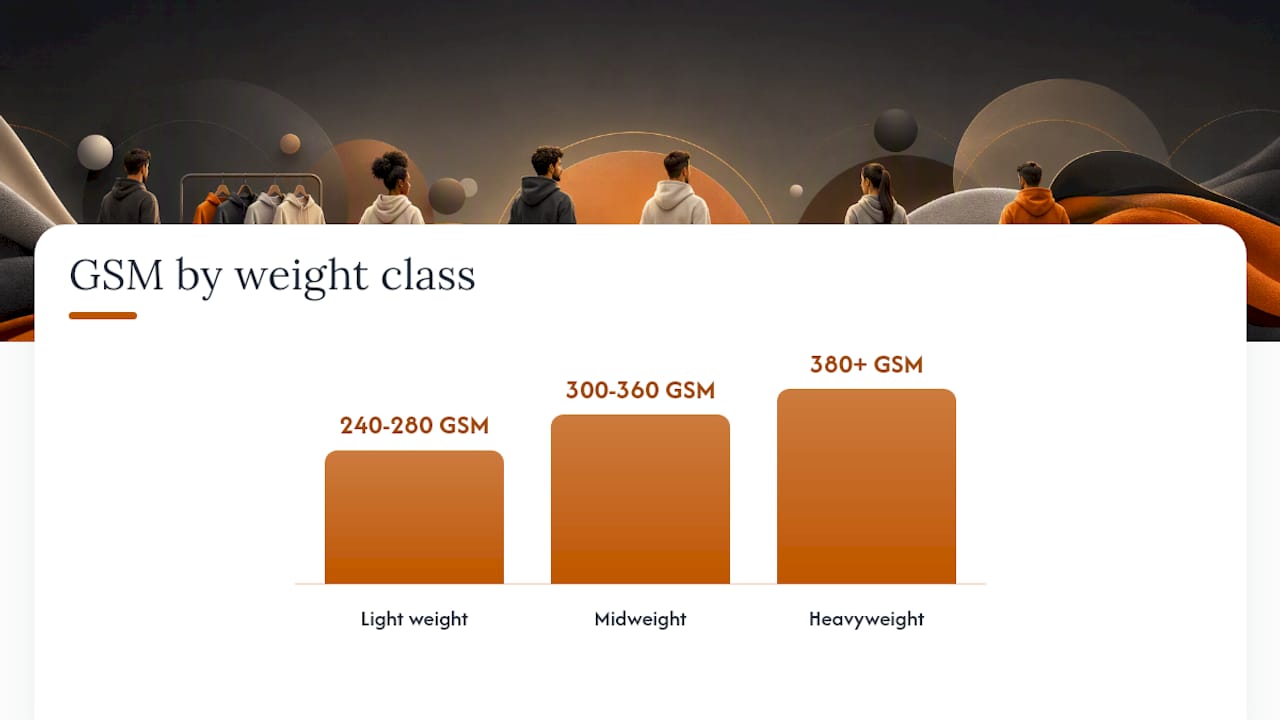
- GSM tells you more than the fabric name. Light fabrics run roughly 240 to 280 GSM and feel almost like a heavy tee. Midweight fabrics sit around 300 to 360 GSM, the sweet spot for year-round hoodies. Heavyweight brushed fleece climbs to 380 GSM and beyond, built for cold-weather outerwear.
That third point is the one buyers skip most often. A “fleece” hoodie at 260 GSM and a “French terry” pullover at 340 GSM might actually feel more similar than either does to a different item bearing the same fabric name.
Matching the Fabric to the Activity
Once you know the construction, the real question is simpler: what will the garment actually do?
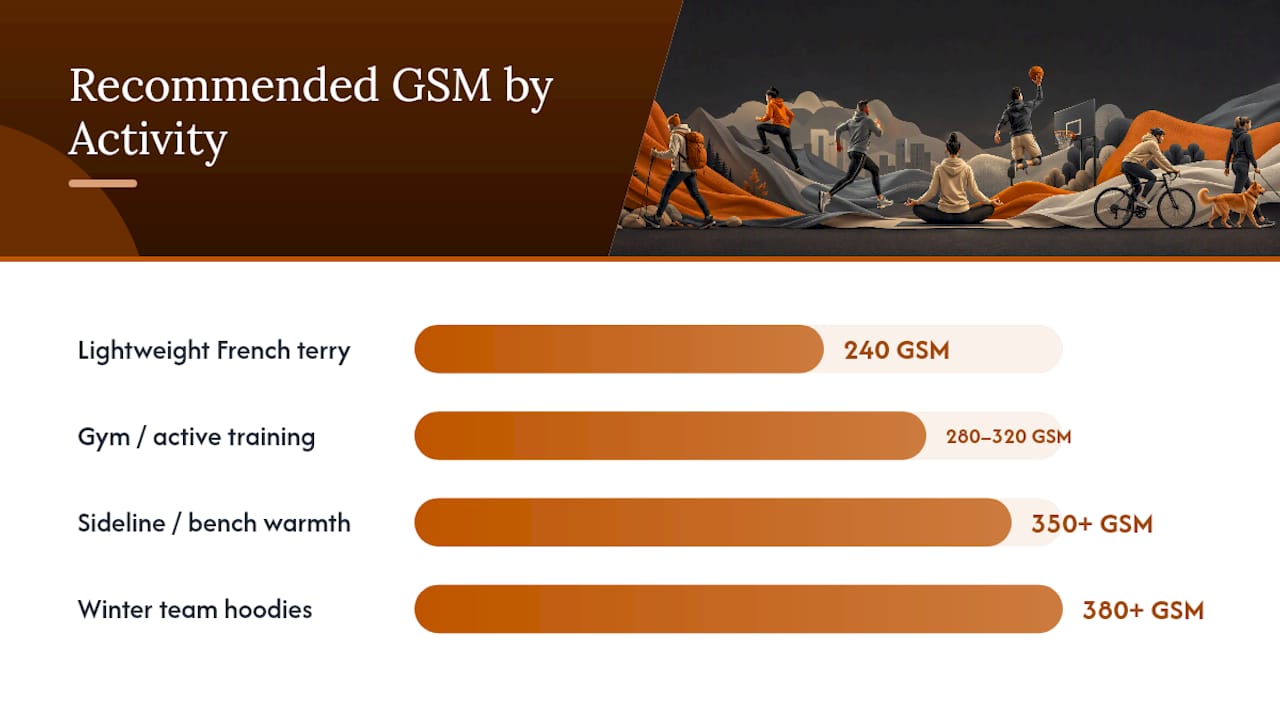
- Gym and active training: French terry in the 280 to 320 GSM range breathes well during movement and doesn’t trap sweat the way a dense napped fleece can.
- Mid-season layering: Midweight French terry or a light sweatshirt fleece both work as an outer layer over a base layer or under a shell jacket.
- Sideline and bench warmth: Heavier brushed fleece, 350 GSM and up, holds heat when players are standing still in cold air.
- Winter team drops: Polar fleece or heavyweight sweatshirt fleece at 380 GSM or higher gives the plush, substantial feel fans expect from a winter hoodie.
Fleece runs from roughly 380 GSM up past 500 GSM for the warmest winter-weight options, while lightweight French terry can start as low as 240 GSM, according to industry weight guides. That’s a wide enough gap that “fleece” and “French terry” alone don’t tell you much. Weight does.
Fiber blend adds another layer. An 80/20 or 60/40 cotton-poly blend softens French terry and cuts shrinkage, which matters for teams that wash gear constantly during a season. Recycled polyester, often labeled rPET, is the route to take for sustainability claims, but only carries real weight when backed by GRS certification. If moisture management is the priority for a training top, how moisture-wicking fibers actually work explains why polyester-heavy blends pull sweat away from skin faster than cotton does.
Printing, Embroidery, and Keeping Both Fabrics Looking New
Decoration method should influence your fabric pick just as much as warmth does. French terry’s smoother, flatter face gives screen printing and direct-to-garment prints a cleaner surface to grip, so fine detail and multi-color art hold up better than on a heavily brushed fabric. Fleece can absolutely carry a great print or a bold embroidered crest, but the nap can shadow small text or thin lines, and dense stitching needs proper backing to avoid puckering.
Pilling is the other practical concern. Lower-quality fleece with a long, loose nap pills faster with washing and friction; a tighter brush count resists it.
Care habits matter more than most people assume:
- Wash cold and turn garments inside out to protect printed graphics and reduce surface abrasion.
- Skip the high-heat dryer cycle. Heat flattens the nap over time and speeds up pilling on brushed fleece.
- Air dry when you can, and reshape heavyweight pieces while they’re still damp.
Pro Tip: Reshape a heavyweight fleece hoodie by hand right after washing, while it’s still damp. Fleece loses loft fastest when it dries wrinkled or balled up in a dryer.
What To Ask Before You Order
Fabric names on a supplier’s website don’t guarantee anything. Specs do. Use this checklist before committing to a bulk run.
- Confirm the intended season and use. Sideline wear, indoor training, and outdoor winter events all point toward different weights.
- Request the exact GSM, not just a category label like “midweight.”
- Ask for fiber content, including blend ratios, and GRS documentation if recycled content is claimed.
- Ask about finish, including anti-pill or anti-static treatments if the garment will see heavy washing.
- Confirm the decoration method the fabric was chosen for, and request a sample wash test to check for shrinkage or color shift.
If fit predictability matters for a team order, ask whether the fabric is pre-shrunk or sanforized before cutting. A batch that shrinks unevenly across sizes is a bigger headache than a slightly wrong weight.
Pro Tip: Always request a physical swatch before locking in a large team order. A photo can’t tell you how a fabric drapes, breathes, or feels against skin, and a bad surprise on 40 hoodies is expensive.
RNK Apparel’s Take on Choosing Between These Fabrics
Team orders live or die on the fabric decision, not the design. A crest looks the same on a screen mockup no matter what’s underneath it, but the players wearing it notice the difference between a sideline hoodie that actually holds heat and one that doesn’t.
We build cold-weather sideline hoodies around heavier brushed fleece because that’s what holds up through a season of bench time in cold rinks. Training pieces meant for warmups and travel days lean toward midweight terry, since players need to move without overheating under equipment. Neither fabric is universally right. The mistake teams make is picking one fabric for an entire season’s merch lineup instead of matching weight to how each piece actually gets worn.
— Eric
Order Custom Team Apparel Built for the Right Fabric
We offer teams custom hoodies in both fleece and midweight French terry, with details on GSM rather than guessing from a stock photo. Every order can start with a swatch or sample run before you commit to a full team size run, so coaches and managers know exactly what’s landing on players before it ships.
Browse the custom hockey hoodie collection to compare fleece and terry options side by side, add team logos and player numbers, and pick colors that match your program. Teams building out a full kit can also check the performance training gear line for lighter, moisture-friendly pieces suited to practice days. Request a swatch, confirm the weight fits your season, and place your order when you’re ready.
Sources
- French Terry vs Fleece — Complete fabric comparison for hoodies and sweatshirts
- Fleece vs French Terry: A Sourcing Guide for Custom Sportswear Buyers - Fexwear
- French Terry vs. Fleece: Warmth, Breathability, Printing
- What is fleece fabric?
FAQ
Which Is Warmer, Fleece or French Terry?
Fleece is warmer at comparable weights because brushing creates a napped surface that traps air against the skin, while French terry’s open loops let heat escape.
Is French Terry Too Hot for Summer?
Lightweight French terry, generally under 280 GSM, breathes well enough for warm weather and mild summer evenings, though heavyweight terry can still feel warm in direct heat.
What Is Fleece French Terry?
This usually describes a French terry base fabric that’s been lightly brushed on one side, giving it some of fleece’s softness while keeping some of terry’s breathability. It sits between the two categories rather than fitting neatly into either.
Is French Terry a Good Fabric for Team Hoodies?
Yes, especially for training gear and three-season wear, since it holds up well to movement and prints cleanly. For deep winter sideline apparel, a heavier brushed fleece is typically the better call.
Recommended
- The Ultimate Guide to the Fleece Hockey Sweatshirt: Warmth, Performance
- Match Jersey Fabric Weight with 5 GSM Bands for Sewists & Team Manager
- Bulk Order Youth Hockey Sweatshirts for Your Team
- Customizable Hockey Clothing Options for Teams - Enhance Team Identity | Quality Apparel, Affordable Prices
