

For most youth hockey uniforms, a lightweight moisture-wicking polyester blend is the best all-around choice for game and practice jerseys, with mesh panels added for ventilation and heavier polyester fleece or cotton blends reserved for fanwear. Fabric weight (measured in GSM, grams per square meter) and knit construction are the two specs that separate a jersey that holds up through a full season from one that pills and fades by January.
- Game jerseys: 100% sublimated polyester or polyester blend with mesh ventilation panels at underarms and back yoke
- Practice gear: Heavier-weight polyester knit with pinhole construction for durability under daily use
- Off-ice training: Performance polyester or polyester/spandex blend for stretch and mobility
- Fanwear: Cotton or cotton/poly blend hoodies and tees for comfort and everyday wear
Sublimation is the recommended print method for full-graphic jerseys because it bonds dye directly into polyester fibers, giving you color that survives hundreds of wash cycles without cracking.
Table of Contents
- What factors should you consider when selecting fabric for youth hockey uniforms?
- Which fabric types work best for youth hockey apparel?
- Why does your layering system matter more than the jersey alone?
- What fabric should you choose for each use case?
- What should you specify when ordering custom youth hockey uniforms?
- How do you care for youth hockey uniforms to maximize lifespan?
- How does Rnkapparel put these fabric specs into practice?
- Key Takeaways
- What coaches often get wrong about fabric selection
- Custom youth hockey uniforms from Rnkapparel
What factors should you consider when selecting fabric for youth hockey uniforms?
Youth hockey gear takes more punishment than most parents expect. Kids sweat hard, fall often, and their jerseys go through the wash two or three times a week. That combination of stress makes fabric selection a real decision, not a formality.
Moisture management is the first filter. Wicking moves sweat from skin to fabric surface; evaporation removes it from there. A fabric that wicks but traps heat at the surface is only half the solution. Breathability works alongside wicking: open-knit constructions and mesh panels let warm air escape so the jersey doesn’t become a sauna under shoulder pads.
Durability and abrasion resistance matter more for youth than adult gear. Kids hit boards, slide on ice, and pile equipment on top of jerseys after practice. Reinforced stitching and abrasion-resistant fabrics at stress points — underarms, hem, collar — extend lifespan significantly. Stretch and mobility are equally critical: a jersey cut too tight across the shoulders restricts a skating stride, while one with no recovery stretch bags out fast.
Printing compatibility shapes your fabric choice as much as performance does. Sublimation requires a high-polyester surface. Screen print and heat transfer work on a wider range of fabrics but carry different durability profiles. Safety and allergens are worth a quick check: some synthetic finishes trigger skin sensitivity in younger players, so look for OEKO-TEX certified fabrics when parents flag concerns. On the sustainability side, recycled polyester options are increasingly available and perform comparably to virgin poly for most youth applications.
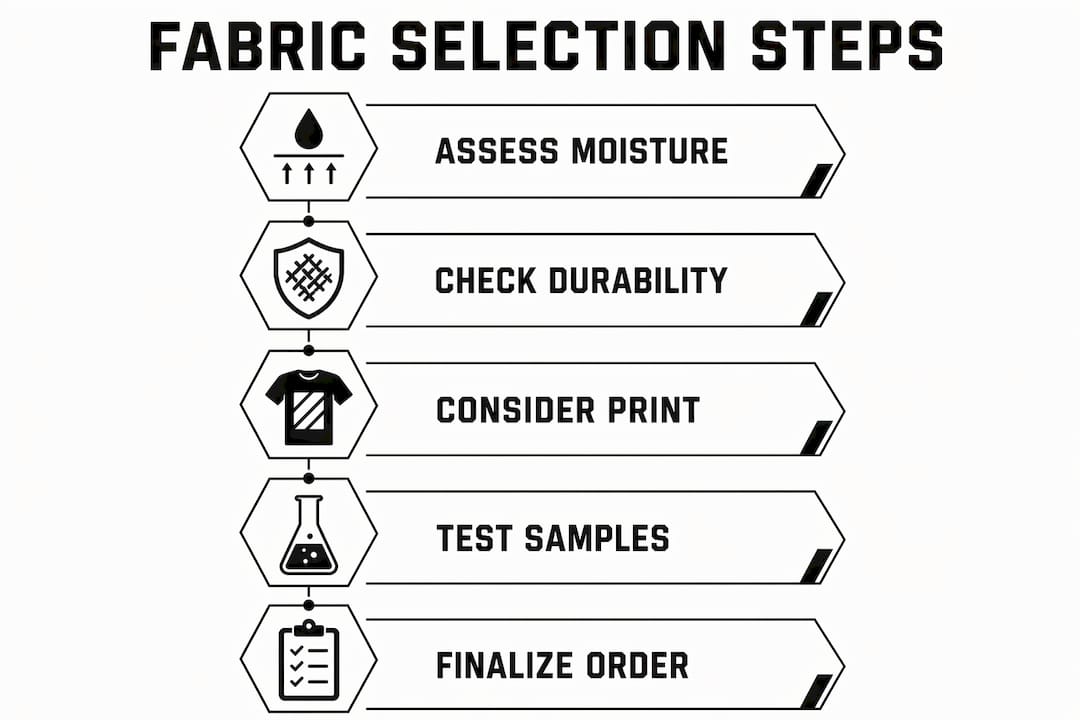
Pro Tip: Test your base layer and jersey together before committing to a full order. A jersey that wicks beautifully on its own can underperform if the base layer beneath it saturates and blocks moisture transfer.
Which fabric types work best for youth hockey apparel?
Polyester is the dominant choice for on-ice jerseys, and for good reason. It wicks, it’s light, it holds sublimated color better than any other fiber, and it survives repeated washing without losing shape. The tradeoff is that 100% polyester can feel stiff or scratchy at lower GSM weights, which is why most quality youth jerseys use a micro-polyester or polyester/spandex blend.
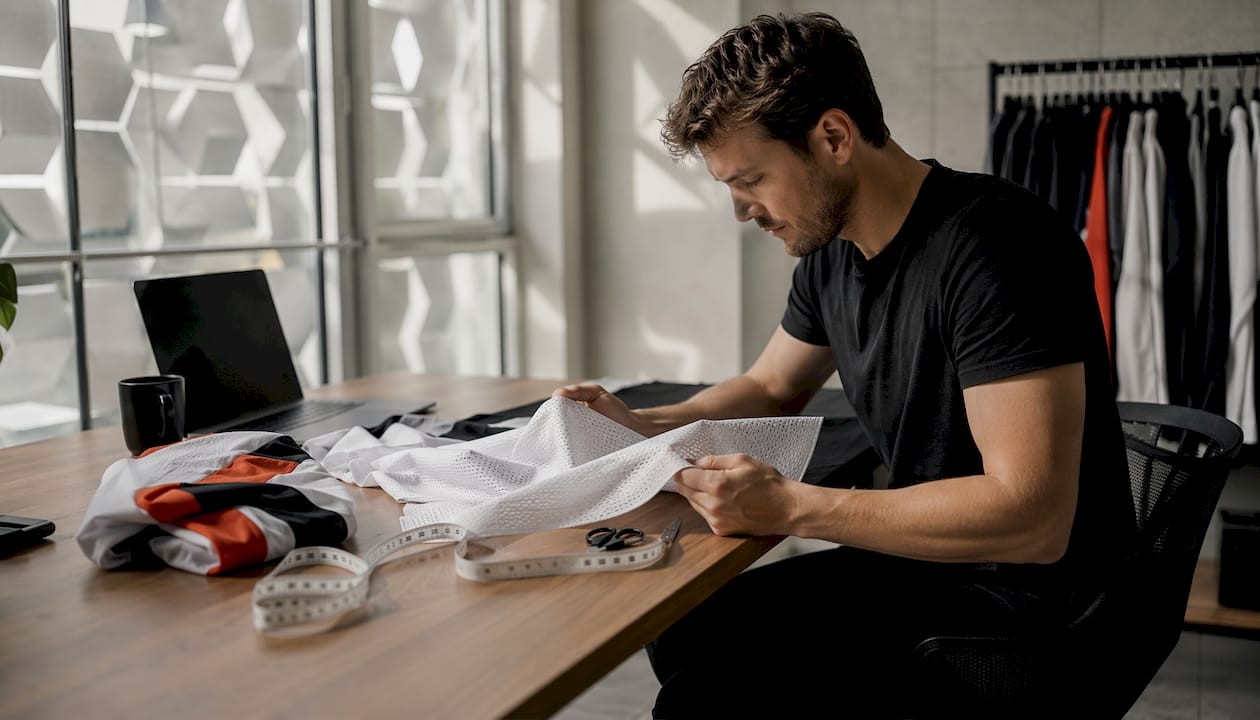
Performance mesh is the ventilation workhorse. BF-19 and BF-20 hockey mesh fabrics deliver high breathability and solid wicking, making them the standard choice for underarm and back panels. One caveat: not all mesh performs equally. Some constructions trade elasticity for abrasion resistance, so check the spec sheet before assuming “mesh” means the same thing across suppliers.
AK-knit heavy-weight polyester with pinholes is the industry-standard construction for youth select jerseys. The pinhole pattern adds breathability without sacrificing the durability that youth play demands. It’s the fabric behind the Athletic Knit Youth Select line and similar products across the market.
Advanced knit technologies like Evap Knit and Aircut take a different approach. Evap Knit absorbs perspiration at the vapor stage through fiber chemistry, while Aircut reduces fabric mass and improves airflow. These are worth specifying for elite-level youth programs where thermal management is a priority.
Fleece and cotton blends belong off the ice. Polyester fleece hoodies and cotton/poly tees are the right call for fanwear, warm-up layers, and post-game wear. Cotton absorbs moisture rather than wicking it, so it’s a poor choice for anything worn during play.
Pro Tip: For youth bodies, choose a moderate weight game jersey fabric to balance durability and comfort, avoiding fabrics that are too light and prone to fraying or too heavy and overly warm.
Why does your layering system matter more than the jersey alone?
Moisture management depends on the entire layering system, not just the outer jersey. That’s the single most important thing coaches and parents get wrong when specifying uniforms.
When a base layer hits saturation, the jersey above it has nowhere to send moisture. The result is a hot, wet microclimate under the pads that no amount of mesh paneling can fix. The solution is system-level: specify base layer, jersey, and ventilation panel placement together.
- Base layer: Lightweight polyester or vapor-absorbing synthetic fiber; avoid cotton entirely
- Jersey: Open-knit or pinhole polyester with mesh panels at high-sweat zones (underarms, upper back)
- Outer layer (practice/warm-up): Breathable polyester fleece or performance knit that doesn’t trap heat against the jersey
For youth players, the base layer is often skipped or treated as optional. It shouldn’t be. A $20 synthetic base layer can make a $60 jersey perform dramatically better.
What fabric should you choose for each use case?
| Use Case | Recommended Fabric | GSM Range | Print Method | Expected Lifespan |
|---|---|---|---|---|
| Game jersey | Sublimated polyester or micro-poly blend | medium-weight | Sublimation | a few seasons |
| Practice jersey | AK-knit heavy polyester with pinholes | heavier weight | Screen print or sublimation | multiple seasons |
| Off-ice training | Polyester/spandex blend | moderate weight | Screen print or heat transfer | several seasons |
| Fanwear (hoodies, tees) | Cotton/poly blend or polyester fleece | heavier weight | Screen print or heat transfer | several years |
| Warm-up layer | Performance polyester knit | — | Heat transfer | 2–4 seasons |
Youth sizing needs extra attention. Jerseys must fit over shoulder pads and chest protectors, so size up one step from a standard athletic fit. Mobility through the shoulders and arms matters more than a trim silhouette. For off-ice training apparel, a closer athletic fit is appropriate. Recycled polyester is a viable sustainability option for any category in this table; it performs comparably to virgin poly and is increasingly available at similar price points.
What should you specify when ordering custom youth hockey uniforms?
Getting the order right the first time saves weeks of back-and-forth. Here’s what to put in writing before you send a brief to any supplier.
- Fabric type and GSM — specify the fiber content (e.g., 100% polyester) and weight (e.g., 160 GSM)
- Knit construction — single jersey, pinhole, or mesh; note panel placement for ventilation zones
- Trim and stitching — request reinforced stitching at underarms, collar, and hem for youth durability
- Print method — sublimation for full-graphic jerseys; screen print or heat transfer for simpler logos on mixed-fiber fabrics
- Size grading — provide actual measurements, not just S/M/L; youth sizing varies widely by brand
- Quantity and pricing breaks — most suppliers offer breaks at 12, 24, and 48 units
- Lead time — custom sublimated jerseys typically run 3–6 weeks; rush orders add cost
- Sample policy — always request pre-production samples and run at least two wash-dry cycles before approving the full run
For cost ranges, custom youth jerseys in sublimated polyester typically vary based on quantity, complexity, and supplier. Fanwear hoodies and tees typically land lower per unit at volume. Always get a written quote with fabric specs included.
How do you care for youth hockey uniforms to maximize lifespan?
The right fabric choice only pays off if the laundering is right too.
- Wash cold, inside out, on a gentle cycle
- Use a mild detergent; skip fabric softener on performance polyester (it clogs wicking fibers)
- Air dry or tumble dry on low; high heat degrades sublimated prints and warps polyester fibers
- Treat abrasion points (underarms, collar edges) early with a fabric repair product before holes form
- For mesh panels, use a mesh laundry bag to prevent snags
Youth jerseys washed two to three times per week will show wear faster than adult gear used less frequently. Sublimated prints hold up better than screen-printed or heat-transfer graphics under this kind of laundering load, which is one more reason sublimation earns its premium for game jerseys. Expect 2–4 seasons from a well-cared-for game jersey and 3–5 from a heavier practice jersey.
How does Rnkapparel put these fabric specs into practice?
Rnkapparel’s youth training hockey apparel collection is built around the same specs this guide recommends: performance polyester fabrics, moisture-management construction, and full customization for team logos, names, and numbers. The coach’s ordering guide walks through size grading, print method selection, and sample requests in plain language.
- Performance training gear: Polyester and polyester-blend fabrics with moisture-management properties
- Fanwear: Cotton and cotton/poly options including youth hockey tees and hoodies for off-ice wear
- Customization: Upload team logos, add player names and numbers, select colors across the full product range
- Ordering support: The coach’s guide covers lead times, quantity breaks, and sample policy
The youth sports apparel buying checklist is a practical starting point for parents and coaches who want to confirm specs before placing an order.
Key Takeaways
Lightweight moisture-wicking polyester blends with mesh ventilation panels are the right foundation for most youth hockey game and practice jerseys, with fabric weight (GSM) and knit construction as the two specs that determine real-world performance.
| Point | Details |
|---|---|
| Polyester is the baseline | Lightweight polyester or micro-poly blend suits game and practice jerseys for wicking, durability, and print compatibility. |
| Mesh panels add ventilation | Performance mesh at underarms and upper back improves airflow; check specs since mesh fabrics trade off elasticity and abrasion resistance differently. |
| Layering system matters | A saturated base layer can raise microclimate humidity to near 90%, blocking outer-jersey wicking; specify base layer and jersey together. |
| Sublimation for full graphics | Sublimation bonds dye into polyester fibers and outlasts screen print or heat transfer under frequent washing. |
| Rnkapparel for custom orders | Rnkapparel’s youth training collection and coach’s guide cover fabric selection, customization, and sample requests for team orders. |
What coaches often get wrong about fabric selection
Most coaches spend their fabric budget on the jersey and treat the base layer as an afterthought. That’s backwards. The base layer is the first line of moisture management, and a saturated one turns even a well-specified jersey into a wet blanket. The fix isn’t expensive: a basic synthetic base layer in the right fiber does the job.
The other underrated move is ordering a pre-production sample and actually washing it. Color shift, print adhesion failure, and fabric pilling almost always show up in the first three wash cycles, not after a full season. Catching those problems on a single sample saves a team from receiving 20 jerseys that don’t match the approved design.
Fabric specs on paper look similar across suppliers. GSM, polyester content, and knit type are the numbers that reveal the real differences, and any reputable supplier should provide them without hesitation.
Custom youth hockey uniforms from Rnkapparel
Coaches and parents who’ve read this far know exactly what to ask for. Rnkapparel makes it straightforward to order custom youth hockey uniforms built to those specs, with performance polyester fabrics, full sublimation printing, and team customization across the full kit.
The hockey graphic t-shirts collection covers fanwear and fundraising apparel, while the hockey long sleeve tees and hockey workout apparel round out a complete off-ice training kit. Upload your team logo, choose your colors, and request a pre-production sample before committing to a full run. Start your order at rnkapparel.com or use the coach’s guide to build your brief.
