

Hockey apparel material types primarily rely on polyester and polyester-spandex blends engineered for durability, moisture management, and flexible fit. The shift away from wool and cotton happened because synthetic fibers resist shrinking and fading far better than natural fibers, making them the standard for team inventories at every level. Whether you play in a recreational league or coach a competitive travel team, the fabric in your jersey, hoodie, or training shirt directly affects how you perform and how long your gear lasts. This guide breaks down every major fabric category, weight class, and knit construction so you can make informed choices.
1. What are the key hockey apparel material types?
Polyester is the foundation of modern hockey apparel. It resists shrinking, holds color through repeated washing, and dries faster than any natural fiber. That combination makes it the default choice for jerseys, practice shirts, and training gear across youth and adult leagues alike.
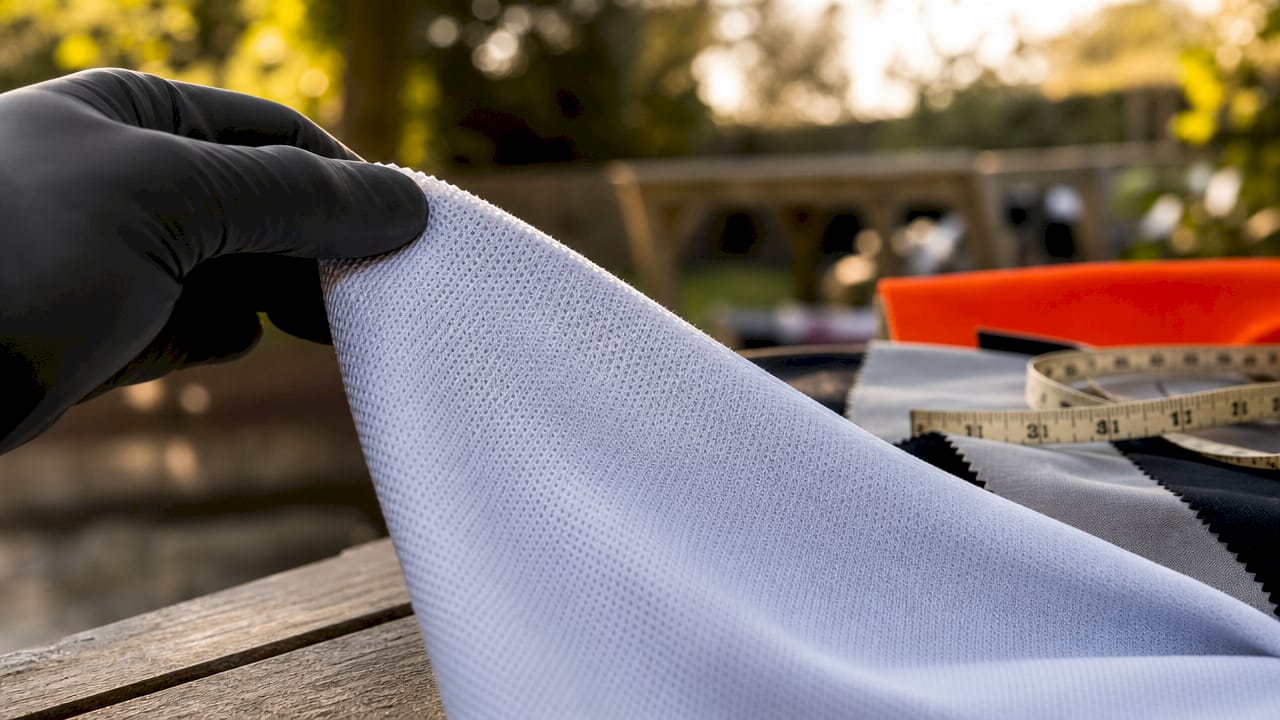
Professional hockey jerseys primarily use polyester-spandex blends with 5–10% spandex added for stretch and shape retention. The spandex component lets the fabric move with your body during skating strides and stick handling without losing its original shape after a full season of wear.
The four main fabric categories used in hockey apparel are:
- Polyester mesh: Open-weave construction that maximizes airflow and pulls sweat away from the skin. Best for game jerseys and warm-weather practice gear.
- Polyester knit: Tighter weave that holds printed graphics cleanly and resists abrasion. Common in training shirts and off-ice apparel.
- Polyester-spandex blends: Combine the durability of polyester with the stretch of spandex. Standard in performance jerseys and compression-style training wear.
- Recycled polyester: Made from post-consumer PET plastic. Recycled polyester delivers similar performance to virgin polyester with a lower environmental footprint. Adoption is growing across team apparel programs.
Pro Tip: When ordering custom jerseys, request a fabric swatch before committing to a full order. Feeling the weight and weave in your hands tells you more than any product description.
2. How does fabric weight impact hockey apparel performance?
Fabric weight, measured in grams per square meter (GSM), is the single most useful number when comparing hockey gear fabrics. It tells you how dense the material is, which directly predicts airflow, durability, and protection level.
Hockey jersey fabrics fall into three GSM categories: Lightweight (150–180 GSM), Mid-Weight (190–230 GSM), and Heavy-Duty (240–280 GSM). Each category serves a different playing context.
| GSM Range | Category | Best Use |
|---|---|---|
| 150–180 GSM | Lightweight | Summer practice, youth leagues, high-heat environments |
| 190–230 GSM | Mid-weight | Recreational leagues, training shirts, everyday team wear |
| 240–280 GSM | Heavy-duty | Elite competitive play, contact-heavy positions, cold rinks |
Lightweight fabrics in the 150–180 GSM range maximize airflow. They feel almost paper-thin but move sweat off the skin quickly, which matters most during high-intensity drills or summer skating camps.
Mid-weight fabrics in the 190–230 GSM range balance durability and comfort. They hold up through a full season of weekly games without the stiffness that heavier fabrics can introduce. Most recreational and club-level jerseys land in this range.
Heavy-duty fabrics at 240–280 GSM add abrasion resistance for elite play. Heavyweight polyester mesh at 160–200 GSM is specifically prioritized for moisture-wicking and abrasion resistance at professional levels. That density means the fabric survives repeated contact with boards, ice, and equipment without pilling or tearing.
Pro Tip: “Heavyweight” is a marketing term that manufacturers use loosely. Always ask for the actual GSM number. A jersey labeled heavyweight at 200 GSM performs very differently from one at 260 GSM.
3. What fabric constructions and knit types are used in hockey apparel?
The knit structure of a fabric determines how air moves through it, how it handles sweat, and how well it holds up under friction. Two jerseys made from the same polyester fiber can perform completely differently based on how that fiber is woven.
Moisture management depends on both fiber choice and knit structure. Open mesh promotes air circulation, while tighter knits use capillary action to pull sweat away from the skin and spread it across a larger surface area for faster evaporation.
The main knit constructions you will encounter in hockey apparel are:
- Open-weave mesh: Large gaps between fibers create maximum ventilation. Used in underarm panels, back yokes, and full game jerseys for hot conditions.
- Tight-knit polyester: Dense construction that holds sublimated or screen-printed graphics without distortion. Preferred for jerseys where visual clarity of numbers and logos matters.
- Air-knit: A mid-range construction that combines some openness with structural integrity. Common in training shirts and lightweight hoodies.
- Interlock knit: Two layers of fabric knitted together for added thickness and softness. Used in off-ice apparel like hoodies and sweatshirts where warmth matters more than ventilation.
- Hybrid panel construction: Embedding mesh panels in high-heat zones alongside tighter knit panels is a professional standard for optimal moisture management. You get targeted ventilation where the body generates the most heat without sacrificing durability in high-contact areas.
The hybrid approach is the most technically advanced option available. It requires more manufacturing steps, which is why you see it primarily in higher-end jerseys and position-specific designs.
4. How do material choices vary by player role and playing conditions?
Not every player needs the same fabric. Position, playing level, and environment all change what the best fabrics for hockey gear actually are in practice.
Goalies face the most demanding material requirements. A goalie jersey must survive constant contact with pucks, sticks, and ice while keeping the player cool through long periods of intense activity. Goalie jerseys use hybrid materials that combine durable body panels with breathable mesh in ventilation zones like the underarms and back. The reinforced body handles abrasion, and the mesh panels prevent overheating.
Skaters at the recreational level prioritize comfort and fit over maximum durability. A mid-weight polyester knit or polyester-spandex blend in the 190–220 GSM range covers most needs. The spandex component keeps the jersey from riding up during skating strides.
Here is how material priorities shift across common usage scenarios:
- Summer skating camps: Lightweight mesh at 150–170 GSM. Airflow is the top priority. Durability requirements are lower because contact is minimal.
- Recreational league games: Mid-weight polyester knit at 190–220 GSM. Balances print quality for team branding with enough durability for a full season.
- Competitive travel hockey: Polyester-spandex blends at 200–230 GSM. The stretch component supports athletic movement, and the weight handles board contact.
- Elite and professional play: Heavy-duty polyester mesh at 240–280 GSM. Maximum abrasion resistance with strategic mesh panels for ventilation.
- Cold-weather outdoor games: Interlock or heavier knit constructions. Warmth becomes a factor, and the hockey apparel evolution toward layered synthetic systems handles temperature regulation better than any single-layer natural fiber could.
- Youth training programs: Lightweight to mid-weight polyester with added spandex for growth-friendly stretch. Youth performance wear needs to move freely and survive the kind of abuse young players put gear through.
- Off-ice training and casual wear: Cotton-polyester blends or French terry constructions in hoodies and sweatshirts. Performance fabric properties matter less here, and comfort takes priority.
Key Takeaways
The best hockey apparel fabrics combine polyester construction, the right GSM weight for the playing context, and a knit structure matched to the player’s position and environment.
| Point | Details |
|---|---|
| Polyester dominates hockey fabrics | Polyester and polyester-spandex blends are the standard for durability, moisture-wicking, and color retention. |
| GSM determines performance tier | Match fabric weight to playing level: 150–180 GSM for airflow, 240–280 GSM for elite abrasion resistance. |
| Knit structure drives moisture management | Open mesh maximizes ventilation; tight knits wick sweat via capillary action; hybrid panels do both. |
| Goalie jerseys need hybrid construction | Reinforced body panels plus mesh ventilation zones balance protection and breathability for goalies. |
| Verify GSM before ordering | “Heavyweight” is a marketing label. Request the actual GSM number to confirm durability before committing. |
What I’ve learned about picking hockey fabrics that actually hold up
The most common mistake I see players and coaches make is choosing fabric based on how a jersey looks in a photo. A jersey can look sharp and still fall apart after 20 games if the GSM is too low for the playing level.
Fabric swatch verification before production is the single most underused quality control step in custom apparel. Manufacturers use “heavyweight” loosely, and without a confirmed GSM number, you are guessing. I have seen teams receive jerseys that pilled after one season because nobody checked the actual fabric weight before the order went through.
The other thing worth knowing is that breathability and durability are not opposites. A well-designed hybrid construction gives you both. The mistake is treating them as a trade-off and choosing one at the expense of the other. A 220 GSM polyester-spandex jersey with mesh underarm panels outperforms both a pure mesh jersey and a pure tight-knit jersey for most competitive players.
Climate matters more than most players realize. If your rink runs cold, a lightweight mesh jersey will leave you stiff and uncomfortable by the third period. If you play outdoor summer hockey, a heavy-duty 260 GSM jersey will cook you. Match the fabric weight to your actual playing environment, not just your playing level.
— Eric
Custom hockey apparel built on performance fabrics
Rnkapparel builds its hockey apparel on the same polyester and polyester-spandex blends that perform at competitive levels. Every piece is designed for players and teams who want gear that holds up through a full season and still looks sharp on game day.
From custom hockey t-shirts in moisture-wicking polyester to team hoodies built for cold-rink warmth, Rnkapparel covers every fabric need across the roster. You can upload your team logo, add player names and numbers, and choose from a range of garment styles. Youth and adult sizing are both available, so the whole team gets gear that fits and performs.
FAQ
What material are most hockey jerseys made from?
Most hockey jerseys use 100% polyester or a polyester-spandex blend with 5–10% spandex. Polyester resists shrinking and fading, while spandex adds stretch for athletic movement.
What does GSM mean for hockey apparel?
GSM stands for grams per square meter and measures fabric density. Higher GSM means a heavier, more durable fabric; lower GSM means lighter weight and better airflow.
What are the benefits of moisture-wicking fabrics in hockey?
Moisture-wicking fabrics pull sweat away from the skin and spread it across the fabric surface so it evaporates faster. This keeps players cooler and reduces chafing during intense play.
Why do goalie jerseys use different materials than skater jerseys?
Goalie jerseys use hybrid constructions that combine reinforced body panels for abrasion resistance with mesh panels in high-heat zones for ventilation. Skater jerseys prioritize lighter weight and stretch for skating mobility.
Is recycled polyester a good option for hockey apparel?
Recycled polyester performs comparably to virgin polyester in terms of moisture management and durability. It is made from post-consumer PET materials and is a practical choice for teams that want to reduce their environmental impact without sacrificing performance.
