

An off-ice hockey wardrobe is defined as the collection of apparel worn outside the rink for training, travel, and casual wear that supports both performance and personal style. Players and fans who build off-ice hockey wardrobe collections with intention outperform those who grab whatever is cheapest at the store. The difference comes down to three factors: fabric quality, layering strategy, and fit. Get those right, and your gear works for you whether you are at a dry-land session, watching a game from the stands, or running errands between practices.
What materials and fabric blends are best for off-ice hockey clothing?
Fabric choice is the single most important decision you make when building a training wardrobe. The wrong material turns a good practice session into a soggy, uncomfortable grind.
The 60/40 cotton-polyester blend is the industry standard for hockey training shirts. Cotton contributes softness and breathability, while polyester handles sweat management. Together they prevent the two most common problems in training apparel: waterlogging and the slippery, cheap feel of full synthetics.
Pure cotton absorbs moisture and stays wet. That means a soaked shirt clinging to your back halfway through a workout. Pure synthetics can feel slippery and lack the comfort needed for extended wear. Neither extreme serves a hockey player well.
- 60/40 cotton-polyester blend: Best for training shirts and casual tees. Balances moisture management with all-day comfort.
- Merino wool: Best for base layers. Regulates temperature, resists odor, and stays comfortable against skin during long sessions.
- Fleece: Best for mid-layers and hoodies. Traps warmth without adding bulk, and it dries quickly after arena transitions.
- Polyester shell: Best for outer layers and parkas. Blocks wind and light moisture while remaining packable.
Pro Tip: Check the care label before buying. Fabrics that require dry cleaning or delicate cycles will not survive a hockey player’s laundry schedule. Look for machine-washable, tumble-dry-safe construction.
Reinforced stitching at the shoulders and underarms matters as much as the fabric itself. Training apparel takes repeated stress from shooting drills, stretching, and layering transitions. Seams that fail after a few washes waste your money and your time.
How to layer your off-ice wardrobe for hockey games and training sessions?
Layering is not optional for hockey. Arena seats stay between 55°F and 62°F regardless of outside weather, which means you need a system that works year-round, not just in winter.
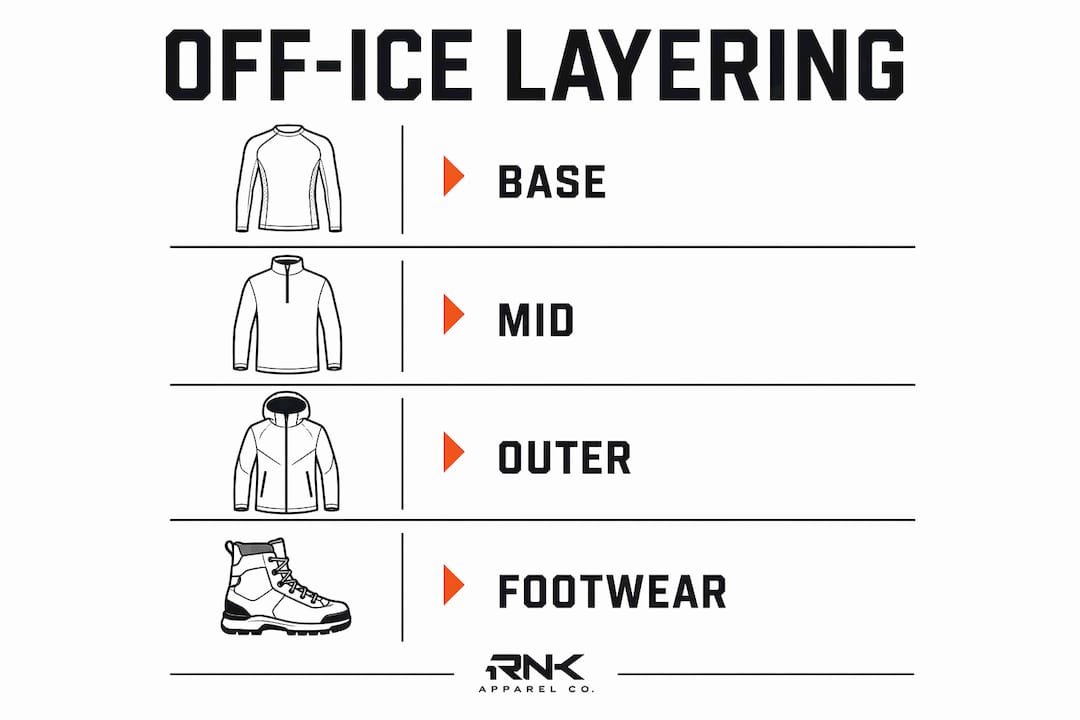
The three-layer system is the standard approach used by players and fans alike.
- Base layer: Choose merino wool or a moisture-wicking synthetic that pulls sweat away from skin. Avoid cotton here. A wet base layer chills you fast in a cold arena.
- Mid-layer: A fleece pullover or team hoodie traps body heat without restricting movement. This is the layer you add or remove most often as you move between the parking lot, the concourse, and your seat.
- Outer layer: A coat, team parka, or insulated jacket handles the transition from outside temperatures to the arena. For players, this layer also covers equipment bags and gear during walk-ins.
| Layer | Best fabric | Primary function |
|---|---|---|
| Base | Merino wool or synthetic | Moisture management |
| Mid | Fleece or cotton-poly hoodie | Heat retention |
| Outer | Polyester shell or insulated parka | Wind and cold protection |
Footwear completes the system. Wool or thermal socks paired with insulated boots in winter and closed sneakers in summer keep your feet comfortable through long games and practices. Open-toed shoes or sandals are a poor choice in any arena, regardless of the season outside.
Pro Tip: Pack your mid-layer in your bag rather than wearing it into the arena. You can add it once you are seated and remove it during warmups without disrupting anyone around you.
A single thick garment never works as well as three lighter layers. One heavy coat traps heat on the walk in, then leaves you cold once you stop moving inside. The three-layer system lets you adjust to every environment you move through in a single game day.
What essential off-ice hockey wardrobe pieces should players and fans invest in?
A functional off-ice wardrobe does not require dozens of items. Three to four training shirts plus outer layers and headwear give you a full rotation that handles training, games, and casual wear without gaps.
Here are the pieces worth prioritizing:
- Training shirts: Look for oversized cuts that allow unrestricted movement during shooting drills and stretching. Fits that are too tight restrict effort; too loose and fabric bunches under equipment.
- Hoodies and team sweatshirts: The most versatile piece in any hockey wardrobe. A quality hockey hoodie works as a mid-layer at the arena, a casual top at school or work, and a team identifier at away games.
- Joggers: Tapered joggers in a cotton-poly blend move well in the gym and look clean enough for everyday wear. They replace sweatpants for players who want to go from practice to errands without changing.
- Graphic tees: A well-designed hockey graphic tee carries your team identity into casual settings without requiring a jersey. These work for travel days, film sessions, and fan events.
- Performance accessories: Beanies, neck gaiters, and lightweight gloves handle the cold between the parking lot and the arena entrance. They pack flat and add almost no weight to a bag.
- Hats: A team cap is the easiest way to show hockey identity in any setting. Custom options let you match team colors exactly.
Fans benefit from the same list. The difference is that fans lean more toward team-branded pieces and less toward performance-specific cuts. A fan wearing a team hoodie, joggers, and a beanie is dressed for comfort and identity without looking like they just left practice.
How to build a durable and versatile off-ice hockey wardrobe that lasts seasons?
Durability is a direct result of the choices you make at purchase, not how carefully you treat cheap gear afterward. Avoiding ultra-cheap training gear is the single most important rule for building a wardrobe that lasts more than one season.
The common mistake is buying quantity over quality. Five cheap shirts that fall apart in three months cost more than two quality shirts that last two years. High-quality shirts with reinforced stitching and moisture-wicking fabrics maintain their performance under repeated use. That is the math that matters.
- Invest in scalable pieces: Choose items that work across multiple seasons and settings. A quality parka or team hoodie does not go out of style between september and march.
- Wash cold, dry low: Heat breaks down elastic fibers and degrades moisture-wicking treatments. Cold water washing and low-heat drying extend the life of every performance garment.
- Rotate your shirts: Three to four training shirts in rotation wear more evenly than two shirts used every day. Even wear means even fading and longer fabric life.
- Check fit before buying: Retail apparel with consistent sizing provides better long-term value than one-size options. Proper fit prevents excess stress on seams and keeps garments looking sharp longer.
- Avoid one-size-fits-all: These cuts almost never fit well. Poor fit leads to discomfort, restricted movement, and faster wear at stress points.
Pro Tip: Turn graphic tees and printed hoodies inside out before washing. This protects the print from friction damage and keeps colors sharp through dozens of wash cycles.
The off-season is the right time to audit your wardrobe. Pull out everything, check for worn seams or faded prints, and replace what has degraded. Replacing one or two pieces per off-season keeps your wardrobe current without a large single expense.
What styling tips help hockey players and fans showcase their passion off the ice?
Style off the ice is about representing your identity without sacrificing comfort or function. The best hockey off-season outfit ideas work because they combine performance fabrics with clean, recognizable team aesthetics.
- Lead with team colors: Build your casual rotation around your team’s primary and secondary colors. A navy and gold hoodie with gray joggers reads as intentional, not accidental.
- Mix training wear with casual pieces: A performance base layer under a team hoodie with dark jeans works for travel days and fan events. You stay comfortable and look put together.
- Dress for the setting: At the arena, prioritize warmth and layering. At a watch party or fan event, a graphic tee and joggers carry your identity without the bulk. At a post-game dinner, swap joggers for clean chinos and keep the team hoodie.
- Use accessories to finish the look: A custom team hat or beanie ties a casual outfit together and signals team loyalty immediately. Neck gaiters and gloves add function on cold game days without looking out of place.
- Personalize where it counts: Custom apparel with your name, number, or team logo makes a stronger statement than generic branded gear. It also builds team cohesion when players show up to events in matching pieces.
Hockey parents on the sideline face the same challenge as fans in the stands. The hockey parent sideline outfit essentials are identical to the fan layering system: thermal base, team hoodie or fleece, and an outer layer rated for the temperature. Add hand warmers and insulated boots for outdoor rink settings, and you are covered for a full practice session in any weather.
For ideas on custom branded apparel that translate well to team settings, the principles of consistent color, durable construction, and personalized details apply directly to hockey wardrobe building.
Key Takeaways
A well-built off-ice hockey wardrobe requires the right fabric blend, a three-layer system for arena conditions, and durable pieces that hold up across multiple seasons.
| Point | Details |
|---|---|
| Fabric blend matters most | Use 60/40 cotton-polyester for training shirts to balance moisture management and comfort. |
| Layer for arena temperatures | Arenas run 55°F–62°F year-round, so a base, mid, and outer layer is always the right system. |
| Prioritize fit and cut | Oversized training cuts allow unrestricted movement and prevent bunching under equipment. |
| Invest in fewer, better pieces | Three to four quality shirts outlast and outperform a drawer full of cheap alternatives. |
| Style follows function | Team colors, custom pieces, and performance accessories carry hockey identity into any setting. |
Why fit and fabric beat brand hype every time
I have watched players spend serious money on gear with recognizable logos, then complain that their shirts feel stiff after two washes or their hoodies pill after a single season. The brand name on the chest does not tell you anything about the cotton-polyester ratio inside the fabric or the quality of the stitching at the shoulder seam.
The players I have seen build the most functional wardrobes start with fabric and fit, then look at aesthetics. They pick a 60/40 blend training shirt in their team color, confirm the cut gives them room to move, and then decide if the design works. That order of priorities is the opposite of how most people shop, and it is why most people end up replacing gear every year.
Layering is the other thing people underestimate. I used to think a heavy jacket was enough for arena days. It is not. The moment you stop moving, a single thick layer stops working. The three-layer system feels like more effort to put together, but once you have the pieces, getting dressed for a game takes two minutes and you are comfortable from the parking lot to the final buzzer.
The off-ice training apparel guide from Rnkapparel covers this ground in detail if you want a deeper breakdown of what to look for in each category. The short version: buy less, buy better, and dress for the arena, not the weather app.
— Eric
Rnkapparel’s off-ice hockey apparel collection
Rnkapparel builds custom hockey apparel for players, fans, and teams across the United States and Canada. Every piece is designed with the same priorities covered in this article: durable fabric blends, functional fits, and personalization options that let you add your name, number, or team logo.
The hockey graphic tees and performance workout gear collections cover the core of any off-ice wardrobe, from training shirts to casual fan wear. Youth players and parents can find dedicated options in the youth training and hoodie collections. If you want apparel that works as hard as you do and still looks sharp off the ice, Rnkapparel is the place to start.
FAQ
What is the best fabric for hockey training shirts?
The 60/40 cotton-polyester blend is the best choice for hockey training shirts. It balances cotton’s softness with polyester’s moisture-wicking performance, avoiding the waterlogging of pure cotton and the cheap feel of full synthetics.
How cold are hockey arenas, and how should I dress?
Hockey arenas maintain temperatures between 55°F and 62°F year-round. Dress in a three-layer system: a moisture-wicking base, a fleece or hoodie mid-layer, and an insulated outer layer.
How many training shirts do I actually need?
Three to four quality training shirts provide a full rotation for regular practice schedules. More shirts than that adds cost without improving performance; fewer means you are washing gear too frequently to maintain fabric quality.
What should hockey parents wear on the sideline?
Hockey parents need the same layering system as arena fans: a thermal base layer, a team hoodie or fleece mid-layer, and a warm outer coat. Insulated boots and wool socks are worth adding for outdoor rink settings.
How do I make my off-ice wardrobe last longer?
Wash garments in cold water and dry on low heat to protect elastic fibers and moisture-wicking treatments. Rotate between three to four shirts rather than wearing the same two daily, and turn printed pieces inside out before washing to preserve graphics.
Recommended
- The Ultimate Guide to Hockey Parent Apparel: Style, Comfort, and Rink – RNK Apparel Co.
- What to Wear to a Hockey Game: The Ultimate Checklist for Parents in 2 – RNK Apparel Co.
- Hockey Goalie Lifestyle Apparel: The Ultimate Guide to Off-Ice Style a – RNK Apparel Co.
- Comprehensive Hockey Apparel Size Guide: Finding Your Perfect Rink-Rea – RNK Apparel Co.
