
The fastest, lowest-risk way to get pro-looking jerseys is to design them with an interactive hockey jersey customizer online and follow a short ordering checklist before you commit to production. Skip the back-and-forth with local shops and email chains of logo files. A builder that shows you a real-time mockup catches sizing and color mistakes before they become an expensive reprint.
Two things to do right now:
- Start a mockup with your team colors and logo to see how the design actually looks on a jersey template.
- Gather your roster’s sizing list and a high-resolution logo file before you touch the design tool.
Pro Tip: Save your logo as a vector file (SVG or AI) before uploading. Raster logos like JPGs look fine on screen but often print blurry or pixelated once scaled to jersey size.
Once your mockup looks right, RNK Apparel Co.'s design and ordering process walks you through sizing, proofs, and production from there.
Key Takeaways
Designing and ordering custom hockey jerseys online works best when teams pair an interactive builder with a strict sizing and proof-approval process before production begins.
| Point | Details |
|---|---|
| Use vector logo files | Upload SVG or AI files instead of JPGs to avoid blurry or pixelated print results. |
| Choose sublimation for durability | Sublimated graphics resist cracking and fading through repeated wash cycles better than embroidery. |
| Order a sample before bulk production | A single physical sample catches sizing and color mismatches before a full team order ships. |
| Pad youth team orders | Add extra jerseys in common sizes to cover new players and measurement errors. |
| RNK Apparel Co. covers the full checklist | RNK offers free mockups, a published size guide, and made-to-order hockey apparel from jerseys to accessories. |
Where to Go Next for Design Help and Sizing
Check RNK’s hockey apparel size guide for detailed measurement charts before finalizing quantities. Browse hockey accessories for hats and add-ons that round out a team kit, and look at headwear ideas for sports fans for cap styles that pair well with a jersey order.
- Size guide: measurement charts for youth and adult fit.
- Accessories collection: hats and add-ons for full team kits.
- Headwear resource: outside ideas for fan and team caps.
Table of Contents
- What Can You Customize on a Hockey Jersey?
- How Do Online Jersey Customizers Actually Work?
- What Does It Cost, and How Do You Place an Order?
- How Long Does Production and Shipping Take?
- How Do You Get Sizing Right for a Full Roster?
- What Trust Signals Should You Check Before You Buy?
- RNK Apparel Co.: Where the Checklist Comes Together
- Ready to Start Your Custom Jersey Order?
- Frequently Asked Questions
What Can You Customize on a Hockey Jersey?
A real hockey jersey design maker gives you control over every visible element, not just a logo swap. Before you open any tool, know what’s actually on the table:
- Base template and cut: traditional hockey cut, athletic fit, or youth sizing block.
- Team colors: primary, secondary, and accent colors applied to body, sleeves, and trim.
- Logos and patches: front chest, shoulder patches, or sleeve crests.
- Names and numbers: back and sometimes chest placement, with font and outline choices.
- Number and letter fonts: block, athletic, collegiate, or script styles.
- Sleeve and trim details: stripe patterns, cuff styles, and contrast piping.
- Collar type: crew, V-neck, or lace-up traditional collar.
- Decoration method: embroidery or sublimation printing.
Each choice affects more than looks. A wider stripe pattern reads better from the stands; a script number font can be harder to read at a fast break. Fabric choice affects moisture wicking during a three-period game, and collar style affects comfort under a cage or visor.
The decoration method deserves special attention because it determines how the jersey survives a full season. Sublimation dyes the pattern directly into the fabric fibers, so there’s nothing to crack, peel, or fade from repeated washing, and 3D configurator tools built for hockey jerseys generally recommend it for exactly that reason. Embroidery, by contrast, adds texture and a premium feel, which works well for smaller logos on hoodies or hats but can feel stiff across a large jersey crest.
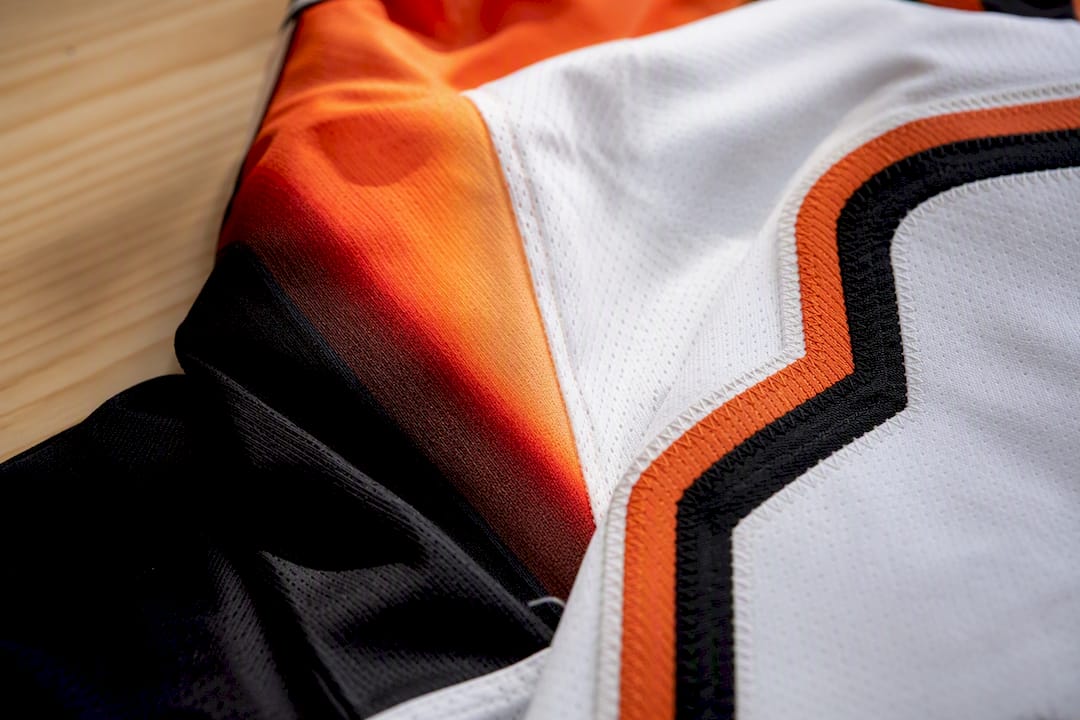
Pro Tip: Choose sublimation for full-jersey graphics and multi-color logos that need to survive weekly wash cycles. Save embroidery for small, single-color marks like a team initial on a cap or hoodie chest.
If you’re building out a full team kit, browse RNK’s hockey graphic t-shirts to see how the same color and logo choices translate across different garment types.
How Do Online Jersey Customizers Actually Work?
Every decent hockey jersey design maker runs on the same basic engine: a template library, a layer-based editor, and a live preview that updates as you make changes. Here’s what separates a tool that saves you time from one that creates production headaches down the line.
The core features to expect:
- 2D or 3D preview that rotates or flattens the jersey so you see front, back, and sleeve at once.
- Template library organized by cut, sport, and age group.
- Color picker with either brand-matched swatches or a full spectrum selector.
- Drag-and-drop logo upload with resizing and repositioning handles.
- Layer ordering so a logo sits above or below a stripe pattern correctly.
- Font and number style picker for names and jersey numbers.
- Measurement guides linked to a size chart.
- Automated bleed and safe-zone checks that flag artwork placed too close to a seam.
File requirements matter more than most first-time customizers realize. A logo saved as a flat JPG at low resolution will look sharp on your laptop screen and grainy on the actual jersey. Vector files (SVG, AI, or EPS) scale to any size without quality loss, which is why print shops almost universally prefer them over raster formats like PNG or JPG.
| Feature | Why it matters | Minimum acceptance criteria |
|---|---|---|
| Logo file format | Determines print sharpness at any size | SVG or AI preferred; 300 DPI minimum for raster |
| Color mode | Affects color accuracy on fabric | CMYK for print, not RGB |
| Safe-zone check | Prevents artwork lost in seams | Logo kept 0.25 inch from all edges |
| Preview resolution | Lets you catch errors before ordering | Full-screen zoom, not thumbnail view |
Pro Tip: Always check your mockup in full-screen mode, not the small preview thumbnail. Contrast issues, like a dark logo on a navy jersey, are nearly invisible at thumbnail size but obvious once you zoom in.
What Does It Cost, and How Do You Place an Order?
Ordering a custom jersey online follows a predictable sequence: build your design, request a digital mockup, confirm sizes and quantities, approve the proof, pay, then wait for production. Each step exists to catch a different kind of mistake before it becomes a printed garment you can’t return.
Pricing on most platforms follows a tiered structure. You’ll typically pay a higher per-unit rate for a small order of five jerseys and a noticeably lower rate once you cross into 20 or more units. Embroidery usually costs more per unit than sublimation because of the labor and machine time involved, and some vendors add a one-time setup fee for first-time logo digitization.
Here’s a simplified illustration of how volume affects unit cost:
- 1 to 9 jerseys: highest per-unit price, sometimes with a small setup fee.
- 10 to 24 jerseys: moderate discount, setup fee often waived.
- 25+ jerseys: lowest per-unit price, best value for full-roster orders.
These figures are illustrative. Always confirm current tiers directly with your vendor rather than assuming last season’s pricing carries over.
Before committing to a full team order, request a physical sample or a small size set. Some 3D jersey designer platforms let you order a sample while still building the design, which is worth doing even if it adds a few days to your timeline. Ordering a single sample jersey that reveals a sizing problem is far cheaper than discovering it after receiving the full order.
Pro Tip: Order one physical sample in your most common roster size before finalizing a bulk order, even if the digital mockup looks perfect. Screen colors and fabric colors don’t always match exactly.
How Long Does Production and Shipping Take?
Standard production for made-to-order hockey jerseys typically runs longer than off-the-shelf apparel because each garment gets custom decoration after you approve the design. Expect the timeline to stretch when artwork needs revision, when you’re mixing embroidery and sublimation on the same order, or when your roster includes odd sizing that requires special cuts.
Several factors control your actual delivery date:
- Artwork approval speed: delays here push everything else back.
- Decoration complexity: multi-color sublimation with fine detail takes longer than a single embroidered patch.
- Order size: a 30-jersey team order takes longer to produce than a 5-jersey order.
- Rush options: most vendors offer expedited production for an added fee, cutting standard timelines significantly.
A seamless online builder paired with clear digital mockups and a defined proof-approval step shortens the whole cycle, mainly because it eliminates the multi-day email exchanges that used to define custom apparel ordering.
Once production wraps, confirm your shipping method and tracking number at checkout. Ground shipping across the country can add several business days on top of your production window, so build that into your season schedule, especially for a tournament deadline.
How Do You Get Sizing Right for a Full Roster?
Sizing mistakes are the single most common reason teams end up reordering jerseys, and they’re almost entirely preventable. The fix starts with collecting real measurements instead of guessing based on age or jersey number.
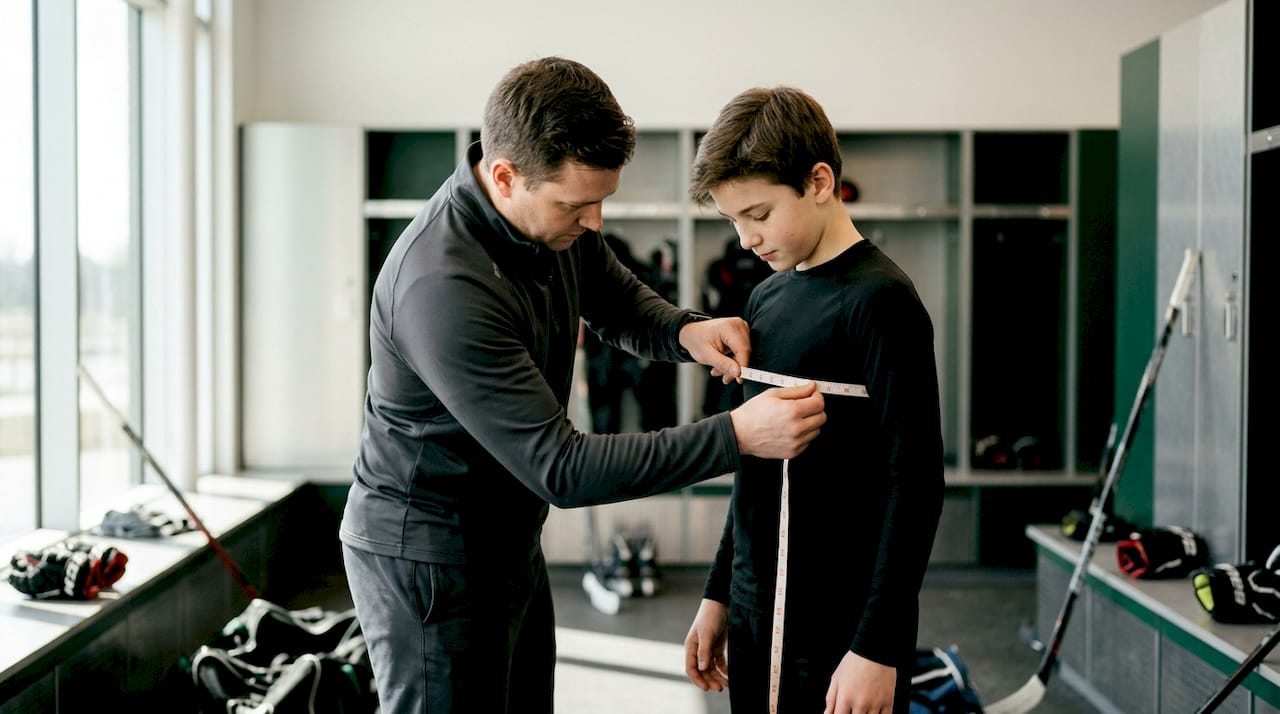
Send your roster a simple measurement sheet before you finalize quantities, and cross-check it against a published hockey apparel size guide. Youth players grow mid-season, so err toward a size up rather than an exact fit, and remember that jerseys worn over shoulder pads and elbow guards need extra room compared to a jersey worn alone.
A few sizing habits that consistently reduce headaches:
- Use a printed measurement sheet, not verbal estimates from parents or players.
- Order one physical sample per size range before finalizing team quantities.
- Keep a written size log tied to each player’s name for easy reorders next season.
- Add a small overage, one or two extra jerseys in common sizes, to cover new players or measurement errors.
Keeping a size log and ordering one physical sample per size consistently reduces return rates and speeds up next year’s reorder, since you’re no longer starting the measurement process from scratch. If you manage a youth program specifically, a youth-focused sizing guide accounts for growth spurts differently than an adult-league guide would.
Pro Tip: Order 5 to 10 percent more jerseys than your active roster size for youth teams. New players joining mid-season and sizing corrections are almost guaranteed, and reordering a single jersey later usually costs more per unit than padding your original order.
What Trust Signals Should You Check Before You Buy?
Not every hockey jersey design maker gives you the same level of confidence before you hit “place order.” A handful of trust signals separate a vendor worth using from one that leaves you guessing.
Check for these before committing to any platform:
- Clear production lead time stated upfront, not buried in a shipping FAQ.
- Transparent pricing tiers you can see without creating an account or requesting a quote.
- Free digital mockups before you pay anything.
- A defined proof-approval step where you sign off on the exact design before production starts.
- Visible minimums, so you know if a 6-jersey order is even possible.
- Customer photos or reviews showing real teams wearing the finished product.
- Accessible support through phone or live chat, not just a contact form that goes unanswered for days.
- A reorder facility that lets you pull up last season’s design without rebuilding it from scratch.
The biggest red flag is a vendor that won’t show you a mockup before charging your card. If a site pushes you straight from design to checkout without a proof step, you have no real way to catch an error before it’s printed.
Common question: What if my logo file doesn’t meet the upload requirements? Most builders will flag an incompatible file format automatically, but resolution problems (a logo that’s too small or too low-quality) sometimes slip through the automated check. If your mockup looks pixelated or blurry after upload, ask for a manual review before approving the proof. It’s a five-minute conversation that prevents a jersey full of blurry logos.
RNK Apparel Co.: Where the Checklist Comes Together
Here’s how RNK lines up against the trust signals worth checking:
- Free digital mockups before you commit to a full order.
- A published size guide covering youth and adult fit differences in detail.
- Design help resources, including a custom hoodie creator walkthrough that shows the online design workflow in practice.
- Made-to-order production, so you’re not stuck picking from limited pre-made stock.
Pro Tip: Start with a single sample garment through RNK’s design tool before placing a full team order, then reference your saved design when you’re ready to reorder next season.
A Practical Note From Eric
Most teams don’t lose money on the jersey design itself. They lose it on sizing guesses and last-minute artwork fixes that could’ve been caught earlier. I’ve watched organizers submit a logo file that looked great in an email attachment and terrible once it hit fabric, simply because nobody checked the resolution first.
The checklist in this piece isn’t complicated: gather real measurements, use a vector logo, order one sample, and approve a proof before production starts. Teams that skip any one of those steps are the ones emailing vendors in a panic two weeks before a tournament. Teams that follow it usually don’t think about their jerseys again until it’s time to reorder.
Ready to Start Your Custom Jersey Order?
Rnkapparel gives you what a generic customizer can’t: a hockey-specific catalog built around real team workflows, from youth joggers to full jersey sets, with sizing guidance built in instead of bolted on as an afterthought.
Start by building a mockup on the hockey graphic t-shirts collection, or browse hockey accessories if you’re rounding out a full team kit with hats and add-ons. If you need help before you commit, reach out through the order form or live chat for design guidance, sizing advice, or a walkthrough of the proof-approval process. Free digital mockups mean you see your exact design before you pay a cent, so there’s no reason to guess. Head to RNK Apparel Co. and get your first mockup started today.
Frequently Asked Questions
Do I need a vector file to upload my team logo? A vector file (SVG, AI, or EPS) isn’t always required, but it produces a sharper print at any jersey size. A high-resolution raster file, 300 DPI or higher, can work if a vector version isn’t available.
How many jerseys do I need to order to get bulk pricing? Most vendors start offering meaningfully lower per-unit pricing around a moderate number of units, though exact tiers vary by decoration method and vendor. Confirm current tiers before finalizing your order.
Can I reorder the same jersey design next season? Yes, most established vendors keep your approved design on file, so a reorder means confirming updated sizes and quantities rather than rebuilding the artwork from scratch.
What’s the difference between sublimation and embroidery for jerseys? Sublimation dyes the design directly into the fabric, making it resistant to cracking and fading over a full season. Embroidery adds a raised, textured logo, which works well for small marks but is less common across a full jersey graphic.
Should I order a sample before committing to a full team order? Ordering one physical sample in your most common size is worth the extra few days it adds to your timeline, since it lets you check color accuracy and fit before committing to a larger production run.
