

Build a small, mix-and-match coach wardrobe: a quarter-zip, performance hoodie, softshell jacket, insulated joggers, a beanie, an insulated tumbler, a whistle lanyard, and a coach clipboard. Those eight pieces cover practically every situation a hockey season throws at you, from a 6 a.m. practice in an unheated rink to a parent meeting after Sunday’s game.
Here’s the starter list, with the job each piece handles:
- Quarter-zip — bench warmth without bulking up your arm movement for demos
- Performance hoodie — layering piece for mid-cold rinks and a pro look on the bench
- Softshell or insulated jacket — outer shell for the coldest arenas or outdoor rinks
- Insulated joggers — mobility plus warmth for standing drills or pacing the bench
- Beanie — quick warmth between periods, easy to pack in a bag
- Insulated tumbler — keeps coffee hot through a three-hour practice block
- Whistle and lanyard — the one item you’ll actually reach for every single session
- Coach clipboard or board — for line changes, drill diagrams, and locker-room talks
Swap pieces by climate (drop the shell in a warm rink, add a base layer outdoors) or by formality (trade the hoodie for a polo before a banquet).
Key Takeaways
A hockey coach’s most functional wardrobe is a small capsule of layered, pocketed, easy-care pieces built around a quarter-zip, hoodie, and shell.
| Point | Details |
|---|---|
| Build a layering system | Base layer, quarter-zip, hoodie or softshell, and a shell cover nearly every rink temperature. |
| Prioritize pockets and mobility | Zippered hand pockets and articulated sleeves matter more for coaching than style alone. |
| Match fabric to task | Technical knits for mobility, fleece or softshell for cold-bench warmth. |
| Keep gifts practical | Insulated tumblers and custom quarter-zips top most-appreciated coach gift lists. |
| Order custom coach gear from Rnkapparel | Rnkapparel offers custom hoodies, quarter-zips, joggers, and tumblers with team logos, names, and numbers for individual or bulk staff orders. |
Table of Contents
- Core Pieces Every Hockey Coach Should Own
- What Should You Wear Coaching on the Bench?
- Comfortable, Presentable Off-Ice and Travel Wear
- Accessories That Make Coaching Easier
- Which Fabrics Work Best for Coaching Apparel?
- How to Build a Coach Capsule Wardrobe
- RNK Apparel Co.'s Recommended Coach-Ready Pieces
- What Are Good Gift Ideas for a Hockey Coach?
- What Should Coaches Pack Before Practice or a Game?
- Why Coach-Friendly Apparel Actually Matters
- Get Your Team’s Custom Coach Gear Sorted
- Sources
Core Pieces Every Hockey Coach Should Own
Every coach’s closet needs six categories: a moisture-wicking base layer, a quarter-zip or midlayer, a performance hoodie, a softshell or insulated jacket, joggers or track pants, and a polo for off-ice events. That’s the full range, and none of it is optional if you’re on the bench three to five times a week.
What separates coaching gear from regular athletic wear comes down to a handful of functional details. Zippered hand pockets matter more than people expect. You’re holding a whistle, a stopwatch, sometimes a laminated drill sheet, and your hands need somewhere secure to put things down between reps. Thumbholes on sleeves keep midlayers from riding up when you’re demonstrating a stick position. Articulated sleeves (ones cut with a slight bend at the elbow) let you raise your arms to signal a line change without your jacket pulling across your shoulders. If your joggers see kneeling time near the boards, reinforced knees add real life to the garment. Easy-care fabrics that survive a washing machine without pilling or shrinking are worth paying more for, since coach apparel gets worn and washed far more often than casual clothes.
Must-have core pieces:
- Moisture-wicking base layer (long sleeve)
- Quarter-zip midlayer with a chest pocket
- Performance hoodie with kangaroo pocket
- Softshell or insulated jacket with zippered hand pockets
- Athletic joggers or track pants with reinforced knees
- A polo for banquets, tryouts, and parent-facing events
Pro Tip: Before buying anything, check the pockets and range of motion first. Raise both arms overhead and mimic a passing motion in the store or in your living room. If the jacket rides up or the pockets gape open, it’s going to fail you during a live drill.
What Should You Wear Coaching on the Bench?
Layer up in this order for bench work: base layer, then a midlayer quarter-zip, then an insulated hoodie or softshell, then a shell if the rink runs especially cold. That sequence gives you control over your body temperature without ever needing to leave the bench to adjust.
- Start with a moisture-wicking base layer. It pulls sweat off your skin during warmups so you’re not standing in a damp shirt an hour later.
- Add a quarter-zip midlayer. This is your workhorse piece. Zip it up during stoppages, unzip it when the bench gets warm from body heat.
- Layer an insulated hoodie or softshell on top. For rinks that run below 50 degrees, this layer is non-negotiable.
- Finish with a shell for the coldest arenas. Outdoor tournaments or older, poorly heated rinks call for a wind-resistant outer layer over everything else.
For milder rinks, drop the shell entirely and rely on the hoodie as your outer layer. For brutal cold, add a base layer bottom under your joggers too.
Footwear and handwear round things out:
- Grippy, insulated boots or sneakers — rink floors get wet and slick near the ice door
- Thin work gloves — enough dexterity to grip a whistle or write on a clipboard, enough warmth to matter
- A lanyard sized for glove use — so you’re not fumbling to pull off gloves every time you need to blow the whistle
Pro Tip: Build your bench outfit in modular pieces rather than one heavy coat. A high-intensity practice heats you up fast, and a sideline wait during a tournament cools you down just as fast. Layers you can add or shed beat one thick jacket every time.
Comfortable, Presentable Off-Ice and Travel Wear
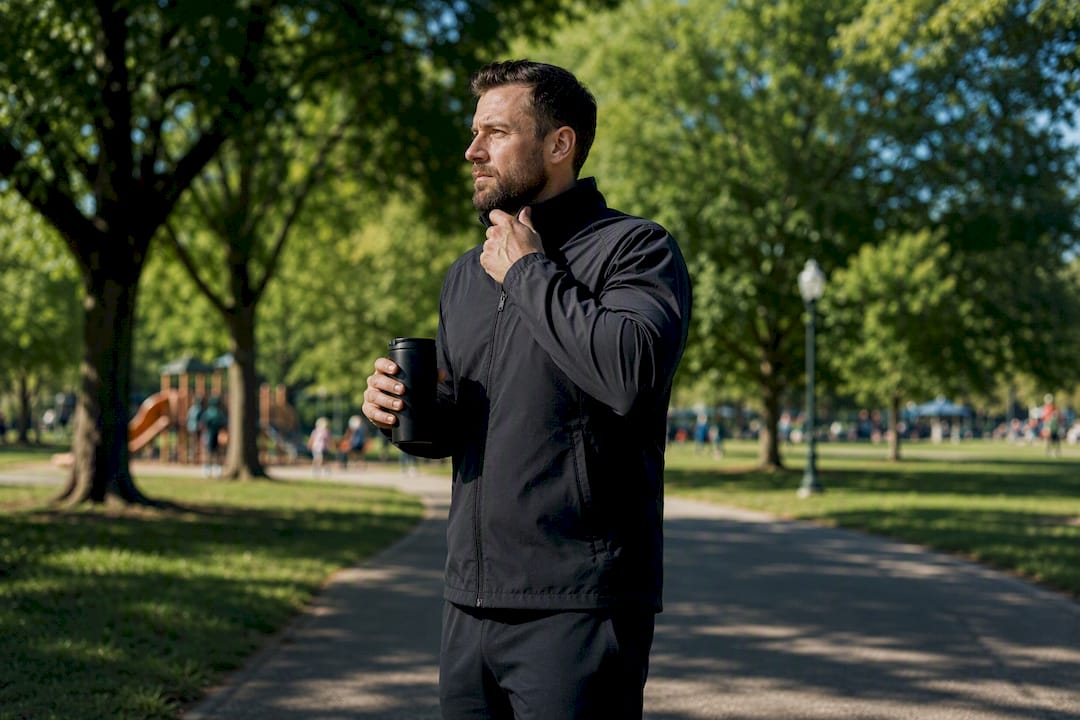
Off the ice, go for performance fabrics cut with a neat silhouette: training joggers, a polo or technical tee, and a travel jacket that doesn’t look like it just came off a practice bench. The goal is comfort that still reads as put-together when you’re standing next to team parents or hotel staff.
A few outfit combinations that cover the common scenarios:
- Travel to a game: joggers, a quarter-zip, sneakers, and a light travel jacket you can shed once you’re inside the arena
- Parent meeting: polo or technical tee, chinos or tailored joggers, clean sneakers
- Tournament-day warmup: performance hoodie, athletic joggers, a team-branded cap
- Post-game errands: hoodie or long-sleeve tee, joggers, casual sneakers, no need to change out of practice gear
Keep any branded pieces subtle. A logo on the chest reads as professional; a full front-and-back wrap of your team crest starts to look like a walking billboard. Save the bold branding for game-day tees and save the everyday pieces for a clean, small mark. The hockey parent apparel guide covers similar styling principles if you want more outfit pairings for rink-adjacent life.
Accessories That Make Coaching Easier
The right accessories solve small, repeated problems that add up over a season. An essential coaching toolkit typically includes a coaching board, water bottle carrier, whistle, first-aid kit, and video equipment, and each of those items has an apparel-adjacent upgrade worth considering.
- Insulated tumbler — keeps coffee or water at temperature through a three-hour block in a cold arena, which matters more than it sounds like until you’ve lived through one
- Coach clipboard or LCD board — traditional dry-erase boards work fine, but electronic LCD coaching boards with instant erase and dual-sided surfaces hold up better through a full season of locker-room use
- Whistle and lanyard — cheap to replace, but a comfortable lanyard is one of those things you notice only when it’s wrong
- Water bottle carrier — frees up a hand during line changes
- Compact first-aid pouch — small enough to clip to a bag, useful more often than you’d think
If you’re outfitting a whole coaching staff, embroidered beanies or laser-engraved tumblers turn a functional item into a small team-branding moment. Retail coaching-gear pages list boards and clipboards across a range of sizes and price points, so there’s room to match your budget whether you’re buying one board or five.
Which Fabrics Work Best for Coaching Apparel?
Pick technical knits and softshells when mobility matters most, and reserve fleece or insulated shells for cold-bench warmth. Matching the fabric to the task, not just the season, is what actually keeps coaches comfortable through a full practice.
- Fleece: warm and soft against the skin, but it absorbs moisture and takes a while to dry if you sweat through a demo
- Softshell: wind-resistant, flexible, and durable through repeated wash cycles, though it runs pricier than basic fleece
- Technical polyester knit: breathable and quick-drying, ideal for base layers or warm-rink coaching, but offers less standalone warmth
- Merino wool blend: naturally odor-resistant for multi-day tournaments, though it costs more and needs gentler washing
Coaching gear retailers consistently point to wipe-clean surfaces and rugged, reusable construction as the standard for anything that lives in a rink bag, and the same logic applies to your clothing. Before buying, run a quick movement test: raise your arms overhead, squat like you’re demonstrating a stance, and reach across your body. If any seam pulls or restricts you, size up or pick a different cut.
How to Build a Coach Capsule Wardrobe
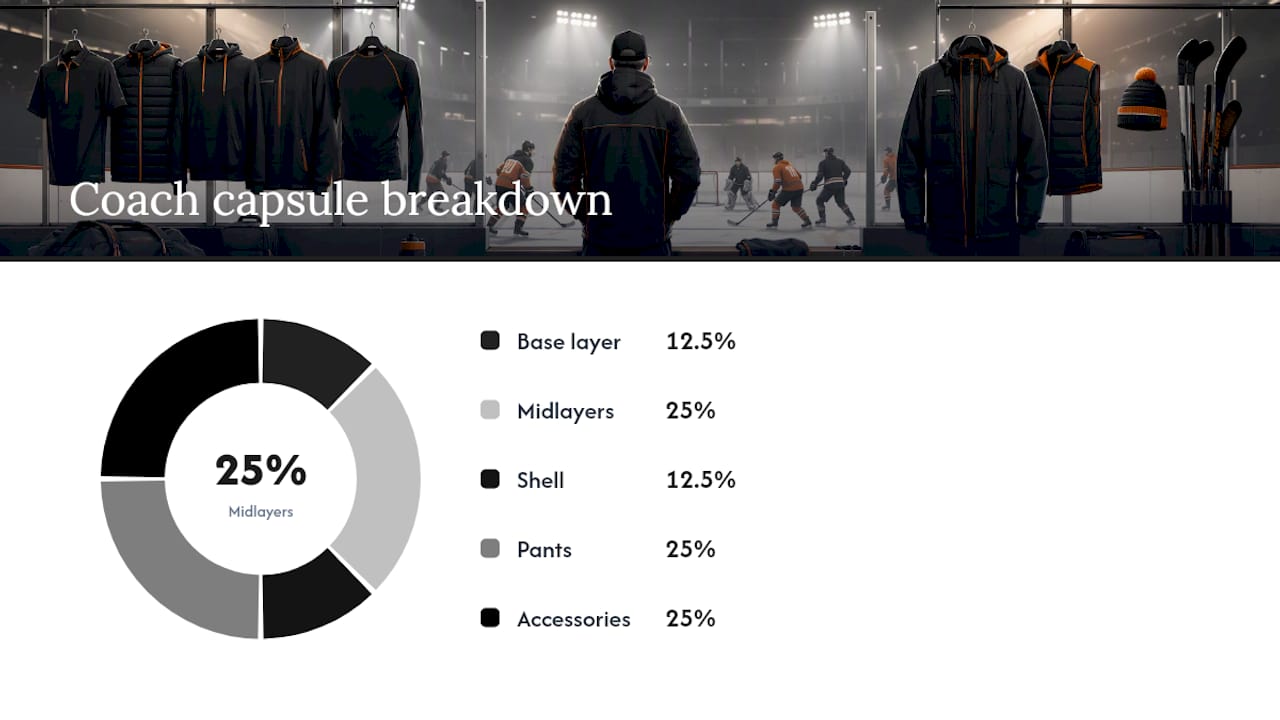
A 7 to 9 piece capsule covers a full season: one base layer, two midlayers, one shell, two pairs of pants, and two accessories. That’s the entire list, and building it in that order (base layer first, accessories last) keeps you from overspending on the pieces that matter least.
Here’s what to prioritize and why:
- Base layer (buy first): the foundation piece you’ll wear under everything else
- Two midlayers (quarter-zip and hoodie): rotate them so one is always clean
- One shell: your only outer layer, so spend more here than anywhere else
- Two pairs of pants: joggers for practice, a slightly cleaner pair for travel days
- Two accessories (tumbler and lanyard): small, but you’ll use them every single day you coach
Budget tiers help if you’re outfitting yourself or an entire staff:
- Budget tier: basic fleece hoodie, polyester joggers, and a simple whistle lanyard, generally the most affordable route for a first-year assistant coach
- Mid tier: softshell jacket, quarter-zip midlayer, and an insulated tumbler, Capelli Sport’s coaching collection sits in this range with quarter-zip fleece hoodies and technical tops
- Premium tier: merino blend base layers, a heavier insulated shell, and a custom-branded full set for a head coach who wants a polished, consistent look
RNK Apparel Co.'s Recommended Coach-Ready Pieces
Rnkapparel is a solid source for custom hoodies, quarter-zips, joggers, and tumblers built specifically for hockey coaches and teams, with logos, player names, numbers, and color choices built into the ordering process.
The lineup lines up closely with everything above:
- Custom hockey hoodies for bench warmth and a branded midlayer
- Quarter-zips and performance pullovers for the workhorse layering piece
- Hockey accessories covering tumblers, lanyards, and small coach add-ons
Ordering for a whole coaching staff or a full team follows a simple sequence:
- Choose the product (hoodie, quarter-zip, jogger, or accessory)
- Upload your team logo and select colors
- Approve the digital mockup before production starts
- Place the order, sized individually for each coach or staff member
Pro Tip: Order one sample piece before committing to a bulk staff order. Confirming fit and print placement on a single item saves you from reordering a dozen mismatched hoodies later. For a deeper walkthrough on logo placement and design choices, the custom hockey hoodie design guide breaks down the process step by step.
What Are Good Gift Ideas for a Hockey Coach?
Pick practical items the coach will actually use: an insulated tumbler, a custom quarter-zip, or an embroidered beanie. Gifts that solve a repeated, visible problem, like standing in a cold rink for hours, consistently rank as the most appreciated coach gifts, beating out novelty items every time.
Typical price ranges give you room to work with any budget:
- Single gift: engraved tumbler, roughly $29.99 to $49.99
- Small staff set: tumbler plus beanie for two or three assistant coaches
- Full staff bundle: tumbler, beanie, and quarter-zip for the entire coaching staff
Buying in bulk usually earns a discount for multiple item orders, and personalizing each piece with a name or number raises the perceived value well beyond the actual cost difference.
What Should Coaches Pack Before Practice or a Game?
Pack the night before, and sort everything into four groups: on-ice, bench, off-ice, and extras. This keeps you from digging through a closet at 6 a.m. trying to remember where you left your whistle.
- On-ice: skates (if demoing), gloves, whistle
- Bench: quarter-zip, hoodie, insulated tumbler, clipboard
- Off-ice: travel jacket, joggers, polo for after
- Extras: first-aid pouch, spare lanyard, phone charger
One-line rule: pack it the night before, because rushed mornings are exactly when the whistle gets left on the kitchen counter.
Why Coach-Friendly Apparel Actually Matters
I’ve come to think the apparel a coach wears is quietly part of the coaching itself. A coach who’s shivering on the bench or fighting a jacket that won’t let them raise an arm is distracted from the game in front of them, and players notice more than you’d expect. Rnkapparel’s approach, built around fit, durability, and real customization, exists because coaches deserve gear that works as hard as they do.
Get Your Team’s Custom Coach Gear Sorted
Rnkapparel builds custom hoodies and quarter-zips specifically for hockey coaches and teams, not generic athletic wear repurposed for the rink. That means fit cuts designed for layering, pocket placement that survives an actual practice, and personalization (logos, names, numbers, colors) built into the ordering flow instead of bolted on as an afterthought.
If you’re outfitting yourself or your whole staff, start with the custom hockey hoodie collection and pick one design to sample before committing to a bulk order. Verify sizing and logo placement on that single piece first. Once it fits right, place your full team order with the confidence that every coach on your bench gets the same clean, consistent look.
Sources
- Essential Gear for Hockey Coaches: A Comprehensive Guide — Lowry Sports
- 25+ Best Hockey Coach Gift Ideas Canada 2026: Personalized & Practical · LAMOSE
- Hockey Coaching Gear - Ice Warehouse
Recommended
- Personalized Hockey Coach Gift Guide: Performance Gear They’ll Actually Wear (2026) – RNK Apparel Co.
- The Ultimate Guide to Hockey Parent Apparel: Style, Comfort, and Rink – RNK Apparel Co.
- The Coolest Hockey Dad Apparel: A 2026 Guide to Rink-Side Style and Pe – RNK Apparel Co.
- Design Youth Hockey Team Gear: A Coach’s Guide – RNK Apparel Co.
