

Spirit wear is defined as branded apparel featuring a school’s or team’s name, logo, or colors, worn by students, fans, athletes, and staff to express pride and build community identity. Unlike game-day uniforms, spirit wear is casual clothing designed for everyday use. Common examples include T-shirts, hoodies, hats, sweatshirts, and accessories. For parents, team leaders, and athletes, understanding what spirit wear means goes beyond the clothing itself. It is a tool for belonging, morale, and shared identity that works across schools, sports teams, and even workplaces.
What does spirit wear mean, and how is it defined?
Spirit wear is custom apparel worn by fans, students, and staff that features a school’s or team’s logo to create a sense of belonging. The term “spirit wear” is the widely accepted industry label for this category of branded casual apparel. It sits between official uniforms and generic fan merchandise, occupying a unique space in team and school culture.
The spirit wear definition covers a broad range of items. Tees, hoodies, hats, sweatshirts, and accessories all qualify when they carry a team or school identifier. Products offer varying styles to engage different demographics and occasions, from youth athletes to adult fans to school staff. That range is what makes spirit wear so effective as a community tool.
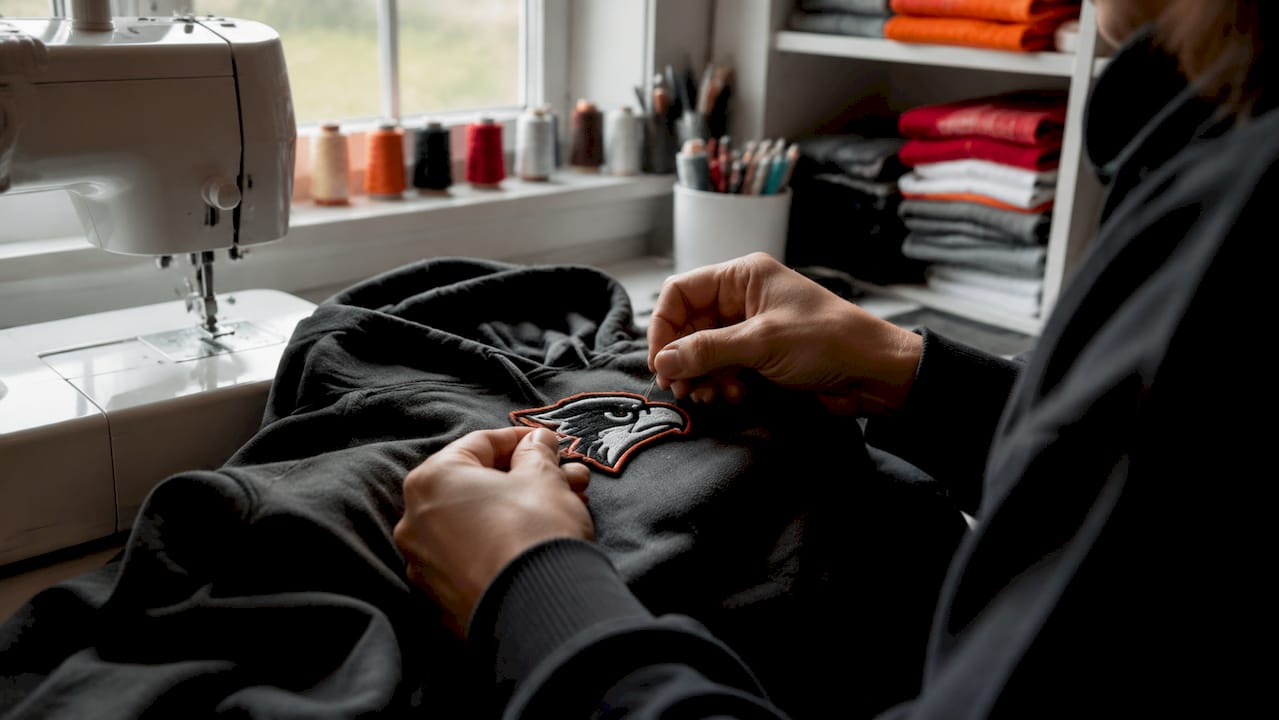
Spirit wear also serves a dual purpose. It represents personal expression and community identity, but it also acts as a marketing tool for schools or teams. A student wearing a school hoodie to the grocery store is advertising the school without thinking about it. That organic visibility is something no billboard can replicate.
How does spirit wear differ from uniforms and fan apparel?
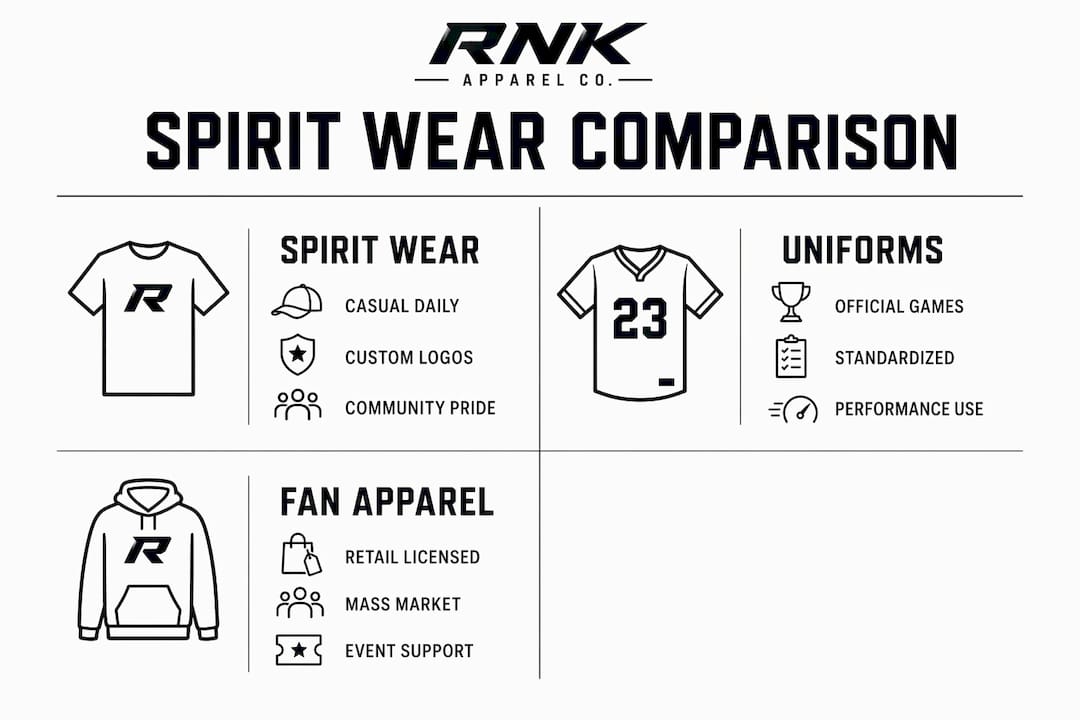
Spirit wear is distinct from uniforms because it is casual and meant for everyday wear rather than official game attire. Uniforms are regulated, standardized, and worn only during competition. Spirit wear has no such restrictions. You wear it to practice, to school, to the rink, or around the house.
Fan apparel from major retailers is another category entirely. Licensed merchandise sold at big-box stores often features professional team logos and is designed for passive fans. Spirit wear, by contrast, is typically custom-made for a specific school, local team, or organization. It is personal in a way that a mass-produced jersey is not.
The table below shows how these three categories compare across key dimensions.
| Category | Purpose | Customization | Occasion |
|---|---|---|---|
| Spirit wear | Community pride and daily expression | High, team-specific logos and names | Everyday, casual, events |
| Official uniform | Game-day performance and identification | Standardized, regulated | Competition only |
| Fan apparel | General fandom and retail purchase | Low, licensed designs | Casual, spectator events |
Spirit wear wins on flexibility. It is the only category designed to be worn anywhere, by anyone connected to the team or school, without any formal requirement.
How does spirit wear build community and school spirit?
Spirit wear acts as a self-reinforcing engagement mechanism. Seeing peers in branded apparel encourages more participation, which in turn creates more visibility, which draws in even more people. This loop is one of the most underappreciated dynamics in school and team culture.
The psychological effect is real. When a student walks into school wearing the team hoodie and three classmates are wearing the same one, the sense of belonging is immediate and tangible. Spirit wear transforms supporters into visible brand ambassadors who build community momentum without any deliberate effort.
For hockey teams in particular, this effect is powerful. Players who wear matching team apparel for unity off the ice signal to each other and to opponents that they are a cohesive group. That signal matters before a puck is even dropped.
Spirit wear also supports morale during difficult stretches of a season. When a team is struggling, shared apparel is a visible reminder of collective identity. It keeps the culture intact when results are not.
Here are the core ways spirit wear builds community:
- Visibility creates momentum. Every person wearing the gear is a walking reminder of the group’s existence and pride.
- Inclusivity expands the community. Parents, siblings, and fans can wear spirit wear even if they never play a game.
- Consistency reinforces identity. Regular use of spirit wear at practices, events, and school days keeps the culture active year-round.
- Recognition drives engagement. Wearing the same gear as your teammates creates a sense of shared experience that strengthens bonds.
Pro Tip: Design spirit wear that works as everyday clothing, not just team gear. When the hoodie looks good enough to wear to a coffee shop, people wear it more often, and the community effect multiplies.
What are effective strategies for designing a spirit wear program?
Successful spirit wear programs treat apparel as a strategic engagement tool rather than mere merchandise, focusing on design relevance and diversity of appeal. Generic logos on plain white tees do not move the needle. Programs that align apparel design with current fashion trends and student or athlete interests see significantly higher participation.
Here is a practical rollout process for any team leader or school administrator:
- Survey your community first. Ask students, parents, and athletes what styles they actually wear. Hoodies, joggers, and fitted tees consistently outperform generic designs.
- Hire or consult a designer. A logo that looks sharp on a screen often needs adjustment for embroidery or screen printing. Get it right before ordering.
- Use sizing kits before bulk orders. Providing sizing kits for bulk orders is a crucial but often overlooked step that reduces returns and improves satisfaction significantly.
- Set up an online store. Digital platforms handle sales, payments, and fundraising to simplify administration and allow 24/7 ordering without manual processing.
- Integrate with fundraising. A spirit wear fundraiser turns apparel sales into revenue for the team or school, making the program self-sustaining.
- Rotate products seasonally. Offer lightweight tees in fall, hoodies in winter, and performance gear in spring to keep the catalog fresh and relevant.
Pro Tip: Launch your spirit wear program at the start of a season or school year, not mid-cycle. Early adoption creates the visibility loop faster, and latecomers feel motivated to join rather than left out.
Timing matters as much as design. A program launched at the wrong moment, such as mid-season when enthusiasm is lower, will underperform even with excellent products.
What are the current trends shaping spirit wear culture?
Spirit wear is expanding well beyond schools and sports teams. Corporate spirit wear includes high-end polos and event swag, showing the concept’s broad applicability in workplaces where branded apparel boosts morale and fosters belonging. Companies now use spirit wear logic to build internal culture the same way schools do.
The blending of spirit wear with mainstream fashion is another major shift. Athleisure has normalized wearing team-branded hoodies and joggers in non-athletic settings. Youth sweatshirts used as bench wear are now as likely to show up at a mall as at a rink. That crossover has raised the design bar considerably.
Digital integration is the most significant development. Effective spirit wear programs integrate apparel campaigns with digital recognition platforms to create continuous community engagement. This approach sustains pride beyond isolated events by connecting physical apparel to online recognition, social sharing, and digital rewards.
The table below captures where spirit wear culture is heading.
| Trend | What it means in practice |
|---|---|
| Fashion alignment | Designs follow streetwear and athleisure trends, not just team colors |
| Digital integration | Apparel campaigns connect to social platforms and recognition programs |
| Workplace adoption | Companies use branded apparel to build internal culture |
| Expanded demographics | Parents, alumni, and community members are now primary buyers |
“Spirit wear is no longer just a school fundraiser item. It is a community engagement platform that happens to come in the form of a hoodie.” This shift in thinking is what separates programs that thrive from those that stall.
The emotional role of branded apparel gifts in fan culture reinforces this point. When spirit wear is given as a gift, it carries meaning beyond the garment itself. It communicates belonging, recognition, and care.
Key Takeaways
Spirit wear is the most accessible and durable tool a team or school has for building visible, lasting community identity.
| Point | Details |
|---|---|
| Spirit wear definition | Branded casual apparel with a team or school logo worn to express pride and build belonging. |
| Different from uniforms | Spirit wear is for everyday use; uniforms are regulated and worn only during competition. |
| Community building | Seeing peers in spirit wear creates a self-reinforcing loop that grows participation over time. |
| Program design matters | Trendy designs, sizing kits, and online stores drive adoption and reduce friction. |
| Expanding beyond schools | Workplaces and community groups now use spirit wear logic to build internal culture. |
Why spirit wear programs succeed or fail
I have seen a lot of spirit wear programs over the years, and the ones that fail share one trait: they treat apparel as an afterthought. A coordinator orders 50 generic tees with a clip-art logo, prices them at cost, and wonders why nobody buys them. The product has no identity. It does not make anyone feel proud to wear it.
The programs that work do the opposite. They start with the community, not the catalog. They ask what people actually want to wear, they invest in real design, and they launch with enough visibility to create that initial momentum. One good hoodie that everyone wants is worth more than five mediocre options nobody touches.
The hockey community understands this intuitively. Players and parents in this sport are used to quality gear. They know the difference between something built with care and something thrown together. That standard should apply to spirit wear too. When you give a kid a hoodie they are genuinely proud to wear, they wear it everywhere. That is the whole point.
The other mistake I see is treating spirit wear as a one-time event. The strongest programs refresh their catalog, run seasonal campaigns, and connect apparel to real moments in the team’s story. Spirit wear is not a product. It is a practice.
— Eric
Build your team’s identity with Rnkapparel
If you are ready to put spirit wear to work for your hockey team or youth program, Rnkapparel makes the process straightforward. Every product is built for the hockey community, from custom hockey hoodies that hold up through a full season to custom hockey tees your players will actually want to wear off the ice.
Rnkapparel offers full customization: upload your team logo, add player names and numbers, and choose from a range of colors and garment styles. Whether you are outfitting a youth travel team or building a school spirit wear program from scratch, the platform handles orders of any size. Visit Rnkapparel to start building apparel your community will wear with pride.
FAQ
What is the spirit wear definition in simple terms?
Spirit wear is branded casual apparel featuring a school’s or team’s name, logo, or colors, worn to express pride and build community identity. It includes items like T-shirts, hoodies, hats, and sweatshirts.
How is spirit wear different from a uniform?
Spirit wear is casual and worn for everyday use, while uniforms are standardized and worn only during official competition. Spirit wear has no regulations and is available to fans, parents, and staff, not just players.
What are common spirit wear examples for schools and teams?
Common examples include hoodies, graphic tees, sweatshirts, hats, joggers, and accessories printed or embroidered with a school or team logo. Items are chosen to appeal to a wide range of ages and occasions.
Why does spirit wear matter for youth sports teams?
Spirit wear builds team unity, boosts morale, and turns players and families into visible community ambassadors. Seeing teammates in matching branded apparel reinforces a shared identity that carries beyond the game.
Can spirit wear be used as a fundraiser?
Yes. Many schools and youth sports teams sell spirit wear through online stores to generate revenue. Digital platforms handle payments and order management, making spirit wear fundraisers one of the most practical options available.
