
Matching apparel is the fastest signal a youth team can send: we belong to each other. The practice of outfitting every player in identical or coordinated gear, known formally as team uniform standardization, goes far beyond aesthetics. Research confirms that teams wearing matching gear produce stronger social bonds and elevated morale before a single word is spoken. For coaches, managers, and parents wondering why youth teams use matching apparel, the answer spans psychology, logistics, and long-term player development. Rnkapparel builds customizable hockey apparel specifically to deliver those benefits to youth teams across the U.S. and Canada.
Why youth teams use matching apparel: the psychology behind it
Uniform standardization works because it triggers social identity theory, the psychological principle that people derive self-esteem and behavior from the groups they belong to. When every player pulls on the same jersey, the visual cue shifts their mindset from “I am an individual” to “I am part of this team.” That shift happens before warm-ups begin.
The concept of enclothed cognition, developed by researchers Adam Galinsky and Hajo Adam, explains the mechanism precisely. The clothes you wear change how you think and perform. For youth athletes, wearing the same colors and cuts as their teammates signals shared purpose and shared accountability. The result is measurable in attitude, effort, and cohesion.
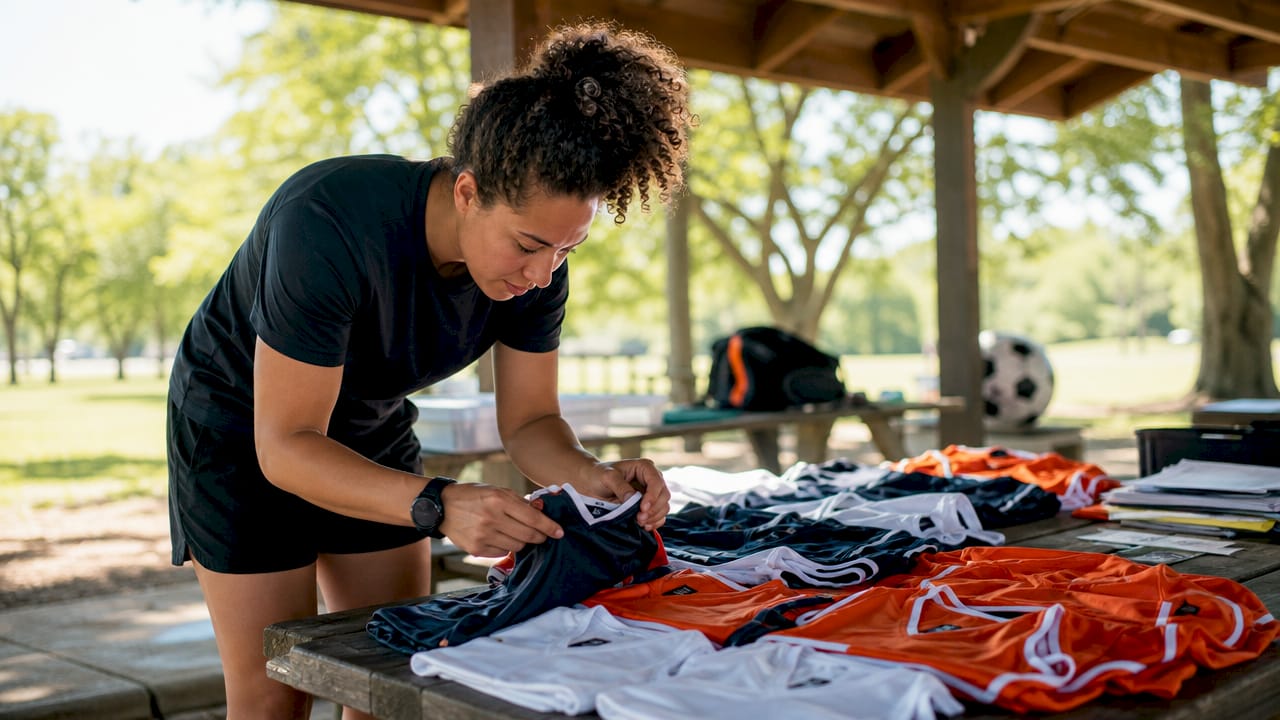
Matching uniforms also function as a social leveler, removing visible socioeconomic markers that can create division. A player wearing last season’s off-brand gear stands out in a mixed group. A player wearing the team jersey does not. That removal of visible difference reduces “us vs. them” tension among teammates and builds genuine inclusivity.
Key psychological benefits of matching apparel include:
- Instant belonging: Players feel connected to the group the moment they put on the uniform, before practice or competition begins.
- Reduced anxiety: Knowing exactly what to wear removes a source of pre-game stress for young athletes and their families.
- Elevated confidence: Wearing coordinated, quality gear signals to players that they are taken seriously as athletes.
- Peer accountability: When everyone looks the same, individual behavior reflects on the whole group, which encourages responsibility.
Pro Tip: If your team is introducing matching apparel for the first time, have players wear their gear during a low-stakes practice before the first game. The familiarity accelerates the psychological bonding effect.
What are the practical management benefits of matching uniforms?
The logistical case for matching apparel is just as strong as the psychological one. Numbered and named uniforms provide critical advantages that coaches and managers feel immediately on game day.
- Faster lineup management. Numbered jerseys let sideline coordinators match players to registration lists in seconds. During chaotic tournament situations with multiple games in a day, this alone prevents delays and errors.
- Simplified substitutions. Referees and scorekeepers track players by number. Without numbered uniforms, substitutions require verbal confirmation every time, slowing the game and increasing the chance of mistakes.
- Reduced equipment loss. Personalized names and numbers on bags, jerseys, and gear prevent the confusion that is standard in youth sports locker rooms. When every bag looks identical, labeling is the only reliable system.
- Faster group photos and sponsor visibility. Matching gear cuts pre-game photo preparation from 20 minutes down to 2 minutes. That is a 90% reduction in setup time, which matters when you are managing 15 kids before a 7 a.m. game.
- Less decision fatigue for families. Standardized kits reduce wardrobe stress before games. Parents know exactly what their child wears. Players know exactly what to pack. That clarity frees mental energy for actual preparation.
Measuring admin efficiency gains from uniform standardization shows consistent results across sports organizations: fewer pre-event delays, lower administrative overhead, and better parent communication. For a volunteer coach managing a youth hockey team, those gains are not minor. They are the difference between a smooth game day and a stressful one.
Matching vs. non-matching apparel: how it affects team perception
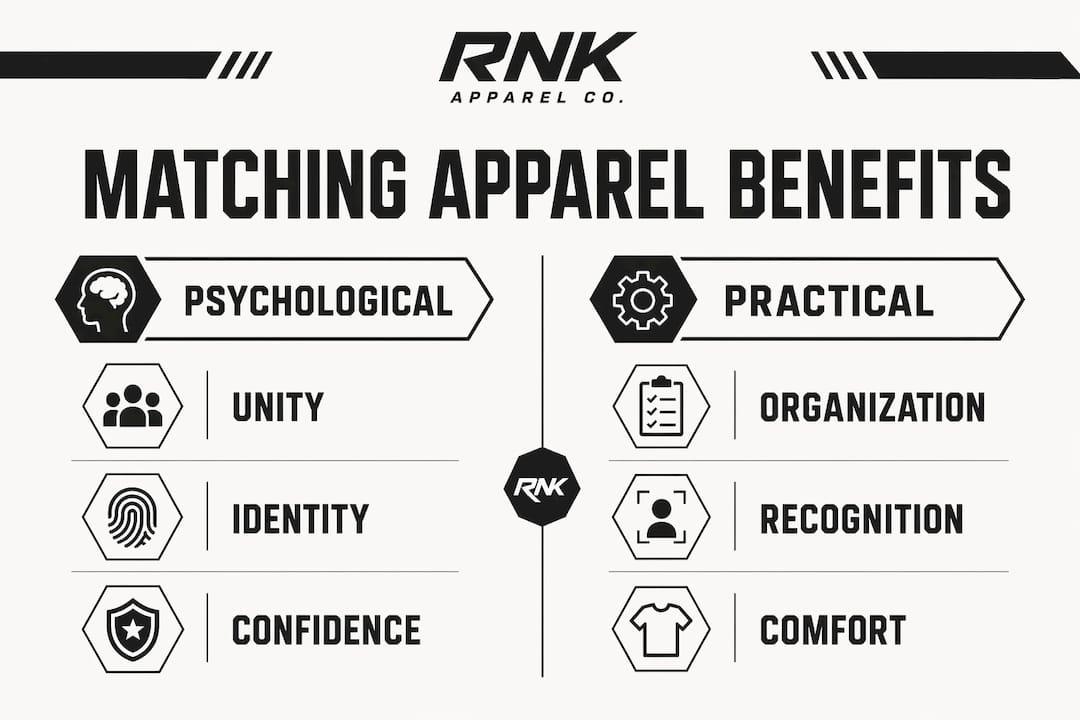
The contrast between a uniformed team and a non-uniformed one is visible from the parking lot. Presentation shapes perception, and perception shapes behavior, both in players and in everyone watching.
| Factor | Matching apparel | Non-matching apparel |
|---|---|---|
| First impression | Professional, organized, disciplined | Casual, informal, unprepared |
| Sponsor visibility | Consistent logo placement on every player | Inconsistent or absent branding |
| Player accountability | Behavior reflects on the team identity | Individual behavior feels disconnected |
| Referee and official trust | Signals a well-managed program | May signal disorganization |
| Community and parent confidence | Builds trust in coaching staff | Raises questions about program quality |
Professional-looking gear acts as a reputation manager, encouraging players to uphold team discipline and responsibility. This is not speculation. Coaches consistently report that players in quality uniforms carry themselves differently, stand taller, and take warm-ups more seriously. The gear sets an expectation, and young athletes rise to meet it.
Consistent branding also matters for sponsors. A team where every player wears the same logo on the same jersey is a team worth investing in. A team in mismatched gear offers no reliable visibility. For programs trying to attract local business support, matching apparel is a prerequisite, not a luxury.
Pro Tip: When ordering team apparel, place the sponsor logo on the chest or upper back where it appears clearly in photos and video. This makes your team more attractive to future sponsors and gives current ones visible return on their investment.
How inclusive design affects player comfort and satisfaction
The benefits of matching uniforms only materialize when players actually want to wear them. Comfort, fit, and inclusive sizing are not secondary concerns. They are the foundation of the entire system.
Research among 18,000 participants found that high-performing uniform programs achieve wearer satisfaction rates of 98.8% by focusing on inclusive fits, human-centered design, and functional fabrics. That number reflects a deliberate design philosophy: apparel built around the actual range of body types on a team, not a single idealized silhouette.
For youth hockey teams specifically, this means offering extended sizing, adjustable fits, and moisture-wicking fabrics that hold up through full practices and tournament days. A player who is uncomfortable in their uniform will not perform at their best, and they will not feel proud wearing it. Inclusive sizing also removes a subtle but real barrier to participation. When a player cannot find a uniform that fits, they feel excluded before the game starts.
| Design factor | Why it matters for youth teams |
|---|---|
| Extended sizing range | Accommodates diverse body types and builds confidence in every player |
| Moisture-wicking fabric | Keeps players dry and focused during intense practice and game situations |
| Durable construction | Withstands the physical demands of youth hockey across a full season |
| Customizable fit options | Allows teams to order apparel that works for every player, not just average builds |
Rnkapparel’s approach to youth team sizing reflects this directly. Offering extended sizes and customizable options means every player on the roster gets gear that fits and performs. That is the standard every youth program should hold their apparel supplier to.
How matching apparel builds team spirit and long-term loyalty
The emotional impact of matching apparel extends well beyond a single season. Uniforms become emotional anchors, tied to specific memories of wins, comebacks, and shared effort. Players who wore the same jersey through a championship run carry that association for years.
Shared colors and visual synergy create a rhythmic team presence that players feel on the ice and in the locker room. When everyone looks the same, the group feels like a unit rather than a collection of individuals. That feeling drives mutual encouragement, peer support, and the kind of effort that does not show up in statistics.
Benefits of matching apparel for long-term team spirit include:
- Positive memory formation: Players associate the uniform with shared experiences, creating lasting loyalty to the program.
- Reduced individual anxiety: Wearing the same gear as teammates signals that no one is alone in the effort.
- Stronger peer support: Visual unity reinforces the idea that the team succeeds or struggles together.
- Increased program retention: Players who feel they belong to something return the following season. Matching apparel is part of what creates that sense of belonging.
Exploring youth team spirit wear that goes beyond the jersey, including hoodies, hats, and training gear, extends the sense of team identity into everyday life. When a player wears their team hoodie to school, they carry the team’s identity with them. That visibility builds pride and reinforces commitment.
Key takeaways
Matching apparel works because it simultaneously addresses psychology, logistics, professionalism, comfort, and long-term team culture, making it the single most cost-effective investment a youth program can make.
| Point | Details |
|---|---|
| Psychology drives unity | Matching gear triggers social identity and enclothed cognition, shifting player mindset to team-first. |
| Logistics become simpler | Numbered uniforms cut substitution errors, equipment loss, and photo prep time by up to 90%. |
| Perception shapes behavior | Uniformed teams project professionalism that raises player accountability and sponsor confidence. |
| Inclusive design is non-negotiable | Programs achieving 98.8% satisfaction prioritize fit, fabric, and extended sizing for all body types. |
| Apparel builds lasting loyalty | Shared colors and team gear create emotional anchors that keep players returning season after season. |
What I’ve learned coaching uniformed vs. non-uniformed youth teams
I’ve watched the same group of kids transform the moment they put on matching gear. It is not subtle. The posture changes. The chatter in the locker room shifts from scattered to focused. Players who barely spoke to each other during tryouts start calling each other by name once they share a jersey.
The conventional wisdom says uniforms are about looking professional for games. That is true, but it misses the deeper function. Matching apparel does its most important work before the puck drops. It creates a shared identity that gives young athletes something to protect and represent. That sense of responsibility is what coaches spend months trying to build through drills and team talks. A well-chosen uniform accelerates the process significantly.
The one mistake I see programs make consistently is treating apparel as an afterthought. They order whatever is cheapest, in one size range, with minimal customization. Then they wonder why players leave their jerseys in the car or forget their gear at home. When players are proud of what they wear, they treat it differently. Investing in quality, inclusive, well-designed apparel is not a budget line to minimize. It is a program-building decision with returns that compound over multiple seasons.
My advice: involve players in the design process when possible. Let them vote on colors or logo placement. The ownership they feel over the final product amplifies every psychological benefit the uniform provides.
— Eric
Build your team’s identity with Rnkapparel
If the research above reflects what you want for your youth team, Rnkapparel delivers the tools to make it happen. From custom hockey hoodies to graphic tees, training wear, and accessories, every product is built for customization with team logos, player names, and numbers.
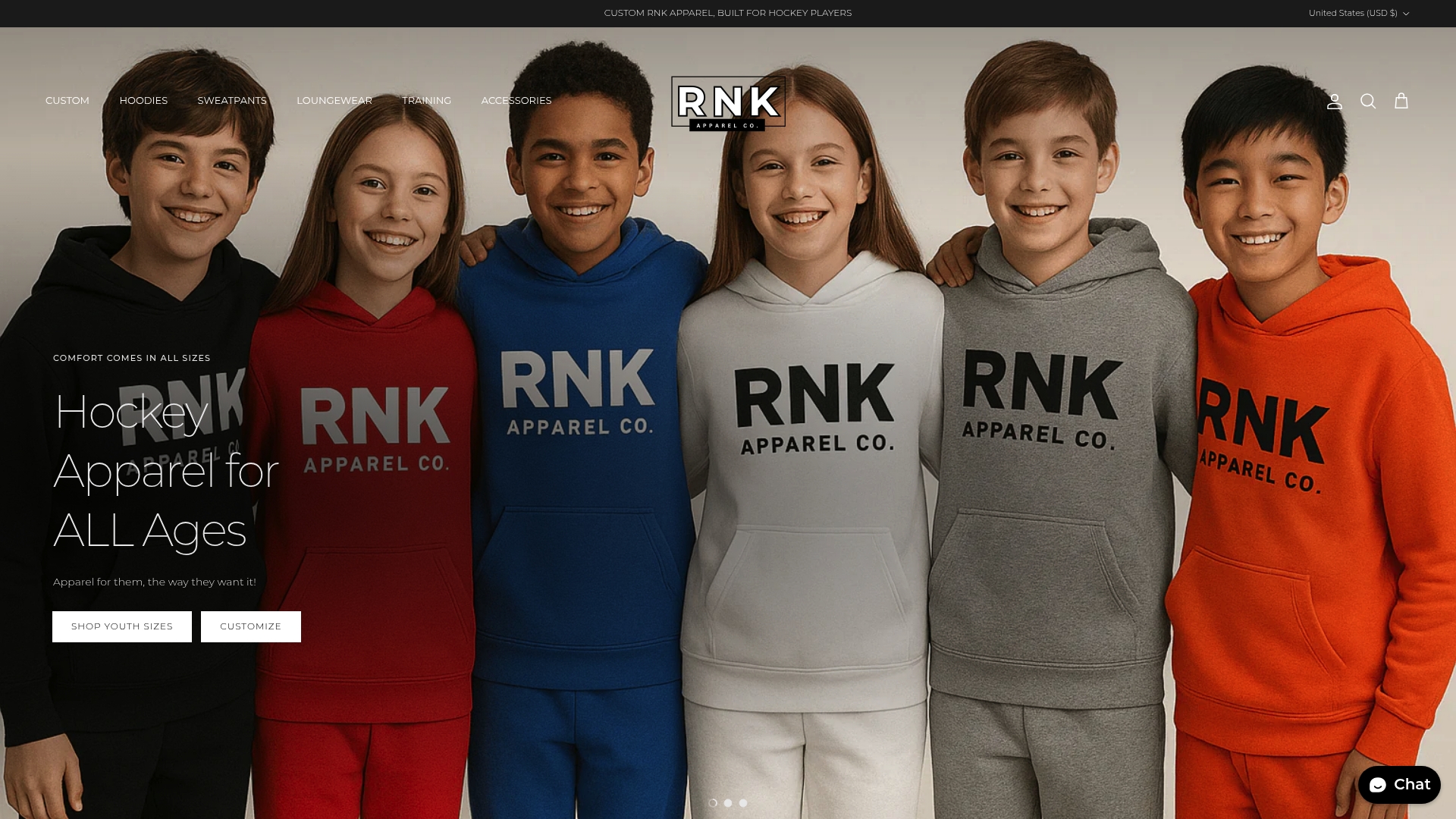
Bulk ordering is straightforward, sizing is inclusive, and the customization options mean every player gets gear that fits and represents the team accurately. Whether you are outfitting a six-player travel squad or a 25-player recreational program, Rnkapparel’s custom hockey shirts and full apparel range give your team the unified look that builds pride from the first practice. Browse the full collection and start building your team’s identity today.
FAQ
Why do youth teams use matching apparel instead of letting players choose?
Matching apparel creates visual unity that triggers social identity and belonging, which individual gear cannot replicate. It also removes socioeconomic markers and reduces pre-game decision stress for players and families.
Does matching apparel actually improve team performance?
Research on enclothed cognition confirms that what athletes wear changes how they think and behave. Teams in matching gear show higher morale, stronger peer accountability, and better focus before competition begins.
How much does matching apparel help with game day logistics?
Numbered and named uniforms reduce substitution errors, simplify registration checks, and cut group photo preparation time by up to 90%, from 20 minutes down to 2 minutes.
What should coaches look for in youth team apparel?
Prioritize inclusive sizing, moisture-wicking fabrics, and customization options for names and numbers. Programs that focus on human-centered design achieve wearer satisfaction rates as high as 98.8%.
At what age should youth teams start wearing matching uniforms?
Matching apparel benefits players at any age, but the psychological and social bonding effects are particularly strong in youth programs where team identity is still forming. Starting with matching gear from the first season sets the standard early.
