
Custom apparel is defined as clothing modified to a buyer’s specifications, including logos, colors, player names, and artwork applied to garments chosen for a specific purpose. For hockey teams, youth leagues, and event organizers, that definition translates directly into hoodies with team crests, t-shirts with player numbers, and hats bearing a club’s identity. The industry term for the most common form is decorated apparel, which covers everything from screen-printed jerseys to embroidered caps. Understanding what custom apparel means, and how it works in practice, helps you order smarter and get gear your team will actually wear with pride.
What does custom apparel mean, exactly?
Custom apparel means clothing made to individual specifications, where the buyer controls design elements like color, logo placement, and text rather than choosing from a fixed retail catalog. Merriam-Webster defines “custom-made” as produced to individual order. That principle sits at the core of every team jersey, event hoodie, or personalized cap you see on the ice or in the stands.
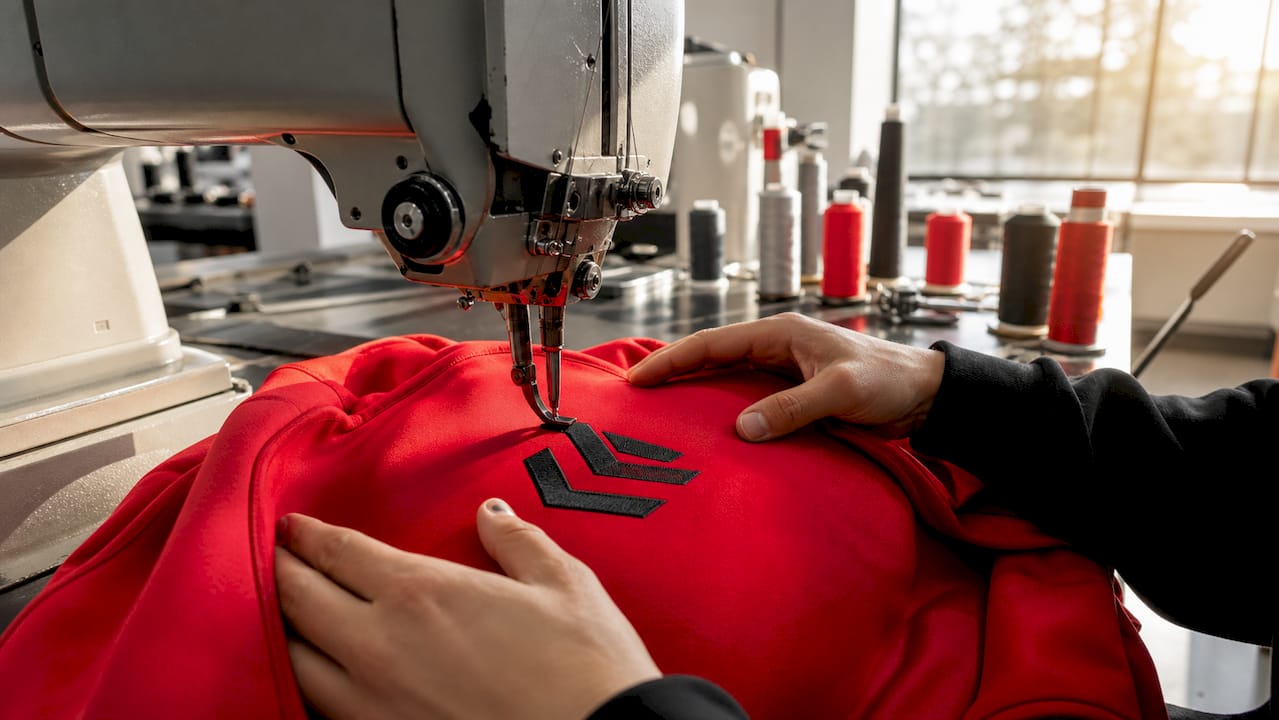
The custom apparel definition covers garments printed, embroidered, or decorated to order, including t-shirts, hoodies, polos, and uniforms. What makes them “custom” is not that each piece is one-of-a-kind. A youth hockey team can order 40 identical hoodies with the same logo and still call them custom, because the design was created specifically for that team and applied on demand.
Custom apparel spans consumer personalization, corporate uniforms, team sports kits, and event merchandise. For athletes and parents, the most relevant category is team sportswear: garments that carry a shared identity and signal belonging. That shared identity is exactly why custom apparel matters beyond just looking good.
How is custom apparel different from mass-produced clothing?
The difference between custom and mass-produced apparel comes down to who controls the design. Mass-produced clothing is designed by a manufacturer and sold as-is. Custom apparel gives the buyer meaningful design control, which is the defining factor regardless of how many units are ordered.
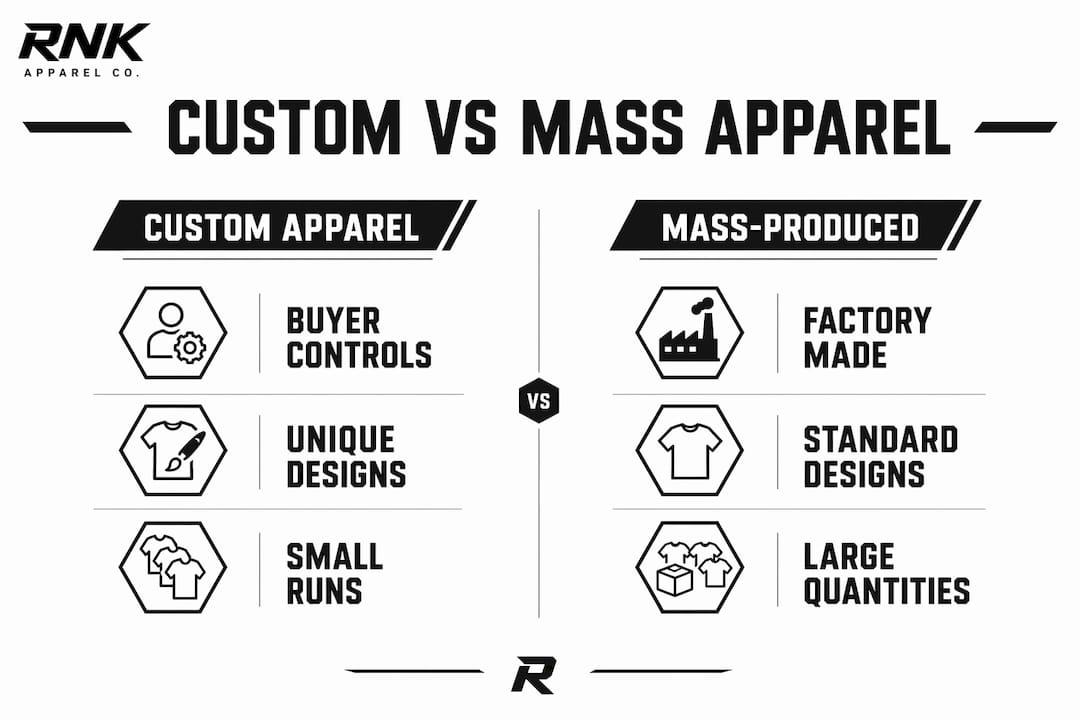
Private label clothing sits in the middle. A retailer puts its own brand name on a garment made by a third-party factory, but the buyer has little say in the design. That is not custom apparel. True customization means you choose the artwork, colors, and text that go on the garment.
There is also a distinction between decorating blank garments and full custom manufacturing. Most team orders fall into the first category: a supplier takes a blank hoodie or t-shirt and applies your logo via printing or embroidery. Full custom manufacturing means the garment itself is built from scratch to your specs, including fabric choice, cut, and branded finishing. That level of production is typically reserved for professional leagues and large brands.
Here is a quick comparison to clarify the three categories:
| Type | Design Control | Who It’s For |
|---|---|---|
| Mass-produced | None | General retail shoppers |
| Private label | Brand name only | Retailers rebranding stock |
| Custom decorated | Full logo, color, text | Teams, events, individuals |
| Full custom manufacturing | Fabric, cut, and branding | Pro leagues, large brands |
Key distinctions for team buyers:
- Custom decorated apparel is the standard for youth and adult hockey teams.
- You choose the blank garment and the decoration. The supplier handles production.
- Design intent and purpose define custom apparel more than physical uniqueness.
- Orders of 12 or 400 units can both qualify as custom if the design is buyer-specified.
Which decoration methods are used to create custom apparel?
The decoration method determines how your design looks, how long it lasts, and what it costs. Five main techniques cover the vast majority of custom sportswear: screen printing, direct-to-garment (DTG), embroidery, sublimation, and direct-to-film (DTF) transfers.
Each method suits different situations. Screen printing works best for bulk runs with simple, bold designs and delivers the lowest cost per unit at high quantities. Embroidery produces a professional, textured finish ideal for logos on hats, polos, and chest crests. DTG handles photographic or multicolor designs on cotton garments without setup fees, making it practical for small runs. Sublimation bonds ink directly into polyester fibers for all-over prints that never crack or peel, which is why it dominates performance jerseys. DTF transfers offer flexibility across fabric types and work well for small orders or complex artwork on mixed-material garments.
Here is how each method maps to common hockey team needs:
- Screen printing: Best for cotton t-shirts and hoodies in quantities of 24 or more with two to four color designs.
- Embroidery: Best for caps, polo collars, and chest logos where a premium look matters.
- DTG: Best for small runs or designs with gradients and photographic detail on cotton.
- Sublimation: Best for polyester performance wear, training tops, and full-coverage designs.
- DTF transfers: Best for mixed-fabric garments or orders under 12 pieces with detailed artwork.
Modern methods like DTF and DTG have reduced production time and opened customization to small runs that were previously uneconomical. A parent organizing a 10-person team event can now get quality custom shirts without meeting a 50-piece minimum.
Pro Tip: Match your decoration method to how the garment will be used. Training gear that gets washed three times a week needs sublimation or embroidery. A fan hoodie worn casually can handle screen printing just fine.
How does custom apparel build team identity and unity?
Custom apparel builds team identity by giving every player and supporter a shared visual language. When a youth hockey team steps onto the ice in matching hoodies carrying the same logo, the message is clear before a single puck drops. Youth hockey teams regularly use customized hoodies, shirts, caps, and training apparel to promote spirit and recognition at tournaments and events.
The practical benefits go beyond aesthetics. Here is how athletes, organizers, and parents typically use custom apparel across a season:
- Pre-season gear: Customized t-shirts and hoodies distributed at tryouts establish team culture from day one.
- Game-day warmups: Matching training tops with player names and numbers reinforce identity during warmups visible to opponents and spectators.
- Tournament travel: Coordinated travel gear, including joggers and zip-ups, makes teams easy to identify in busy arenas and builds group cohesion off the ice.
- Parent and supporter apparel: Custom hats and hoodies for parents create a visible fan section and extend team pride into the stands.
- End-of-season recognition: Personalized items with player names and season years serve as lasting keepsakes that motivate young athletes.
The motivational value of custom apparel is real. Athletes who wear gear that reflects their team’s identity report stronger group belonging and higher commitment to shared goals. For youth players especially, wearing a hoodie with their name and number on it signals that they belong to something worth representing. That feeling does not come from a generic store-bought sweatshirt.
Pro Tip: Order a few extra pieces in the most common sizes when placing a team order. Replacements mid-season are expensive and slow. A small buffer saves time and keeps the team looking uniform all year.
What should you consider before ordering custom apparel?
Two core decisions drive every custom apparel order: choosing the right blank garment and selecting the decoration method that fits your design and use case. Getting both right saves money and prevents disappointment.
Start with the garment itself. Fabric weight, fit, and material affect comfort, durability, and how well decoration adheres. A 100% cotton heavyweight hoodie holds embroidery and screen printing well. A lightweight polyester training top is the right base for sublimation. Choosing the wrong blank for your decoration method leads to cracking prints or poor color saturation.
Design complexity directly affects cost and method feasibility. A simple two-color logo costs less to screen print than a six-color gradient design. Submitting clean, scalable vector artwork, typically in .AI or .EPS format, gives suppliers the best starting point and reduces revision rounds. Raster images like JPEGs lose quality when scaled up and often require redrawing at extra cost.
Order quantity and timeline are the two factors most buyers underestimate. Screen printing requires setup fees that spread across the order, so larger quantities lower the per-unit cost significantly. Bulk ordering for youth teams also simplifies sizing and delivery logistics. Allow at least two to three weeks for production and shipping, and add buffer time before a tournament or season opener.
Common pitfalls to avoid:
- Submitting low-resolution artwork that requires paid redrawing.
- Ordering exact quantities with no buffer for size exchanges or late additions.
- Choosing a decoration method based on price alone without considering durability.
- Skipping a sample or proof approval before the full run goes into production.
Pro Tip: Always request a digital proof before approving production. A proof catches placement errors, color mismatches, and sizing issues before they become a 50-piece problem.
Key takeaways
Custom apparel delivers the most value when buyers understand the definition, choose the right decoration method, and plan their order with enough lead time to avoid costly mistakes.
| Point | Details |
|---|---|
| Core definition | Custom apparel means clothing modified to buyer specs, including logos, colors, and text. |
| Decoration method matters | Match screen printing, embroidery, sublimation, or DTF to your garment type and use case. |
| Design control defines it | Meaningful buyer control over design separates custom apparel from mass-produced or private label clothing. |
| Team identity is the real value | Custom gear builds belonging and motivation, especially for youth athletes across a full season. |
| Order smart | Submit vector artwork, order buffer quantities, and allow two to three weeks for production. |
Why custom apparel means more than just a logo on a shirt
I have watched a lot of youth hockey teams walk into arenas over the years, and the ones wearing coordinated custom gear carry themselves differently. It is not subtle. There is a confidence that comes from looking like a unit, and that confidence shows up in how players warm up, how they interact with opponents, and how parents rally in the stands.
What surprises most people is how accessible this has become. A decade ago, getting quality custom hoodies for a 15-player peewee team meant navigating minimum order requirements, long lead times, and artwork fees that ate into the budget. Today, methods like DTF and DTG have changed that math entirely. Small runs are viable. Turnaround times are shorter. And the quality gap between small-order and large-order production has nearly closed.
The trend I find most interesting is how youth teams are using custom apparel beyond game day. Training gear with player names, travel sets for tournaments, and end-of-season keepsakes are now standard expectations, not extras. Parents budget for them. Coaches plan around them. That shift tells you something important: custom apparel has moved from a nice-to-have to a core part of how sports teams build culture and identity at every level.
— Eric
Get your team outfitted with Rnkapparel
Rnkapparel builds custom hockey apparel specifically for athletes, teams, and the families behind them. Every item in the catalog is designed for the hockey community, from custom hockey t-shirts and hoodies to hats, accessories, and youth training gear. You upload your logo, choose your colors, and add player names and numbers. Rnkapparel handles the rest.
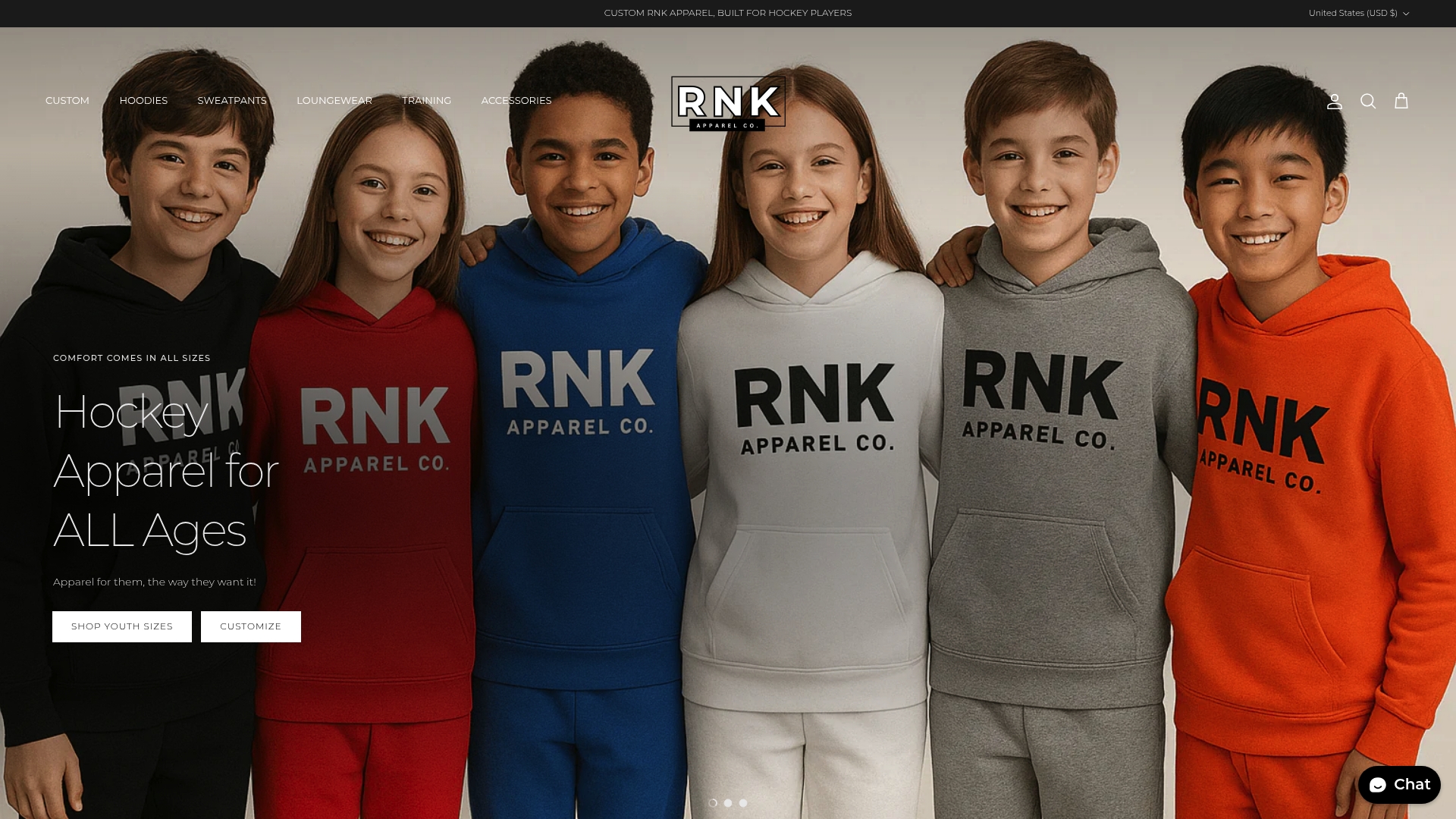
Whether you are outfitting a full youth roster or picking up a personalized piece for a single player, Rnkapparel offers quality garments at prices that make sense for team budgets. Explore the full range of custom hockey hoodies, team caps, and youth training apparel to find the right fit for your next order.
FAQ
What does custom apparel mean in simple terms?
Custom apparel means clothing decorated or modified to a buyer’s specifications, including logos, colors, names, and numbers applied to garments chosen for a specific purpose or group.
Is custom apparel the same as custom manufacturing?
No. Most custom apparel involves decorating blank garments with printing or embroidery. Full custom manufacturing means building the garment from scratch, including fabric, cut, and branded finishing, which is a separate and more complex process.
What decoration method is best for hockey team hoodies?
Screen printing works well for bold, two to four color designs on cotton hoodies in quantities of 24 or more. Embroidery suits chest logos where a premium finish is the priority.
How many pieces do i need to order custom apparel?
Minimums vary by supplier and method. Screen printing typically requires 12–24 pieces to offset setup costs. DTG and DTF transfers work for smaller runs, sometimes as few as one piece.
How long does a custom apparel order take?
Most suppliers need two to three weeks from artwork approval to delivery. Tournament or season deadlines should be planned with at least four weeks of lead time to allow for proofing and any revisions.
