
Sign for the package, note the carrier and order number, and count what’s in the box against your packing list before anyone touches it. Photograph the outside of every box, then photograph anything damaged or missing right away. Check whether the shipment came to one address (consolidated) or straight to individual players (drop-shipped), since that decision determines everything about how you sort and distribute gear next.
TL;DR:
- Confirm and photograph the carrier, tracking number, and physical condition of each package before opening to document the delivery properly.
- Check for printing errors, misaligned logos, incorrect names or numbers, and fabric flaws by inspecting each item closely and documenting defects with photos.
- Use clear, standardized labeling and sorting by player name rather than jersey number to streamline distribution, especially for personalized gear.
- Implement a scheduled pickup window with a roster check to avoid backlog and ensure quick, organized handouts during distribution day.
- File damage or missing item claims promptly with photos, order details, and a clear description, and process disputes without holding up unaffected items.
Table of Contents
- How to Ship Team Orders: A Receiving Checklist
- How Do You Check for Damage and Printing Errors?
- What’s the Best Way to Sort and Label Team Gear?
- How Do You Run Distribution Day Without a Backlog?
- How Do You Handle Damaged or Missing Items?
- How Long Does It Take to Ship Team Orders?
- How RNK Apparel Processes and Ships Team Orders
- What Repeat Distributions Have Taught Me
- Get Your Next Team Order Right the First Time
- Where to Go for More on Shipping and Claims
- Sources
How to Ship Team Orders: A Receiving Checklist
The moment the boxes land, your job is documentation, not distribution. Do these steps in order before you open a single bag of jerseys.
- Write down the carrier, tracking number, and order or PO number from the shipping label before you do anything else.
- Sign for the delivery and photograph the label so you have proof of the delivery date and address.
- Find the packing list or invoice taped inside or attached to the boxes, and set it next to your roster.
- Match quantities and sizes against what your roster ordered, not just the total box count.
- Inspect the outside of every box for damage before opening, and photograph anything that looks crushed, torn, or wet.
- Initial and time-stamp your notes so there’s a clear record of who received what and when.
- Keep the packaging and paperwork until you’ve finished inspecting items and handed everything out.
That paperwork matters more than it seems. If a claim comes up later, the vendor will ask for exactly this information, and having it ready cuts resolution time significantly.
How Do You Check for Damage and Printing Errors?
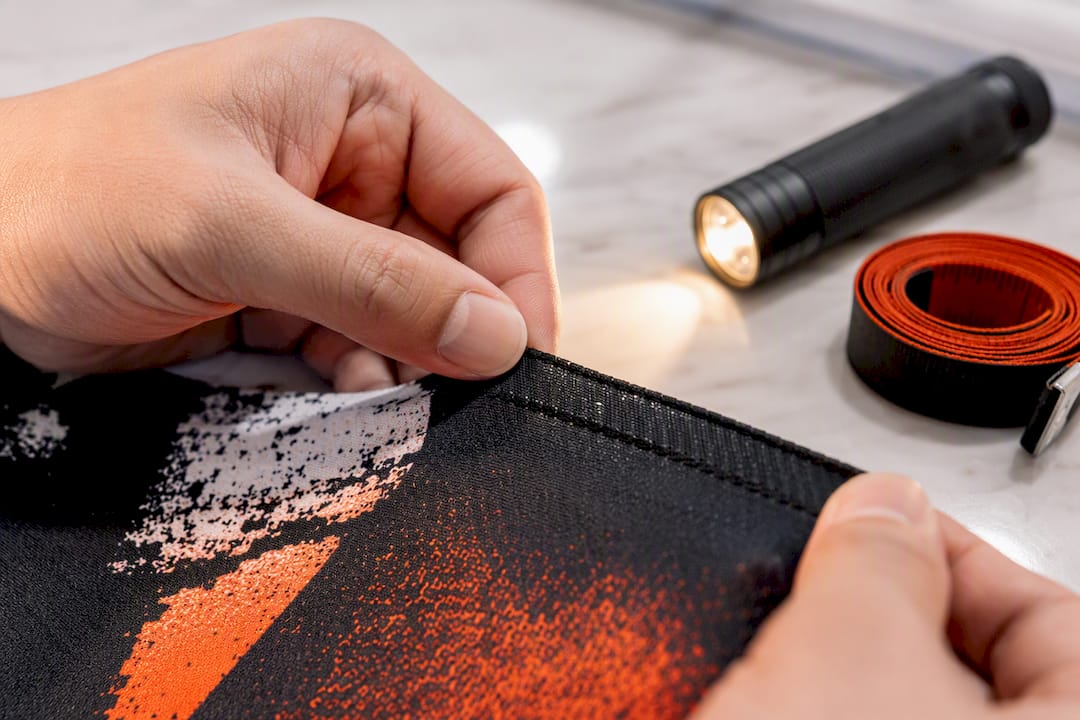
Open boxes one at a time and work through each SKU methodically rather than dumping everything on a table. Check every size label and jersey number against the packing list as you go, because a single swapped size early in the stack can throw off your whole distribution plan later.
Look closely at these common problem areas:
- Misaligned or crooked logo placement on the chest or sleeve
- Color mismatches between the ordered swatch and the actual print
- Wrong player names or numbers, especially on personalized jerseys
- Loose threads, uneven seams, or fabric flaws near the collar and hems
- Size labels that don’t match the garment’s actual cut
Pro Tip: Take one close-up photo of the defect and one wider shot showing the item next to the packing list. Vendors process claims faster when they can see both the problem and the proof of what was ordered. Documented photo matches significantly increase successful claims resolution, so don’t skip the wider shot even when the defect seems obvious.
What’s the Best Way to Sort and Label Team Gear?
Sorting by player name works better than sorting by roster number for most youth and adult teams, since parents recognize names faster than jersey numbers during a rushed pickup. Size-based sorting only makes sense for non-personalized items like generic team hoodies.
A few labeling habits that save real time on distribution day:
- Use pre-printed tags or the packing slip itself as a label rather than handwriting names on tape.
- Bag small items like hats or socks individually so they don’t get lost inside a hoodie or jersey.
- Color-code bags by age group or division if you manage multiple teams from the same shipment.
- Stage items on tables or taped floor sections in the same order your check-in list runs, so you’re not searching.
Consolidated shipments make this whole process easier, since everything arrives together and you sort once. Drop-shipped orders skip your sorting step entirely, but you lose visibility into what actually shipped until players start telling you what they received.
How Do You Run Distribution Day Without a Backlog?
A clear pickup window, communicated at least a few days ahead, prevents the slow trickle of parents showing up at random times all week. Allow delegated pickups, but require a short written note or text authorization naming who’s picking up on a player’s behalf.
- Set and announce the pickup window in writing, with a start and end time.
- Bring your roster or confirmation list to the table, not just a memory of who ordered what.
- Match the name or number on the bag to the name on your list before handing anything over.
- Mark the item as picked up immediately, either on paper or in a shared spreadsheet.
- Collect a signature or a quick digital confirmation for anything valuable or personalized.
- Set aside partial pickups in a clearly labeled holding spot, and note a follow-up date.
Having about one staff member for every group of players helps keep the line moving smoothly without turning the table into a bottleneck. A single dedicated check-in lead, rather than several people juggling the same list, reduces confusion and cuts down on double-handouts.
How Do You Handle Damaged or Missing Items?
File the claim before you distribute anything else that’s disputed. A complete claim includes the order number, the SKU, clear photos, the receiver’s name and delivery date, and a short description of the problem.
- Isolate the disputed item and distribute the rest of the order right away, don’t hold up the whole team over one hoodie.
- Expect most vendors to respond within a few business days once the claim includes photos and packing-list proof.
- Repackage any return in its original bag or box with the original label still visible, since mismatched labels slow down vendor processing.
- Keep a copy of everything you send, including the email or form confirmation.
Pro Tip: If a jersey has a misprinted name, don’t cut it or write on it, even if you’re frustrated. Vendors often need the item back in original condition to process a reprint or refund.
How Long Does It Take to Ship Team Orders?
“Shipped” means the order left the vendor’s warehouse. It doesn’t mean it left the same day the store closed, and it definitely doesn’t mean it’s arriving tomorrow. “In transit” means it’s with the carrier, “out for delivery” means it’s on today’s truck, and “delivered” means it’s sitting at your door.
- Custom team orders typically wait for the team store to close before production even starts.
- Add production time on top of the closing date, then add carrier transit time on top of that.
- Track using both the carrier’s tracking number and the vendor’s own order status page, since the two don’t always update in sync.
- Ask about rush production if your season start date is tight.
Production for team shops commonly holds until the store closes, which is the single biggest reason delivery estimates feel longer than a typical online order. Setting that expectation with parents early avoids a wave of “where’s my order” messages three weeks in.
How RNK Apparel Processes and Ships Team Orders
Rnkapparel holds production until your team store closes, which lets every player’s order print in a single run instead of trickling out one at a time. That’s the tradeoff for group ordering: one closing date in exchange for consistent sizing and printing across the whole roster.
- Choose consolidated shipping to one address if you want to handle sorting and distribution yourself.
- Choose individual drop-ship if you’d rather have Rnkapparel send gear straight to each player’s address.
- Report printing errors or damaged items through Rnkapparel’s claims process, with photos and your order number ready.
- Check the fulfillment guide for current turnaround windows and rush options before your store closes.
Managers who’ve placed bulk sweatshirt orders through Rnkapparel report the same pattern: confirm your shipping method choice at checkout, because switching after production starts isn’t usually possible.
What Repeat Distributions Have Taught Me
Run a dry run with a handful of team members before your first real pickup event. It exposes weak spots in your check-in list faster than any amount of planning on paper.
Keep an emergency kit on the table: extra labels, tape, a couple of safety pins, and a permanent marker. Something always needs a quick fix. One spreadsheet tracking pickup status per player beats juggling a paper list and a group text at the same time.
Communicate your pickup window and no-show policy before the shipment even arrives, not the day of. And when you have the choice, take consolidated shipping. Managing one delivery beats chasing down twenty individual tracking numbers every single time.
— Eric
Get Your Next Team Order Right the First Time
Rnkapparel gives team managers the two things that make delivery day painless: a choice between consolidated shipping and individual drop-ship, and full control over names, numbers, and colors before production ever starts. Every order comes with clear fulfillment guidance so you know exactly when production begins and what to expect at your door.
If your team is due for new gear, browse the custom hockey t-shirt collection and set up your team store with a closing date that fits your season. Pick your shipping method at checkout, share the fulfillment guide with your parents, and you’ll walk into distribution day with a plan instead of a guess.
Where to Go for More on Shipping and Claims
- How Team Apparel Orders Are Processed: A Coach’s Guide covers Rnkapparel’s own production hold and shipping choices.
- Custom Team Apparel Fulfillment Guide details return and reprint policies.
- What Should I Do When I Receive My Team’s Order? offers a general framework for checking contents and sizing on arrival.
- Employment Orders: FAQs explains how formal orders and instructions carry defined responsibilities, useful background for understanding precise shipping language.
