

Narrow your options with a Lab-based digital matcher, then confirm the winner against a physical thread card on your actual fabric. Skipping the physical check is the single most common reason a “perfect” screen match looks wrong under sewing machine lights or after washing. Do both steps, in that order, every time.
TL;DR:
- Digital thread matchers create a shortlist of likely codes, but physical swatch testing remains essential for final confirmation under actual fabric and lighting conditions.
- Color discrepancies often occur due to dye lot variations, fabric undertones, and finish sheen, which digital tools cannot fully account for.
- Matching brand-specific Pantone or Pantone-equivalent colors requires converting to hex or RGB, then testing on the actual fabric to ensure color accuracy.
- Checking thread colors under multiple light sources, especially daylight and indoor lighting, prevents mismatches that look fine indoors but wrong outdoors.
- Proper thread storage and accurate record-keeping help maintain consistency over time, reducing re-matching efforts for long-term or bulk projects.
Table of Contents
- How Do You Match Thread Colors Step by Step?
- Why Screen Colors and Thread Colors Never Match Perfectly
- Does Thread Type Change How the Color Looks?
- How Do You Match a Logo or Pantone Color to Thread?
- What’s the Final Check Before You Commit to a Full Order?
- How Team Apparel Suppliers Handle Color Matching at Scale
- What Thread Color Standards Actually Exist?
- Where Do Most Thread Color Matches Go Wrong?
- How Should You Check Thread Colors Under Different Lighting?
- How Do You Store Thread So Colors Stay Easy to Match Later?
- Verified Tools and Reference Pages Worth Bookmarking
- Ready to Put a Matched Color Into Production?
- A Pragmatic Take on the Whole Process
- Sources
- FAQ
How Do You Match Thread Colors Step by Step?
Matching thread to fabric works best as a short sequence, not a single guess. Follow it in order and you’ll cut your revision rate way down.
- Grab a fabric swatch and look at it under natural daylight, not the lamp on your sewing table. Indoor bulbs shift warm and cool tones enough to fool you.
- Lean one shade darker than the fabric if you want the stitching to blend in. Thread almost always reads lighter once it catches light, so a slightly deeper shade lands closer to true.
- Go the opposite direction and pick a contrasting color when the stitching needs to be seen, like team numbers or a logo outline.
- Pull the hex code straight from a logo file or photo if you’re matching a brand color rather than eyeballing it.
- Run that hex through a digital matcher to get two or three candidate thread codes, not just one.
- Confirm with a physical thread card, then stitch a small test swatch and check it wet and dry before you commit to a full run.
That last step is the one people skip when they’re in a hurry, and it’s the one that saves the most rework.
Why Screen Colors and Thread Colors Never Match Perfectly
Your monitor displays color as red, green, and blue light in the sRGB space. Thread is dyed fiber that reflects ambient light, which means the same hex value can look noticeably different on a screen versus on a spool under your sewing lamp. That gap is exactly why raw RGB comparisons steer people wrong.
Better matchers work in CIE Lab color space and score results with a formula called CIEDE2000, often shortened to ΔE. This system models how human eyes actually perceive color differences, including the fact that people notice shifts in green and yellow more readily than equivalent shifts in blue. A tool built on ΔE will rank a slightly-off green as “close enough” less often than a tool using flat RGB math, because it accounts for how sensitive your eye really is to that hue.
The practical workflow looks like this: extract the hex code from your artwork, paste it into a matcher, filter results by the thread brand you actually stock, then shortlist two or three spool codes for physical testing.
A few tools handle this differently, and it’s worth knowing which does what:
- Stitchers’ Suite matches thread colors directly from a photo and runs entirely in your browser, so uploaded images never leave your device.
- Patch Empire converts a hex or picked color into the closest Madeira or Isacord thread codes using Lab-based distance scoring.
- VectoSolve parses SVG files and maps every color to a spool code across Madeira, Brother, and Isacord, plus a rough thread-usage estimate.
- Threadcolors is a straightforward RGB/hex lookup table if you just need to check one color against known floss codes.
- LangColor indexes yarn and thread colors across roughly 80 brands, handy when your supplier isn’t one of the big three.
If you’re matching a client’s logo or an unreleased team design, stick to in-browser tools like Stitchers’ Suite. Nothing about the artwork gets uploaded to a server you don’t control.
Does Thread Type Change How the Color Looks?
Fiber and finish change perceived color more than most sewists expect, sometimes enough to make an identical hex match look wrong once it’s stitched. Polyester threads such as Isacord and Polyneon hold color fastness well and shrug off repeated washing, which makes them the standard choice for uniforms and anything that sees a dryer regularly. Rayon threads like Madeira Rayon carry more sheen and are usually picked for decorative logos where the shine and drape matter more than durability under abuse.
That sheen isn’t cosmetic trivia. Luster bends how a color reads because a glossy fiber bounces light differently than a matte one, so the same dye lot can look a shade brighter or richer depending on finish. Stitch type compounds this: satin stitches and fill stitches catch light at different angles, so digitizers sometimes adjust stitch direction just to correct a hue shift that has nothing to do with the thread color itself.
Fabric matters just as much as fiber. Ground color, weave texture, and any printed pattern underneath all influence how a thread reads once it’s sewn in, which is why testing on the actual garment fabric beats testing on a scrap of something similar. Decide blending or contrast before you shop for thread. Blending calls for polyester in a slightly darker shade; contrast for visibility, like jersey numbers, usually wants a higher sheen thread that catches the eye from a distance.
How Do You Match a Logo or Pantone Color to Thread?
Brand colors add one more layer of precision, since a logo usually has an exact spec that a general fabric match doesn’t need to hit.
- Open the vector file (SVG or AI) or the brand style guide and pull the exact hex or Pantone value listed for each color.
- Convert Pantone to hex first. Thread matchers are built around hex and RGB input, not Pantone numbers, so typing a Pantone code directly into most tools won’t return anything useful.
- Run the SVG through a mapper like VectoSolve, which returns exact spool codes across major thread brands along with a rough stitch and thread-usage estimate for planning.
- Send the shortlist to your digitizer and ask for a mock stitch preview plus one test sew before you approve a production batch.
If you’re prepping a team logo for embroidery, our guide to getting a team logo ready for custom apparel walks through the file prep side of this same process.
Pro Tip: Ask your digitizer for the stitch preview in the same lighting you’ll actually wear the garment under. A mock preview rendered on a bright studio backdrop can hide a color mismatch that shows up instantly on a rink-side jersey.
What’s the Final Check Before You Commit to a Full Order?
Digital matching narrows your options. Physical testing is what actually confirms them, and skipping it is how small projects turn into expensive reprints.
- Stitch a real sample on the same fabric you’ll use for the final piece, not a random scrap of similar color.
- View it under at least two light sources, ideally daylight and whatever indoor lighting the garment will usually be seen under.
- Run a wash-and-dry cycle if the piece will get laundered regularly, and check the color again once it’s dry.
- Ask your supplier for a current thread card before ordering in bulk. Dye lots shift over time, and a spool code from two years ago may not match today’s batch exactly.
- Log the final thread brand and code somewhere you’ll actually find it again, so reorders match without repeating the whole process.
Pro Tip: Keep a small swatch of the approved stitch sample with the thread code written on the back. It’s a faster reference than any digital record when a coach calls asking for “the same red as last season.”
How Team Apparel Suppliers Handle Color Matching at Scale
Suppliers working with team logos every week rely on the same layered system, just formalized. Hex codes drive digital previews and mockups, while Pantone and CMYK values govern what actually goes to production, since those are the specs printers and thread manufacturers work from directly.
A typical embroidery checklist looks like this before anything gets stitched: confirmed hex value, an approved physical swatch, the specific thread brand being used, and an estimated stitch count for cost planning. Even with a strong digital match in hand, professionals still pull a physical thread card before cutting a production run. Screens lie a little; fiber under gym lighting doesn’t.
That discipline matters more once you’re dealing with team colors across dozens of jerseys rather than a single project. One shade of navy that reads slightly purple under rink lighting is a minor annoyance on one hoodie and a real problem across forty. If you’re prepping artwork for a bulk order, our preflight checklist for vector logos covers the file details that keep colors clean once they hit the embroidery machine.
What Thread Color Standards Actually Exist?
There’s no single universal thread color standard the way there’s a universal Pantone system for print, but a few reference systems dominate the industry. DMC and Anchor number systems are the backbone of hand embroidery and cross-stitch, with thousands of sewists trading project notes by code number alone. Machine embroidery leans on manufacturer catalogs instead: Madeira, Isacord, and Robison-Anton each maintain their own numbered color charts, and those numbers don’t translate directly between brands.
That’s the part that trips up a lot of crafters moving between hand and machine work, or switching thread suppliers mid-project. A Madeira shade number means nothing on an Isacord chart, and neither maps directly to a DMC floss number. The conversion has to happen through the underlying color value, hex or Lab coordinates, rather than by cross-referencing catalog numbers directly.
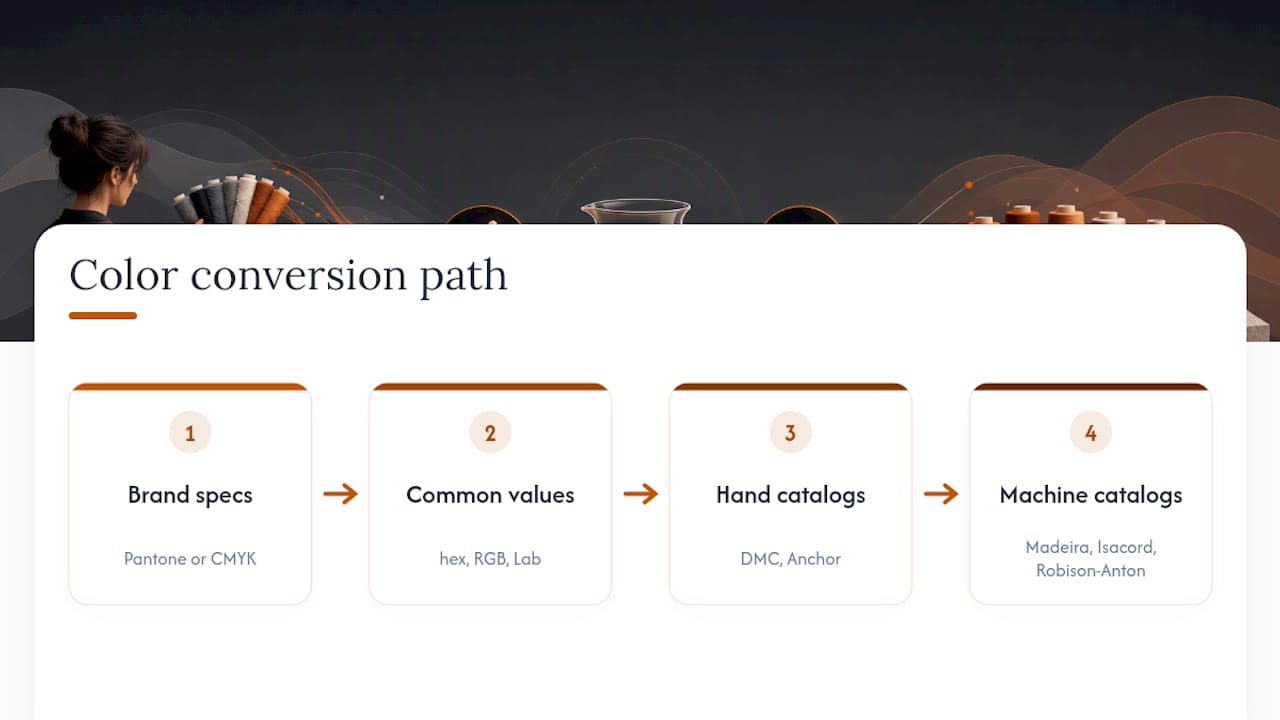
Pantone sits above all of this as the reference most brand guidelines actually use, since logo colors are almost always specified in Pantone or CMYK for print consistency. None of the major thread catalogs accept Pantone codes directly, though, which is why every workflow above routes through hex or RGB as the common language between a brand’s official color and a specific spool. Knowing which system your project depends on, hand embroidery numbering, machine thread catalogs, or brand Pantone specs, determines which tool and which conversion step you actually need.
Where Do Most Thread Color Matches Go Wrong?
The most common failure isn’t a bad tool choice. It’s trusting a single digital result without checking it against anything physical. A hex match can score as a near-perfect ΔE value and still look off once it’s stitched, because dye batches, fabric undertone, and lighting all shift the outcome in ways a screen can’t show you.
Dye lot variance causes more mismatches than people expect. Thread manufacturers batch-dye their spools, and two spools sold under the identical code number can carry slightly different shades if they came from different production runs. This becomes a real problem on large team orders where you’re buying thread over multiple weeks. A jersey number stitched in week one might not perfectly match one stitched in week four, even with the same code on the label.
Fabric undertone is another quiet culprit. A “true black” fabric often carries a hidden blue, brown, or green undertone that only shows up once thread sits against it. Matching against a printed swatch instead of the actual garment fabric leads straight into this trap, since printed color charts don’t carry the same undertones as dyed textile.
Metallic and neon threads resist standard matching almost entirely. Both reflect light in ways that standard Lab-based algorithms weren’t built to model, so a tool might return a confident-looking match that’s visibly wrong once you thread the machine. Treat any metallic or neon result as a rough starting point, not a final answer, and lean harder on the physical swatch stage than you would for a standard color.
How Should You Check Thread Colors Under Different Lighting?
Lighting changes color more than most people account for until a finished piece looks wrong outside the room where it was sewn. Fluorescent shop lighting tends to push colors cooler and flatter, which can make a warm red look almost brick-toned while you’re stitching, only to look correct once it hits daylight.
The safest habit is checking your match under at least two different light sources before finalizing anything. Natural daylight near a window is the most reliable baseline, since it renders color closest to how most people will actually see the finished garment. Follow that with a check under whatever lighting the piece will realistically be seen in, gym fluorescents for a team jersey, warm indoor lighting for a hoodie meant for everyday wear.
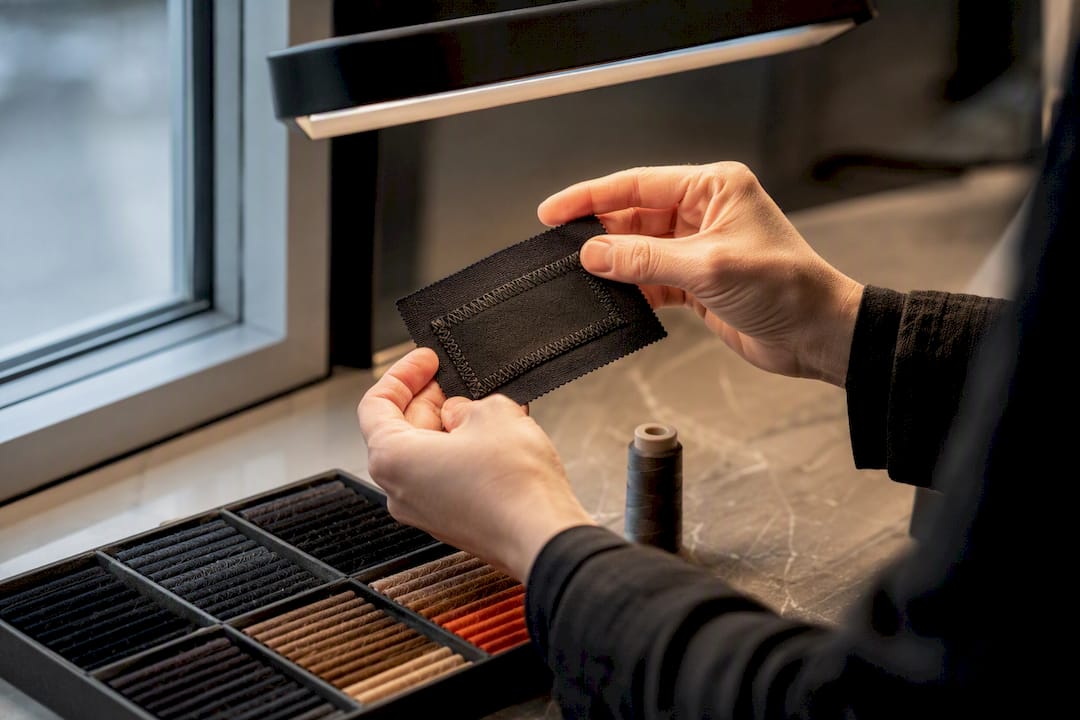
Avoid trusting a match made entirely under warm incandescent bulbs, which shift everything toward yellow and orange and can make a genuinely mismatched thread look fine until you step outside. If you’re working late and only have artificial light available, treat any decision made under it as provisional. Confirm again under daylight before you cut thread for a full production run, not after.
How Do You Store Thread So Colors Stay Easy to Match Later?
Organized thread storage isn’t just about tidiness. It directly affects how accurately you can match colors months or years down the line, especially once labels fade or spools get separated from their original packaging.
Store thread away from direct sunlight, since UV exposure fades dye over time and a faded spool will throw off any future match attempt even if the code number is still legible. A closed drawer or opaque storage box beats an open shelf near a window for anything you’re planning to keep long term.
Keep the manufacturer code visible on every spool, either on the original label or transferred to a small tag if the label wears off. Losing that code turns a five-second lookup into a full re-matching process from scratch. Organizing by brand and number, rather than by loose color grouping, also makes it far easier to pull the exact spool you used on a past project when a reorder comes in.
For team or client work, keep a simple log of which thread code went with which project and fabric. A spreadsheet with garment type, thread brand, code, and date is enough. That record is what lets you match a reorder six months later without repeating the entire digital-and-physical matching process from the beginning.
Verified Tools and Reference Pages Worth Bookmarking
These are the tools referenced throughout this guide, worth keeping on hand for your next project:
- Stitchers’ Suite — in-browser photo-to-thread matcher for DMC and Anchor
- Patch Empire — hex-to-thread converter for Madeira and Isacord
- VectoSolve — SVG-to-spool mapper with stitch estimates
- Threadcolors — RGB/hex lookup table for floss codes
- LangColor — cross-brand yarn and thread matcher covering roughly 80 brands
Ready to Put a Matched Color Into Production?
Once you’ve confirmed your thread code against a physical swatch, the next step is turning that decision into finished apparel. Custom hockey gear can be designed with this kind of color precision, whether you’re outfitting a full roster or personalizing a single piece. Our hockey graphic t-shirts support custom logo colors and player names, and our hockey accessories collection covers the smaller items, patches, hats, bags, where thread color consistency matters just as much as it does on a full jersey. Bring your confirmed thread code and swatch to your order, and you’ll skip the guesswork entirely.
A Pragmatic Take on the Whole Process
The conventional advice on thread matching treats digital tools and physical swatches as competing methods, pick one camp or the other. That framing misses the point entirely. Lab-based matchers using CIEDE2000 are genuinely good at narrowing hundreds of thread codes down to two or three realistic candidates, faster than any amount of eyeballing a color card ever could. But treating that digital shortlist as the final answer is where most mismatches actually happen, not in the algorithm, but in skipping the five-minute physical check that catches what the screen can’t show.
What gets overrated is precision for its own sake. Chasing a perfect ΔE score matters far less than testing the winning candidate on your actual fabric, under real light, after a wash cycle if the garment will see one. What gets underrated is the boring stuff: writing down the thread code you actually used, keeping a current thread card on hand, and accepting that dye lots shift over time even under the same catalog number.
If you take one thing from this guide, let it be the order of operations. Narrow digitally. Confirm physically. Never skip the second step because the first one looked convincing on a screen.
— Eric
Sources
- Embroidery Thread Colour Matcher from Photos | DMC & Anchor (Stitchers’ Suite)
- Thread Color Converter | Match Colour to Thread | Patch Empire
- Thread Color Mapper: Match SVG Colors to Madeira, Brother & Isacord Thread | VectoSolve
- Find Threads by Color | Threadcolors
FAQ
How Do You Match Thread Color to Fabric?
Compare a fabric swatch to a physical thread card under natural daylight, then narrow your options with a Lab-based digital matcher before making a final decision. Confirm the shortlisted code by stitching a small test swatch on the actual fabric.
Is There a Free Tool That Can Match Colors From a Photo?
Yes. Tools like Stitchers’ Suite let you upload a photo and get thread color suggestions for free, and the matching runs in your browser so the image never leaves your device.
How Do I Match Embroidery Thread Colors Specifically?
Extract the hex code from your logo or fabric photo, run it through a matcher filtered to your thread brand (Madeira, Isacord, or similar), then confirm the top result against a physical thread card before stitching a production run.
How Can I Find DMC Thread Colors That Match a Specific Color?
Use a hex or RGB lookup tool like Threadcolors to search DMC floss codes by color value, then verify the closest match against a printed DMC color card since screen and print can render shades differently.
Why Doesn’t My Screen-Matched Thread Look Right in Person?
Screens display color as RGB light, while thread reflects light as dyed fiber, so identical hex values can look different in person. Sheen, fabric undertone, and lighting all shift perception in ways a monitor can’t reproduce, which is why a physical check always comes after any digital match.
