
Order a core kit first (game jerseys, practice shirts, one hoodie). Pick 2 to 3 fan items for supporters, and lock a single hard deadline before you touch a design file. That sequence, in that order, is how you choose fan gear for a local hockey team without a last-minute scramble. The rest of this comes down to timing: proofing usually eats 3 to 5 business days, screen printing runs 7 to 10 business days and sublimation runs 10 to 14, and shipping adds another 2 to 5. Add it up and you need a few weeks of buffer for a sublimated jersey order, less for screen-printed tees.
This week’s checklist:
- Pull the full roster with legal names, preferred jersey names, and numbers.
- Lock your logo files and team colors before requesting any mockups.
- Decide on the core kit items now, then treat fan gear as a fast follow.
Working with a specialist like RNK Apparel Co. shortens this list further, since one vendor handling mockups, personalization, and fulfillment removes several handoffs that usually cause delays.
Key Takeaways
A smooth team gear order comes down to sequencing the core kit first, locking one deadline, and choosing a decoration method that matches your design and timeline.
| Point | Details |
|---|---|
| Order core kit first | Jerseys, practice shirts, and one warm layer take priority over fan extras and add-ons. |
| Match method to design | Use sublimation for full-color jerseys, screen print for bulk tees, embroidery for hats. |
| Build in a real buffer | Budget roughly 3 to 5 days for proofing plus 7 to 14 days for production and 2 to 5 for shipping. |
| Collect sizes with one deadline | Use a single online form and a hard cutoff to avoid mismatched or late orders. |
| Require a sample for new designs | Request a physical sample before full production on any new fabric or complex artwork. |
| Use a hockey-focused vendor | RNK Apparel Co. handles mockups, personalization, and team stores under one process. |
Table of Contents
- How To Choose Fan Gear For Your Local Hockey Team
- Which Decoration Method Fits Your Design?
- How Do You Collect Accurate Sizes For A Youth Or Adult Team?
- What Artwork And File Specs Do You Need To Provide?
- What’s The Realistic Timeline From Quote To Delivery?
- How Much Should You Budget For Custom Team Gear?
- What Should You Check Before Approving A Proof?
- Why RNK Apparel Co. Simplifies A Team Order
- What Actually Derails A Team’s Fan Gear Order
- Get A Team Quote Started This Week
- Where To Learn More And Start Your Order
- Sources
How To Choose Fan Gear For Your Local Hockey Team
Start with three categories: what the team wears on the ice, what parents and fans buy at the rink, and the small extras that round out a team store. Trying to order everything at once, with equal urgency, is the most common reason teams miss deadlines.
The core kit covers custom game jerseys with names and numbers, practice shirts in a durable interlock fabric, and one warm layer, usually a hoodie or a lightweight jacket. This is the non-negotiable list. Everything else is optional in terms of timing, even if it is not optional in terms of team spirit.
High-value fan items are the ones parents buy without needing to be convinced: graphic tees, structured hats, and drawstring bags with the team logo. These move fast at a rink because they’re affordable, wearable outside the arena, and easy to personalize with a player’s number instead of a full name.
Small-quantity add-ons like scarves, water bottles, and custom socks work best as a second wave. Add them once the core kit and fan tees are locked, so they don’t compete for production slots or budget attention.
- Season kickoff — order the core kit and one fan tee style together, six to eight weeks before opening night.
- Tournament weekend — add a limited-run hat or bag as a quick fundraiser item, ordered separately from the core kit.
- Fundraising store — open a short-window team store with fan items only, since a well-built team store separates required gear from optional purchases and keeps parents from confusing the two.
For a broader look at what fits into each category, this guide to hockey fan apparel breaks down product types by use case, and these hat styles built for team spirit are worth a look if headwear is part of your plan.
Which Decoration Method Fits Your Design?
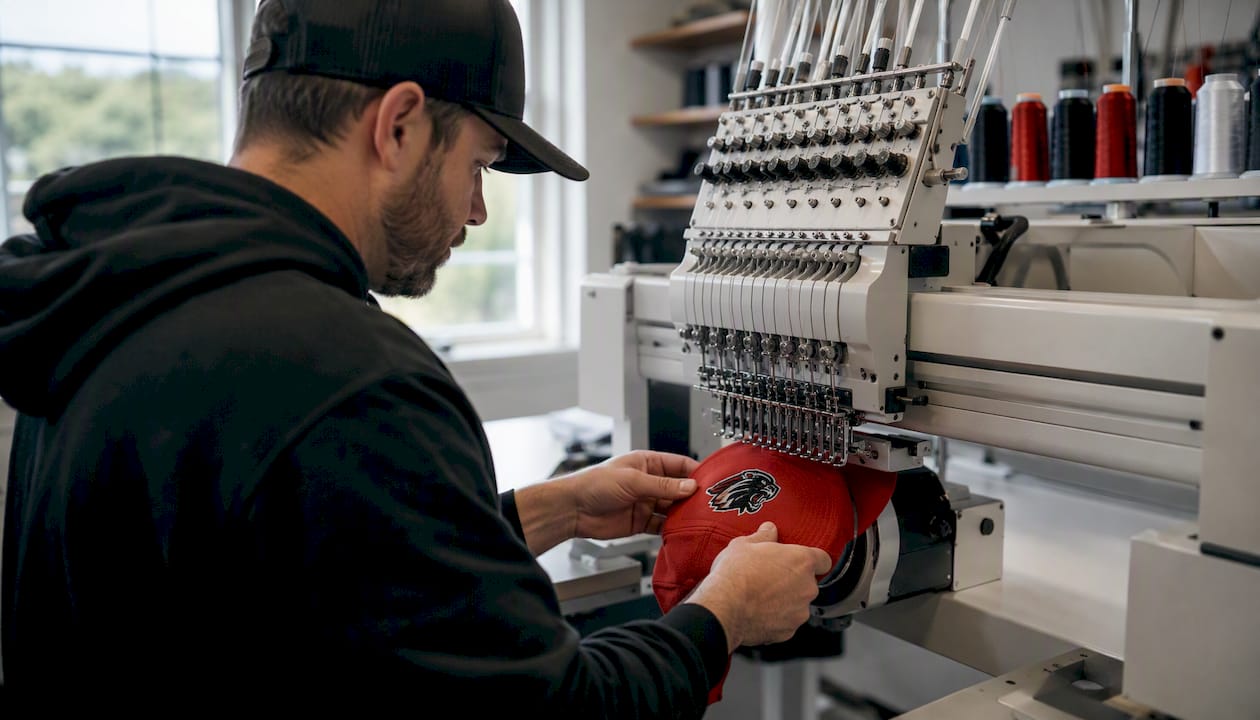
Pick the method by matching design complexity and fabric, not by picking whatever the last vendor offered you. Sublimation is the right call for full-color, breathable jerseys where the design bleeds edge to edge. Screen printing wins on low-cost logos and bulk tee orders where you need one or two colors on cotton or a cotton blend. Embroidery is the standard for hats and premium items where durability under repeated washing matters more than flat cost, and using a Hockey Player Stamper or Embosser by Noteworthy Collections can add a custom touch to these items. Heat-press vinyl handles small, personalized runs, like adding one player’s name to a single hoodie without running a full production batch.
| Method | Best for | Production turnaround | Durability / washability | Setup / per-unit cost | Personalization |
|---|---|---|---|---|---|
| Screen print | Bulk tees, simple logos | 7 to 10 business days | Good; can crack over years of heavy washing | Low setup, low per-unit at volume | Limited to a few colors per design |
| Sublimation | Full-color game jerseys | 10 to 14 business days | Excellent; ink is dyed into the fiber, won’t peel | Higher setup, moderate per-unit | Names and numbers built into the dye process |
| Embroidery | Hats, polos, premium layers | 7 to 10 business days | Excellent; holds up to years of use | Higher setup per design, moderate per-unit | Best for small logos and text, not full graphics |
| Heat-press vinyl | Small personalized runs | 3 to 5 business days | Fair; can peel with aggressive drying | Low setup, higher per-unit for small batches | Fast individual names and numbers |
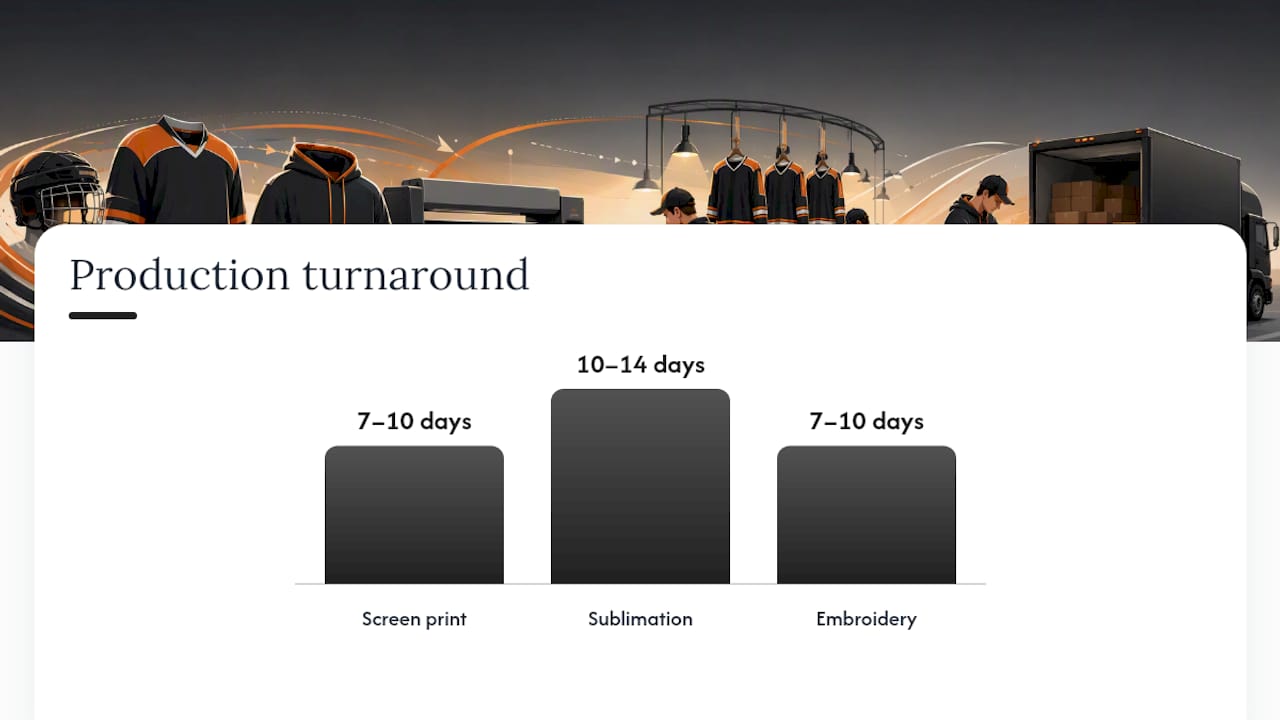
Screen printing, sublimation, and heat transfer vinyl all show up as the standard decoration options in most custom team jersey programs, each with its own cost and durability trade-off.
Pro Tip: Mix methods within one order to control cost. Sublimate the game jerseys for a full-color look, then embroider the hats and use screen printing for the fan tees. You get the right finish for each item without paying premium pricing across the whole order.
How Do You Collect Accurate Sizes For A Youth Or Adult Team?
Use an online size form with a hard submission deadline, and request a physical sample if you’re unsure how a new fabric or cut fits your roster. Guessing sizes off last year’s roster, or letting parents email sizes one at a time, is how teams end up with a box of mismatched jerseys two days before opening night.
Youth sizing runs smaller and less consistently across brands than adult sizing, so when a player is between sizes, size up rather than down. Growing kids outgrow a snug fit within a season; adults rarely do.
- Send one size form to every family with a single close date, not a rolling window.
- Cross-check names and numbers against the official roster before submitting to production.
- Flag any players who registered late and route them through a smaller secondary order.
- Order 2 to 3 extra units in the most common sizes to cover late signups or a lost jersey.
Pro Tip: Reserve those 2 to 3 extra units in the sizes your roster skews toward, usually adult medium and large for adult teams, youth medium for younger squads. It’s cheaper than a rushed reorder later.
What Artwork And File Specs Do You Need To Provide?
Supply a vector logo, in AI, EPS, or a high-resolution PDF, and state your team colors as Pantone, RGB, or HEX values before anyone starts a mockup. A blurry logo pulled from a team Facebook page is the single biggest cause of proof delays, because a vendor has to redraw it before production can start.
If you only have a raster file (a JPG or PNG), it needs to be at least 300 DPI at the final print size, and even then it may not scale cleanly onto a full jersey. Vector files avoid that problem entirely since they scale without losing quality.
- Vector logo (AI, EPS, or high-res PDF) with team colors specified in Pantone, RGB, or HEX.
- Raster art (JPG, PNG) at minimum 300 DPI at actual print size, only as a fallback.
- A clean roster list with exact spelling of names and confirmed jersey numbers.
- Sponsor logos submitted in the same vector format, with placement noted separately from the team logo.
Some leagues set their own number rules. The NFHS requires back numbers at least 10 inches tall with sleeve numbers at least 4 inches in certain settings, and many hockey associations require contrasting home and away sets. Confirm your league’s specific rules before finalizing a proof, and flag any required patches (league, sponsor, memorial) to your vendor early so placement gets built into the first mockup instead of a revision.
| File type | Minimum spec | Use case |
|---|---|---|
| Vector (AI, EPS, PDF) | Scalable, no resolution limit | Team and sponsor logos |
| Raster (JPG, PNG) | 300 DPI at print size | Fallback only when no vector exists |
| Color values | Pantone, RGB, or HEX | Matching team colors across garments |
| Numbering | League-specific height minimums | Game jerseys, per league rule |
What’s The Realistic Timeline From Quote To Delivery?
Build your calendar around the slowest item in your order, not the fastest. If you’re ordering sublimated jerseys and screen-printed tees in the same batch, the whole order moves at sublimation speed.
- Request a quote with your logo files, roster count, and product list ready to go.
- Review the digital mockup and confirm colors, placement, and spelling before approving.
- Lock sizes and numbers with your team, using the hard deadline from your size form.
- Approve the production-ready proof, in writing, so there’s a record of sign-off.
- Track production and shipping, and communicate the arrival window to your team.
| Stage | Typical duration |
|---|---|
| Proofing and revisions | 3 to 5 business days |
| Screen print production | 7 to 10 business days |
| Sublimation production | 10 to 14 business days |
| Shipping | 2 to 5 business days |
Ordering guides recommend planning around your slowest custom item and setting season-specific order-by dates so a fall season order goes in by late July and a winter season order by early October.
Pro Tip: Close your team store 2 to 3 business days before you submit final approval for production. That gap gives you time to consolidate every order into one batch instead of processing rushed, one-off charges after production has already started.
How Much Should You Budget For Custom Team Gear?
Expect a setup or art fee on top of a per-unit decoration cost, and expect that per-unit price to drop once you cross roughly 12 to 15 units, with a bigger break at 50 or more. Fabric, personalization, and rush timing all move the number in the other direction.
- Decoration method — embroidery and sublimation carry higher setup than screen printing.
- Fabric choice — heavier, moisture-wicking polyester costs more than a basic cotton blend.
- Personalization — individual names and numbers add per-unit cost versus a blank team design.
- Size mix — extended sizes (2XL and above) often carry an upcharge.
- Rush production — expediting past standard turnaround adds a fee, sometimes a significant one.
- Shipping — weight and destination matter more for bulky items like hoodies than for tees.
If your team is small, combining orders with other teams in your league can unlock the 50-plus unit pricing tier that a single roster usually can’t reach on its own. Ask any supplier for a line-item quote covering setup, per-unit decoration, personalization, and shipping separately, so you can compare vendors on the same terms instead of one bundled number.
What Should You Check Before Approving A Proof?
Always require a digital mockup, and for a new fabric or a complex design you haven’t ordered before, request a physical sample before committing to full production. Skipping the sample step on an unfamiliar combination is where teams end up with a color that looked right on screen and wrong on the garment.
- Check color accuracy against your stated Pantone or HEX values, not just against the screen.
- Confirm number and name placement matches league rules and your roster spreadsheet exactly.
- Proofread every name for spelling, twice, since this is the error families notice fastest.
- Verify sizing against your submitted chart, not a generic size guide.
- Inspect stitch quality on any embroidered or tackle-twill elements if you have a physical sample.
Samples are worth the extra few days when you’re working with a new vendor, a fabric you haven’t used before, or artwork with fine detail that might not translate cleanly to fabric.
Pro Tip: Keep every proof approval in writing, an email reply or a signed PDF works, and ask your vendor upfront what their remake or return policy covers for custom goods. A vendor without a clear answer to that question is a vendor to keep shopping past.
Why RNK Apparel Co. Simplifies A Team Order
RNK Apparel Co. specializes in custom hockey apparel, which means the mockup, personalization, and fulfillment steps that usually involve juggling multiple vendors happen under one roof. That specialization matters more for hockey than for general team sportswear, since jersey fabric, number placement, and league-specific sizing all carry hockey-specific quirks a generalist print shop may not catch.
- Jerseys, hoodies, and practice wear built around the core kit structure most teams need first.
- Hats and accessories for the fan-facing side of an order, from structured hats to bags and add-ons in the hockey accessories collection.
- Team store setup so families order once, against one deadline, instead of you chasing individual requests.
- Roster-based personalization for names and numbers applied consistently across the whole order.
The trust signals worth checking with any vendor, clear production timelines, a digital mockup step before production starts, the option to request a sample, and a documented remake or return policy for custom goods, are all part of how RNK structures a team order. To start, request a quote or set up a team store directly through RNK Apparel Co.
What Actually Derails A Team’s Fan Gear Order
The teams that scramble in week one of the season almost never fail because of a bad vendor. They fail because sizes trickled in over three weeks instead of arriving by one deadline, or because someone approved a mockup with a logo color that was never actually confirmed against a Pantone value.
Inconsistent artwork is the quieter problem. A coach pulls a logo from an old banner, a parent has a slightly different version on their phone, and nobody notices the mismatch until two garments in the same order look subtly different. The fix isn’t complicated: one team store, one deadline, one approved logo file, and someone specific who owns the proof sign-off.
If you’re setting this up for the first time, RNK Apparel Co.'s team handles the mockup and sizing side of that process directly, which removes most of the coordination work from your plate.
Get A Team Quote Started This Week
RNK Apparel Co. is the direct route to custom hockey gear when your team needs one vendor handling mockups, personalization, and delivery instead of coordinating a print shop for tees and a separate embroiderer for hats. That’s the real friction point for most coaches: not the design itself, but chasing three vendors for one roster’s worth of gear.
Gather your logo files, your roster with confirmed names and numbers, and your core item list (jerseys, practice shirts, hoodie) before reaching out. That prep work alone shaves days off the quote-to-mockup turnaround. Browse the custom hockey t-shirt collection or team hoodies to get a sense of pricing before you request a formal quote, and ask about opening a team store if you’re ordering for more than a handful of players. Start your quote request through RNK Apparel Co. this week to keep your production window intact.
Where To Learn More And Start Your Order
For deeper dives on specific parts of this process, a few resources are worth bookmarking before you place your order.
- How to Set Up a Custom Team Store walks through the store structure that keeps required and optional items separate.
- Custom Hockey Apparel for Small Teams is useful if your roster is under 15 players and minimums are your main concern.
- Common Questions About Team Hockey Apparel Answered covers sizing, returns, and personalization questions that come up after you’ve placed an order.
Sources
- How to Set Up a Custom Team Store for the 2026 Season - Relentless Sports
- 6 Proven Steps to Order Custom Ice Hockey Jerseys for Leagues -
Recommended
- Custom Hockey Apparel for Small Teams: The 2026 Buying Guide – RNK Apparel Co.
- Custom Hockey Apparel for a Local Team - RNK Apparel Co.
- Hockey Team Online Store Setup: The 2026 Guide to Risk-Free Team Appar – RNK Apparel Co.
- Custom Hockey Team Hats: The Ultimate 2026 Guide to Style and Performa – RNK Apparel Co.
