

Social media now decides which fan-apparel styles survive and which ones disappear. Platforms like TikTok, Instagram, and YouTube don’t just reflect what fans want to wear — they actively create that demand by converting visible fan signals into replicable visual templates and immediate shopping intent. A player’s post-game outfit goes viral on a Tuesday; by Friday, a custom tee referencing that moment is already selling out.
Here’s what that means in practice:
- Platform roles differ sharply. TikTok compresses discovery-to-purchase timelines to days. Instagram Reels and Shops turn aspiration into conversion. YouTube builds the deep fandom loyalty that sustains long-term merch demand. Depop and Pinterest feed the discovery and resale loops that validate whether a trend has real staying power.
- Influencer tier matters more than follower count. Micro-creators (10K–100K followers) often drive higher purchase intent than celebrity endorsers because their audiences trust them as peers, not advertisers. A systematic review published in Frontiers in Communication confirms that influencer credibility and message congruence are the primary drivers of fashion purchase intention.
- Speed-to-market is the new competitive moat. Novelty items can move from meme to SKU in under a week. Brands that can’t execute a micro-drop within 72 hours of a viral moment leave money on the table.
- Measurement requires more than likes. Sell-through rate, UGC volume, and resale price lift tell you whether a trend has commercial legs. Engagement rate alone is a vanity metric.
The role of social media in fan apparel trends has shifted from passive amplifier to active design brief. What follows is a platform-by-platform breakdown, a nine-step playbook, and a hockey-specific case study that shows exactly how this works in a niche fandom.
Key Takeaways
Social media doesn’t just amplify fan-apparel trends — it creates them, compresses the timeline from weeks to days, and rewards brands that are already embedded in the community before a viral moment hits.
| Point | Details |
|---|---|
| Platform roles are distinct | TikTok ignites trends in hours; Instagram converts; YouTube builds long-term fandom loyalty. |
| Influencer credibility drives purchase intent | Micro-creators (10K–100K) outperform celebrities for fan apparel because community trust is the conversion lever. |
| Sell-through beats engagement | A sell-through above 85% in 72 hours signals underproduction; below 50% in two weeks signals a misread trend. |
| Authenticity before speed | Brands embedded in the fan community before a viral moment consistently outperform reactive competitors. |
| Rnkapparel for custom hockey drops | Rnkapparel supports micro-drops and bulk team orders with custom logos, names, and colorways built for fast turnaround. |
Table of Contents
- How did social media change the fashion trend cycle?
- Which platforms actually shape fan-apparel signals?
- How do creators and influencers translate fan cues into apparel demand?
- Why does fan apparel function as social currency?
- What does the lifecycle of a fan-apparel trend actually look like?
- What business models convert social attention into fan-apparel revenue?
- How do you measure social media’s impact on fan-apparel sales?
- What risks and ethical issues come with monetizing fan attention?
- Nine-step playbook for brands to act on fan-apparel trends
- Hockey fan apparel and social media: a niche fandom case study
- What will shape fan-apparel trends in the next 12–24 months?
- A perspective on what actually matters here
- Custom hockey drops, made fast: Rnkapparel’s approach
- Sources
How did social media change the fashion trend cycle?
Before social media, fashion moved in seasons. Designers set the agenda at runway shows, editors filtered it through magazines, and retailers stocked what buyers predicted consumers would want six months later. A trend took roughly 12–18 months to travel from runway to mass market. Fan apparel was even slower — licensed merchandise was dominated by official league deals, and independent fan-driven styles rarely escaped regional markets.
The structural shift happened on at least four fronts:
- Attention velocity. Algorithms surface content based on engagement signals, not editorial gatekeeping. A fan-made graphic tee worn in a TikTok video can reach a million people before a brand’s marketing team has finished its Monday morning meeting.
- Low-friction commerce. Instagram Shops, TikTok Shop, and Pinterest’s shoppable pins collapsed the distance between inspiration and purchase. The social commerce ecosystem now spans discovery, consideration, and checkout within a single platform session.
- Creator monetization. Influencers have financial incentives to find and amplify emerging aesthetics before they go mainstream. That creates a professional class of trend scouts who work faster and cheaper than any internal trend-forecasting team.
- Global fan communities. A hockey fan in Minnesota and one in Sweden can co-create a visual language for their team’s aesthetic in real time. Local references become worldwide demand almost overnight.
For product designers and brand strategists, these shifts change three things: the timeline for design decisions (weeks, not months), the risk profile for inventory (smaller, faster runs beat large seasonal bets), and the source of creative direction (fan communities, not internal design teams). Understanding the evolution of fan apparel from tradition-bound licensed gear to community-driven streetwear is the foundation for everything that follows.
Which platforms actually shape fan-apparel signals?
Each platform has a distinct mechanical role in the trend pipeline. Treating them as interchangeable is one of the most common and costly mistakes in fan merch strategy.
TikTok is the ignition point. Its For You Page algorithm has no follower requirement — a zero-follower account can reach millions if the content resonates. That replicability is the key mechanic: once a styling moment goes viral, other creators copy it within hours, each iteration adding slight variations that collectively define a new aesthetic. Industry analysis confirms that short-form video virality compresses discovery-to-purchase timelines to days, with novelty items sometimes moving from meme to SKU in under a week. Seed TikTok with raw, authentic content — not polished ads.
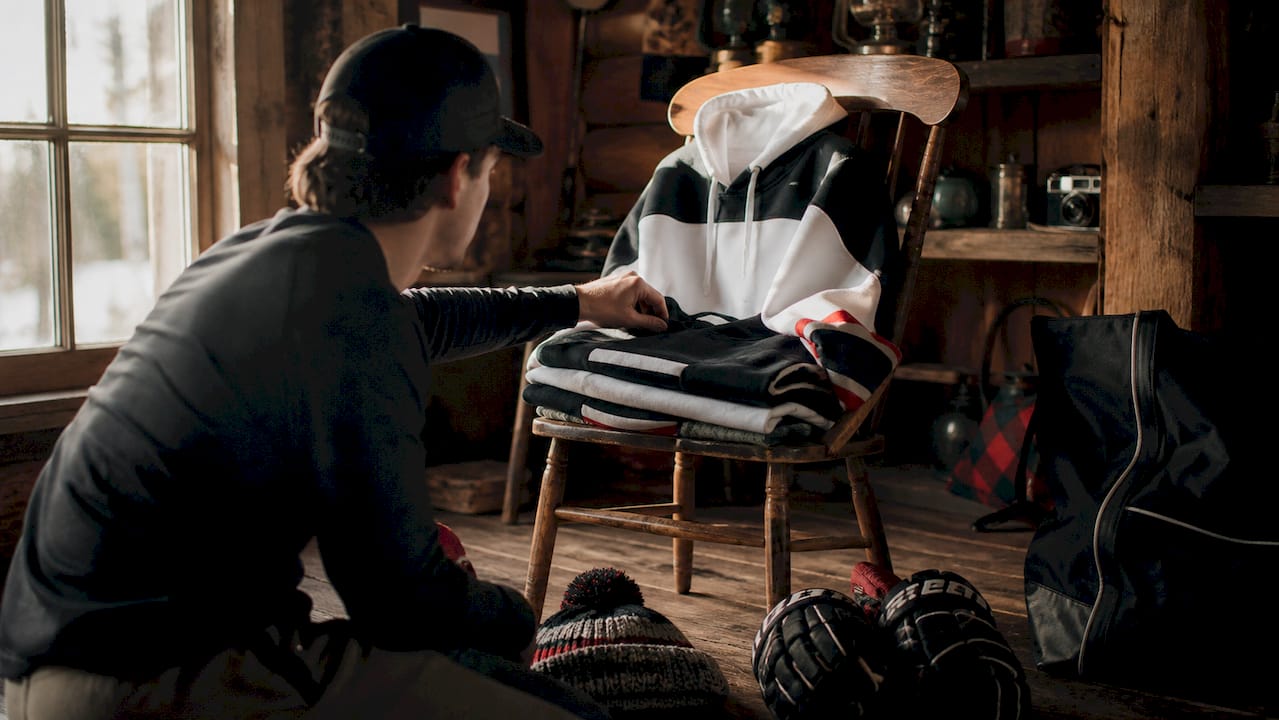
Instagram handles aspiration and conversion. Reels surface trend content to non-followers, while Stories and close-friends lists create the intimacy that drives parasocial loyalty. Instagram Shops and product tags let brands close the loop between a styling post and a checkout page. The platform rewards visual consistency, so it’s where a fan-apparel brand should invest in cohesive aesthetic storytelling rather than one-off posts.
YouTube is the long-game platform. A 15-minute video breaking down a player’s off-ice style or a team’s locker-room aesthetic builds the kind of deep fandom that sustains merch demand across seasons, not just viral moments. YouTube audiences tend to be older and more purchase-ready for higher-ticket items like premium hoodies or limited collabs.
Depop functions as a real-time market signal. When fan-made or limited-edition pieces start appearing on Depop at a markup, that’s a reliable indicator that demand has outpaced supply and that a broader commercial opportunity exists. It’s also where grassroots fan aesthetics get validated before brands notice them.
Pinterest is the moodboard engine. Users save apparel ideas months before they buy, which makes Pinterest data a leading indicator of purchase intent. Statista’s social commerce data shows that purchase frequency varies significantly by category, and Pinterest’s longer consideration cycle makes it particularly useful for planning seasonal drops rather than reactive novelty items.
Shein and Fashion Nova operate as fast-fashion accelerants. Both platforms monitor social trends in near real-time and can produce on-trend pieces at scale within days. Their speed sets the competitive clock for independent fan-apparel brands: if you can’t move faster than Shein on a novelty item, you need to compete on authenticity, quality, or community connection instead.
Princess Polly occupies a different position — it’s a social-native brand that built its entire identity through Instagram and TikTok influencer seeding, demonstrating that a direct-to-consumer model can scale entirely through platform-native content without traditional retail distribution.
Pro Tip: Don’t spread creative assets evenly across platforms. Prioritize TikTok for trend ignition, Instagram for conversion, and YouTube for community depth. Depop and Pinterest are intelligence tools as much as sales channels.
How do creators and influencers translate fan cues into apparel demand?
The influencer economy is the transmission mechanism between a viral fan moment and a product that sells. But not all creators work the same way for fan apparel, and choosing the wrong tier is an expensive mistake.
Influencer tiers and their merch roles:
- Nano (1K–10K followers): Highest trust, lowest reach. Best for seeding product in tight fan communities and generating authentic UGC.
- Micro (10K–100K): The sweet spot for fan apparel. High engagement, niche credibility, and audiences that overlap tightly with specific fandoms. A systematic review in Frontiers in Communication identifies influencer credibility and message congruence as the primary antecedents to purchase intention in fashion — micro-creators typically score higher on both than macro accounts.
- Mid-tier (100K–500K): Good for amplifying a trend that’s already gaining traction. Less intimate than micro, but broader reach with still-meaningful engagement rates.
- Macro and celebrity (500K+): Awareness plays, not conversion drivers. Useful for launching a collab or a major seasonal drop, but expensive and often misaligned with niche fan communities.
Activation types range from organic mimicry (a creator wears your piece without prompting, which is the most credible signal you can get) to paid drops, co-design partnerships, UGC amplification campaigns, affiliate links, and live commerce events. Co-design is particularly powerful for fan apparel because it gives the creator’s audience a direct stake in the product — they’re not just buying merch, they’re buying something their trusted creator helped make.
Authenticity and disclosure matter more in fan communities than in general fashion. Fans are unusually good at detecting inauthentic promotion, and a creator who clearly doesn’t care about the team or the sport will generate backlash rather than sales. The FTC’s endorsement guidelines require clear disclosure of paid partnerships, and fan audiences will punish creators who obscure that relationship. Choose creators whose genuine fandom is visible in their content history, not just their media kit. For a deeper look at how this plays out specifically in hockey, the hockey influencer guide from Rnkapparel covers tier selection and activation examples in detail.
Why does fan apparel function as social currency?
Fan apparel has always been about belonging, but social media turned that belonging into a publicly visible, algorithmically amplified signal. Wearing the right piece in the right context isn’t just self-expression — it’s a credential.
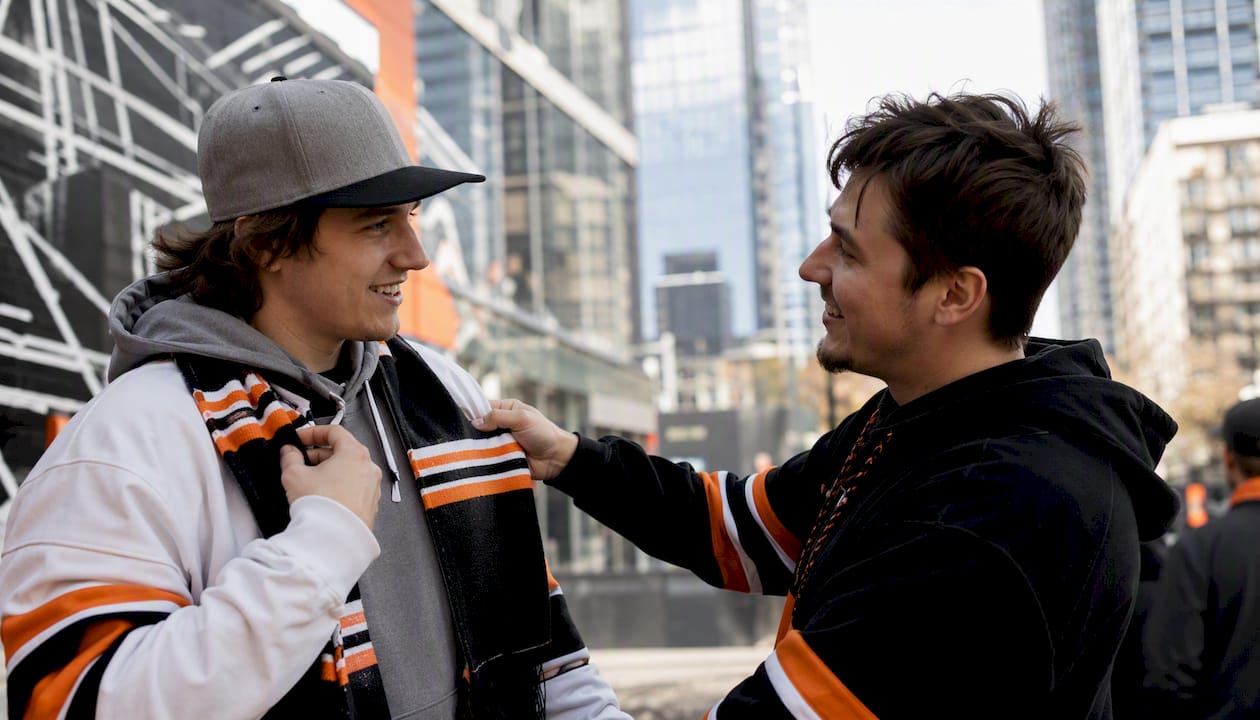
Research published in Springer on social media engagement as social currency finds that for Gen Z, social engagement functions as a form of currency, and apparel that signals membership in a fan community carries value beyond its product utility. The implication for brands is direct: narrative-driven design (story, color palette, micro-details that only insiders recognize) outperforms logo-first merch because it creates a visible membership signal that fans want to display.
User-generated content is the engine that keeps this system running. When a fan posts a photo in your piece and tags the team, they’re not just creating free advertising — they’re validating the piece as community-approved. That validation is more persuasive to other fans than any paid campaign. Channels where fan communities create and validate apparel choices include Discord servers, Reddit communities (r/hockey, team-specific subreddits), fan hashtags on TikTok and Instagram, and YouTube comment sections under player highlight videos.
Viral fan culture converts sideline moments into wider casual-wear trends, and brands that respond with limited runs see fast sales upticks when their product drops align with active UGC cycles.
Pro Tip: To encourage authentic UGC without appearing opportunistic, seed product with 5–10 nano and micro creators in the fan community before any public launch. Let them post organically first. The resulting content becomes your social proof before you spend a dollar on paid promotion.
Fan apparel also functions as identity expression within hockey culture — a dynamic that applies across sports fandoms and explains why community-validated designs consistently outperform generic licensed merchandise.
What does the lifecycle of a fan-apparel trend actually look like?
Understanding the lifecycle helps you decide when to move fast, when to wait, and when to walk away. The timeline compresses dramatically compared to traditional fashion cycles.
- Ignition (hours to 48 hours). A viral moment — a player’s outfit, a post-game interview, a fan-made graphic — generates a spike in social engagement. Watch for: sudden hashtag volume increases, creator replication within the same aesthetic, and search spikes on Google Trends or TikTok’s own search bar.
- Amplification (48 hours to 7 days). Mid-tier creators pick up the aesthetic. UGC variations multiply. This is the window for novelty items. Industry analysis notes that micro-drops often target 72-hour windows for novelty tees and accessories — if you can’t ship within that window, the moment has passed.
- Mainstreaming (1–4 weeks). The trend appears in Pinterest saves, YouTube styling videos, and Depop listings. Engagement rate on original content starts to decline as the aesthetic becomes familiar. This is the window for higher-quality limited runs and collabs.
- Saturation or fade (4–12 weeks). Fast-fashion platforms have produced their version. Resale prices on Depop normalize. The trend either fades or gets absorbed into the fandom’s permanent visual vocabulary.
Cost signals at each stage:
- Novelty tees and accessories (ignition/amplification window): lower unit cost, print-on-demand viable, margin depends on speed of execution.
- Limited-quality drops (mainstreaming window): higher unit cost, requires pre-sourced blanks or manufacturing partners, but commands premium pricing and generates longer-term brand equity.
- Collabs and licensed designs: highest cost and longest lead time, but the strongest long-term brand value according to industry reporting on fandom merch trends.
Decision triggers: Move to a micro-drop when UGC volume is still climbing and resale prices are above retail. Hold inventory when engagement is plateauing but search volume is still high. License or partner when the trend has moved into mainstream culture and you need IP clearance to continue.
What business models convert social attention into fan-apparel revenue?
The monetization path you choose shapes everything downstream: margin, inventory risk, community perception, and legal exposure.
- Micro-drops. Small-batch releases (50–500 units) timed to a viral moment. Low inventory risk, high scarcity psychology, fast cash flow. The trade-off is operational intensity — you need sourcing partners and fulfillment ready before the moment hits, not after.
- Co-branded collabs. Partnering with a creator, athlete, or complementary brand to co-design a piece. Higher production cost and longer lead time, but the creator’s audience becomes a built-in launch audience. Requires clear IP agreements upfront.
- DTC limited runs. Direct-to-consumer drops through your own site, often with a waitlist or countdown mechanic. Builds owned audience data (email, SMS) that compounds over time. Works best when you have an existing community to seed the launch.
- Marketplace and resale strategies. Listing on Depop or similar platforms to reach trend-forward buyers who are actively searching for fan pieces. Lower margin but useful for testing price sensitivity and validating demand before committing to larger runs.
- Fast-fashion response. Producing at volume quickly to capture broad demand. High revenue potential but significant sustainability and brand-perception risks. Brands like Shein and Fashion Nova operate here; independent fan-apparel brands that try to compete on this axis usually lose on cost and win nothing on authenticity.
Legal and IP checklist for fandom-based designs: Before producing any piece that references a team, player, logo, or cultural property, confirm you hold or have licensed the relevant rights — copyright, trademark, and right-of-publicity clearances are all separate issues. Fan-art-style designs that don’t reproduce official marks occupy a gray area; designs that reproduce team logos or player likenesses without authorization do not. One compliance note: the FTC requires clear disclosure of any material connection between a brand and a creator promoting its products, and that requirement applies to gifted product as well as paid partnerships.
The difference between fan apparel and cosplay is worth understanding here — fan apparel tends to be subtler and more wearable, which is precisely why it travels further on social media and sustains demand longer than costume-adjacent pieces.
How do you measure social media’s impact on fan-apparel sales?
Engagement rate is not a business metric. It’s a signal, not an outcome. The measurement framework that actually connects social activity to revenue looks like this:
Core KPIs and what they tell you:
- Engagement rate (likes + comments + shares / impressions): measures content resonance, not purchase intent. Useful for creative optimization, not revenue forecasting.
- CTR from platform content (clicks to product page / impressions): the first real commercial signal. A high CTR with low conversion points to a product-page problem, not a content problem.
- Add-to-cart and conversion rate: the clearest indicators of purchase intent. Benchmark against Statista’s social commerce category data to set realistic expectations for your apparel category.
- Sell-through rate (units sold / units produced): the most honest measure of whether a drop was sized correctly. A sell-through above 85% in the first 72 hours suggests you underproduced; below 50% in two weeks suggests you misread the trend.
- UGC volume: the number of organic posts featuring your product. High UGC volume with low sales suggests a styling gap — people love the look but aren’t buying. Low UGC with high sales suggests a retention opportunity.
- Resale price lift (Depop/secondary market price vs. retail): a premium on the secondary market confirms scarcity and demand. A discount confirms overproduction or weak demand.
- LTV of fan customers: fan buyers tend to repurchase at higher rates than general apparel customers. Tracking LTV by acquisition channel tells you which platform’s audience is actually worth the investment.
| KPI | What it indicates | Tactical response |
|---|---|---|
| High engagement, low CTR | Content resonates but doesn’t drive traffic | Add product tag, clearer CTA, or link in bio |
| High CTR, low conversion | Traffic arrives but product page underperforms | Improve imagery, sizing info, or price anchor |
| Low sell-through (<50%) | Overproduction or weak demand signal | Reduce next run size; validate trend earlier |
| High UGC, low sales | Community loves the look, not the product | Review fit, price, or purchase friction |
| Resale price above retail | Demand exceeded supply | Restock or plan a second drop |
| High LTV from TikTok | Platform audience has strong repeat-buy behavior | Increase TikTok content investment |
Attribution challenges are real and worth naming. Multi-touch attribution across TikTok, Instagram, and YouTube is difficult because most platforms don’t share data with each other. Dark social (shares via DMs, Discord, group chats) is invisible to standard analytics but often drives significant traffic for fan communities. Use UTM parameters on every link, set up post-purchase surveys asking “how did you hear about us?”, and treat view-through attribution from TikTok and Instagram with appropriate skepticism — platform-reported view-throughs are notoriously inflated.
What risks and ethical issues come with monetizing fan attention?
The fan-apparel space has specific failure modes that general fashion brands don’t face at the same intensity.
- IP infringement. Fan communities are built around cultural properties that belong to leagues, studios, athletes, and rights holders. Producing unlicensed merchandise that reproduces protected marks is a legal liability, not just an ethical one. Monitor your own designs and your supply chain.
- Counterfeit knockoffs. A successful drop will be copied. Monitor Depop, eBay, and AliExpress for unauthorized reproductions of your designs. Register trademarks on distinctive marks early.
- Misleading influencer disclosures. The FTC’s endorsement guidelines require clear, conspicuous disclosure of paid or gifted relationships. Fan communities are particularly sensitive to undisclosed promotion — the backlash when it’s discovered tends to be disproportionate to the original offense.
- Overproduction and waste. Fast-fashion response strategies generate significant textile waste. Limited runs with sustainable material options (organic cotton, recycled polyester) are both an ethical choice and a brand-positioning advantage with younger fan audiences.
- Community backlash. Getting the cultural reference wrong — misrepresenting a team’s history, using a player’s likeness without permission, or producing a design that the fan community reads as exploitative — can generate the kind of social media backlash that is very hard to recover from. Global fan communities are fast to call out brands that don’t respect cultural context.
Practical mitigations: Use transparent material sourcing and communicate it. Keep runs limited to reduce waste exposure. Build clear influencer agreements that specify disclosure requirements. Monitor secondary markets weekly during and after a drop. And before producing any fandom-adjacent design, run it past actual community members — not just your internal team.
Nine-step playbook for brands to act on fan-apparel trends
This is the operational sequence that separates brands that catch trends from brands that read about them afterward.
- Set up social listening before you need it. Tools like Brandwatch, Sprout Social, or even native TikTok and Instagram search can surface emerging hashtags, creator clusters, and aesthetic moments in your fandom. Define your keyword set (team names, player names, style terms) and monitor daily.
- Validate the signal before committing inventory. A single viral post is not a trend. Look for creator replication (3+ independent creators using the same aesthetic), search volume uptick on Google Trends, and Depop listing activity before moving to production.
- Prototype fast. Have a print-on-demand partner or a blank-garment supplier pre-qualified so you can produce a sample within 24–48 hours of validation. Speed at this stage is the entire competitive advantage.
- Seed with nano and micro creators. Send product to 5–10 creators in the fan community before public launch. Let them post organically. Their content becomes your social proof and your launch creative simultaneously.
- Execute the micro-drop. Launch with a limited quantity (50–300 units for a first drop), a countdown mechanic, and a clear scarcity signal. Price at a slight premium to retail to signal quality and exclusivity.
- Integrate live commerce where possible. TikTok Live and Instagram Live shopping events during the drop window drive urgency and allow real-time Q&A that converts hesitant buyers. Sports merch strategies in 2026 increasingly rely on live commerce to increase conversion rates for limited drops.
- Amplify community UGC. Repost, shout out, and engage with every organic post featuring your product. This signals to the community that you’re paying attention and encourages more UGC without paid incentives.
- Measure against the KPI framework. Track sell-through rate, UGC volume, and resale price lift in the first 72 hours. These three metrics tell you whether to restock, hold, or move on.
- Decide on restock or scale. If sell-through exceeds 85% and resale prices are above retail, restock immediately or plan a second drop. If sell-through is below 50%, analyze the data before committing more inventory — the trend may have peaked.
Pro Tip: Print-on-demand is the right model for trend validation, not for premium drops. Once you’ve validated demand with a POD run, switch to pre-made blanks with custom printing for the second drop — the quality difference is visible and fan communities notice.
Minimum readiness checklist before any drop: creative assets ready (at least 3 platform-native formats), sourcing partner confirmed, legal/IP clearances complete, fulfillment timeline locked, influencer seeding done, and a post-purchase survey live on your checkout page.
Hockey fan apparel and social media: a niche fandom case study
Hockey fandom is a useful case study precisely because it’s niche enough to be manageable and passionate enough to generate real commercial signals. The dynamics that play out in hockey translate directly to other tight-knit sports and entertainment fandoms.
Consider what happens when a player’s post-game style moment goes viral on TikTok — a distinctive hoodie, an unusual colorway, a piece that reads as both athletic and streetwear. Within 24 hours, fan accounts are screenshotting the look. Within 48 hours, creators are posting “get the look” content. By day three, search volume for that aesthetic has spiked, and Depop listings for similar pieces are appearing at a markup.
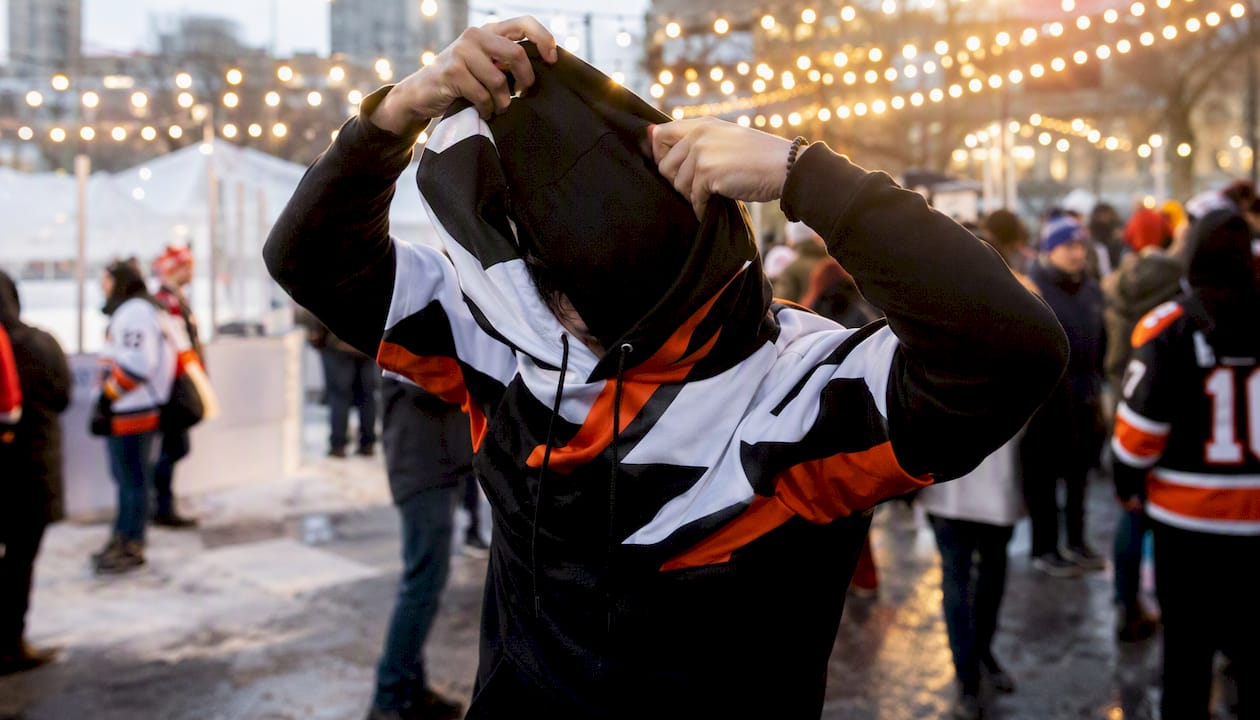
Brands that have social listening in place catch this at the screenshot stage. Those that don’t catch it when Shein has already produced a version.
The practical lessons from this pattern:
- Niche fandoms move faster than general fashion. Hockey fans are a smaller, more cohesive community than general streetwear consumers, which means trend signals are cleaner and easier to read. A 20% spike in a hockey-specific hashtag is a stronger signal than a 5% spike in a general fashion hashtag.
- Authenticity is non-negotiable. Hockey fans can tell immediately whether a brand understands the culture. A design that gets the team colors wrong, uses the wrong era’s aesthetic, or feels like it was made by someone who has never watched a game will get called out publicly and quickly.
- The fan apparel style guide matters. Understanding what fan apparel actually is — distinct from licensed merchandise, distinct from cosplay, rooted in community identity — is the prerequisite for designing pieces that the community will adopt and amplify.
Checklist for niche-fandom brands adapting this approach:
- Monitor 3–5 fandom-specific hashtags and 2–3 creator accounts daily.
- Pre-qualify a print-on-demand partner for novelty items and a blank-garment supplier for quality drops.
- Build a community presence (Discord, Reddit, fan hashtags) before you need it for a launch.
- Design with cultural specificity — details that only insiders recognize are more powerful than broad logos.
- Measure sell-through and UGC volume within 72 hours of every drop.
What will shape fan-apparel trends in the next 12–24 months?
The signals are already visible. Here’s what’s worth building a pilot around now:
- Creator co-design becomes standard, not special. Fans increasingly expect that the people they follow had a hand in designing the merch they’re selling. Brands that build co-design infrastructure (templates, approval workflows, revenue-share agreements) will move faster than those treating every collab as a one-off project.
- Live commerce grows as a drop mechanic. TikTok Shop and Instagram Live shopping are still early in their adoption curve for fan apparel, but the conversion data from sports merch categories is strong enough that brands ignoring live commerce are leaving a measurable revenue channel untouched.
- AI-generated micro-styles accelerate the trend cycle further. AI design tools are already being used to generate colorway variations and graphic concepts in hours rather than days. The brands that use this for rapid prototyping and community testing will validate trends faster than those relying on traditional design workflows.
- “Coded” merch grows in appeal. Subtle, insider-reference designs — pieces that only community members recognize — are gaining ground over loud logo-first merchandise, particularly among Gen Z fans who value exclusivity and cultural literacy over broad brand signaling. The social currency research from Springer supports this: membership signaling through subtle design details carries more social value than obvious branding.
- Sustainability-driven limited runs become a positioning tool. Younger fan audiences are increasingly attentive to production ethics. Limited runs with transparent material sourcing aren’t just waste reduction — they’re a brand story that travels well on social media.
- Cross-category collaborations expand the addressable market. Fan apparel crossing into lifestyle categories (home goods, tech accessories, wellness products) is already happening in entertainment fandoms and will accelerate in sports. For hockey brands, this means thinking beyond the rink.
A perspective on what actually matters here
The conventional wisdom in fan merch is that you need to be everywhere on social media, respond to every trend, and produce as fast as possible. That’s wrong, and it’s expensive to learn the hard way.
The brands that build durable fan-apparel businesses on social media share one characteristic: they were in the community before they needed the community. They had Discord servers, they were commenting on fan posts, they had seeded product with nano creators who genuinely cared about the sport. When a viral moment hit, they didn’t scramble — they activated a network that was already warm.
Speed matters, but it’s the second variable. Authenticity is the first. A fast drop that gets the cultural reference wrong will generate backlash that takes months to recover from. A slightly slower drop that the community recognizes as genuinely theirs will generate UGC, word-of-mouth, and repeat purchases that no paid campaign can replicate.
The measurement obsession in this space also deserves a reality check. Brands spend enormous energy optimizing engagement rate and CTR while ignoring sell-through rate and LTV. Engagement tells you whether people liked your content. Sell-through tells you whether you read the trend correctly. LTV tells you whether you built something worth coming back to. Those last two metrics are where the actual business lives.
For niche fandoms like hockey, the opportunity is cleaner than it looks in general fashion. The community is smaller, more cohesive, and more forgiving of imperfect execution when the intent is clearly authentic. You don’t need a million followers to build a profitable fan-apparel brand in a niche sport. You need 500 genuine community members who trust you, a sourcing partner who can move fast, and the discipline to measure what actually matters.
Custom hockey drops, made fast: Rnkapparel’s approach
When a viral moment hits the hockey community, the brands that capitalize are the ones with sourcing and fulfillment already in place. Rnkapparel is built for exactly that scenario: custom hockey apparel produced on demand, with options for team logos, player names, and colorways that match your community’s aesthetic — not a generic catalog.
Whether you’re a coach ordering team hoodies for a playoff run, a merch manager planning a micro-drop around a fan moment, or an individual fan who wants a piece that actually reflects your team’s identity, Rnkapparel has the production infrastructure to move fast without sacrificing quality. The custom hockey tees are the fastest entry point for novelty drops, and the hockey hoodies are the right choice for premium limited runs that fans will wear beyond game day. Browse the full range and start your custom order at Rnkapparel.
Sources
- Springer: Social media engagement as social currency (2025)
- Frontiers in Communication: Influence of social media influencers on fashion purchase intention (2025)
- Statista: Social commerce topic overview
- Thekings
- Wears
