

Bulk order shipping cost comes down to three levers: billed weight (actual versus dimensional), destination zone, and whether your order volume qualifies for negotiated rates such as UPS Hundredweight or LTL freight. Teams that right-size their packaging and consolidate shipments to fewer destinations routinely unlock wholesale-level discounts of 30 to 60%. Start there. Everything else in your shipping invoice is a variation on those two moves.
TL;DR:
- Shipping costs can be significantly reduced by right-sizing packaging to prevent dimensional weight charges and consolidating shipments to a single destination whenever possible.
- Volume discounts for bulk orders start around 100 parcels weekly through a fulfillment partner, with larger orders qualifying for up to 57% off list rates, and CWT can save up to 70% for qualified shipments to the same address.
- Using commercial shipping methods and requesting itemized, transparent quotes help avoid hidden surcharges, while regular review of shipping contracts ensures rates stay current with order volume changes.
- Cross-border and regional regulations can add costs, especially internationally or to remote areas, so domestic shipping and early ordering outside peak season often lead to lower overall expenses.
- Technology such as rate comparison tools and dimensioning apps can prevent invoice surprises and streamline bulk order management, especially when combined with strategic timing and destination consolidation.
Table of Contents
- How Do Carriers Calculate Bulk Shipping Charges?
- What Volume Discounts and Pricing Programs Should Teams Know?
- How Do You Actually Lower Your Next Bulk Shipping Invoice?
- How Rnkapparel Handles Bulk Order Logistics for Teams
- How Do Shipping Regulations Affect Bulk Order Pricing?
- Parcel vs Freight: Which Bulk Shipping Strategy Costs Less?
- Real Cost Savings From Bulk Shipping Optimization
- What Role Does Technology Play in Managing Shipping Costs?
- How Much Volume Do You Need for Wholesale or CWT Rates?
- Why Do Fuel Surcharges and Seasonal Rates Change Your Bill?
- The Editorial Take: Stop Chasing the Cheapest Carrier
- Get a Bulk Quote and Simplify Your Team’s Shipping Day
- Sources
- FAQ
How Do Carriers Calculate Bulk Shipping Charges?
Carriers bill whichever number is higher: the actual scale weight of your package or its dimensional weight. Dimensional weight (DIM weight) is calculated from a box’s length times width times height, divided by a carrier-set divisor. This matters enormously for hockey apparel because hoodies, joggers, and bagged jerseys are bulky but light. A box of 30 folded hoodies might weigh 40 pounds on a scale but calculate out to 58 pounds once a carrier applies its DIM formula, and you get billed for the 58.
USPS applies these dimensional and cubic pricing rules to commercial shipments, and the agency rounds fractional measurements up to the next whole inch. A box that measures 12.2 inches gets billed as 13. That rounding rule alone can bump a shipment into a more expensive cubic tier, and it is one of the most common reasons a shipping bill comes in higher than the online rate calculator promised.
Beyond base rates, a handful of surcharges do most of the damage on team apparel shipments:
- Residential surcharges apply when you ship to a coach’s or parent’s home address instead of a commercial one.
- Additional handling fees kick in for packages that are irregularly shaped, poly-bagged in bulk, or exceed a carrier’s standard dimension thresholds.
- Oversize and large-package fees hit boxes that cross specific length or girth limits, which happens fast when you pack an entire team’s gear into one container.
- Fuel surcharges adjust monthly based on national diesel prices and apply on top of every other charge.
- Dimension-noncompliance fees get charged when your manifest lists incorrect measurements, something USPS enforces through its own dimension audits.
Pro Tip: Measure one sample garment box before you order 50 more of the same size. A half-inch of unnecessary packing material on every side adds up to a full weight-tier jump by the time you’re shipping 200 units.
What Volume Discounts and Pricing Programs Should Teams Know?
Once your order volume grows past occasional single-box shipments, three pricing paths open up, and each one rewards a different kind of scale.
Negotiated wholesale shipping rates are the most common entry point. Carriers and third-party logistics providers typically structure discounts in tiers tied to weekly parcel volume: roughly 35% off list rates at 100 to 499 parcels per week, 48% off at 500 to 1,999, and 57% off once you clear 2,000 parcels weekly. Most youth and adult team orders will not hit those top tiers on their own, but a fulfillment partner shipping many teams’ orders together often can, and that collective volume is exactly why working with an established apparel fulfiller can beat shipping through a small local print shop.
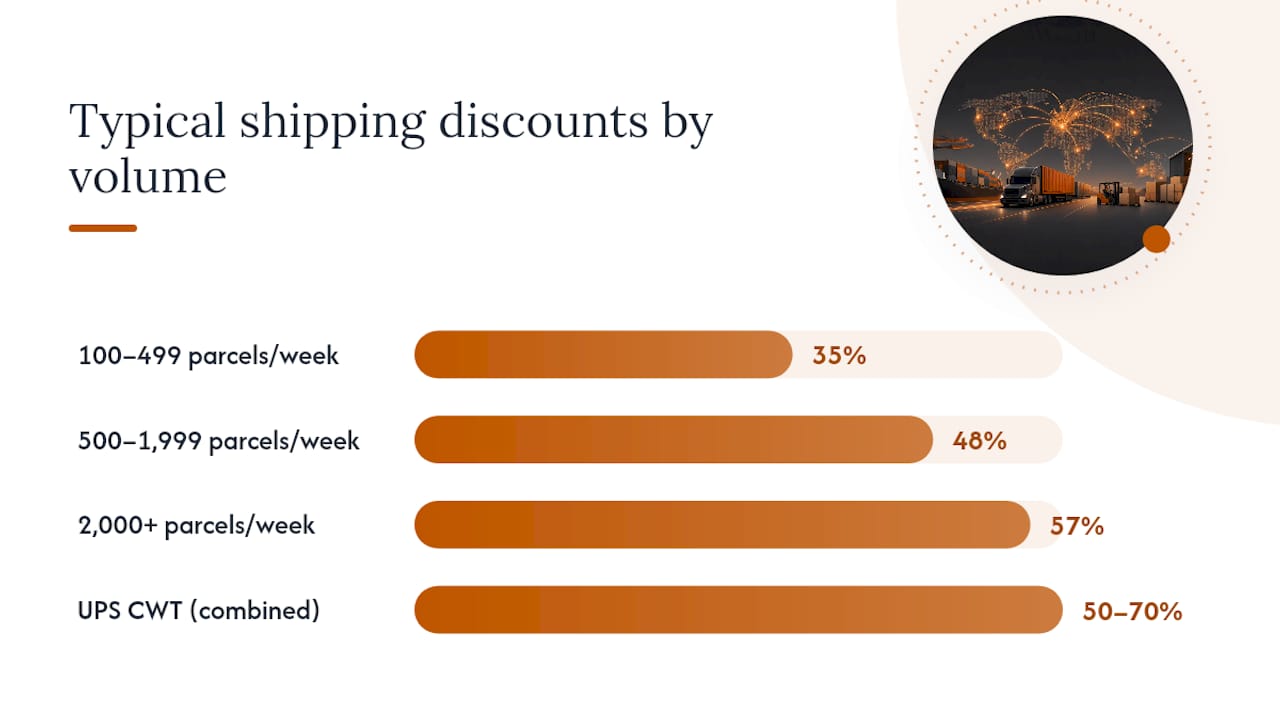
UPS Hundredweight (CWT) works differently. Instead of pricing each box individually, CWT combines multiple packages heading to the same address on the same day into one billed weight, treated as a single shipment. Shippers can see savings of 50 to 70% under CWT when they qualify, because surcharges like residential delivery fees apply once per shipment instead of once per package. If your entire roster’s gear is going to one rink or one athletic director’s office, CWT is almost always worth checking before you default to standard parcel rates.
LTL (less-than-truckload) freight becomes relevant once an order is large enough to fill a pallet, which is common for full-team bulk orders combining hoodies, joggers, and bags. LTL pricing runs on freight class and density rather than per-package weight, so a densely packed pallet of folded apparel often prices better than the same goods shipped as a dozen loose parcel boxes.
- Ask any 3PL for the exact volume threshold that triggers their next discount tier.
- Confirm whether a quoted rate is “percent off list” or a flat per-CWT rate. The two can produce very different real-world totals.
- Request accessorial fee caps in writing before you sign a shipping agreement.
How Do You Actually Lower Your Next Bulk Shipping Invoice?
Most of the savings above depend on things a team manager controls directly, not on finding a magic carrier discount. Work through these in order:
- Test your packaging against DIM weight. Grab a sample garment, box it the way you normally would, and measure it against the carrier’s DIM divisor before you commit to packing 40 more boxes the same way.
- Consolidate by destination. If you’re shipping to one rink, one school, or one central pickup point, group those packages so they qualify for Hundredweight pricing instead of shipping each box separately.
- Push your 3PL for itemized, transparent pricing. Some fulfillment partners add markups of 5 to 30% on top of carrier charges, plus a roughly 3% card-processing fee that rarely appears on the initial quote. Ask for a line-item breakdown before you approve any invoice.
- Use commercial shipping methods. Permit imprint, PC Postage, and proper electronic manifesting all unlock commercial pricing tiers that retail counter rates simply don’t offer.
- Review your shipping contract every quarter. Team order volume shifts by season. A rate negotiated in September can be outdated by February if your roster or order frequency changed.
Pro Tip: Keep a running log of your shipping cost per garment, not just per shipment. A $180 invoice for 60 hoodies tells you a lot more than a $180 invoice on its own.
How Rnkapparel Handles Bulk Order Logistics for Teams
The bulk-order process around custom hockey apparel is structured so that fulfillment decisions are made with team-size orders in mind from the start rather than bolted on after the fact. Made-to-order production timelines are set clearly at checkout, so team managers know what to expect before committing to a bulk run.
Reducing shipping friction on a team order starts with consolidation. When gear for an entire roster ships to one destination, whether that’s a rink, a school, or a team manager’s address, it opens the door to combined-shipment pricing instead of paying separate surcharges on every individual box.
A receiving checklist built specifically for pickup day is published to help coaches and managers save time when a large shipment lands all at once and needs to be sorted by player.
To get the best shipping outcome on a bulk order, teams should be ready to provide:
- Accurate garment counts and sizing broken out by player before production begins.
- One consolidated delivery address whenever possible, rather than splitting a roster across multiple homes.
- Reasonable lead time, since rushed orders limit the packaging and consolidation choices that keep shipping cost down.
The teams that save the most on shipping aren’t the ones chasing the cheapest carrier. They’re the ones who consolidate destinations and give their supplier enough lead time to pack smart instead of pack fast.
How Do Shipping Regulations Affect Bulk Order Pricing?
Regional and cross-border rules add real cost to bulk apparel shipments, even within North America. A team based in the northern United States shipping gear to a tournament in Canada faces customs paperwork, potential duties, and carrier-specific brokerage fees that a domestic shipment never touches. Those charges get added on top of standard freight, not folded into it, so a quote that looks competitive for a domestic run can jump once cross-border fees land.
Within the United States, state-level differences are smaller but still matter for bulk shippers. Some carriers apply different delivery-area surcharges depending on how remote or rural a destination zip code is, which affects teams shipping to smaller towns rather than major metro areas. A hockey team ordering gear for a roster spread across a wide rural region will often see higher per-package delivery-area charges than a team consolidated in one city, even with an identical total weight.
Compliance documentation adds friction, too. International shipments typically require a commercial invoice and accurate harmonized tariff codes for the goods being shipped, and getting those details wrong causes customs delays that carry their own hold fees. For a domestic U.S. team order, none of this applies, which is one more reason bulk-order costs stay more predictable and controllable when a team keeps its shipping destination inside the country.
The practical takeaway for most American team managers: keep bulk shipments domestic when the schedule allows, and treat any international leg of an order as its own separate cost line rather than assuming the domestic rate applies.
Parcel vs Freight: Which Bulk Shipping Strategy Costs Less?
The right strategy depends almost entirely on order size, and the breakeven point is more specific than most teams expect.
Standard parcel shipping, through USPS, UPS, or FedEx, prices per individual package based on actual or dimensional weight plus surcharges. It works well for orders under roughly 10 to 15 boxes, and it’s the default for most single-team apparel runs. The downside is that every box pays its own set of surcharges independently, so a 20-box order can rack up 20 separate residential or delivery-area fees.
Hundredweight service sits in the middle. It still uses parcel carriers, but it batches multiple boxes going to the same address into one billed weight and one set of surcharges. This is usually the sweet spot for a full roster’s gear, hoodies, joggers, tees, and bags, all heading to one rink or one manager’s address.
LTL freight takes over once an order fills a substantial part of a pallet, typically several hundred pounds of apparel. Freight pricing runs on class and density instead of per-box weight, and it includes its own accessorial charges (liftgate service, inside delivery, appointment scheduling) that parcel shipping doesn’t have. For a single team’s seasonal order, LTL is usually overkill. For a league-wide bulk buy across multiple teams, it can beat parcel pricing by a wide margin.
| Shipping method | Best for | Main cost driver |
|---|---|---|
| Standard parcel | Single small orders, under 15 boxes | Per-box DIM weight and surcharges |
| UPS Hundredweight | Full team orders to one address | Combined weight, shared surcharges |
| LTL freight | Multi-team or league-wide bulk buys | Freight class and pallet density |
Real Cost Savings From Bulk Shipping Optimization
The clearest illustration of these savings comes from how discount tiers actually scale with volume. A team ordering fulfillment through a partner shipping only 50 to 80 parcels a week sits below the lowest published discount bracket entirely, paying close to full retail carrier rates. The moment that same volume gets pooled with other teams through a fulfillment partner shipping 500 or more parcels weekly, the applicable discount tier jumps to roughly 48% off list rates.
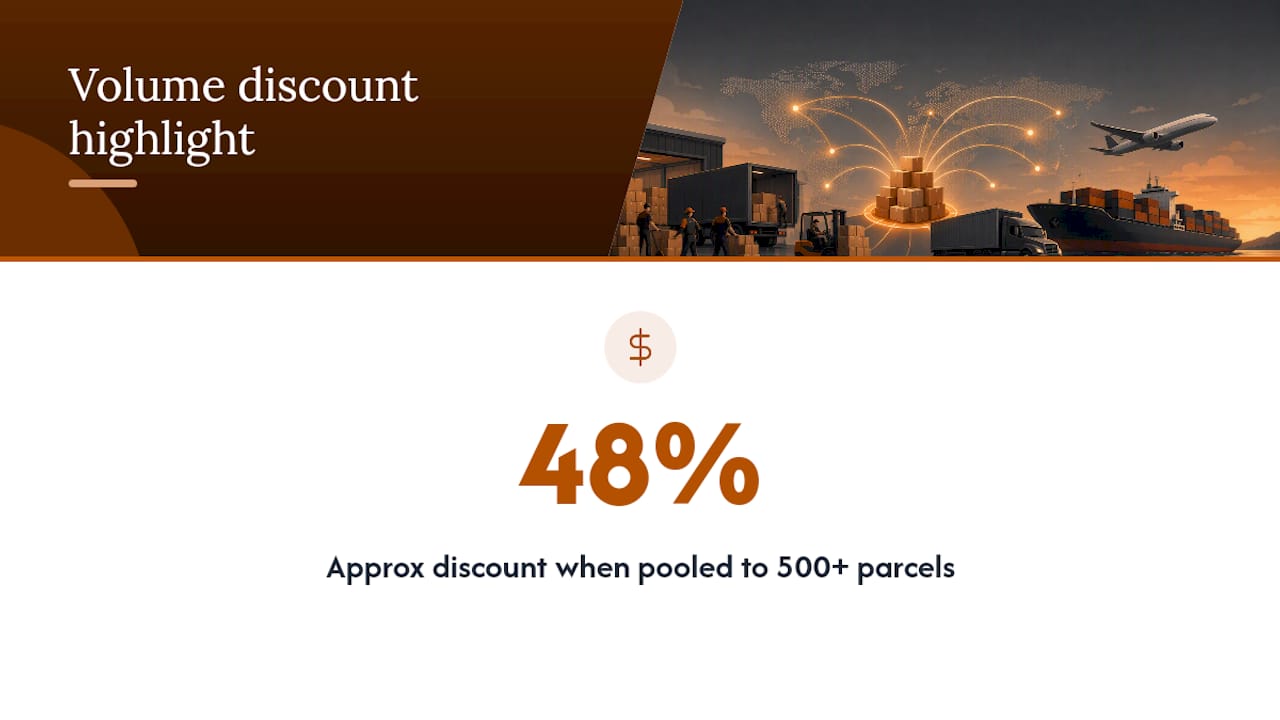
That’s the practical case for why so many youth and adult hockey organizations end up ordering through apparel fulfillers rather than local print shops: the volume math simply doesn’t work in a single team’s favor until you’re ordering hundreds of units a week, which almost no individual team does.
Consolidation delivers a second, smaller but still meaningful savings layer. A team shipping 25 individual boxes to 25 different family addresses pays 25 sets of surcharges. The same team shipping those same 25 boxes to one central pickup location, then handling in-person distribution, can qualify for Hundredweight pricing and pay surcharges once instead of 25 times. On a modest order, that single change in delivery strategy often accounts for more savings than any rate negotiation.
The pattern holds across both examples: cost drops when the shipment looks bigger and simpler to the carrier’s pricing system, not necessarily when you shop around for a better sticker rate.
What Role Does Technology Play in Managing Shipping Costs?
Manual rate shopping and eyeballed box dimensions leave real savings on the table. Shipping software and carrier-integrated tools solve two specific problems for bulk apparel orders: rate comparison and dimension accuracy.
Rate comparison tools pull live pricing across USPS, UPS, and FedEx simultaneously, which matters because the cheapest carrier for a 5 pound box to Ohio is often not the cheapest carrier for a 40 pound box to Texas. Without a comparison tool, most teams default to whichever carrier they used last time, which usually isn’t the cheapest option for every shipment.
Digital scales paired with dimensioning apps catch the packaging problems described earlier before a box ever ships. Instead of estimating a box at “about a foot cubed,” a dimensioning tool gives an exact cubic measurement, which prevents the DIM-weight surprises that inflate invoices after the fact.
Manifesting and label software also matters for compliance. Electronic manifests that list correct dimensions and weights up front avoid the noncompliance fees carriers charge when a physical package doesn’t match its paperwork. For a team manager placing one bulk order a season, this software layer might feel like overkill. For a fulfillment partner processing bulk apparel orders for dozens of teams, it’s the difference between predictable margins and constant invoice disputes.
The bigger point: technology doesn’t replace the packaging and consolidation decisions covered earlier. It just makes those decisions faster and harder to get wrong.
How Much Volume Do You Need for Wholesale or CWT Rates?
Access to negotiated wholesale rates and UPS Hundredweight pricing depends on volume thresholds, and those thresholds are lower than most first-time bulk shippers assume.
For negotiated wholesale rates through a 3PL or fulfillment partner, the entry-level discount tier starts around 100 parcels per week, which no single youth or adult team hits on its own during a normal season. That’s why these rates are usually accessed indirectly, through a fulfiller whose combined shipping volume across many customers clears the threshold, rather than through a single team negotiating directly with a carrier.
Hundredweight eligibility works differently and doesn’t depend on weekly volume at all. What matters is that multiple packages ship to the same destination on the same day and meet the carrier’s minimum combined weight requirement. A single team’s full roster shipment, all boxes going to one rink on one day, can qualify for CWT pricing on its very first order. There’s no ramp-up period required.
The timeline for seeing savings also differs. Wholesale tier discounts through a fulfillment partner are typically baked into pricing from the first order, since the fulfiller has already cleared the volume threshold before you ever place an order. CWT savings show up shipment by shipment, so a team that ships once a season sees the benefit once, while a team ordering gear multiple times a year sees it repeatedly. Planning ahead for one consolidated shipment date, rather than several smaller ones, is usually the fastest way to actually access these savings rather than qualifying for them in theory but missing them in practice.
Why Do Fuel Surcharges and Seasonal Rates Change Your Bill?
Fuel surcharges adjust monthly based on national average diesel prices, and carriers apply them as a percentage on top of your base shipping charge, not as a flat add on fee. That means the same box shipped in January and again in July can carry two different fuel surcharge percentages even if nothing else about the shipment changed.
Carrier base rates and fuel surcharges have generally trended upward over recent years, and expanding size thresholds for surcharges like additional handling mean many shippers see real-world cost increases that run higher than the headline annual rate hike carriers announce each year. A team that budgeted based on last year’s per-box cost can find this year’s invoice noticeably higher even with identical packaging.
Seasonality compounds this. Hockey season overlaps directly with the carrier peak season that runs from roughly October through January, when holiday shipping volume spikes across the entire parcel network. Peak surcharges stack on top of fuel surcharges during exactly the months most teams are ordering warmup gear and travel apparel for the season. Ordering earlier, in late summer rather than October, sidesteps peak surcharges entirely and gives a fulfillment partner more lead time to consolidate your shipment efficiently.
The practical fix isn’t fighting fuel surcharges directly, since they’re set by carriers and apply uniformly. It’s timing bulk orders to land outside peak season whenever a team’s schedule allows, and treating fuel surcharge percentages as a normal, expected line item rather than a billing error.
The Editorial Take: Stop Chasing the Cheapest Carrier
Most advice on bulk shipping cost focuses on the wrong variable. Team managers spend hours comparing carrier sticker rates when the bigger lever is almost always packaging and consolidation. A hoodie box trimmed by an inch on each side, combined with three other boxes headed to the same rink, will beat carrier shopping every time.
The conventional wisdom of “just negotiate a better rate” also assumes leverage that most single teams don’t have. A 60-jersey seasonal order isn’t going to move a carrier’s pricing desk. What actually works is ordering through a fulfillment partner whose combined volume already clears those wholesale discount tiers, and consolidating your own shipments to qualify for Hundredweight pricing whenever your roster’s gear is headed to one address.
If there’s one thing to prioritize first, it’s this: measure before you ship, and ship together instead of separately. Everything else in this guide, from surcharge negotiation to software tools, matters less than those two habits.
— Eric
Get a Bulk Quote and Simplify Your Team’s Shipping Day
Custom hockey apparel and bulk fulfillment for teams is handled with clear timelines, consolidated destinations, and no guessing about what’s showing up at pickup. If packaging and consolidation are the real levers behind bulk order shipping cost, working with a partner that already builds around team-size orders puts those savings within reach from your first order.
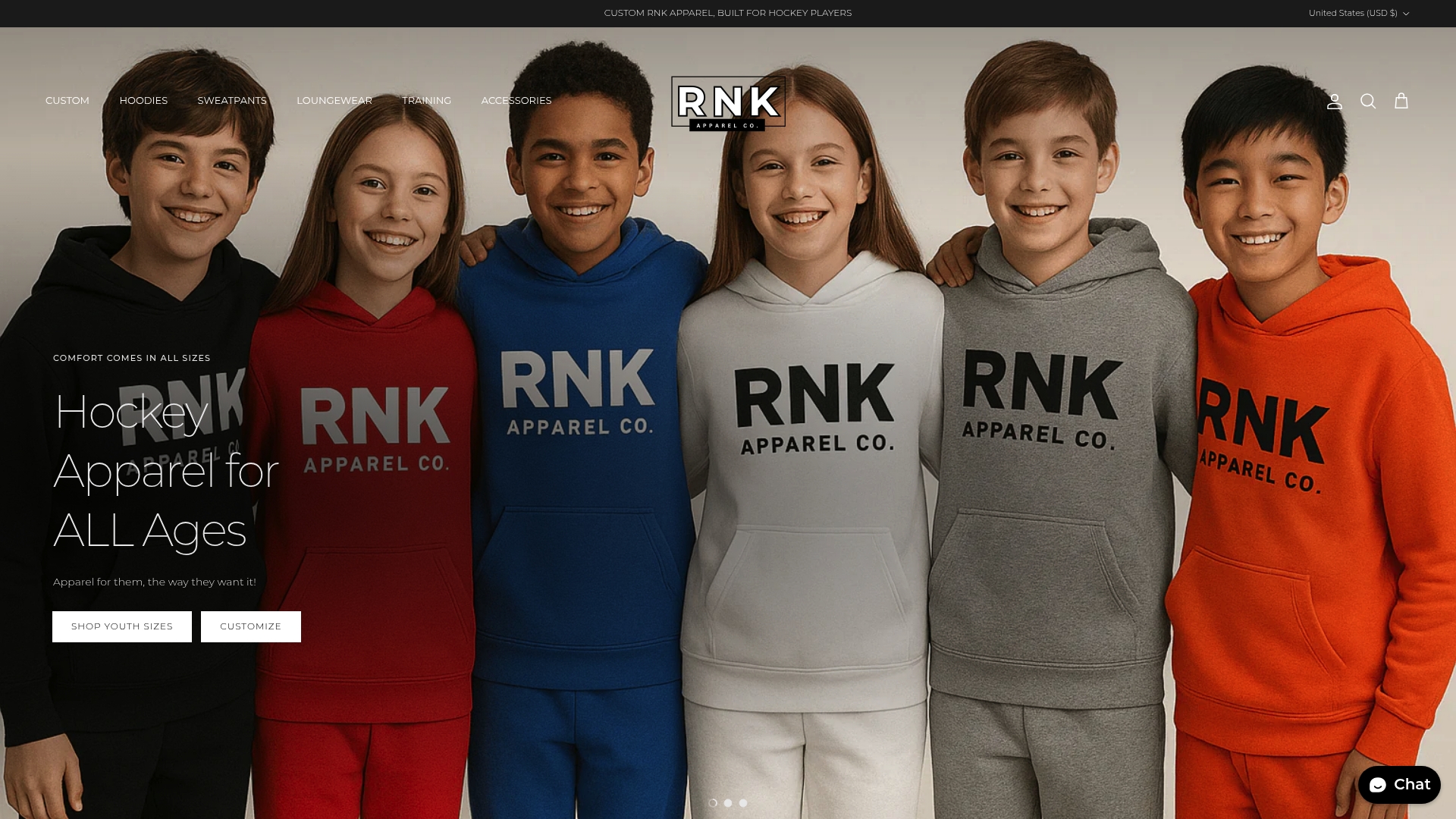
Two places to start. Request a bulk order quote for your team’s custom hockey apparel directly through the main product page, or download the receiving checklist built for team pickup day so your equipment manager isn’t sorting 40 boxes by hand with no plan. Browsing hoodie or jogger options first? The hockey hoodie collection and jogger collection both show current styles available for team customization.
Sources
- How 3PL pricing works (GoBolt / TIJ references)
- USPS DMM — Dimensional weight and commercial pricing rules
- How 3PL pricing works, with every fee line explained (Speed Commerce)
- UPS Hundredweight service guidance (UPS rate tool)
FAQ
What is the biggest factor in bulk order shipping cost?
Billed weight is the biggest factor, and carriers charge whichever is higher: actual scale weight or dimensional weight calculated from box size. For bulky, lightweight items like hoodies, dimensional weight usually wins, which is why right-sizing packaging matters more than most managers expect.
How much can wholesale shipping rates actually save a team?
Negotiated wholesale rates can cut shipping costs by roughly 30 to 60% versus retail carrier pricing, depending on weekly parcel volume. Most single teams access these savings indirectly through a fulfillment partner rather than negotiating a carrier contract directly.
When does UPS Hundredweight make sense for a team order?
UPS Hundredweight works best when multiple boxes are heading to the same address on the same day, such as a full roster’s gear delivered to one rink. Qualifying shipments can see savings of 50 to 70% because surcharges apply once per shipment instead of once per box.
Does Rnkapparel help teams reduce bulk shipping costs?
Rnkapparel structures bulk orders around consolidated team deliveries and provides a receiving checklist to simplify pickup once gear arrives. Current bulk pricing and fulfillment timelines are available by requesting a quote directly on the site.
Should teams order shipping earlier to avoid seasonal surcharges?
Yes. Carrier peak season typically runs from October through January, and it overlaps directly with hockey season ordering. Placing bulk orders in late summer avoids stacked peak and fuel surcharges that otherwise inflate an invoice beyond the base shipping rate.
