

Fan hoodies are popular in cold arenas for two reasons that reinforce each other: they work as a mid-layer that keeps you warm without the bulk of a winter coat, and they let you wear your team’s colors without sacrificing comfort. Walk into any NHL arena on a Tuesday night in January and you’ll see the same thing: jerseys layered over hoodies, fans adjusting their sleeves between periods, and a sea of team-branded fleece from the nosebleeds to the glass. The hoodie sits at the center of that because nothing else does both jobs as well.
Here’s what makes them the go-to choice for cold arena fashion:
- They trap body heat as a mid-layer while still allowing enough airflow to prevent overheating when the crowd gets loud
- They fit under a jersey without bunching or restricting movement
- The hood adds coverage for your neck and head, two spots that lose heat fast in a cold building
- You can pull them off and tie them around your waist when the arena warms up mid-game
- Team branding turns a practical piece of clothing into a statement of loyalty
- They work for every fan, regardless of whether you own an official jersey
Table of Contents
- 1. How cold does it actually get inside a hockey arena?
- 2. Why hoodies work as the essential mid-layer for hockey games
- 3. How your seat location changes what you need to wear
- 4. Fan hoodies as identity, not just insulation
- Key Takeaways
- Rnkapparel makes the hoodie you actually want to wear to the game
1. How cold does it actually get inside a hockey arena?
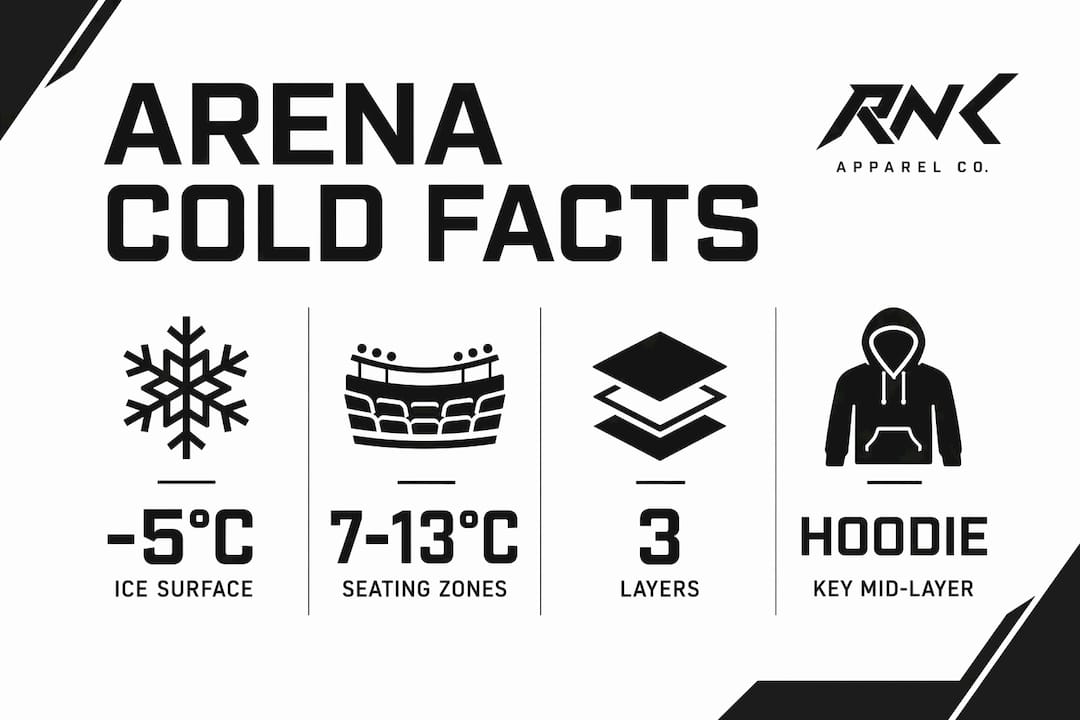
Arena temperatures hit fans harder than most people expect, especially first-timers. The ice surface is maintained below freezing, and the air in the seating area is cold enough that fans often feel chilled, especially depending on where they’re sitting. That’s cold enough that after two hours on a plastic seat, you’ll feel it in your legs, your feet, and your hands.
The cold doesn’t stay uniform across the building, either. Seats near the ice are obviously colder, but the upper bowl has its own problem: cold, dense air pools near the roof, making the highest sections some of the chilliest spots in the arena. Concrete floors conduct cold efficiently, so your feet will often feel it before the rest of your body does.
A few things that shape how cold you’ll actually feel:
- Seat proximity to the ice: Lower bowl seats near the glass face the coldest air directly off the surface
- Upper bowl effect: Cold air collects near the ceiling, making upper sections consistently cold throughout the game
- Concrete and metal seating: Both materials pull heat away from your body faster than wood or cushioned seats
- Crowd density: A packed arena generates body heat that raises the ambient temperature slightly, but the base cold from the ice never fully disappears
- Game timing: Playoff crowds in June still walk into an arena that’s typically between 7°C and 13°C (45–55°F) inside, even when it’s 85°F outside
| Arena zone | Typical air temp | Key cold factor |
|---|---|---|
| Ice surface | Below freezing | Ice maintenance refrigeration |
| Lower bowl, near glass | 7°C to 13°C (45–55°F), colder near ice | Direct cold air off ice |
| Mid-level seating | Slightly warmer, within the 7°C to 13°C range | Moderate cold, some crowd warmth |
| Upper bowl | Cold, often closer to 7°C (45°F) due to air pooling | Cold air pooling near roof |
| Concourse | Variable, often warmer | Enclosed, less ice exposure |
2. Why hoodies work as the essential mid-layer for hockey games
The layering system for a cold arena has three parts, and the hoodie owns the middle one. Start with a moisture-wicking thermal base layer directly against your skin. That layer pulls sweat away and keeps you from getting damp and cold when you warm up during a goal celebration. Cotton fails here because it holds moisture and gets colder as you sweat. Synthetic fabrics or merino wool are the right call.
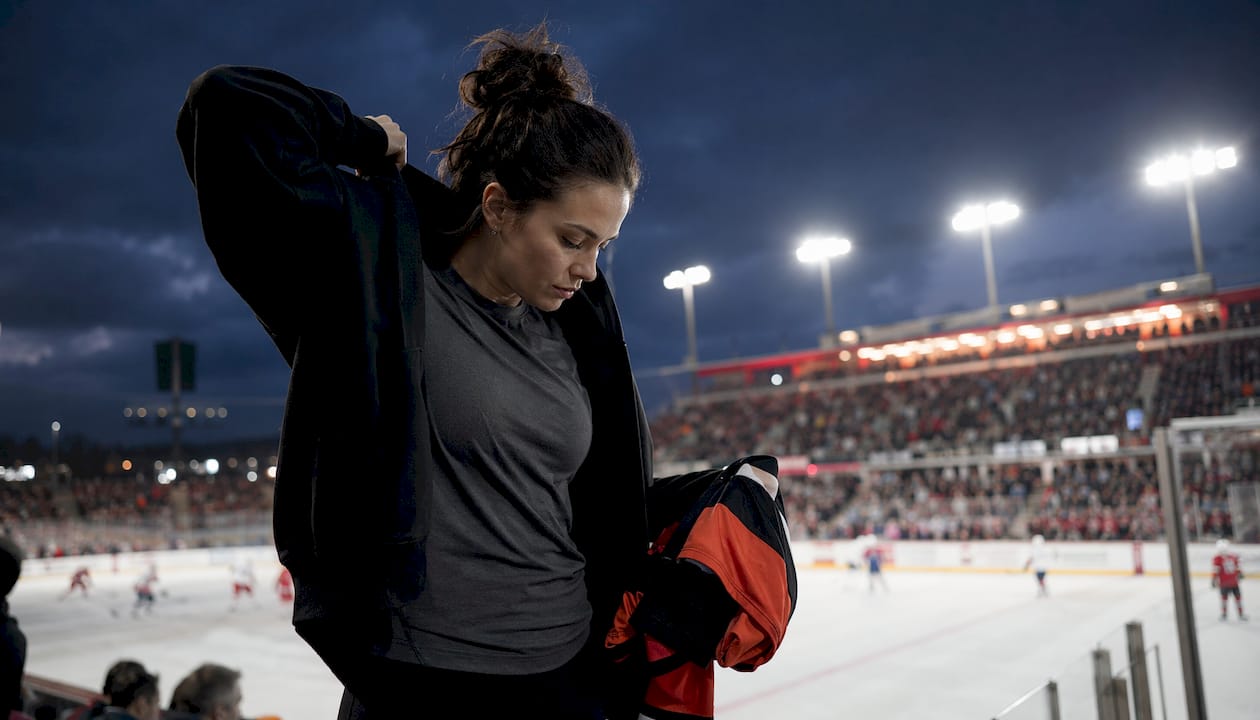
The hoodie goes over that base layer and does the actual warming work. It traps the heat your body generates and holds it close. Mid-layer hoodies trap body heat effectively while still allowing enough airflow to prevent overheating during those moments when the crowd is on its feet and the energy spikes. That balance is exactly what makes them better than a heavy coat for this setting.
The outer layer is optional and situational. A jersey over a hoodie is the classic hockey fan look, and it works because jerseys are cut roomy enough to accommodate the extra bulk underneath. A light jacket or puffer works for the coldest sections.
Pro Tip: Size up your jersey by one size if you plan to wear a hoodie underneath. Most replica jerseys run fitted, and a hoodie adds more bulk than people expect.
Here’s how the full layering sequence breaks down:
- Base layer: Moisture-wicking thermal top and bottom, never cotton
- Mid-layer: Team hoodie or fleece, your primary warmth source
- Outer layer: Jersey over the hoodie, or a light jacket for the coldest sections
- Feet: Thick wool or synthetic socks inside closed shoes; cold air sinks and concrete floors amplify it
- Accessories: A beanie in your bag costs nothing and solves a lot of problems in the upper bowl
- Flexibility: The hoodie is the layer you adjust. You can unzip it, pull it off, or tie it around your waist as the game and your body temperature shift
3. How your seat location changes what you need to wear
Where you’re sitting in the arena determines how seriously you need to take the cold. Lower bowl seats near the ice give you the best view and the most intense chill. Upper bowl seats are colder than most fans expect because cold air pools near the roof, not just at ice level. Mid-level sections tend to be the most comfortable temperature-wise, especially in a full arena.
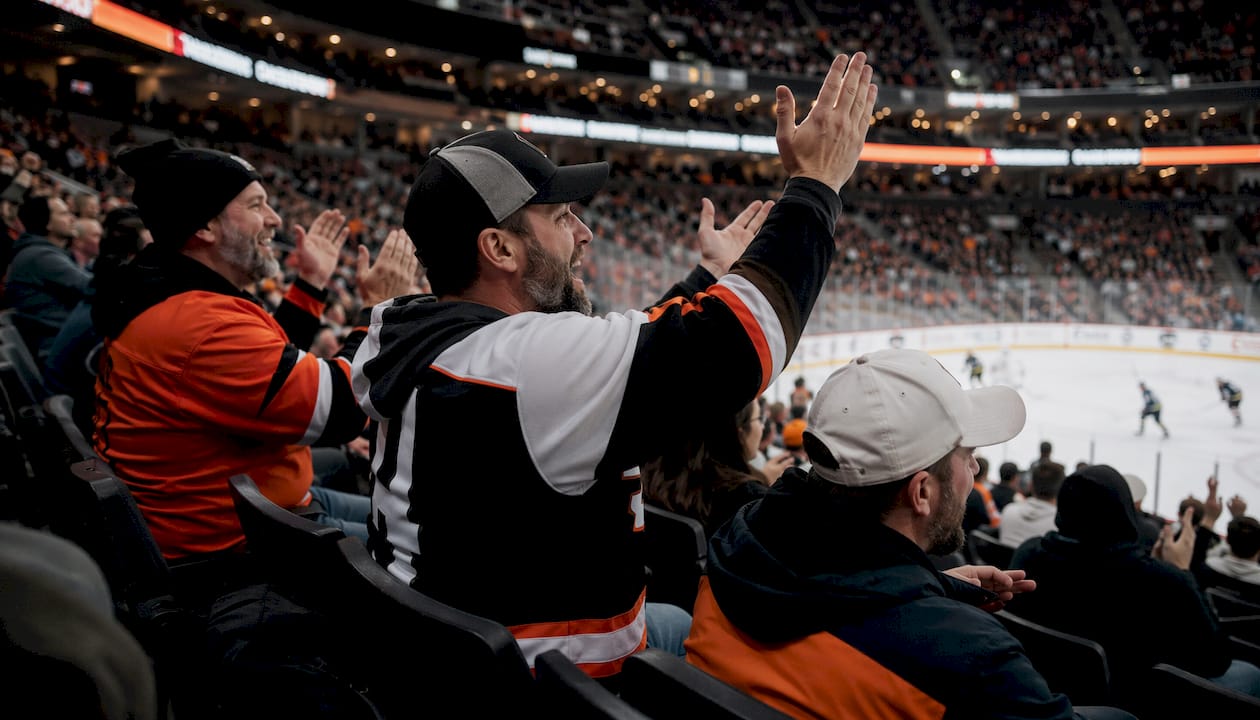
Upper bowl seats require warmer apparel across the board, including a hoodie, hat, and gloves as standard gear rather than optional extras. If you’re in the lower bowl near the glass, the cold is more direct but the crowd density around you helps offset it somewhat.
Practical adjustments by seating zone:
- Lower bowl, near ice: Full layering system plus thick socks; your face and hands will feel the cold most
- Mid-level: Base layer plus hoodie is usually enough; jersey on top if you want it
- Upper bowl: Add a hat and gloves to the standard hoodie setup; don’t leave them in the car
- Between periods: The concourse is warmer, so you’ll naturally shed a layer; the hoodie is easy to carry or tie off
- Outdoor games and playoff June heat: The outside temperature is irrelevant. Inside is always cold. Dress for the building, not the weather outside it.
Crowd density also shifts things during the game. A playoff crowd generates noticeably more body heat than a regular-season Tuesday night, which makes the arena slightly more manageable. But the ice is still there, the refrigeration is still running, and the base temperature doesn’t change. Layer anyway.
4. Fan hoodies as identity, not just insulation
The practical case for hoodies in cold arenas is clear. But the reason fan hoodie trends have accelerated goes well beyond warmth. Modern hoodie culture has shifted from utility clothing to a primary vehicle for identity and community expression, driven by sports loyalty, customization, and emotional connection to teams. A fan wearing a team hoodie isn’t just staying warm. They’re declaring something.
That shift shows up in how fans shop. Customization of fan hoodies with logos, names, and numbers addresses a gap that official merchandise has historically left open, particularly for women and casual fans who want warmth and style without settling for a pink-washed version of a men’s product. A well-made, customized hoodie in team colors fills that gap completely.
Design trends in fan apparel are also moving in a direction that makes hoodies more wearable beyond game day. 2026 hoodie design trends favor subtle graphics, earth-tone palettes, and minimalist aesthetics that blend into everyday wardrobes rather than screaming “I just came from the arena.” That quiet luxury direction means a quality team hoodie works at the game, at the bar after, and on a Saturday morning.
Fan hoodies have become one of the most direct expressions of sports loyalty available to fans. They combine the emotional connection of team identity with the practical comfort of everyday wear, creating a piece of clothing that people reach for repeatedly, not just on game day. The customization trend amplifies this: a hoodie with your name and your team’s logo is personal in a way that a mass-produced jersey simply isn’t.
The identity function of fan hoodies also plays out socially. Wearing your team’s hoodie in the arena signals which side you’re on without saying a word. It creates instant recognition among other fans, builds a sense of shared experience, and makes the crowd feel like a community rather than a collection of strangers. That’s a function no amount of insulation can replicate.
For fans who want to go deeper on how team hoodies build identity beyond the practical, the psychology behind it connects directly to why people wear them even when the arena isn’t cold.
Key Takeaways
Fan hoodies are popular in cold arenas because they solve the warmth problem better than any other single garment while simultaneously serving as the most versatile piece of fan identity apparel available.
| Point | Details |
|---|---|
| Arena temperatures are genuinely cold | Seating areas range from 7°C to 13°C (45–55°F); upper bowl and ice-level seats hit the lower end consistently. |
| Hoodies own the mid-layer role | They trap body heat, allow airflow, and fit under a jersey without bulk, making them the most practical warmth layer for fans. |
| Seat location changes your gear needs | Upper bowl fans need a hat and gloves on top of a hoodie; lower bowl fans near the glass face direct cold off the ice. |
| Identity drives hoodie popularity as much as warmth | Customization with team logos and names turns a practical garment into a personal statement of loyalty and community. |
| Rnkapparel builds custom hockey hoodies for exactly this | Quality, customizable hoodies designed for hockey fans who want warmth, team identity, and a fit that actually works in cold arenas. |
Rnkapparel makes the hoodie you actually want to wear to the game
Most official fan merchandise is designed to look good on a website and fall apart after a season. Rnkapparel takes a different approach: custom hockey hoodies built for the people who actually show up to cold arenas, sit through three periods, and want to look like they belong there.
You can upload your team’s logo, add a name and number, and choose from a range of colors and fits that work whether you’re layering under a jersey or wearing the hoodie as your main piece. The quality holds up to repeated washing, the weight is right for cold arena conditions, and the customization goes further than what you’ll find in most official merchandise stores. Rnkapparel serves fans across the United States and Canada, with options for individual fans, families, and full teams.
If you’re heading to a game and want a hoodie that does both jobs well, the custom hockey hoodies collection is the right place to start. For fans who want to build out a full layering setup, the long sleeve tees work as a base layer that pairs directly with any hoodie in the lineup.
Recommended
- Types of Hockey Fan Apparel: The Complete Fan Guide – RNK Apparel Co.
- Custom Hockey Hoodies USA & CANADA | Affordable Team Hoodies – RNK Apparel Co.
- The Warmest Hoodie for Hockey Moms: A 2026 Rink-Side Survival Guide – RNK Apparel Co.
- Hockey Hoodie: Combining Comfort and Style Seamlessly – RNK Apparel Co.
