

Team hoodies are defined as coordinated outerwear that signals group membership, supports physical readiness, and shapes an athlete’s mental state before and during competition. Understanding why athletes wear team hoodies requires looking at three distinct forces: social identity, physical comfort, and a psychological phenomenon called enclothed cognition. Research published in 2026 confirms that fabric type, fit, and color each independently shift motivation and self-confidence during training. These are not decorative choices. They are performance decisions, and coaches who treat them that way gain a measurable edge.
Why athletes wear team hoodies: identity, cohesion, and the “we” signal
Matching team apparel functions as a visible symbol that strengthens social identification, shifting an athlete’s focus from individual differences to shared team membership. This is the foundation of social identity theory: when people look alike, they think alike as a group. The hoodie becomes a signal, readable by teammates and opponents alike, that says “we are one unit.”
The practical effect is real. When every player on a hockey team wears the same hoodie with the same logo in the same color, status differences fade. The star player and the fourth-liner stand on equal footing in the locker room. That visual equality promotes belonging and cooperation, which translates directly into how players communicate and support each other during a game.
Personalization deepens this effect further. Adding a player’s name and number to a team hoodie increases individual investment in the gear. Athletes who feel ownership over their apparel take better care of it, wear it more consistently, and associate it more strongly with their team role. That association is not trivial. A study with collegiate athletes found that athletic identity boosts wellbeing, mediated by perceived team support and self-efficacy. The hoodie is a physical anchor for that identity.
“Team gear is not just aesthetic. It is a psychological signal that reduces focus on status differences and promotes group cooperation.”
Consistency matters as much as design. Variable apparel weakens the psychological uniformity that makes matching gear effective. If half the team wears one style and the other half wears something different, the “we” signal breaks down. Coaches who allow inconsistency in team hoodies are, without realizing it, diluting one of the cheapest and most effective cohesion tools available.
- Uniform hoodies reduce visible status gaps between players
- Personalized names and numbers increase individual ownership
- Consistent style across the full roster maximizes the group identity signal
- Visible team logos create recognition for both teammates and opponents
How do team hoodies improve physical comfort and performance?
Athletic hoodies trap heat effectively, acting as a thermal buffer that helps muscles warm up before exertion and cool down gradually afterward. This is not just about feeling warm. Cold muscles are less elastic, which raises injury risk. A hoodie worn during a pre-game skate or a post-practice cooldown keeps tissue temperature in the range where performance and recovery both improve.
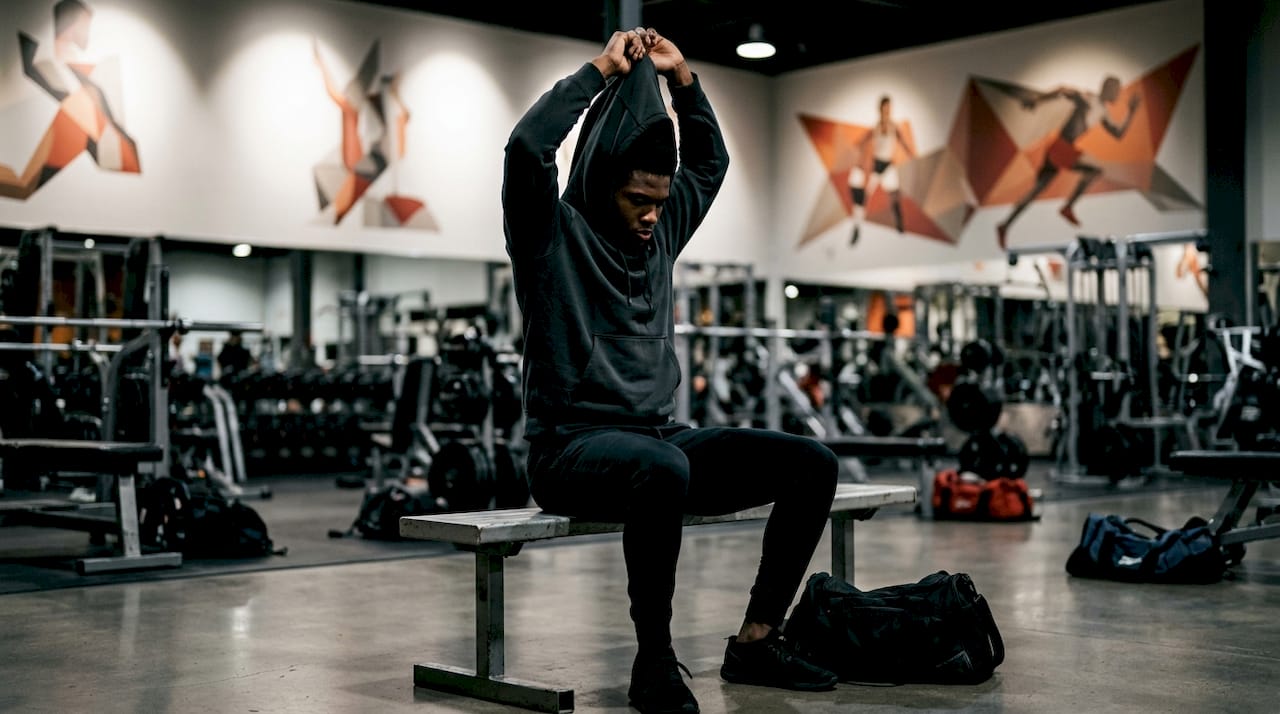
Fabric choice drives most of the physical benefit. Fleece-lined hoodies retain heat without adding excessive weight, making them the preferred choice for athletes who need to move freely. Why athletes prefer fleece hoodies comes down to this balance: warmth without restriction. A cotton-heavy hoodie absorbs sweat and becomes heavy, while a polyester-fleece blend manages moisture and stays light throughout a session.
Fit is equally critical. Ergonomic garment fit boosts self-confidence and reduces distractions during athletic activity. A hoodie that pulls at the shoulders or bunches at the waist becomes a constant low-level irritant. Athletes notice it. That distraction pulls focus away from execution, which is the opposite of what team apparel should do.
- Choose the right fabric. Polyester-fleece blends offer warmth, moisture management, and light weight for active use.
- Prioritize fit over style. A hoodie that moves with the body keeps athletes focused on performance, not discomfort.
- Use hoodies in warm-up routines. Wearing a hoodie during the first 10–15 minutes of warm-up keeps muscles primed before the gear comes off.
- Match sizing to the individual. One-size-fits-all ordering creates fit problems that undermine both comfort and confidence.
Pro Tip: Coaches should order team hoodies in a full size run and fit-test them before the season starts. A hoodie that fits correctly in october performs differently than one ordered in bulk without trying.
What is enclothed cognition and how does it affect athletes?
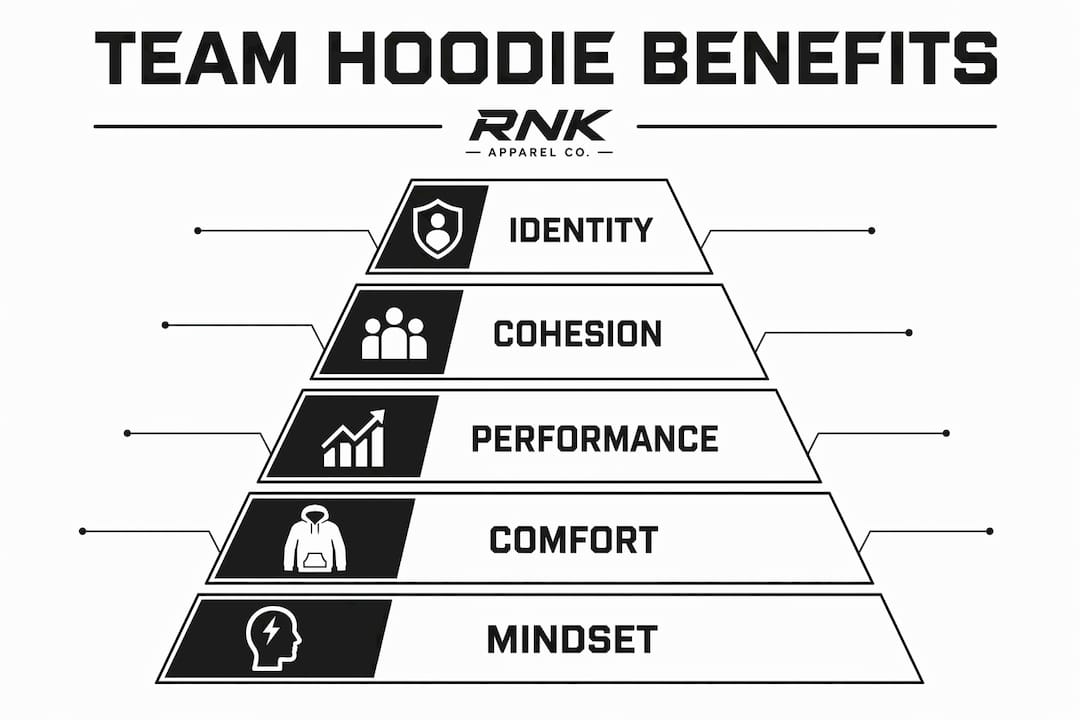
Enclothed cognition is the theory that clothing’s symbolic meaning influences the wearer’s focus, attention, and behavior. The effect depends on two things: the physical experience of wearing the garment and the meaning the wearer assigns to it. For athletes, a team hoodie carries both. It feels like belonging, and it signals readiness.
When a hockey player pulls on a team hoodie before a game, the act itself triggers a mental shift. The brain begins to associate the garment with competition mode. Over time, this becomes a conditioned response. Athletes use hoodies ritualistically to mark the mental transition from daily life to competitive focus, the same way a surgeon’s scrubs signal a shift in professional attention.
“Enclothed cognition varies by symbolic meaning of clothing. Team hoodies work best when they clearly signal role and competence.”
The anxiety-reduction effect is also documented. Team apparel worn during high-stress moments cues belonging and safety signals that reduce perceived threat. An athlete surrounded by teammates in matching gear feels less isolated under pressure. The hoodie is a visual reminder that the team is present, which lowers cortisol-driven anxiety responses before a big game.
- Enclothed cognition requires both wearing the garment and understanding its meaning
- Repeated use of the same hoodie in competition contexts strengthens the mental cue
- Team hoodies reduce perceived threat by signaling group support
- The effect is strongest when the hoodie clearly represents a specific team role
Practical guidelines for athletes and coaches
Coaches who treat team hoodies as a performance tool, not just a uniform accessory, get more out of them. The guidelines below reflect what the research actually supports, not general best practice.
Uniformity first. Every player should receive the same hoodie in the same style. Apparel consistency is the single most important factor in maximizing the psychological benefits of team gear. Allowing players to wear different versions, even slightly different colors, weakens the group identity signal.
Fit and fabric as performance variables. Coaches should treat apparel fit and comfort as part of the psychological environment. Poor fit undermines the intended benefits of team apparel. Procurement decisions should include a fit review, not just a logo approval.
Build the ritual. Incorporate the hoodie into a defined pre-game routine. Players who wear their team hoodie during warm-ups, team meetings, and the walk to the rink build a stronger mental association between the garment and competition readiness. The ritual does not need to be elaborate. Consistency is what creates the conditioned response.
| Practice | Purpose | Outcome |
|---|---|---|
| Full-roster uniform hoodies | Maximize “we” identity signal | Higher cohesion and cooperation |
| Correct fit per player | Reduce distraction, boost confidence | Improved focus during performance |
| Pre-game hoodie ritual | Trigger enclothed cognition response | Faster mental shift to competition mode |
| Personalized names/numbers | Increase player ownership | Greater engagement and gear consistency |
Pro Tip: Encourage players to wear their team hoodie during film sessions and team meetings, not just on the ice. The more contexts the garment appears in, the stronger the mental association becomes.
Avoid variable sizing or letting players substitute personal hoodies for team gear. The importance of team uniform consistency goes beyond aesthetics. It is a psychological infrastructure decision.
Key Takeaways
Team hoodies build cohesion, support physical readiness, and trigger a competitive mindset through enclothed cognition, making them a performance tool, not just a uniform accessory.
| Point | Details |
|---|---|
| Identity through uniformity | Matching hoodies shift athlete focus from individual differences to shared team membership. |
| Fabric and fit matter | Polyester-fleece blends and correct sizing maximize comfort and reduce performance-disrupting distractions. |
| Enclothed cognition is real | Wearing a team hoodie repeatedly in competition contexts conditions a mental shift to focused, ready mode. |
| Consistency is non-negotiable | Variable styles or sizing across a roster weaken the psychological uniformity that makes team apparel effective. |
| Ritual use amplifies benefits | Incorporating hoodies into pre-game routines strengthens the mental association between the garment and competition readiness. |
What I’ve learned watching teams get this wrong
Most coaches I have observed treat the team hoodie as a budget line, not a coaching decision. They order whatever fits the price point, skip the fit review, and hand them out once. Then they wonder why the gear sits in bags instead of being worn consistently.
The teams that get it right do something simple. They treat the hoodie order the same way they treat practice planning: with intention. They pick a fabric that works for their climate, they run a sizing session, and they build the garment into the team’s daily routine from day one of the season. The result is not just better-looking players. It is a locker room that feels more cohesive, because the visual signal is consistent and the players have bought into what it represents.
The economic accessibility of quality custom hoodies has improved significantly. There is no longer a reason for youth teams or budget-constrained programs to skip proper team apparel. The psychological return on a well-fitted, consistently worn team hoodie is disproportionate to its cost. Coaches who ignore apparel as a performance variable are leaving a real edge on the table.
— Eric
Rnkapparel’s custom hockey hoodies for team identity and performance
Rnkapparel builds custom hockey hoodies designed specifically for the demands coaches and athletes described in this article. Every hoodie is customizable with team logos, player names, and numbers, so your roster gets the consistent, personalized gear that research links to stronger cohesion and higher player engagement.
Fabric and fit options are built into the ordering process, so teams can select materials that match their training environment and climate. Rnkapparel also carries hockey accessories and complementary team gear to round out a complete, uniform look from warm-ups through game day. If you are building a program where apparel is part of the performance strategy, Rnkapparel is the place to start.
FAQ
Why do athletes wear hoodies before games?
Athletes wear hoodies before games to keep muscles warm and to trigger a mental shift into competition mode. The practice is supported by enclothed cognition research, which shows that wearing a garment with strong symbolic meaning conditions a focused, ready mindset.
What makes team hoodies different from regular hoodies?
Team hoodies carry shared symbolic meaning, consistent branding, and personalization that regular hoodies lack. That combination activates social identity effects and enclothed cognition in ways a generic garment cannot replicate.
Why do athletes prefer fleece hoodies for training?
Fleece hoodies balance warmth and moisture management without adding weight, making them practical for warm-ups and cooldowns. Research confirms that fabric type independently influences motivation and self-confidence during athletic activity.
How does a team hoodie reduce pre-game anxiety?
Team apparel worn during high-stress moments cues belonging and safety signals that lower perceived threat. Seeing teammates in matching gear reinforces the sense that support is present, which reduces cortisol-driven anxiety responses.
Does hoodie fit actually affect performance?
Yes. Ergonomic fit in sportswear boosts self-confidence and reduces distractions, according to 2026 research on sportswear design. A poorly fitting hoodie creates constant low-level discomfort that pulls focus away from execution.
Recommended
- Why Team Hoodies Are Worn at Hockey Tournaments – RNK Apparel Co.
- The Ultimate Hockey Hoodie Guide - Affordable Hockey Hoodie for Youth Players | Comfort, Durability, Great Fit – RNK Apparel Co.
- Custom Hockey Hoodies: The Ultimate 2026 Guide to Performance – RNK Apparel Co.
- Hockey Hoodie: Combining Comfort and Style Seamlessly – RNK Apparel Co.
