

Quality hockey clothing for kids is defined as apparel that balances moisture management, structural durability, and freedom of movement to support young athletes through practice and game play. Parents who focus on materials, fit, and construction will spend less money replacing worn-out gear and more time watching their kids thrive on the ice. The right kids hockey apparel also builds confidence. A jersey that fits well and looks sharp makes a young player feel like they belong on the team. This guide covers every factor you need to choose quality hockey clothing for kids without guesswork or wasted spending.
What materials are best for kids’ hockey clothing?
Polyester is the industry standard for youth hockey jerseys because it is lightweight, moisture-wicking, and durable. It pulls sweat away from the skin and dries fast, which keeps young players comfortable during long shifts. Polyester also resists fraying and tearing through repeated washes and physical contact. That matters a lot when your child is practicing three times a week.
Synthetic fiber blends and mesh take polyester’s core benefits further by adding breathability and abrasion resistance. Mesh panels placed under the arms or across the back allow heat to escape during high-intensity play. Nylon reinforcements at stress points, like the shoulders and collar, prevent the fabric from breaking down where the gear takes the most punishment.
The best kids hockey apparel also features stretchy panels and reinforced seams that work together. Stretchy panels give young players a full range of motion for skating strides and stick handling. Reinforced seams hold the garment together under repeated stress and extend the wearable life of the piece.
- Polyester: Lightweight, moisture-wicking, and machine-wash durable
- Mesh panels: Increase airflow and reduce overheating during play
- Nylon blends: Add abrasion resistance at high-wear zones
- Stretchy panels: Support skating mechanics and full arm movement
- Reinforced seams: Prevent tearing at stress points and extend garment life
Pro Tip: Check the collar construction before you buy. A stiff or scratchy collar will distract your child every time they wear the jersey. Look for a soft, ribbed collar that holds its shape after washing.
How do you find the right fit and sizing for kids’ hockey apparel?
Proper fit is the single most important factor in youth hockey clothing. Oversized gear restricts movement in unexpected ways, bunches under pads, and reduces a young player’s confidence on the ice. Buying a size up “to grow into” is one of the most common and costly mistakes parents make.
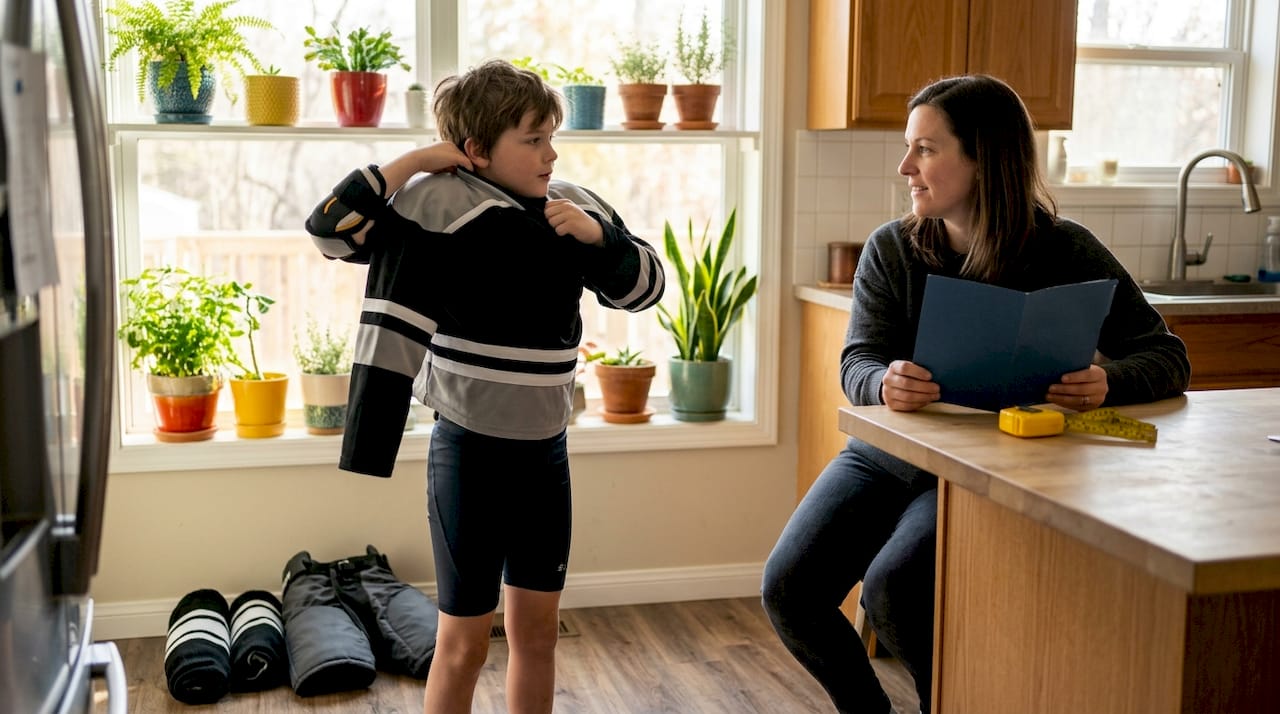
Sizing for hockey outfits for kids works differently than sizing for school clothes. Hockey jerseys are worn over protective pads, so the fit should be snug but not tight when the pads are on. Measure your child’s chest, waist, and height, then compare those numbers against the brand’s specific size chart rather than relying on age-based sizing alone.
Here is a practical sizing process parents can follow:
- Measure with pads on. Have your child put on their shoulder pads and chest protector, then measure the chest circumference over the pads.
- Check the length. The jersey should reach the top of the hip pads without riding up during arm raises.
- Test arm mobility. Ask your child to raise both arms fully overhead and mimic a skating stride. The jersey should move with them, not pull.
- Consult the brand’s size chart. Age-based sizing varies widely between brands. Always cross-reference chest and height measurements.
- Allow minimal growth room. One size up is the maximum. Two sizes up creates a safety hazard and hurts skating mechanics.
Pro Tip: If your child is between sizes, size up for jerseys worn over pads and size down for training shirts worn against the skin. The layering context changes the right call every time.
The Rnkapparel sizing guide for youth hockey shirts walks parents through exact measurements and explains how each size maps to common pad configurations. Using a dedicated sizing resource saves you a return shipment and gets your child dressed right the first time.
What durability features should you look for in kids’ hockey clothing?
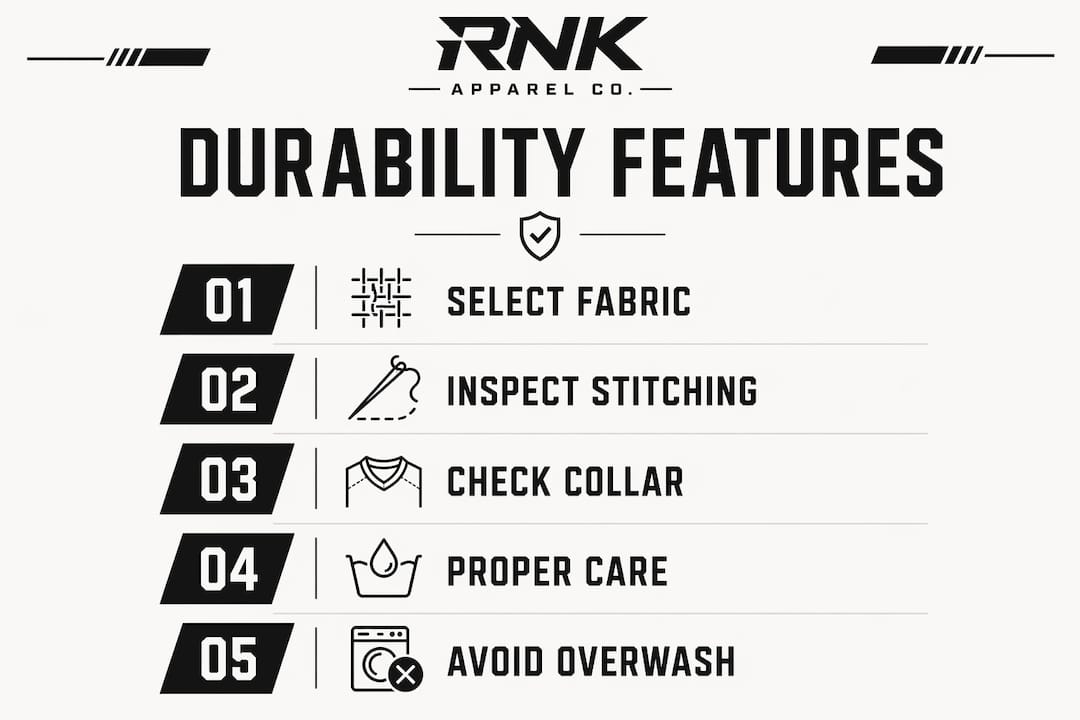
Durable construction and reinforced seams directly increase how long a garment survives under rigorous hockey use. Kids are hard on their gear. They slide, fall, grab, and wash their jerseys dozens of times per season. A garment that falls apart after ten washes is not affordable hockey clothing for children. It is an expensive mistake repeated every few months.
The key durability indicators to check before buying are:
- Double-stitched seams: Single-stitch seams split under lateral stress. Double stitching holds at the shoulders, underarms, and side panels.
- Fabric weight: Heavier fabric weights in polyester blends resist pilling and tearing better than ultra-thin performance cuts.
- Colorfastness: Dyes that bleed or fade after washing make a jersey look worn out fast. Check product descriptions for “colorfast” or “fade-resistant” language.
- Care label compliance: Garments designed for machine washing at warm temperatures hold up better than those requiring cold-only or hand-wash care.
Entry-level hockey clothing focuses on solid protection and comfort rather than advanced materials. Beginners benefit most from lightweight, properly fitting apparel rather than premium-tier construction. As your child advances and plays more frequently, investing in higher-grade fabric weights and construction pays off in longevity.
Care habits also affect durability. Turn jerseys inside out before washing to protect printed graphics and numbers. Avoid high-heat drying, which breaks down synthetic fibers faster than air drying does.
How does customization work for youth hockey jerseys?
Personalized hockey apparel does more than look good. It builds team identity and gives young players a sense of ownership over their gear. A jersey with your child’s name and number on the back is a motivator that a plain practice shirt simply cannot match.
Custom name and number heat-pressing typically requires 5–7 business days after the order is placed. That timeline covers production and quality checks before the item ships. Parents ordering for a season opener or a tournament need to plan at least two weeks out to account for shipping on top of production time.
| Customization type | Typical lead time | Best for |
|---|---|---|
| Name and number heat-press | 5–7 business days | Individual players and gifts |
| Team logo application | 5–7 business days | Club and rec league teams |
| Full custom color jersey | Varies by order size | Travel teams and tournaments |
| Personalized training shirts | 5–7 business days | Practice and off-ice wear |
Rnkapparel offers custom logo youth hockey shirts with options to upload team logos, select colors, and add player names and numbers. The process is designed for both individual parents and team managers placing bulk orders. Personalized hockey sweatshirts follow the same customization workflow and work well for warm-ups and post-game wear.
What mistakes do parents make when choosing hockey clothing for kids?
The most common mistake is buying gear that is too large. Parents assume a bigger jersey means more value because the child will grow into it. In practice, oversized clothing bunches under pads, restricts movement, and creates a tripping hazard at the hem. Properly fitted clothing aids skill development and confidence far more than a jersey that fits in two years.
The second mistake is overspending on pro-level gear for beginners. Basic starter kits can be assembled for $250–$700, and that range covers everything a new player needs. Spending beyond that on advanced materials or professional-grade construction does not improve a beginner’s experience. It just empties your wallet faster.
- Ignoring comfort for looks: A jersey that looks great but scratches or restricts movement will get left in the bag.
- Skipping the size chart: Age-based guessing leads to returns and delays. Always measure first.
- Choosing wrong materials: Cotton holds sweat and gets heavy. Stick to polyester and synthetic blends for active play.
- Buying adult sizes for older kids: Adult cuts sit differently on growing bodies and affect pad fit and mobility.
Pro Tip: Buy one quality jersey at the right size rather than two cheap ones at the wrong size. A single well-made piece outlasts two poor ones and costs less over a full season.
Key Takeaways
Choosing quality hockey clothing for kids requires matching the right materials, fit, and construction to your child’s age, skill level, and how often they play.
| Point | Details |
|---|---|
| Polyester is the best fabric | It wicks moisture, resists tearing, and holds up through frequent washing and contact play. |
| Fit over size | Properly fitted clothing improves mobility and confidence more than oversized gear ever will. |
| Durability starts at the seams | Double-stitched seams and colorfast dyes extend garment life through a full season of use. |
| Plan ahead for custom orders | Heat-pressed names and numbers take 5–7 business days, so order at least two weeks before you need them. |
| Match gear to skill level | Entry-level apparel focused on comfort and fit serves beginners better than premium-tier construction. |
What I’ve learned from watching parents shop for youth hockey gear
Parents consistently underestimate how much fit affects a young player’s performance. I have seen kids skate with restricted arm movement for an entire season because their jersey was two sizes too big. The parents thought they were being practical. The kids were fighting their own clothing every shift.
The other thing I notice is that parents treat jersey shopping like shopping for school clothes. They grab the size that looks right and move on. Hockey clothing works differently. It layers over protective equipment, moves with the body under physical stress, and gets washed more often than almost any other garment a child owns. Those three factors change every decision from fabric choice to sizing to care routine.
My honest advice: spend your budget on fit and fabric quality, not on brand names or flashy graphics. A well-made polyester jersey in the right size from a brand that understands youth hockey will outlast and outperform a premium-priced jersey that fits poorly. The youth training apparel category has improved significantly in recent years, and parents now have access to genuinely good options at reasonable prices. Use the sizing guides. Measure your child with their pads on. And resist the urge to buy big.
— Eric
Quality custom hockey apparel for young players at Rnkapparel
Rnkapparel builds hockey clothing specifically for the youth hockey community, with options that cover everything from game-day jerseys to practice wear and warm-up gear.
The custom hockey t-shirts collection features 100% polyester construction, moisture-wicking performance, and full personalization with player names, numbers, and team logos. Production runs on a 5–7 business day timeline, making it practical for both individual orders and full team kits. Parents can also shop youth hockey joggers and hoodies built for the same comfort and durability standards. Every piece is designed to hold up through a full season of practice, games, and post-rink life.
FAQ
What fabric is best for kids’ hockey jerseys?
Polyester is the best fabric for youth hockey jerseys because it is lightweight, moisture-wicking, and durable through frequent washing and contact play. Polyester blends with mesh panels add breathability and abrasion resistance for active young players.
How should a hockey jersey fit a child?
A hockey jersey should fit snugly over protective pads without restricting arm movement or riding up at the hem. Avoid buying oversized jerseys to grow into, as poor fit reduces mobility and hurts skating mechanics.
How long does custom hockey apparel take to produce?
Custom name and number heat-pressing on youth hockey jerseys typically takes 5–7 business days after the order is placed. Parents should order at least two weeks before they need the item to account for shipping time.
Do beginners need expensive hockey clothing?
Beginners do not need high-end or pro-level hockey clothing. Entry-level apparel focused on comfort, proper fit, and basic moisture management serves new players better and costs significantly less than advanced-tier gear.
How do I make kids’ hockey clothing last longer?
Turn jerseys inside out before washing to protect graphics and numbers. Avoid high-heat drying, which breaks down synthetic fibers, and follow the care label instructions to preserve fabric strength and colorfastness through a full season.
