

Siblings share hockey team spirit through four repeatable moves: visible game-day signals like matching outfits and chants, shared off-ice training that builds real trust, season-long emotional check-ins, and one signature ritual that becomes “their thing.” Haley Winn’s brothers turned matching outfits into a recognizable presence at the rink, and a Lancashire talent-development study.pdf) found sibling relationships build cooperation and emotional resilience that outlasts any single season. A brand like RNK Apparel Co. can supply the matching gear that makes those signals easy to repeat.
- Wear something recognizable together, every game
- Train or drill together off the ice, even casually
- Text or call between games, not just after wins
- Build one small, repeatable ritual instead of ten random ones
Pro Tip: The traditions that stick aren’t the loudest ones. They’re the ones you can actually repeat every single game without burning out.
Key Takeaways
Sibling team spirit sticks when it’s built on one repeatable signal, shared training time, and frequent small check-ins, not grand gestures.
| Point | Details |
|---|---|
| Repeat one signal | Pick a single chant, outfit, or prop and use it every game instead of switching things up. |
| Train together off-ice | Short, regular practice sessions build the trust that makes cheering feel genuine. |
| Check in often, briefly | Frequent short texts support a player better than rare long conversations during a season. |
| Keep rivalry process-focused | Judge competition on effort and improvement, not just wins, to avoid resentment. |
| Source matching gear easily | RNK Apparel Co. offers custom tees, hoodies, and accessories siblings can order to make traditions visible right away. |
Table of Contents
- What Game-Day Traditions Can Siblings Start Together?
- How Does Off-Ice Practice Build Sibling Team Spirit?
- What Emotional Support Do Siblings Give During a Long Season?
- How Do You Keep Sibling Rivalry Healthy Instead of Harmful?
- What Apparel and Props Make Sibling Spirit Visible?
- How Do You Launch a Sibling Hockey Tradition This Season?
- Why Sibling Traditions Matter Beyond the Rink
- Ready to Start a Matching Tradition This Season?
- Frequently Asked Questions
- Sources
What Game-Day Traditions Can Siblings Start Together?
The simplest, highest-impact tradition is visual consistency. Pick one thing you wear every game, and stick with it long enough that teammates and coaches start to expect it.
A few low-effort options that actually work:
- Matching colors or a coordinated outfit theme for every home game
- A short, planned chant or clap sequence you use at specific moments (first goal, third period, overtime)
- A signature prop, like a small flag, a themed hat, or a hand-painted sign
- A synchronized pose or entrance you repeat for photos and videos
Haley Winn’s three older brothers built exactly this kind of following at the rink. AP reported they “churned out goofy viral videos in several outfits,” and their coordinated cheering became something teammates and fans noticed and looked forward to.
The signal doesn’t need to be elaborate. It needs to be repeatable enough that the player on the ice knows exactly where to look and what it means.
Before you launch anything, check arena rules on signage, noise, and standing during play, and consider using this guide on parent onboarding new football club members to support healthy family involvement in sports environments. Coordinate with parents or other siblings so nobody duplicates the same gimmick, and rehearse a chant once before game day so it doesn’t fall flat in front of a packed crowd.
Pro Tip: Keep the routine short enough to do in under 15 seconds. Long routines lose energy fast and start to distract more than support.
How Does Off-Ice Practice Build Sibling Team Spirit?
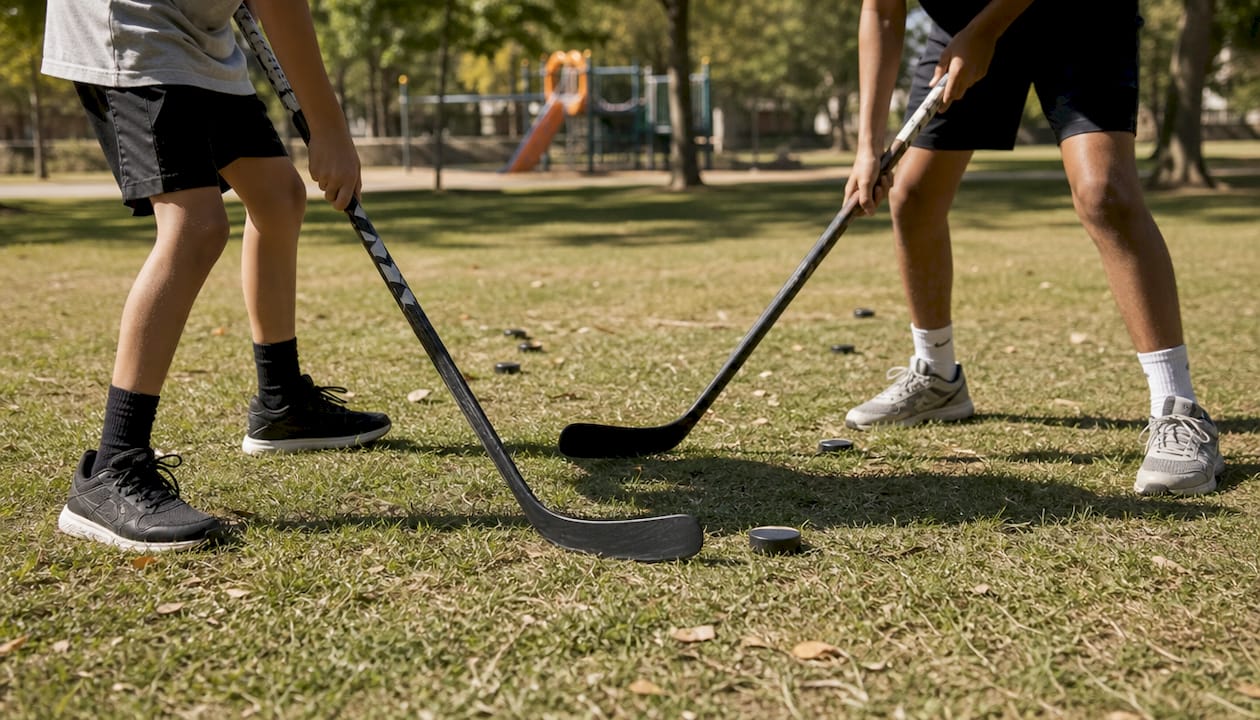
Shared training builds the trust that makes your cheering feel earned instead of performative. You don’t need a home rink. You need consistency.
- Set a weekly slot. Even 20 minutes twice a week, in a driveway or backyard, beats a marathon session once a month.
- Run a simple skill circuit. Puck-handling through cones, wall passes, or timed stickhandling challenges work with minimal equipment.
- Add a playful competition. Timed drills or shootout contests keep things fun while sharpening both siblings.
- Warm up first, always. Five minutes of movement before any drill cuts injury risk and keeps sessions sustainable.
The Samoskevich family took this further with a backyard “boot camp” at a makeshift home rink, and Seattle Kraken coverage described the siblings as each other’s best friends because of it. That shared training time built a language between them that made later mentorship and support credible, not just supportive on the surface.
Pro Tip: Rotate who leads the drill each session. It keeps younger or less-skilled siblings invested instead of always following.
What Emotional Support Do Siblings Give During a Long Season?
Long seasons wear players down, and the sibling role that matters most often isn’t loud. It’s steady. Short, frequent check-ins beat rare, long conversations every time.
The Greig and Batherson siblings lean on each other exactly this way. NHL.com reported they “can talk during the season and act as sounding boards,” offering perspective when stats dip or pressure builds. A quick text after a rough game often does more than a long pep talk days later.
Frequent small touches beat rare, long check-ins. That’s the pattern across every sibling relationship worth studying.
Research backs this up structurally. The Lancashire talent-development study found siblings foster cooperation, emotional interpersonal skills, and rivalry that contribute directly to resilience over a career, not just a season.
Simple rituals that carry this weight:
- A two-minute post-game text template (“one thing you did well, one thing to shake off”)
- A surprise video or note for milestones like a first goal or call-up
- A standing “no bad news before warmups” rule to protect pre-game focus
The Greig family also proved milestone attendance matters on its own. Ridly reunited with sister Dara in Ottawa after “eight or nine years” apart, and their on-ice celebration afterward became its own kind of tradition.
Pro Tip: Save milestone celebrations for real milestones. If everything gets a surprise video, nothing feels special anymore.
How Do You Keep Sibling Rivalry Healthy Instead of Harmful?
Rivalry helps when it’s structured around effort, not outcomes. Canucks prospect Wilson Björck credited his brother with building his competitive mindset by competing across many activities, not just hockey. That variety kept the competition from turning into resentment.
A short checklist to keep traditions inclusive and sustainable:
- Rotate who leads a chant, drill, or prop duty so no one sibling carries the whole tradition
- Invite teammates or other families into low-stakes rituals when it fits
- Set rivalry rules around process (“who improved most”) instead of just wins and losses
- Treat every new tradition as a one-year trial, and drop what isn’t working without guilt
What Apparel and Props Make Sibling Spirit Visible?
Visibility is what turns a private inside joke into a tradition other people recognize. Matching apparel is the fastest way to get there.
Strong options for siblings specifically:
- Matching graphic tees in one team color for warm-weather games
- Coordinated hoodies for cold rinks, which also photograph well for milestone photos
- Long sleeve tees layered under a jersey for a subtler matching look
Small props round it out without adding cost: mini banners, a shared scarf, custom stickers on water bottles, or a foam hand painted in team colors. Most of these can be made DIY for under $20 if you’re not ordering custom gear. Check with families who already coordinate looks at the rink for sizing and layering tips before buying in bulk, and confirm your arena allows signage or noisemakers before game day.
Pro Tip: Order matching gear one size up if younger siblings are growing. A tradition dies fast if the outfit doesn’t fit by mid-season.
How Do You Launch a Sibling Hockey Tradition This Season?
- Pick one signature signal. A chant, a pose, or a matching color, not all three at once.
- Choose your apparel or prop. Keep it cheap and easy to repeat weekly.
- Rehearse it once before the first game. Ten minutes at home is enough.
- Set a launch date and just run it. The next home game works fine.
Give it three games before judging whether it’s working. Success looks like genuine fun, positive feedback from the player, and energy in the stands, not perfection on the first try. If it fizzles, drop it and try a different signal next month.
Why Sibling Traditions Matter Beyond the Rink
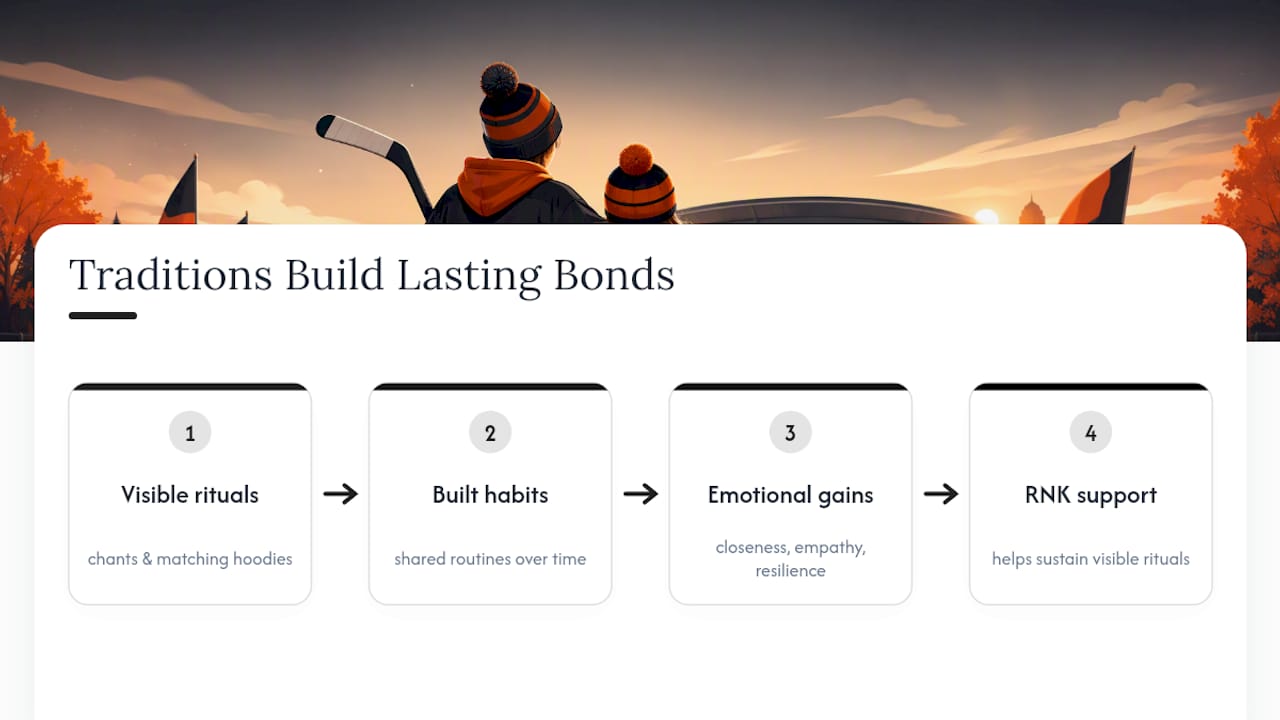
The chants and matching hoodies are the visible part. The real payoff is quieter: siblings who build these habits together tend to develop closeness, empathy, and resilience that outlasts any single season or roster. That’s the part worth protecting, and a brand like RNK Apparel Co. exists partly to make the visible half of it easier to sustain.
Ready to Start a Matching Tradition This Season?
You’ve got the ideas. RNK Apparel Co. makes the visible part simple, with custom matching gear for siblings and families without a minimum order or a complicated design process.
If you want something ready to wear this weekend, start with custom hockey graphic tees for a quick matching look, or go with custom hockey hoodies if you’re planning a cold-rink tradition that needs to last the season. Add small accessories from the hockey accessories collection if you want a prop instead of a full outfit. Pick one item, order it this week, and have it ready before your next home game.
Frequently Asked Questions
What’s the easiest way for siblings to show hockey team spirit? Matching apparel is the fastest place to start. A shared color, a coordinated tee, or the same hat every game creates a visible signal without any planning or cost beyond the outfit itself.
How often should siblings check in during a hockey season? Short and frequent beats long and rare. A quick text after a tough game does more for morale than an occasional deep conversation weeks later.
Can sibling rivalry actually help a hockey player improve? Yes, when it’s structured around effort and process rather than wins and losses. Competing across multiple activities, not just hockey, tends to keep rivalry motivating instead of discouraging.
How do siblings avoid overshadowing the player they’re supporting? Rotate responsibilities like leading a chant or holding a sign, and keep the spotlight moments tied to real milestones instead of every single game.
Sources
- US hockey star Haley Winn’s three older brothers are her biggest fans | AP News
- Samoskevich Honed ‘Compete Level’ Facing Sisters | Seattle Kraken
- Greig siblings reunite in Ottawa and celebrate on-ice successes | NHLPA
Recommended
- Why Families Wear Matching Apparel to Hockey Games – RNK Apparel Co.
- 10 Creative Hockey Team Spirit Wear Ideas to Boost Team Pride in 2026 – RNK Apparel Co.
- What to Wear to a Hockey Game: The Ultimate Checklist for Parents in 2 – RNK Apparel Co.
- Matching Hockey Family Apparel: The 2026 Trend Guide for Rink-Side Sty – RNK Apparel Co.
