

Hockey warm-up clothing types are specialized garments designed to regulate body temperature, support muscle readiness, and maintain comfort before, during, and after ice time. The three primary fit categories are loose-fit, slim-fit, and tight-fitting compression styles. Each serves a distinct purpose depending on the player’s position, body type, and rink conditions. Knowing which type to wear, and how to layer them, directly affects how well you perform when the puck drops. This guide covers every category, plus the layering strategies coaches and parents rely on for cold rink environments.
1. Hockey warm up clothing types: the core classification
The three-fit system is the industry standard for categorizing pre-game and practice apparel in hockey. Loose-fit prioritizes mobility and easy layering. Slim-fit reduces wind resistance and suits players who want a cleaner silhouette without sacrificing flexibility. Compression fits act as base layers that support muscles and retain heat close to the body.
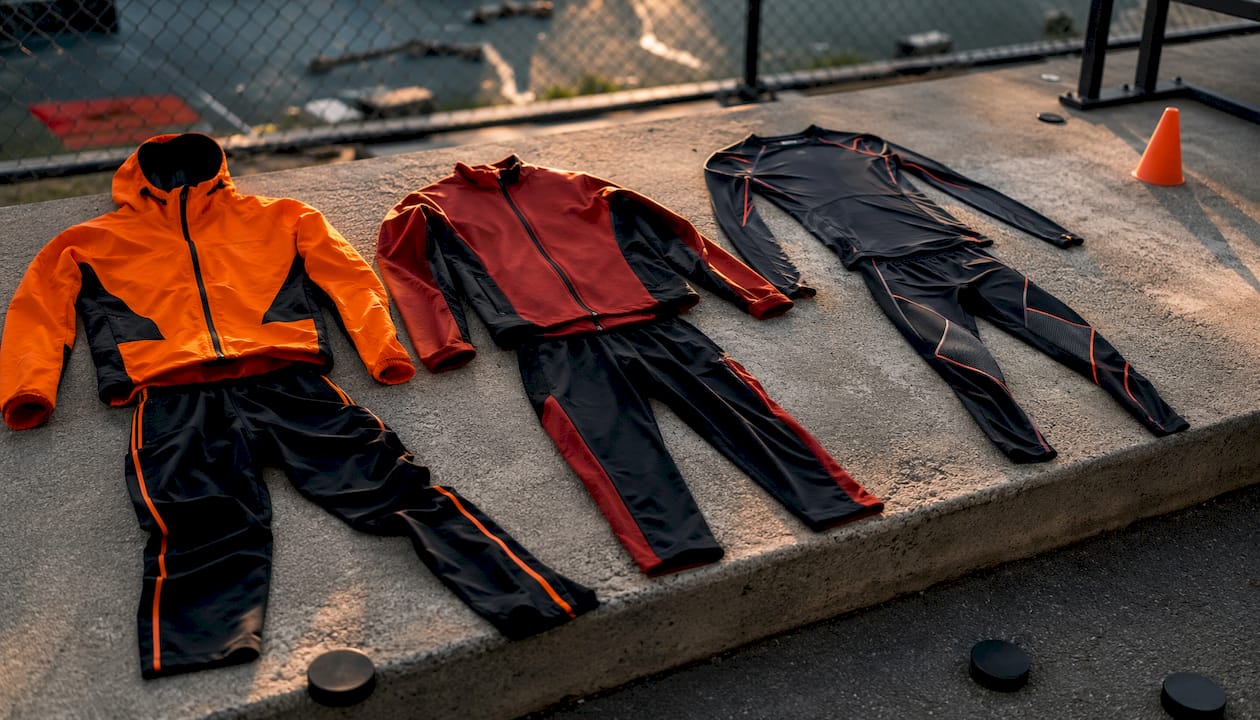
Understanding this classification before you shop saves money and prevents poor fit choices. A youth player in a cold arena has different needs than an adult forward skating hard intervals at practice. The right fit type addresses those differences directly.
2. Loose-fit warm-up clothing: room to move
Loose-fit warm-up apparel gives players maximum freedom of movement. The silhouette sits away from the body, which makes it easy to pull on and off over gear or skates. Polyester blends dominate this category for their moisture-wicking properties and durability through repeated washing.
Key advantages of loose-fit styles:
- Easy to layer over base layers without bunching
- Simple removal during halftime or between periods
- Broad size tolerance, which suits team orders with mixed body types
- Ergonomic fabric blends balance warmth and breathability
- Mesh panels in high-sweat zones improve airflow during intense drills
Where loose-fit falls short:
- More fabric creates drag in cold air
- Excess material can catch on gear or boards
- Less thermal efficiency compared to compression fits
Loose-fit styles work best as outer warm-up layers or for players who run warm and need ventilation. They are the most popular choice for team-issued warm-up suits because one cut fits a wide range of body types.
Pro Tip: Choose loose-fit pants with gusset panels or articulated knees. Gusset construction allows a full range of motion during stretching and skating drills without the fabric pulling or tearing at the seams.
3. Slim-fit warm-up clothing: ergonomics and performance
Slim-fit warm-up apparel follows the body’s natural lines without gripping the muscle. The cut uses straight seams and ergonomic shaping to reduce bulk while keeping the player covered. Slim-fit styles reduce drag and are recommended for daily exercise and players with moderate builds.
The material in slim-fit garments typically balances warmth with breathability. You get enough insulation for a cold bench area, but the lighter weight prevents overheating during active warm-up drills. This makes slim-fit a strong choice for players who move directly from the locker room to the ice without a long waiting period.
| Feature | Loose-fit | Slim-fit |
|---|---|---|
| Mobility | High, unrestricted | High, contoured |
| Wind resistance | Lower | Higher |
| Layering ease | Easy over base layers | Best as outer layer |
| Best use | Team wear, bench comfort | Active drills, daily training |
| Build suitability | All builds | Moderate builds |
Slim-fit also photographs better for team photos and pre-game tunnel walks, which matters for programs that prioritize team identity. For a deeper look at how fit types interact with fabric performance, the hockey apparel material guide from Rnkapparel breaks down each synthetic blend in detail.
Pro Tip: If you are between sizes in slim-fit, size up. A slim-fit that is too tight restricts the hip flexors during skating strides and defeats the purpose of a warm-up garment.
4. Tight-fitting and compression warm-up clothing: muscle support and base layers
Compression warm-up clothing uses 3D cutting techniques and elastic fabrics to conform closely to the muscle. This fit reduces muscle oscillation during skating, which lowers fatigue over the course of a game or long practice session.
Compression garments serve two functions in a hockey warm-up outfit. First, they act as a thermal base layer that traps body heat close to the skin. Second, they provide graduated pressure that supports the quads, hamstrings, and calves during explosive movements like starts and stops.
Common uses for compression warm-up clothing:
- Base layer worn under hockey pants and shin guards
- Under-jersey layer for goalies who need extra warmth without bulk
- Recovery wear between periods to maintain muscle temperature
- Youth players in particularly cold arenas who need extra insulation
Compression fabrics require specific care to maintain their performance. Avoid folding them tightly for long-term storage, as sustained compression on the fabric degrades the elastic fibers. Wash in cold water and air dry to preserve the shape and stretch recovery of the material.
The neuroperformance benefits of proper muscle support during warm-ups extend beyond comfort. Supported muscles activate more efficiently, which translates to sharper reaction times and cleaner skating mechanics from the first shift.
5. Layering strategies for cold rink environments
The three-layer system is the most effective approach to hockey warm-up clothing in cold arenas. Each layer has a specific job, and removing one breaks the system.
Layer 1: The moisture-wicking base
The base layer sits directly against the skin. It must pull sweat away from the body and dry quickly. Synthetic fabrics like polyester and nylon perform better here than cotton, which holds moisture and chills the skin. A long sleeve performance tee or compression shirt works well as a base for most players.
Layer 2: The insulating mid-layer
The mid-layer traps warm air close to the body. A quarter-zip fleece or pullover hoodie is the standard choice. Fleece provides insulation without the weight of heavier fabrics, and the quarter-zip design lets players vent heat quickly during active drills. Experts recommend a mid-weight hoodie or quarter-zip as the core of any layered hockey warm-up setup.
Layer 3: The outer protective layer
The outer layer blocks wind and retains heat during the walk from the locker room to the bench. A team jacket or windproof shell works here. This layer comes off first once the player is on the ice or actively warming up.
Pro Tip: Parents dressing youth players for cold rinks should add hockey accessories like thermal socks, lightweight gloves, and a fitted beanie as a fourth layer for pre-skate warmth. These items add minimal bulk but make a measurable difference in comfort for younger players who lose body heat faster.
The layering system also applies to off-ice hockey wardrobe planning. Players who train year-round benefit from having dedicated sets for each layer so they can mix and match based on arena temperature and workout intensity.
6. Choosing the right materials for each clothing type
Polyester fleece, nylon, and mesh panels each serve different roles in hockey warm-up apparel. Polyester fleece insulates and wicks moisture. Nylon is softer and lighter, making it a strong choice for slim-fit outer layers. Mesh panels placed in the underarm or back yoke improve airflow in high-sweat zones during active drills.
Cotton is the one fabric to avoid in performance warm-up gear. It absorbs sweat and holds it against the skin, which causes rapid cooling when a player stops moving. One wet cotton layer can undo the thermal benefit of an entire layered system.
For youth players, durability matters as much as performance. Fabrics that hold up to frequent washing without pilling or losing shape reduce the long-term cost of outfitting a growing athlete. Rnkapparel’s youth training apparel uses materials selected for both performance and wash durability, which is a practical consideration for parents managing a full season’s worth of gear.
7. Building a complete hockey warmup outfit setup
A complete hockey warmup outfit setup covers base, mid, and outer layers plus accessories. The base is a moisture-wicking compression shirt and fitted bottoms. The mid-layer is a fleece hoodie or quarter-zip. The outer layer is a team jacket or windproof shell. Accessories include thermal socks, gloves, and a hat for cold arenas.
The full setup does not need to be purchased at once. Start with a quality base layer and mid-layer, then add the outer shell as budget allows. Coaches and parents building a training setup should prioritize foundational, versatile pieces before investing in specialized gear. A well-chosen hoodie and compression base serve most players through an entire season before an upgrade is needed.
Customization adds team identity to the setup. Rnkapparel offers custom team hoodies with logo uploads, player names, and number options, which lets programs outfit every player in a consistent look without sacrificing fit or fabric quality.
Key takeaways
The most effective hockey warm-up clothing setup combines a moisture-wicking base, an insulating mid-layer, and a protective outer shell, each matched to the player’s fit preference and rink conditions.
| Point | Details |
|---|---|
| Three fit types define the category | Loose-fit, slim-fit, and compression each serve a distinct performance role. |
| Layering is non-negotiable in cold rinks | A three-layer system regulates temperature and allows quick adjustments between periods. |
| Polyester outperforms cotton | Moisture-wicking synthetics keep players dry and warm; cotton chills the skin when wet. |
| Compression doubles as a base layer | Tight-fitting styles support muscles and retain heat under hockey gear. |
| Start simple, then specialize | A quality base and mid-layer cover most needs before investing in specialized outer shells. |
What I’ve learned from watching players dress for the wrong rink
Most players and parents overthink the outer layer and underthink the base. I’ve seen players show up in expensive team jackets with a cotton t-shirt underneath, and they’re shivering by the second period. The base layer is where temperature regulation actually happens. The jacket is just the last line of defense.
The other mistake I see constantly is buying compression gear that is too small. Players assume tighter means better support. It does not. A compression garment that restricts circulation does the opposite of what it is designed to do. Fit it snug but not restrictive, and always check that you can do a full squat and hip rotation before committing to a size.
Proper garment care is the most overlooked part of warm-up clothing ownership. Compression fabrics lose their elasticity when stored folded under pressure or washed in hot water. Air dry everything technical. It takes longer, but your gear will perform the same in month ten as it did in month one.
My honest recommendation for parents outfitting a youth player: buy one good base layer, one mid-layer hoodie, and spend the rest of the budget on proper hockey accessories for cold weather. That combination outperforms a full expensive warm-up suit with a poor base layer every time.
— Eric
Rnkapparel’s hockey warm-up apparel collection
Rnkapparel builds hockey warm-up apparel for players, teams, and parents who want quality without guessing at fit or fabric. Every piece is designed for the demands of rink environments, from moisture-wicking performance training gear built for hard practice sessions to custom hockey hoodies that serve as the mid-layer anchor of any warm-up setup.
You can customize any piece with your team logo, player name, and number. Rnkapparel ships across the United States and Canada, with options for youth and adult sizing in every category. Browse the full range of custom hockey shirts and warm-up layers to build a setup that works from the locker room to the bench and back.
FAQ
What are the three main hockey warm up clothing types?
The three main types are loose-fit, slim-fit, and tight-fitting compression styles. Each serves a different purpose: loose-fit for mobility, slim-fit for reduced drag, and compression for muscle support and thermal retention.
What should I wear under hockey gear for warmth?
A compression base layer made from polyester or a synthetic blend is the best choice. It wicks moisture away from the skin and retains body heat without adding bulk under pads.
Is cotton acceptable for hockey warm-up clothing?
Cotton is not recommended for hockey warm-up apparel. It absorbs sweat and holds it against the skin, which causes rapid cooling when a player stops moving or sits on the bench.
How many layers does a hockey player need for a cold rink?
Three layers cover most cold rink situations: a moisture-wicking base, an insulating mid-layer like a fleece hoodie, and a windproof outer shell. Accessories like thermal socks and gloves add warmth for youth players in particularly cold arenas.
How do I care for compression warm-up clothing?
Wash compression garments in cold water and air dry them flat. Avoid storing them tightly folded for extended periods, as sustained pressure on the elastic fibers degrades their stretch recovery over time.
