
For any team that runs practices, scrimmages, and pickup games, a reversible hockey jersey is the single most practical uniform investment you can make. One jersey, two colors, zero extra bag weight. Before you order, confirm two things: the fabric is 100% polyester with sublimated graphics, and your players are sized up from their base-layer measurement to account for shoulder pads.
Here’s what to know before you place a team order:
- Fabric: Look for performance polyester construction. Sublimated graphics are embedded into the fiber, so they won’t crack or peel after a season of hard washes.
- Sizing: Order one size up from your players’ standard jersey size. Reversibles are cut to layer over pads.
- Customization: Full-sublimation is the recommended method for team logos, names, and numbers. Heat-press numbers work but require more careful wash handling.
- Lead time: Budget a few weeks for custom small runs, and several weeks more for large or peak-season orders.
- Supplier: Rnkapparel handles custom team runs with proofing, roster management, and shipping across the US and Canada.
Table of Contents
- What are reversible hockey jerseys and how do teams use them?
- What materials and construction actually matter?
- How do you size reversible jerseys for youth, senior, and goalie players?
- How does the customization and team-order process work?
- What should you budget, and how long does production take?
- How do you choose the right reversible jersey for your team?
- How do you wash and maintain reversible jerseys?
- Pros and cons of reversible jerseys for teams
- Where to buy reversible jerseys and how to place a team order
- Key Takeaways
- Why reversible jerseys are worth the investment
- Rnkapparel custom reversible jerseys for your team
- Useful sources and next steps
What are reversible hockey jerseys and how do teams use them?
A reversible hockey jersey is a two-color garment built to be worn either side out, so teams can flip colors in seconds without carrying a second set of uniforms. That’s the whole idea: one jersey does the job of two.
The practical applications are broader than most coaches expect:
- Practice sessions: Split the team into lights and darks without handing out separate pinnies.
- Scrimmages and pickup games: Quick color changes between periods or drills keep things organized without extra gear.
- Tournament backups: If a game-day jersey gets damaged or forgotten, a reversible fills in on either side.
- League play: Some recreational leagues require color differentiation each game. A reversible handles both home and away without a second purchase.
Three main construction variants exist in the market. Full sublimated reversibles carry custom artwork on both sides and are the most visually polished option. Mesh or sewn-panel reversibles use stitched color panels and tend to be lighter and cheaper but offer less design flexibility. Stock white-versus-color reversibles are the fastest to get and the lowest cost, but they come with no customization beyond a number.
What materials and construction actually matter?
The fabric choice determines how the jersey performs, how long the graphics last, and how much customization you can put on it.
Most game-grade reversibles use 100% polyester performance knit. Polyester wicks moisture, resists shrinking, and holds sublimated dye better than any natural fiber blend. Denier rating, which measures how thick the individual fibers are, typically falls in the 100–150 range for jerseys built for regular game use. Higher denier means a denser, more durable weave. Lower denier feels lighter but wears faster under heavy use.
| Construction Method | Durability | Customization | Breathability | Cost | Best Use |
|---|---|---|---|---|---|
| Full sublimation | High | Full-bleed, unlimited color | Good | Mid–high | Custom team orders, tournaments |
| Sewn/stitched panels | Medium | Limited (panel colors only) | Good | Low–mid | Budget training sets |
| Mesh reversible | Medium | Limited | Excellent | Low | Hot-gym practices, pickup |
Sublimation works by embedding dye directly into the polyester fibers under heat and pressure. The result is a graphic that can’t peel, crack, or fade the way a heat-applied transfer can. For teams that want logos, sponsor patches, or full-color artwork on both sides, sublimation is the only method that delivers consistent results wash after wash.
Sewn-panel and mesh reversibles are fine for low-stakes training sets where you just need lights and darks. They’re not the right call if your team’s branding matters or if the jerseys will see two or three seasons of use.
Pro Tip: If your team plans to use these jerseys for more than one season, spend the extra money on sublimated construction. The per-unit cost difference is modest compared to reprinting an entire set of jerseys because the numbers peeled off.
How do you size reversible jerseys for youth, senior, and goalie players?
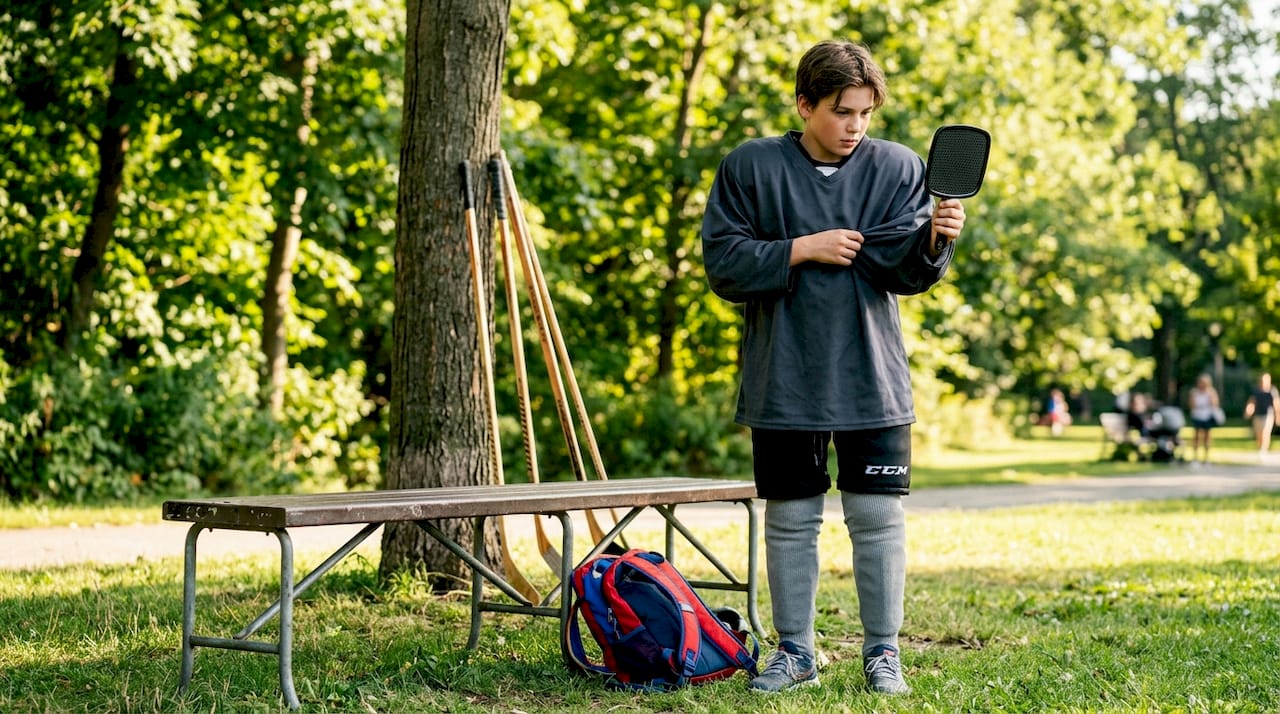
Reversible jerseys are cut larger than standard base-layer jerseys by design. They need to fit over shoulder pads, allow free arm movement for flipping, and often include an extended back length (sometimes called a bench-warmer cut) so players can sit without the jersey riding up. Reinforced armpit seams are worth checking for, since that’s where reversibles take the most stress from repeated inside-out flipping.
Sizing chart (generic reference — always confirm with your vendor’s chart):
| Cut | Chest (inches) | Shoulder Width | Sleeve Length | Notes |
|---|---|---|---|---|
| Youth S/M | 28 | 15 | 24 | Fits ages 6–10 over light pads |
| Youth L/XL | 32 | 15 | 24 | Fits ages 10 over full pads |
| Senior S/M | 38 | 19 | 30 | Standard adult over pads |
| Senior L/XL | 42 | 19 | 32 | Larger adult builds |
| Senior XXL+ | 46 | 21 | 34 | Big builds or heavy pad setups |
| Goalie cut | 46 | 22 | 34 | Extra width in chest and arms |
Goalie cuts deserve special attention. Goalies wear chest protectors that are significantly wider than skater shoulder pads, so a standard senior XL often won’t clear the arms properly. Always order goalie jerseys separately with goalie-specific measurements.
For team measurement drives, follow this process:
- Measure chest at the widest point (under the arms, across the chest).
- Measure shoulder width from the outer edge of one shoulder to the other.
- Measure sleeve length from the shoulder seam to the wrist.
- Ask players to note whether they wear light or heavy pad setups, since that affects how much room they need.
- When in doubt, size up. A jersey that’s slightly large is far easier to play in than one that binds across the shoulders.
How does the customization and team-order process work?
Custom reversible jerseys require more upfront coordination than stock items, but the process is straightforward when you know the steps.
Common customization options:
- Full-sublimated artwork on both sides (logos, colors, patterns, player names, numbers)
- Heat-press or stitched numbers (applied after sublimation, or as the sole decoration on stock jerseys)
- Embroidered crests or patches (typically on one side only, since embroidery can’t reverse cleanly)
- Sleeve patches or sponsor logos
- Inside labels with team name or player number
When teams mix decoration methods, such as sublimated graphics with heat-applied numbers, it’s worth specifying heat-safe number materials and asking your supplier about wash settings. Heat-applied numbers on sublimated jerseys can peel if dried on high heat repeatedly.
Team order workflow:
- Confirm artwork specs: vector files (AI or EPS) preferred; high-resolution PNG with transparent background as an alternative.
- Submit roster spreadsheet with player names, numbers, sizes, and cuts (youth/senior/goalie).
- Specify Pantone or hex color codes for all team colors to ensure accurate color matching.
- Review and approve the digital proof before production begins. This step prevents the most common and costly errors.
- Confirm deposit and payment terms with your supplier.
- Confirm expected production window and ship date.
- Receive and inspect the order before distributing to players.
Sublimation adds no per-unit cost for additional colors, which is one of its biggest advantages for teams with complex logos. Heat-press numbers cost less upfront but add per-unit labor for each player name and number.
Pro Tip: For any team order over 15 units, request a physical sample in your full customization before approving the full production run. A digital mockup catches color and layout issues; a physical sample catches fit, fabric weight, and print quality issues that screens can’t show.
What should you budget, and how long does production take?
Price and lead time both depend on whether you’re buying stock or custom, and how many units you’re ordering.
Stock reversibles are the fastest and cheapest option. Custom sublimated jerseys cost more per unit but deliver full branding and longer garment life. The per-unit price on custom orders drops meaningfully as quantity increases, which is why team orders almost always make more financial sense than individual purchases.
| Order Type | Per-Unit Range (est.) | Typical MOQ | Lead Time |
|---|---|---|---|
| Stock reversible | Lower cost tier | 1+ | Ships within days |
| Custom sublimated (small run) | Mid-range | 6 | 2–4 weeks from proof approval |
| Custom sublimated (team run) | Mid-to-high, bulk discount applies | 12 | 4 weeks from proof approval |
| Peak-season / rush | Premium pricing | Varies | Confirm with supplier |
These are market-range estimates. Request a firm quote from Rnkapparel for your specific roster size, customization level, and timeline.
Production milestones to track: artwork submission → digital proof → proof approval → production start → quality check → shipping. The single biggest delay in most team orders is slow proof approval. Designate one person on your staff to handle approvals and respond within 24 hours to keep the timeline on track.
For season starts, work backward from your first game date. If you need jerseys by mid-September, submit artwork and roster files no later than late July for a custom order. For tournaments, add a buffer week beyond the stated lead time for shipping delays.
How do you choose the right reversible jersey for your team?
The decision comes down to five factors. Work through them in order and the right choice becomes obvious.
Prioritized selection criteria:
- Budget per unit: Stock reversibles fit tight budgets. Custom sublimated jerseys cost more but last longer and look sharper.
- Customization needs: If your team has a logo, sponsor, or distinct color scheme, sublimation is the only method that does it justice on both sides.
- Durability expectations: One season of light practice use? Stock or sewn-panel works. Two or more seasons of regular game and practice use? Sublimated polyester.
- Fit requirements: Does your roster include goalies? Youth players in full pads? Confirm goalie cuts and youth sizing are available before committing to a supplier.
- Lead time: Need jerseys in two weeks? Stock is your only option. Have six weeks? Custom sublimated is worth the wait.
Quick decision guide:
- Choose stock reversibles when budget is the primary constraint, you need jerseys fast, and branding is not a priority.
- Choose custom sublimated when your team has a logo or color scheme, you’re ordering for tournaments or league play, and you want jerseys that hold up for multiple seasons.
- Choose a hybrid approach (stock jersey with applied numbers) when you need a middle ground: some personalization without the full custom lead time or cost.
If your team scores higher than 7 out of 10 on branding importance, go custom sublimated. If you score below 4, stock reversibles will serve you well.
How do you wash and maintain reversible jerseys?
Washing is where most teams accidentally shorten the life of their jerseys. The rules are simple and consistent across all sublimated and printed garments.
Standard care checklist:
- Machine wash cold, gentle cycle, inside-out (this protects the outer graphics from abrasion).
- Use a mild detergent. Avoid bleach entirely; it breaks down polyester fibers and destroys sublimated color.
- Skip fabric softener. It coats performance fibers and reduces moisture-wicking ability.
- Air-dry when possible. If you use a dryer, low heat only. High heat is the primary cause of heat-applied number peeling.
- Never iron directly over numbers or printed graphics.
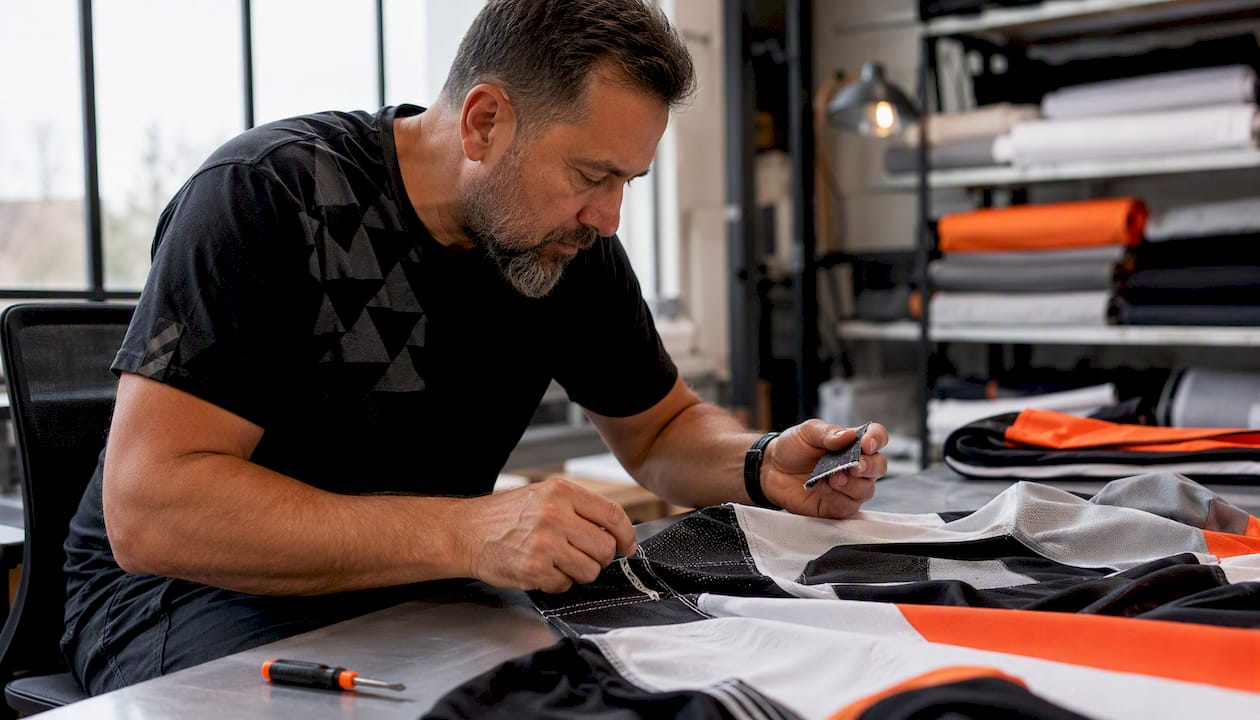
For repairs, the most common issues are armpit seam separation (from repeated flipping and arm movement) and small rips from skate contact. Reinforce armpit seams with a basic whip stitch before they open fully. Small rips can be patched with iron-on repair tape designed for synthetic fabrics. Numbers that start to lift at the edges can sometimes be re-pressed with a household iron on low heat and a pressing cloth, but consult your supplier before attempting this.
Pro Tip: Keep a small repair kit in your team bag: a needle and thread, iron-on patch tape, and a spare set of iron-on numbers in your team’s font. Mid-season fixes take five minutes and save a jersey.
Pros and cons of reversible jerseys for teams
Reversible jerseys make sense for most teams, but not every team. Here’s the honest breakdown.
Pros:
- Cut uniform inventory in half. One jersey replaces two separate practice and scrimmage jerseys.
- Save storage space in locker rooms and equipment bags.
- Quick color changes during practices and scrimmages without extra gear.
- Lower total cost per player when you factor in replacing two jerseys with one.
- Easier bench management for pickup games and recreational leagues.
Cons:
- The cut is intentionally larger, which can feel baggy for players who prefer a fitted look.
- Slightly heavier than a single-layer jersey due to the dual construction.
- Not ideal for teams that need two fully distinct home and away designs with different logos on each side.
- Frequent flipping puts stress on armpit seams; lower-quality construction shows wear faster.
- Embroidered crests don’t reverse cleanly, so embroidery-heavy designs don’t translate well.
The practical recommendation: reversible jerseys are the right call for practice-focused programs, travel squads that need backup colors, recreational leagues, and teams with tight budgets. If your team needs two completely different visual identities for home and away games, separate jerseys are the better answer.
Where to buy reversible jerseys and how to place a team order
Three main buying channels exist: stock retailers (fast, no customization), custom apparel shops (full sublimation, longer lead time), and direct-to-consumer team suppliers like Rnkapparel (custom team runs with proofing, roster handling, and bulk pricing).
Rnkapparel is built for exactly this kind of team order. The workflow covers digital mockups, roster management, bulk-order discounts, and shipping across the US and Canada. You can browse the custom hockey apparel collection to see customization options, or check hockey accessories for add-ons like patches and practice gear. For common team-order questions on lead times and proofs, the RNK blog covers the most frequent sticking points.
Team-order checklist before you submit:
- Confirm your full roster: names, numbers, sizes, and cuts (youth/senior/goalie).
- Finalize artwork: vector files ready, Pantone/hex colors confirmed.
- Approve the digital mockup. Do not skip this step.
- Double-check sizing against the vendor’s chart. Flag any goalie cuts separately.
- Confirm deposit and payment terms.
- Get the expected ship date in writing and work backward to confirm it clears your season start or tournament date.
Key Takeaways
Sublimated polyester reversible jerseys ordered one size up from your players’ standard measurement give teams the best combination of durability, customization, and cost efficiency across practices and games.
| Point | Details |
|---|---|
| Size up for layering | Order one size up from your players’ standard base-layer jersey to fit properly over shoulder pads. |
| Choose sublimation for branding | Dye-sublimated graphics won’t peel or crack and support full-color artwork on both sides. |
| Budget several weeks for custom orders; small custom runs take a few weeks, while large or peak-season orders may require longer lead times from proof approval. | |
| Wash cold and air-dry | Machine wash cold, inside-out, gentle cycle; air-dry or low heat to protect graphics and applied numbers. |
| Rnkapparel handles team runs | Rnkapparel offers custom sublimation, roster handling, digital proofs, and bulk shipping to the US and Canada. |
Why reversible jerseys are worth the investment
The conventional wisdom says reversible jerseys are a budget compromise. That’s not quite right. The teams that get the most out of them aren’t buying reversibles because they can’t afford two sets. They’re buying them because carrying two full sets of jerseys to every practice and road trip is genuinely inefficient, and a well-made sublimated reversible holds up just as well as a single-layer game jersey.
What I see coaches get wrong most often is the sizing decision. They order the same size as their base-layer jerseys, the jerseys arrive, and suddenly half the team can’t pull them on over their pads. That single mistake accounts for more reorders than any other factor. Size up. Always.
The second mistake is skipping the physical sample. A digital mockup is not a substitute for holding the actual garment. Colors render differently on screen than on fabric. The weight and drape of the material matter for how the jersey moves on the ice. For any order above 15 units, a sample is not optional; it’s the step that prevents a costly full-run reprint.
Reversible jerseys work best when the team commits to them as a system: consistent sizing, consistent care, and a supplier who handles the proofing process properly. When those three things line up, a reversible jersey set can serve a program for two or three seasons without a reorder.
Rnkapparel custom reversible jerseys for your team
When you need custom reversible jerseys that actually arrive on time and look the way your mockup promised, Rnkapparel is the direct route. The ordering process covers everything a team manager needs: full-sublimation capability on both sides, digital proofs before production, roster file handling, bulk-order pricing, and shipping to both the US and Canada.
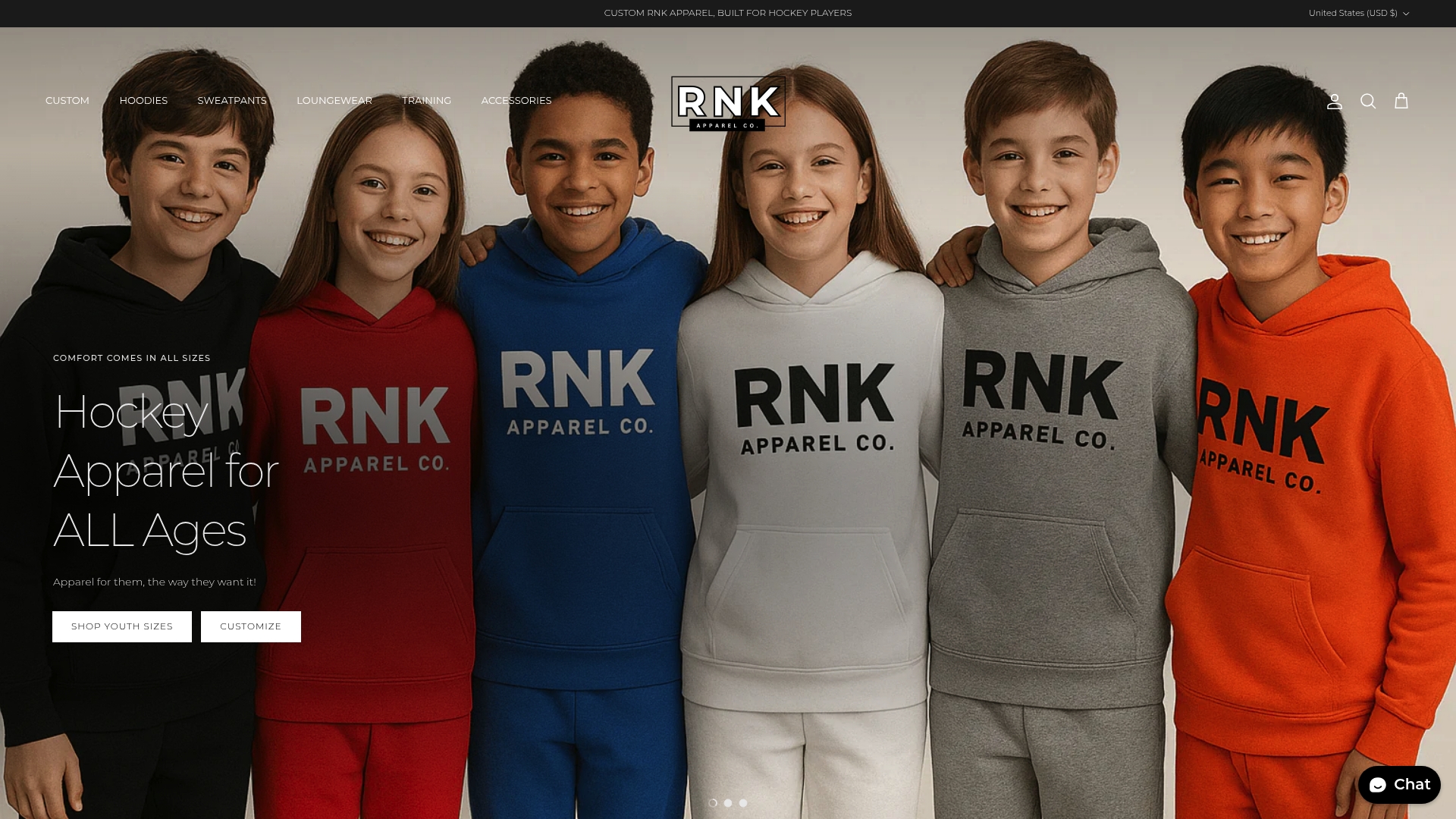
No chasing down a local print shop or navigating a generic sportswear catalog. You submit your artwork, approve your proof, confirm your roster, and Rnkapparel handles production. The custom hockey collection shows the range of options available, and the team at Rnkapparel can walk you through pricing tiers based on your order size. While you’re building out your team kit, hockey accessories like practice add-ons and gear extras are available to bundle with your jersey order. Request a team quote directly through the site and get a firm price and timeline before you commit.
Useful sources and next steps
Rnkapparel resources:
- Common questions about team hockey apparel — lead times, proofs, and ordering process explained
- Custom hockey apparel collection — browse customization options and request a quote
- Hockey accessories and add-ons — patches, practice gear, and extras for team orders
- Hockey apparel evolution and sizing trends — sizing context and performance fabric guidance
- Top custom hockey apparel ideas for teams — design inspiration for reversible and full-kit orders
Market pricing note: Price ranges in this article reflect general market estimates based on publicly available product listings. Competitor product pages are not linked here. For firm pricing on your team’s specific order, request a quote directly from Rnkapparel.
Recommended
- The 2026 Buyer’s Guide to Hockey Graphic T-Shirts and Custom Team Appa – RNK Apparel Co.
- The Ultimate Buyer’s Guide to Hockey Long Sleeve Tees and Custom Hocke – RNK Apparel Co.
- Custom Hockey Hoodies: The Ultimate 2026 Guide to Performance – RNK Apparel Co.
- Custom Hockey Apparel for Small Teams: The 2026 Buying Guide – RNK Apparel Co.
