
Custom team apparel is the most effective youth hockey fundraiser category because it gives families something they actually want to wear long after the season ends. The best youth hockey fundraiser apparel ideas combine team identity, practical comfort, and designs that sell themselves. Hoodies, graphic tees, hats, and joggers from brands like Rnkapparel consistently outperform bake sales and car washes in both revenue and team visibility. This guide covers which apparel types perform best, how to design pieces that sell, and how to plan your rollout around tournaments and key season dates.
1. What are the best youth hockey fundraiser apparel ideas?
Custom team apparel for youth hockey fundraisers falls into a clear hierarchy based on demand, price point, and wearability. The items that sell fastest share three traits: they are comfortable enough for daily wear, they carry the team brand clearly, and they work both inside and outside the arena.
- Hoodies: Custom team hoodies are the top seller in youth hockey fundraising. Parents and players prefer them because they are warm, durable, and worn constantly during the season.
- Graphic T-shirts: Versatile and affordable, tees work year-round. Long-sleeve versions extend their seasonal appeal into fall and spring.
- Hats and beanies: Beanies and caps are budget-friendly items that add warmth and team representation at a lower price point, making them ideal for families watching from cold arenas.
- Joggers and sweatpants: Youth hockey joggers are a growing trend for both training days and casual wear. Players wear them to and from the rink, which keeps the team brand visible.
- Fleece crew neck sweatshirts: A fleece crew neck sits between a hoodie and a tee in warmth and price. It layers well under a team jersey and appeals to fans who want something less bulky.
- Limited edition tournament pieces: Releasing a design tied to a specific tournament or championship run creates urgency. Families buy them as keepsakes, not just clothing.
Pro Tip: Limit your fundraiser store to 3–5 items. A focused selection drives faster decisions and higher conversion than a catalog of 20 options.
2. How to design custom hockey apparel that actually sells
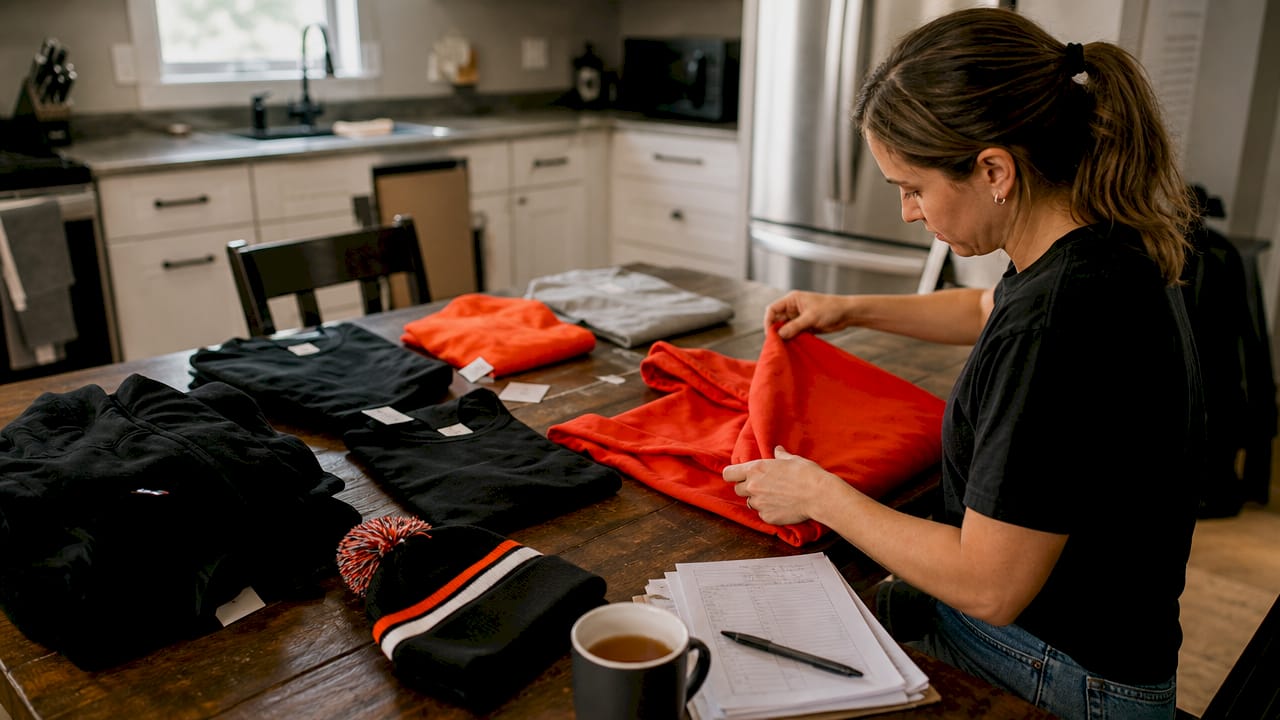
Strong design is the single biggest factor in whether apparel sells out or sits in a box. Families buy pieces they are proud to wear in public, not just at the rink.
Start with team colors and the official logo. These are non-negotiable anchors for any design. Build around them with graphics or slogans that reflect hockey culture, such as player positions, rink imagery, or motivational phrases the team already uses. Rnkapparel lets teams upload logos and add player names and numbers directly, which turns a generic hoodie into a personalized item families are far more likely to buy.
Fit matters as much as graphics. Youth players and their parents want pieces that feel good during training and look good at school. Performance cuts work for tees and joggers, while relaxed fits suit hoodies and crew neck sweatshirts. Offering both a youth size run and an adult size run doubles your potential buyers per item.
Layering compatibility is a design consideration most organizers overlook. A hoodie worn under a team jersey needs to fit without bunching. A tee worn under a fleece mid-layer needs to stay tucked. Design pieces that work as part of a system, not just as standalone items.
Pro Tip: Add a small secondary graphic on the sleeve or back collar. It costs almost nothing extra in print but makes the piece feel premium and increases its perceived value.
3. Comparing apparel ideas by budget, climate, and fundraising goals
Not every team has the same budget or the same arena temperature. The table below maps apparel categories to practical constraints so you can build the right collection for your situation.
| Apparel Category | Budget Level | Best Climate Fit | Fundraising Strength |
|---|---|---|---|
| Graphic T-shirts | Low | Warm arenas, spring | High volume, low margin |
| Long-sleeve tees | Low to mid | Fall, transitional | Year-round versatility |
| Hats and beanies | Low | Cold arenas, outdoor events | Affordable add-on item |
| Hoodies | Mid | Cold arenas, winter | Highest revenue per unit |
| Fleece crew neck sweatshirts | Mid | Cold to moderate | Strong layering piece |
| Joggers and sweatpants | Mid | Year-round | Growing demand, repeat wear |
| Premium outerwear or jackets | High | Outdoor rinks, northern climates | High margin, lower volume |
Smart layering is the standard recommendation for cold arena environments. A moisture-wicking base layer, a fleece mid-layer, and a hoodie or jacket outer layer covers every temperature scenario a youth hockey family will face. Selling all three layers as a coordinated set increases your average order value significantly.
For teams with tight budgets, hats and tees are the right starting point. They carry low minimum order quantities and move quickly. Mid-tier teams should anchor their collection around hoodies, which parents and players prefer for their comfort and durability. High-end collections work best for established programs with large, loyal fan bases who treat apparel as a tradition.
4. How to plan youth hockey tournament outfits and your apparel rollout
Timing your apparel launch around tournaments and season milestones is the difference between a sellout and leftover stock. The most effective fundraising approach uses a short-term online store stocked with 3–5 high-demand items to simplify choices and drive better sales conversion.
Follow this sequence for a clean rollout:
- Set your launch date four to six weeks before a major tournament. This gives families time to order and receive items before the event.
- Open a short-term online store. Platforms that allow pre-orders eliminate the risk of overstock entirely. You only produce what is sold.
- Promote at team meetings first. Parents who hear about the fundraiser in person convert at a higher rate than those who only see a social media post.
- Push on social media with player photos. Images of players wearing sample pieces outperform text announcements every time.
- Create a limited-edition tournament design. A design tied to a specific event gives families a reason to buy even if they already own a team hoodie.
- Encourage players to wear apparel at every game. When the whole team shows up in matching gear, it generates organic interest from other families and opposing teams.
- Combine apparel sales with a raffle or sponsorship drive. Bundling fundraising activities increases total revenue and keeps families engaged across multiple touchpoints.
Online stores and social media promotion are the two factors most strongly linked to higher sales and easier logistics for youth hockey apparel fundraisers. Teams that skip one of these two channels consistently report lower totals.
Pro Tip: Set a hard close date for your online store and communicate it clearly. Scarcity drives last-minute orders from families who were on the fence.
5. Choosing materials that hold up through a full season
Material quality determines whether families wear a piece once or all season. Cheap prints crack after three washes. Thin fabric loses its shape by january. Both outcomes hurt your team’s reputation and reduce repeat purchases in future fundraisers.
For hoodies and crew neck sweatshirts, look for a cotton-polyester blend in the 300–350 GSM range. This weight feels substantial without being stiff. For tees, a 50/50 blend balances softness with print durability. Performance tees and joggers benefit from moisture-wicking fabric that pulls sweat away from skin, which matters for players wearing apparel during warm-ups or travel days.
Printing method also affects longevity. Screen printing holds up better than direct-to-garment on dark fabrics. Embroidery on hats and beanies outlasts any print method and signals higher quality to buyers. Rnkapparel uses quality printing and stitching across its youth hockey line, which reduces the risk of returns and complaints that can derail a fundraiser mid-campaign.
6. Creative apparel ideas that go beyond the standard hoodie
The standard hoodie and tee combination works, but teams that add one or two unexpected items consistently generate more buzz and higher average orders. Think about what players and families actually need at the rink and design around that gap.
Compression base layers are worn by players under their gear for sweat management and muscle support. A branded compression shirt or legging is a practical item players will use every practice. It also signals that your program takes training seriously. Youth-specific performance training wear fills this gap well and differentiates your fundraiser from the typical hoodie-only campaign.
Themed apparel tied to a specific identity also sells well. A “hockey family” design that comes in matching youth and adult sizes turns a single purchase into a two-item order. Slogans built around the team’s actual culture, an inside phrase the players use, a reference to a big win, or a coach’s catchphrase, create emotional connection that generic designs cannot replicate. Rnkapparel’s youth hockey design guide covers how to build these kinds of identity-driven pieces from scratch.
Key takeaways
The most effective youth hockey fundraiser apparel combines daily wearability, strong team branding, and a focused product selection of 3–5 items sold through a short-term online store.
| Point | Details |
|---|---|
| Hoodies lead in revenue | Custom hoodies are the top-selling item and generate the highest revenue per unit in youth hockey fundraisers. |
| Limit your product range | A store with 3–5 focused items converts better than a large catalog with too many choices. |
| Timing drives results | Launch your store four to six weeks before a tournament to maximize orders and on-time delivery. |
| Material quality matters | Choose 300–350 GSM blends for hoodies and moisture-wicking fabric for performance pieces to reduce returns. |
| Layering sells more | Offering coordinated base, mid, and outer layers increases average order value per family. |
What I have learned from watching apparel fundraisers succeed and fail
Eric’s take on what actually works
Most teams make the same mistake. They order too much, too early, and end up with a garage full of medium-sized hoodies nobody wanted. The pre-sale model fixes this completely. You collect orders, you produce exactly what was sold, and you deliver. No guessing, no waste, no awkward conversations at the end of the season.
The second mistake is treating apparel as an afterthought. Teams that build their fundraiser around the apparel, not around a raffle or a car wash with apparel tacked on, raise more money. When the hoodie is the event, families talk about it. Players show up to practice wearing the sample piece. Other parents ask where to get one. That organic word of mouth is worth more than any social media post.
One thing I have seen work surprisingly well is the “family set” approach. A youth hoodie and a matching adult hoodie sold as a pair at a slight discount. Families buy both. Your revenue per transaction doubles. Your apparel becomes visible on two people at every game instead of one.
The trend I am watching closely right now is performance wear for young players. Joggers and training tees are replacing the old cotton sweatpants in youth hockey bags. Teams that add one performance piece to their fundraiser collection are finding it sells faster than expected, especially among the players themselves rather than the parents.
— Eric
Rnkapparel has the custom gear your team needs
Youth hockey fundraisers work best when the apparel is something families genuinely want. Rnkapparel builds custom hockey hoodies, graphic tees, hats, joggers, and accessories specifically for hockey teams across the United States and Canada.
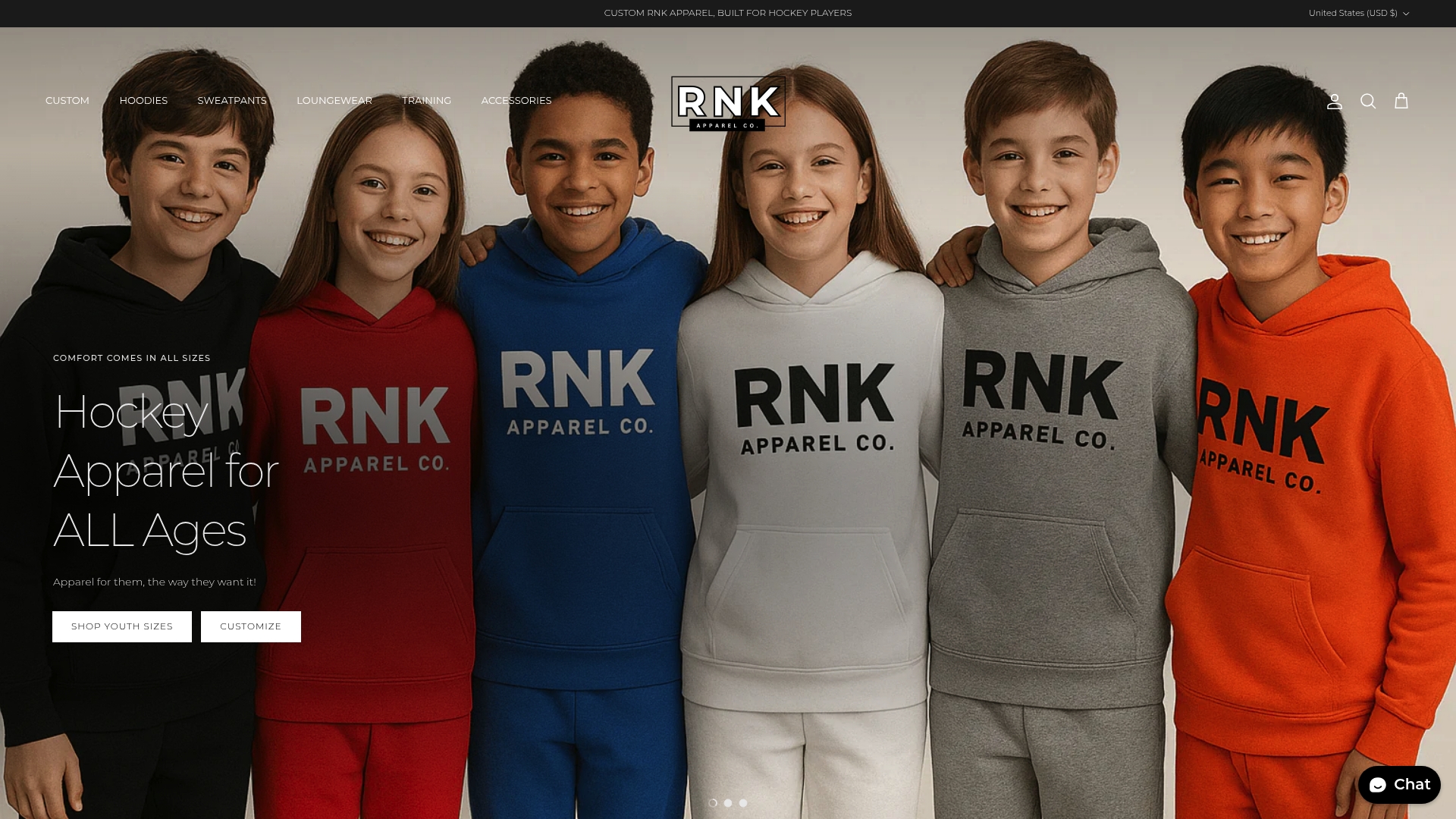
Every piece is customizable with your team logo, player names, and numbers. The ordering process is built for team organizers, not graphic designers. Whether you need hockey graphic t-shirts for a summer tournament or a full layered collection for a winter season fundraiser, Rnkapparel has the range and the quality to make your campaign a success. Browse the full collection at rnkapparel.com and get your team’s custom apparel started today.
FAQ
What apparel sells best at youth hockey fundraisers?
Custom hoodies are the top seller because parents and players wear them constantly during the season. Graphic tees and hats are strong secondary items that appeal to families on tighter budgets.
How many items should a youth hockey fundraiser store carry?
A focused store with 3–5 high-demand items drives better sales than a large catalog. Fewer choices make it easier for families to decide quickly and complete their order.
How do I avoid leftover stock after a fundraiser?
Use a pre-sale model with a short-term online store. You collect orders first, then produce only what was sold. This eliminates overstock entirely.
When should I launch apparel sales before a tournament?
Launch your store four to six weeks before the tournament. This gives families enough time to order and receive their items before the event date.
What fabric works best for youth hockey fundraiser apparel?
A cotton-polyester blend in the 300–350 GSM range works best for hoodies and crew neck sweatshirts. Performance tees and joggers should use moisture-wicking fabric to suit active wear and arena conditions.
