

Why durable sports gear is critical for young athletes
Young athletes are not small adults. Their bones, joints, and connective tissue are still developing, which makes them far more vulnerable to injury than older players facing the same forces. Durable sports gear addresses that vulnerability directly by distributing impact across growth plates and joints rather than concentrating it in one spot, as protective gear fundamentals confirm.
The case for quality gear comes down to a few clear benefits:
- Brain protection: Certified helmets absorb and redirect impact energy before it reaches the skull.
- Dental safety: Properly fitted mouthguards cushion blows to the jaw and teeth.
- Eye protection: Sport-specific goggles rated to ASTM standards block projectiles and debris.
- Joint support: Knee pads, ankle braces, and padded shorts reduce strain on cartilage and ligaments that have not yet fully hardened.
- Performance: Gear that fits well and holds its shape lets athletes move freely and focus on technique rather than discomfort.
- Confidence: Athletes who trust their equipment tend to commit to plays more fully, which supports skill development over time.
- Long-term value: High-quality gear that lasts multiple seasons costs less per season than cheap alternatives replaced every year.
The bottom line is straightforward. Cutting corners on gear for a developing athlete is a false economy, both financially and physically.
How durable gear protects the brain, teeth, eyes, and joints
Youth athletes face a specific set of injury risks that adults often underestimate. A child’s brain is still maturing, which means concussive forces carry a higher risk of lasting neurological effects. Teeth, eyes, and joints are equally exposed in contact and collision sports.
Brain and head injuries are the most widely studied risk. The CDC’s Heads Up program identifies football, lacrosse, and baseball as sports with elevated concussion risk for youth, and each sport requires a helmet certified to its own standard, whether NOCSAE for football and lacrosse or CPSC for cycling. A helmet that meets the right standard for the right sport is not interchangeable with one designed for a different activity.
Dental protection is often skipped because mouthguards feel uncomfortable at first. That discomfort fades within a few practices, but a broken tooth or a jaw fracture does not. Seattle Children’s recommends mouthguards across basketball, soccer, football, lacrosse, and hockey, sports where contact with another player or a hard surface is routine.
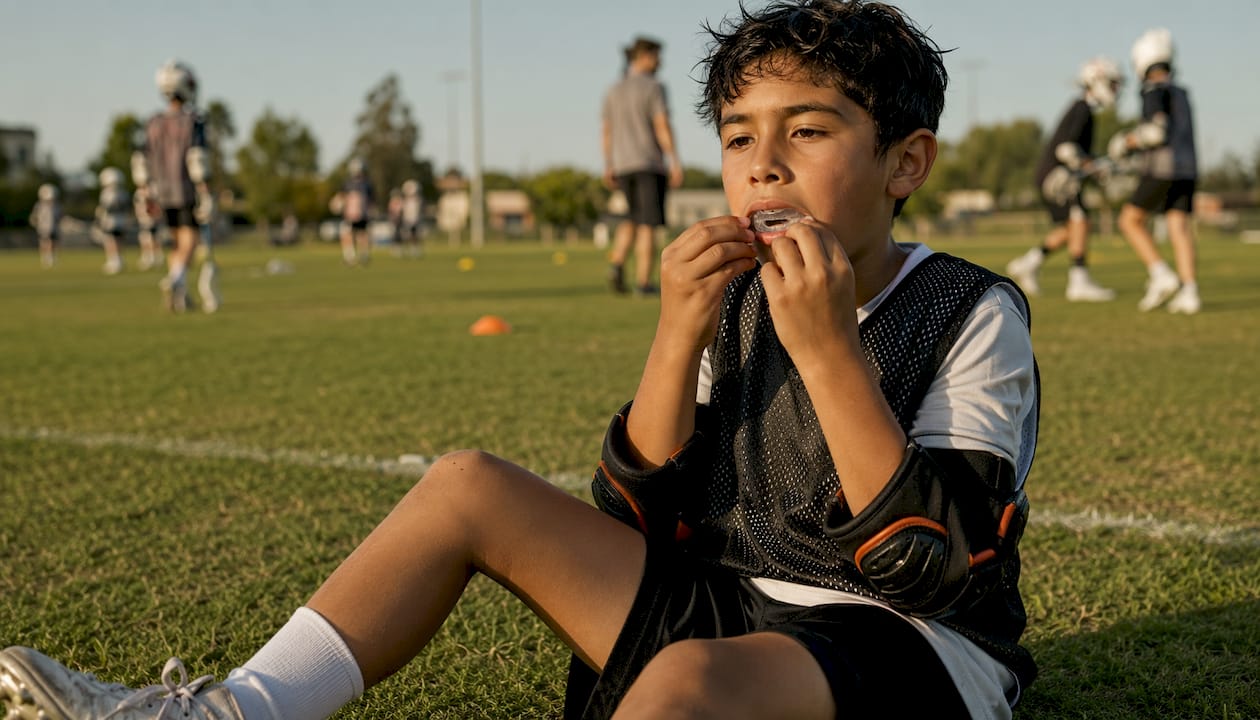
Eye injuries are among the most preventable in youth sports, yet they remain common in racquet sports, lacrosse, and hockey. ASTM-approved eyewear is the standard for lacrosse; polycarbonate goggles rated for hockey protect against puck and stick contact.
Joint protection matters most during growth spurts, when bones lengthen faster than surrounding tendons and ligaments can adapt. Padding that stays in place during movement, rather than shifting with every stride, keeps vulnerable areas covered when it counts.
That last point is worth taking seriously. Gear works best when coaches reinforce safe technique alongside it, not instead of it.
Why proper fit and footwear matter as much as the gear itself
A helmet rated to NOCSAE standards offers almost no protection if it rotates freely on a child’s head. The same logic applies to every piece of protective equipment. Fit quality directly affects injury risk, and ill-fitting footwear changes a young athlete’s biomechanics in ways that increase ankle sprains, shin splints, and knee strain.
Key fit considerations for youth athletes:
- Helmets should sit level on the head, with the front edge two finger-widths above the eyebrows and no side-to-side rocking.
- Mouthguards need to be molded to the individual athlete’s teeth; a generic boil-and-bite guard that does not seat properly provides minimal protection.
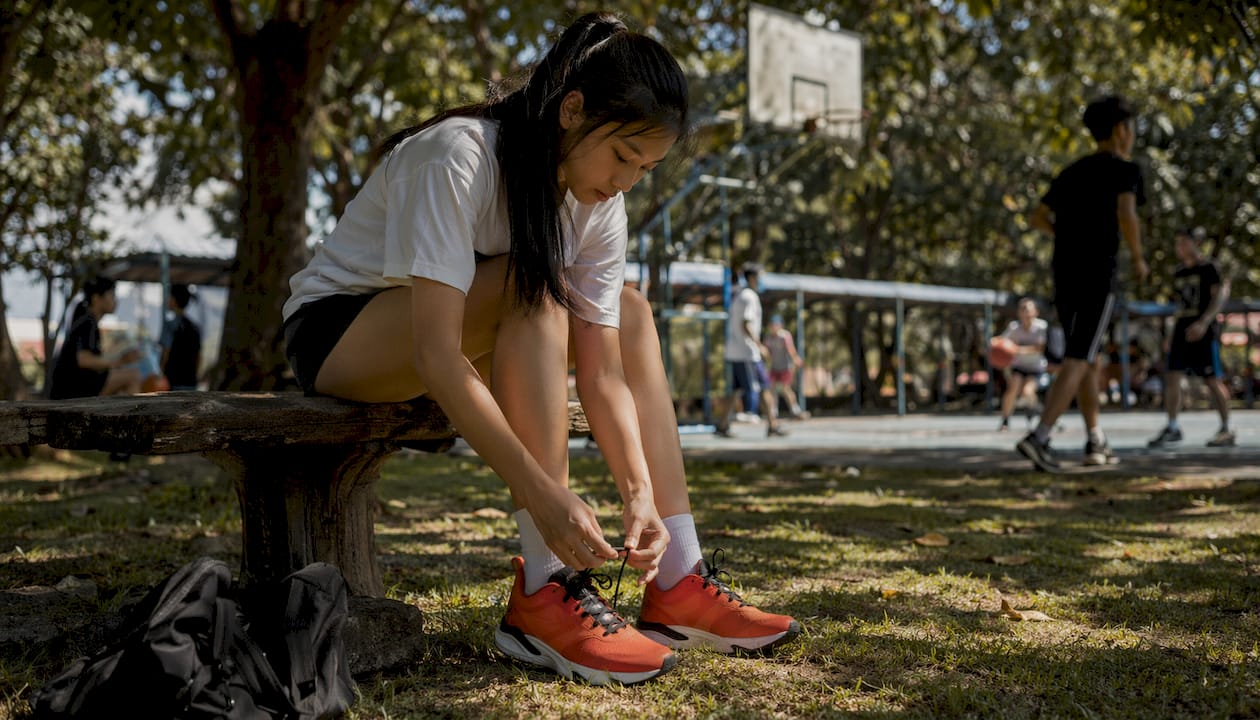
- Footwear should match the playing surface (cleats for grass, court shoes for hardwood) and leave roughly a thumb’s width between the longest toe and the shoe’s end.
- Pads and braces require a dynamic fit check, meaning the athlete should move through sport-specific motions while wearing them to confirm padding stays aligned and does not restrict vision or range of motion.
- Sizing up to save money is one of the most common mistakes parents make. Oversized gear shifts during play, creating gaps in coverage at exactly the moment impact occurs.
Youth athletes grow fast. Checking fit at the start of every season, and again mid-season during growth spurts, catches problems before they become injuries. Rnkapparel’s guide on youth sizing differences explains why youth-specific cuts matter beyond just scale.
Pro Tip: Have your athlete put on all their gear and then run, crouch, and swing as they would in a game. If anything shifts, gaps, or pinches, adjust before the first practice.
What worn-out and low-quality gear actually costs you
Cheap gear fails in ways you often cannot see. Internal cushioning in helmets and shoe midsoles degrades through impact cycles and UV exposure long before the outer shell shows any damage, a process confirmed by research on hidden gear degradation. A helmet that looks fine on the shelf may have already lost a significant portion of its ability to absorb impact.
The risks of low-quality or aging gear include:
- Hidden structural failure: Foam liners compress permanently after repeated impacts, reducing energy absorption on the next hit.
- Expired helmets: Manufacturers set recommended replacement timelines because polymers break down over time, even in helmets that have never taken a hard hit.
- Strap and buckle degradation: Fasteners on pads and helmets weaken with washing and UV exposure, allowing gear to shift during play.
- False confidence: Athletes and parents who see no visible damage often assume gear is still protective, when it may not be.
The financial argument for durable premium gear is straightforward. High-quality equipment that holds up across three seasons costs less per season than budget gear replaced annually, and it carries a lower risk of silent failure. Replacement schedules vary by sport and manufacturer, but a general rule is to replace helmets after any significant impact, after the manufacturer’s recommended lifespan, or whenever fit can no longer be corrected.
Maintenance extends gear life considerably. Wiping down pads after each use, storing helmets away from direct sunlight, and checking straps and buckles weekly all slow the degradation process.
What modern materials actually do for youth athletes
The materials inside today’s durable sports gear are meaningfully different from what was available a decade ago. Advanced polymers, carbon fiber composites, and Kevlar blends now appear in helmets and pads designed for youth sports, and longer warranty periods on these products reflect genuine confidence in their engineering rather than just marketing language.
Modern fabric technology matters just as much as hard-shell protection. Polyester and spandex blends used in base layers and training apparel outperform cotton at managing moisture and reducing chafing, which keeps athletes comfortable through long practices and reduces the kind of distraction that leads to sloppy technique. A young player who is not fighting a soaked cotton shirt or a rubbing seam stays focused on the game.
Key material features to look for:
- Multi-density foam liners in helmets that handle both low-speed and high-speed impacts differently.
- Moisture-wicking fabrics in base layers and training wear that pull sweat away from skin.
- Reinforced stitching and abrasion-resistant panels in pads that take repeated contact.
- Lightweight composites in hard shells that reduce fatigue without sacrificing protection.
- Antimicrobial treatments in padding that slow odor and bacterial buildup over a long season.
Quality signals worth checking include NOCSAE, ASTM, and CPSC certifications on hard-shell gear, plus warranty length on any item with internal foam or polymer components. A one-year warranty on a helmet is a different statement than a five-year one.
Pro Tip: Check the certification stamp on the inside of any helmet before buying. If it does not list the relevant standard for your child’s sport, it does not meet the minimum safety threshold regardless of price.
Rnkapparel’s youth training apparel uses performance fabrics built for the demands of hockey practice, where moisture management and freedom of movement directly affect how well young players develop on the ice.
How to choose durable sports gear for youth athletes
Selecting gear for a young athlete involves more than picking the right sport. Age, growth stage, skill level, and the specific demands of the position all affect what “durable and appropriate” actually means in practice.
Start with certifications, not price. Any hard-shell protective item, helmets, face masks, and goggles, should carry the certification standard for its sport before any other feature matters. NOCSAE for football and lacrosse helmets, CPSC or Snell for bike helmets, and ASTM for ski and snowboard helmets are the baselines set by organizations like the Consumer Product Safety Commission and the American Society for Testing and Materials.
Prioritize fit over brand. A well-fitted mid-range helmet from a reputable manufacturer protects better than a premium helmet that does not sit correctly. Bring the athlete to the store when possible, or use the manufacturer’s sizing guide carefully when ordering online.
Budget for the essentials first. Helmets, mouthguards, and sport-specific footwear are the highest-priority items. Upgrade training apparel and accessories after the first season, once you know the athlete’s growth trajectory and commitment level.
Check warranties before buying. A manufacturer willing to back a product for multiple years is signaling something about the materials inside it. Short warranties on foam-based protective gear are worth questioning.
Rnkapparel’s youth hockey gear guide covers sport-specific selection in detail, including how gear needs shift as players move from beginner to competitive levels.
Warn against common mistakes:
- Buying adult-sized gear and expecting it to “grow into.”
- Skipping mouthguards because the athlete finds them uncomfortable.
- Reusing helmets from older siblings without checking certification dates.
- Choosing gear based on appearance rather than safety ratings.
- Ignoring replacement schedules because gear looks undamaged.
Warm-up routines also interact with gear choices in ways coaches often overlook. Dynamic stretching before practice, as research on static and dynamic stretching from the Hospital for Special Surgery confirms, prepares joints and muscles for load. Gear supports that preparation; it does not replace it.
Gear up your young athlete with Rnkapparel
Youth athletes train hard. Their gear should keep up. Rnkapparel builds performance training apparel designed specifically for young hockey players, with moisture-wicking fabrics, reinforced construction, and sizing built for developing bodies rather than scaled-down adult cuts. From practice sessions to game days, the right apparel keeps athletes comfortable, focused, and ready to perform at their best.
Browse custom hockey accessories for youth teams, or explore the full range of training and bench wear built for the demands of competitive youth hockey.
Key Takeaways
Durable sports gear protects young athletes’ developing bodies, prevents injuries, and delivers better long-term value than cheap alternatives replaced every season.
| Point | Details |
|---|---|
| Youth anatomy requires protection | Developing bones and growth plates need gear that distributes impact force, not concentrates it. |
| Fit determines effectiveness | Even certified gear fails to protect if it shifts during play; check fit at the start of every season. |
| Hidden degradation is a real risk | Internal foam and polymers lose protective function before visible damage appears; follow replacement schedules. |
| Durable gear costs less over time | High-quality equipment lasting multiple seasons has a lower total cost than budget gear replaced annually. |
| Certifications are the baseline | Look for NOCSAE, ASTM, or CPSC stamps on hard-shell gear before evaluating any other feature. |
Recommended
- The Evolution of the Youth Hockey Gear Bag: 2026 Trends and Selection – RNK Apparel Co.
- Youth Hockey Hoodies: The Ultimate 2026 Buying Guide for Players & Par – RNK Apparel Co.
- Hockey Apparel Youth: A Complete Guide - Hockey Apparel Youth Players Wear 2025 | Comfort, Performance, Customization – RNK Apparel Co.
- RNK NEWS – RNK Apparel Co.
