

For hockey players who need a hoodie that actually works at the rink, the answer is a 100% polyester or technical blend performance hoodie with moisture-wicking construction, athletic fit for layering, and customization zones for names and numbers. Rnkapparel is the recommended source for custom and team orders, offering on-demand production that cuts overproduction waste while delivering per-player personalization. The core reasons: technical polyester blends outperform cotton-heavy fleece during training by pulling sweat away from skin and drying fast, athletic cuts move with you instead of bunching under outerwear, and on-demand customization means your team’s hoodies arrive with the right names and numbers without a warehouse full of unsold inventory.
Table of Contents
- What should you look for in a hockey performance hoodie?
- How do you choose the right hoodie for your role?
- Sizing and fit guidance for hockey players
- How does fabric choice affect your performance on and off the ice?
- What do team managers need to know about custom hoodie orders?
- Care instructions that keep hoodies season-ready
- Where can you buy performance hoodies in the U.S., and what do they cost?
- What’s the right next step for buying or ordering?
- Key Takeaways
- What most players get wrong about performance hoodies
- Rnkapparel custom hockey hoodies: built for players, ready for teams
- Useful sources and further reading
What should you look for in a hockey performance hoodie?
The difference between a hoodie that earns a spot in your bag and one that gets left in the locker room usually comes down to four things: fabric, construction, fit, and customization readiness.
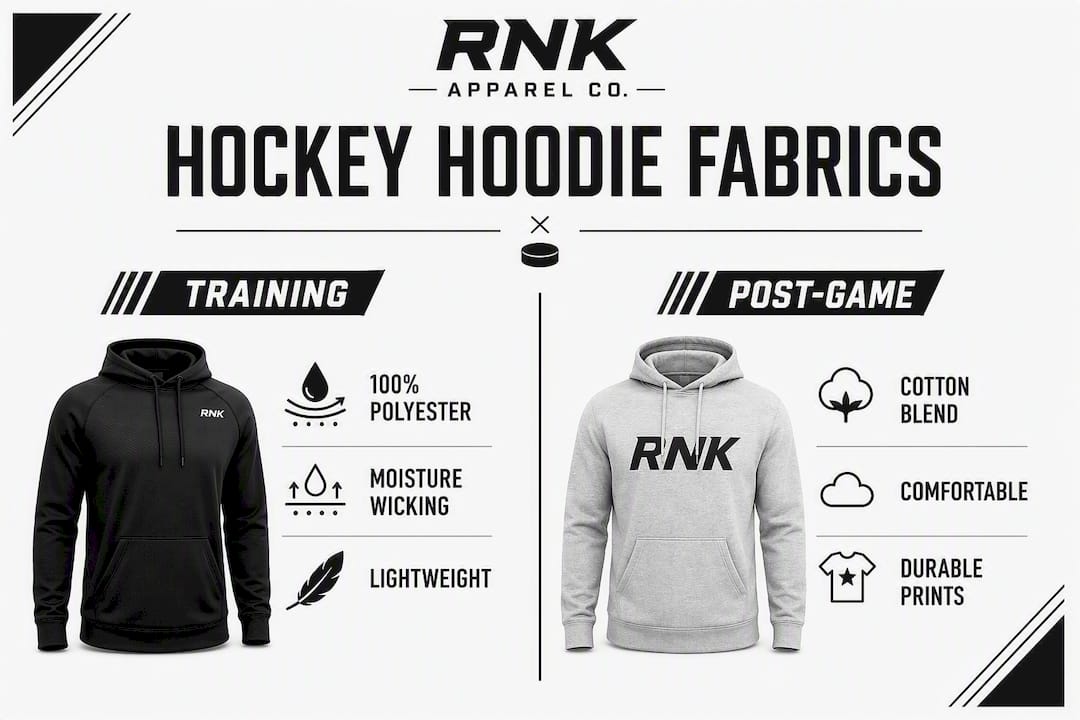
Fabric first. Moisture-wicking 100% polyester or technical synthetic blends are the right call for training and warmups. Cotton-heavy fleece (think 80% cotton/20% polyester) is comfortable and warm, but it absorbs sweat and stays damp. That’s fine for post-game lounging. It’s a problem during drills.
Construction details that matter:
- Taped neck and flatlock seams to prevent chafing under pads or outerwear
- Three-panel hood for a cleaner fit that doesn’t collapse when you pull it up
- Reinforced kangaroo or zip pockets with covered zippers so nothing falls out on the bench
- Breathable underarm panels for ventilation during high-output warmups
- Odor-control or quick-dry finishes on training-specific styles
Fit features to check:
- Athletic or trim cut for movement during drills and on-ice warmups
- Relaxed or slightly oversized cut for layering over base layers and traveling to games
- Longer hem and sleeve length to stay tucked when reaching or bending
Customization readiness. Performance hoodies built for team use need flat, stable print zones on the chest, back, and sleeves. Heat-transfer vinyl works on polyester without cracking if applied correctly. Screen printing suits bulk runs. Dye-sublimation gives the cleanest all-over result on 100% polyester. Embroidery needs a reinforced backing zone so the fabric doesn’t pucker. Check that the vendor specifies minimum order sizes and whether on-demand (single-piece) orders are available.
Pro Tip: Minimal, clean branding on a performance hoodie extends its life beyond team-only contexts. A hoodie with a small chest logo reads as athletic wear anywhere; one covered in large graphics stays in the hockey bag.
How do you choose the right hoodie for your role?
The right hoodie depends on what you’re actually doing in it. A player running warmup drills needs something different from a team manager placing a 30-piece order.
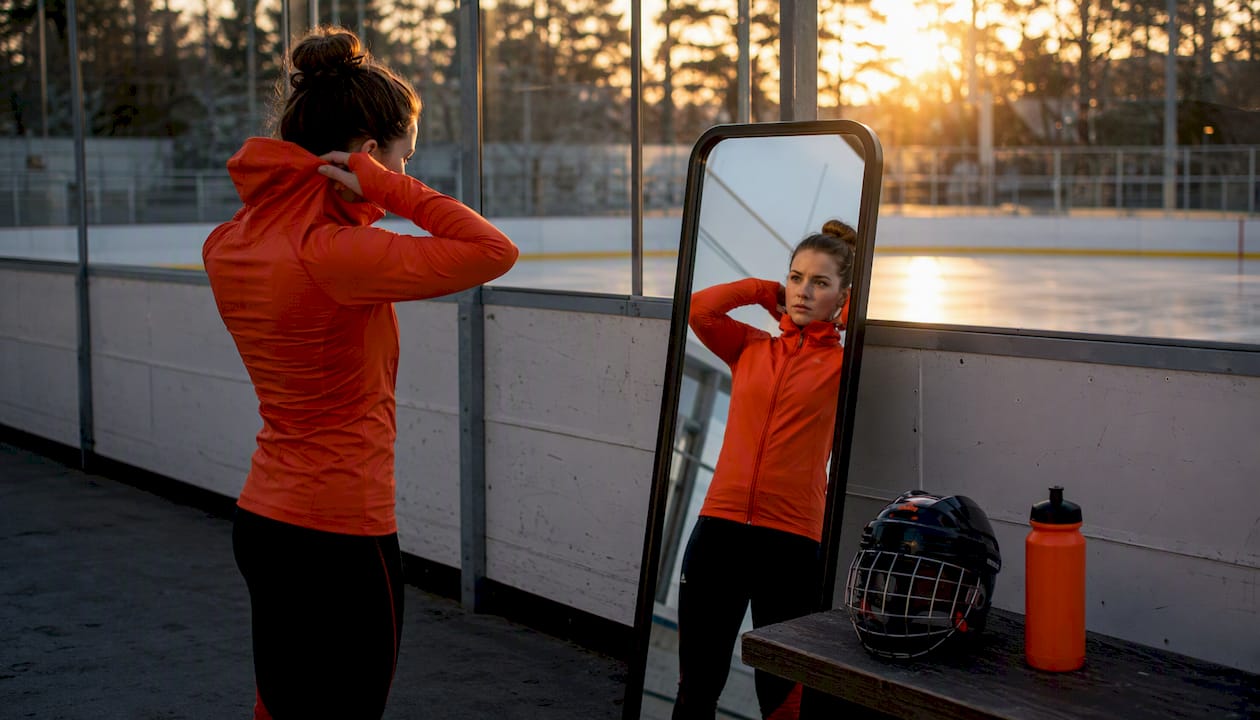
Players in-season should prioritize technical polyester for training and a relaxed cotton blend for post-game recovery. The training hoodie takes the abuse; the post-game one handles the comfort. Owning both is smarter than trying to find one garment that does everything equally well.
Casual fans and supporters can lean toward heavyweight cotton blends. Warmth and comfort matter more than moisture management when you’re watching from the stands.
Team managers ordering in bulk face the most complex decision. Before placing any order, get answers to these questions:
- What is the fabric weight and fiber breakdown (% polyester vs. cotton)?
- Is there a sizing chart specific to this garment, not just a generic S/M/L guide?
- What are the minimum order quantities, and is on-demand available for smaller rosters?
- What is the lead time from artwork approval to delivery?
- What file formats does the vendor require for logos and artwork?
- What is the return or exchange policy for custom orders?
Red flags to walk away from: any vendor that lists “polyester blend” without a percentage breakdown, no sizing chart beyond generic sizes, no stated team-order policy, or product photos that show loose stitching at the cuffs and hem. Those details show up in the first wash.
Sizing and fit guidance for hockey players
Hockey players carry more muscle through the chest and shoulders than the average apparel customer, and that changes how standard sizes fit.
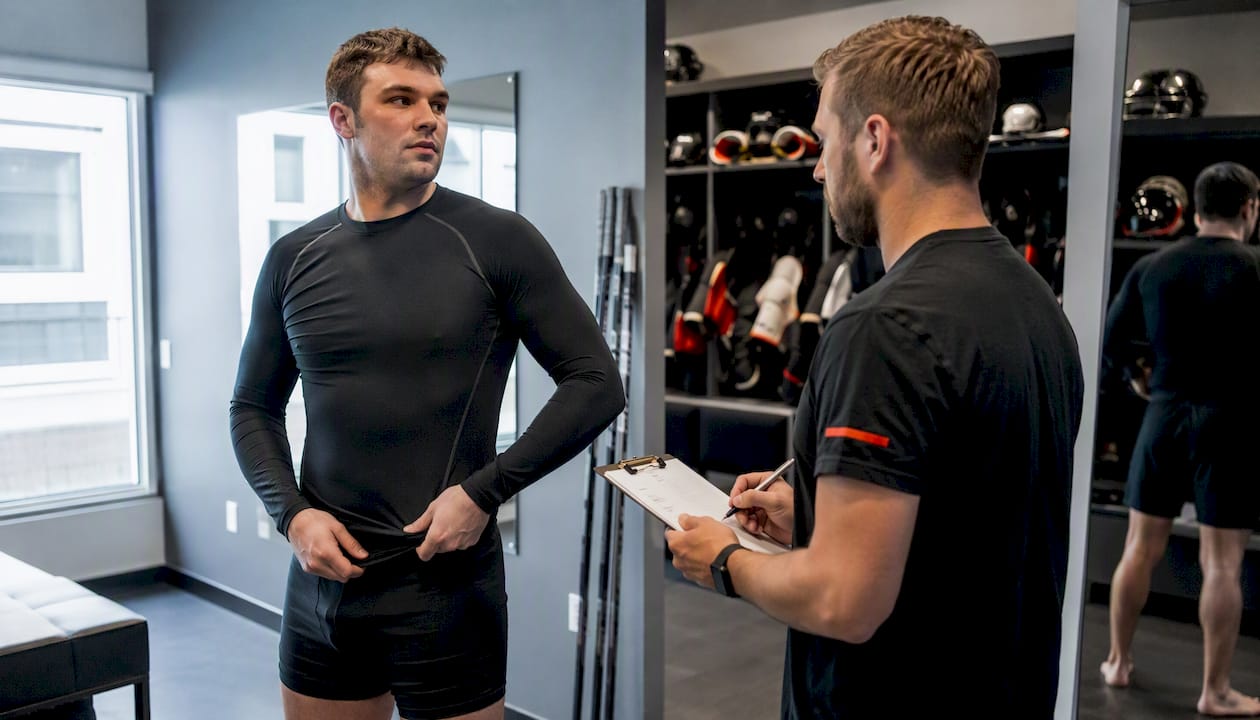
When you plan to layer, go one size up from your usual. You want enough room in the chest and body length to wear a base layer or compression shirt underneath without the hoodie riding up when you reach for a puck or lift your arms. Sleeve length matters here too. A sleeve that hits mid-wrist when your arms are at your sides will creep up past the wrist when you extend.
For training and drills, an athletic or trim cut is worth the tighter feel. Excess fabric bunches at the armpits and waist during movement and can catch on pads. If the hoodie has a kangaroo pocket, make sure it sits flat against the body when you’re moving, not swinging forward.
Practical fit tips:
- Measure your chest at the widest point (under the arms, across the pecs) and compare to the vendor’s chest measurement, not just the size label
- Check shoulder seam placement: it should sit at the edge of your shoulder, not drooping down the arm
- For oversized styles, pay close attention to sleeve length and fabric weight so the extra volume doesn’t restrict movement when you’re carrying a bag or wearing an outer shell
- Players who wear compression base layers can usually size normally for training hoodies; those layering over a full base layer set should size up
Pro Tip: If you’re ordering for a team, collect actual chest and sleeve measurements from every player rather than relying on self-reported sizes. Players consistently underestimate their chest measurement, which leads to a wave of exchange requests after delivery.
How does fabric choice affect your performance on and off the ice?
The fabric decision is where most players get it wrong. They grab a heavyweight cotton hoodie because it feels substantial in the store, then wonder why they’re soaked through after a 20-minute warmup.
Apparel design guidance consistently separates lifestyle and performance gear by fabric composition. Polyester and technical blends wick moisture away from skin and dry quickly. Cotton absorbs moisture and holds it. For training, that difference is the gap between staying warm and getting cold and clammy the moment you stop moving.
| Fabric Type | Composition Example | Key Performance Traits | Best Use Case |
|---|---|---|---|
| 100% Polyester technical knit | 100% polyester | Moisture-wicking, quick-dry, lightweight | On-ice warmups, training drills |
| Microfleece / tech fleece | 100% polyester brushed | Warmth, breathability, light weight | Cold rink travel, bench wear |
| Cotton/poly blend (performance) | 80% cotton / 20% polyester | Moderate wicking, soft hand feel | Gym training, casual practice |
| Heavyweight cotton blend | 80% cotton / 20% polyester | Maximum warmth, comfort, slow-dry | Post-game recovery, fan wear |
The 80% cotton/20% polyester construction common in oversized street-style hoodies is a legitimate choice for post-game comfort. It’s not a performance fabric. Knowing which category you’re buying keeps you from being disappointed.
For teams, that production model also means you can order exact quantities per player size rather than rounding up to hit a minimum and sitting on extras at the end of the season.
What do team managers need to know about custom hoodie orders?
Custom team hoodies involve more moving parts than a standard retail purchase. Getting the process right upfront saves weeks of back-and-forth.
On-demand vs. bulk production. On-demand lets you order one piece at a time with full personalization. No minimum, no leftover inventory, slightly higher per-unit cost. Bulk screen printing drops the per-unit price significantly but requires a minimum run with minimum quantities depending on the vendor and locks in the design before production starts. On-demand production is increasingly the preferred route for teams that want per-player customization without committing to a fixed inventory.
Customization method comparison:
| Method | Best For | Durability | Notes |
|---|---|---|---|
| Heat transfer vinyl | Small runs, names/numbers | Good (3–5 years with proper care) | Avoid high heat in dryer |
| Screen printing | Bulk orders, single-color logos | Excellent | Setup fees apply; minimum quantities |
| Dye-sublimation | All-over designs, 100% polyester only | Excellent (color embedded in fiber) | Cannot be done on cotton blends |
| Embroidery | Chest logos, caps, premium feel | Excellent | Requires backing; adds weight |
Team order checklist:
- Collect chest, shoulder, and sleeve measurements from every player
- Confirm artwork file format (vector .AI or .EPS preferred; high-res .PNG acceptable for some methods)
- Request a digital proof before production starts and get written approval from the team contact
- Confirm the deposit and payment schedule upfront
- Verify the expected ship date and whether partial shipments are available for large orders
- Ask about on-site personalization options if players need name/number changes after initial delivery
Rnkapparel’s custom hoodie design workflow walks teams through artwork upload, color selection, and proof approval in a single online session, which cuts the typical back-and-forth significantly.
Care instructions that keep hoodies season-ready
A performance hoodie that’s washed wrong loses its moisture-wicking finish, shrinks out of fit, or cracks its print in a single season. The care routine is short but non-negotiable.
Wash cold, always. Hot water breaks down polyester’s moisture-wicking treatment and causes cotton-blend hoodies to shrink. Turn the hoodie inside-out before washing to protect printed graphics and embroidery from abrasion against other garments. Skip fabric softener on technical polyester. It coats the fibers and kills the wicking performance.
Dry on low heat or air dry flat. High heat is the fastest way to crack heat-transfer prints and distort the hood shape. For embroidered logos, air drying is the safest option.
Before a bulk team wash, run a quick colorfastness check: dampen a white cloth, press it against the print for 30 seconds, and check for dye transfer. If color comes off, wash that garment separately until the excess dye is gone.
Durability signals to look for in product photos: tight, even stitching at the cuffs and hem, a taped neck seam (visible as a thin strip inside the collar), and reinforced pocket corners. Those details hold up through a full season of weekly washing.
Pro Tip: For teams, rotate two sets of hoodies through the season rather than washing the same pieces every week. It extends the life of each garment and gives you a backup when one is in the wash on game day.
Where can you buy performance hoodies in the U.S., and what do they cost?
Price and channel depend on what you need: a single training hoodie, a custom individual piece, or a full team order.
Buying channels and what to expect:
- Custom DTC (direct-to-consumer, on-demand): Vendors like Rnkapparel let you order one or many pieces with full personalization. Per-unit cost is higher than bulk, but there’s no minimum and no leftover inventory. Best for individual players and small teams.
- Specialty hockey retailers: Carry performance-focused hoodies from hockey-specific brands with technical fabrics and construction details built for rink use. Selection is curated but limited in customization options.
- General sports marketplaces: Wide selection, competitive pricing, but customization is usually limited to licensed team graphics. Not ideal for team orders with player names and numbers.
- Team suppliers (bulk screen printers): Lowest per-unit cost for large orders, but require minimums, setup fees, and longer lead times. Best for established programs ordering 24+ pieces.
Typical price ranges in the U.S.:
- Standard performance hoodies (no customization) typically cost from moderate to higher price ranges.
- Custom printed hoodies (heat transfer or screen print, on-demand) generally fall in a higher price range than standard options.
- Premium embroidered team hoodies (bulk order) usually command premium pricing based on quantity and decoration complexity.
Before committing to a team order, compare total project cost, not just unit price. Setup fees, shipping, and proof charges can add significant extra costs to a bulk order that looks cheaper per piece on paper. Confirm the return policy for custom orders before checkout. Most vendors won’t accept returns on personalized items unless there’s a production error, so getting the proof right matters.
For affordable options across individual and team budgets, Rnkapparel’s hockey hoodies collection covers both ends of the range.
What’s the right next step for buying or ordering?
For most hockey players, the right hoodie is a 100% polyester or technical blend for training and a cotton-blend heavyweight for post-game. For teams, the right move is on-demand custom production with per-player personalization and a clean proofing process before anything goes to print.
If you’re buying for yourself, browse Rnkapparel’s hockey hoodies collection and filter by fabric and fit. If you’re managing a team order, start with the design tool, collect measurements first, and confirm your ship date before the season starts.
Key Takeaways
Performance hoodies built for hockey require technical polyester fabrics, athletic or layering-ready fits, and customization options that hold up through a full season of washing.
| Point | Details |
|---|---|
| Fabric by use case | Choose 100% polyester or technical blends for training; cotton-blend heavyweight fleece for post-game comfort. |
| Sizing for layering | Go one size up when wearing over a base layer; measure chest and sleeve length, not just S/M/L. |
| Customization method | Match the print method to your order size: heat transfer for small runs, screen print for bulk, dye-sublimation for all-over polyester designs. |
| Team order checklist | Collect actual player measurements, confirm artwork format, get a written proof approval, and verify ship dates before paying a deposit. |
| Rnkapparel for teams | Rnkapparel offers on-demand custom hockey hoodies with per-player personalization, no minimum for individual orders, and an online design workflow for team orders. |
What most players get wrong about performance hoodies
The conventional wisdom says “get a good hoodie and you’re set.” The reality is that most players own the wrong hoodie for the wrong moment and don’t realize it until they’re standing at the bench, soaked through a cotton pullover after warmups, with 40 minutes until puck drop.
The fabric split is real and worth taking seriously. A 100% polyester training hoodie and a heavyweight cotton post-game hoodie are not interchangeable. They solve different problems. Players who try to use one garment for everything usually end up with something that does neither job particularly well.
The other thing that gets underestimated: Team managers who invest in higher-quality performance fabrics can reduce their total season cost by having hoodies that survive frequent washes without losing shape or cracking print, thus reducing mid-season replacements. The per-piece cost looks higher upfront; the replacement cost looks much worse in February.
On-demand production deserves more credit than it gets in the team-ordering conversation. The ability to order exactly the right quantity, with each player’s name and number, without committing to a bulk run that leaves you with 8 extra larges at the end of the year, is a genuine operational advantage for youth programs and adult leagues with tight budgets.
Rnkapparel custom hockey hoodies: built for players, ready for teams
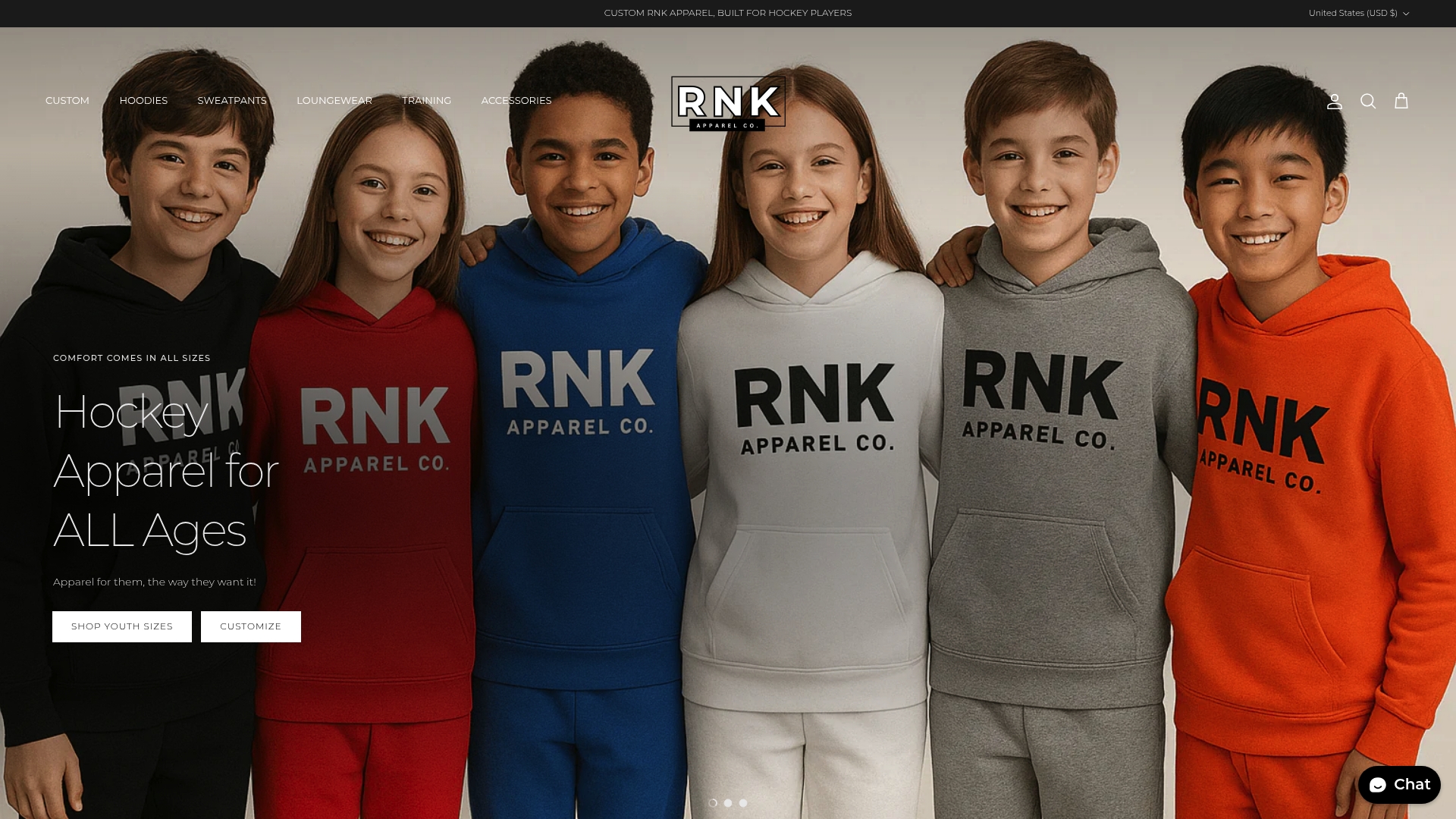
Rnkapparel’s custom hockey hoodies are built around the same criteria this article covers: technical fabric options, athletic and relaxed fits for different use cases, and full customization zones for names, numbers, and team logos. The online design tool handles artwork upload, color selection, and proof approval in one session, so team managers aren’t chasing email threads for two weeks before production starts.
Individual players can order a single piece with their name and number. Teams can configure a full roster order with per-player personalization and no leftover inventory. For players who want to round out their kit, Rnkapparel’s hockey workout apparel collection covers training-specific pieces that pair with performance hoodies for a complete on-ice and off-ice setup.
Start your team order or pick your hoodie at rnkapparel.com/collections/hockey-hoodies.
Useful sources and further reading
- CCM Hockey Apparel — shows the breadth of hockey-specific apparel categories from an established brand; useful for understanding what specialty lines offer
- Rnkapparel custom hockey hoodies collection — primary ordering page for custom and team hoodies
- Rnkapparel custom hoodie design guide — step-by-step walkthrough of the team design and ordering workflow
Recommended
- Custom Hockey Hoodies: The Ultimate 2026 Guide to Performance – RNK Apparel Co.
- Custom Hockey Hoodies USA & CANADA | Affordable Team Hoodies – RNK Apparel Co.
- Hockey Workout Apparel | Performance Training Gear – RNK Apparel Co.
- The Ultimate Hockey Hoodie Guide - Affordable Hockey Hoodie for Youth Players | Comfort, Durability, Great Fit – RNK Apparel Co.
