
Beer league hockey gear is essential protective and performance equipment that directly determines how safely and confidently you play every shift. Recreational hockey, the industry’s standard term for adult amateur play, carries real injury risk even at low intensity. ISO 10256-1:2024 sets the current international benchmark for protective hockey equipment, and HECC certification marks the minimum helmet standard accepted by most North American leagues. Getting your gear right is not about spending the most money. It is about choosing equipment that fits, protects, and holds up through a full season of weekly ice time.
Why beer league hockey gear matters more than most players think
Properly fitted protective gear certified by standards like ISO 10256-1:2024 enhances player confidence and safety by allowing full commitment to physical play. That is not a minor benefit. When you trust your gear, you stop hesitating at the boards, you take hits without flinching, and you execute edge work without second-guessing your balance. Trust in protection removes hesitation, which leads to swifter, more decisive execution on ice.
Poorly fitted gear does the opposite. Gaps in shoulder pads expose your collarbone. Loose shin guards rotate on contact, leaving your knee unprotected. A helmet that rocks forward on impact absorbs less force and increases concussion risk. Improper sizing is one of the most common safety risks in recreational hockey, and it costs nothing to fix beyond a proper fitting session.
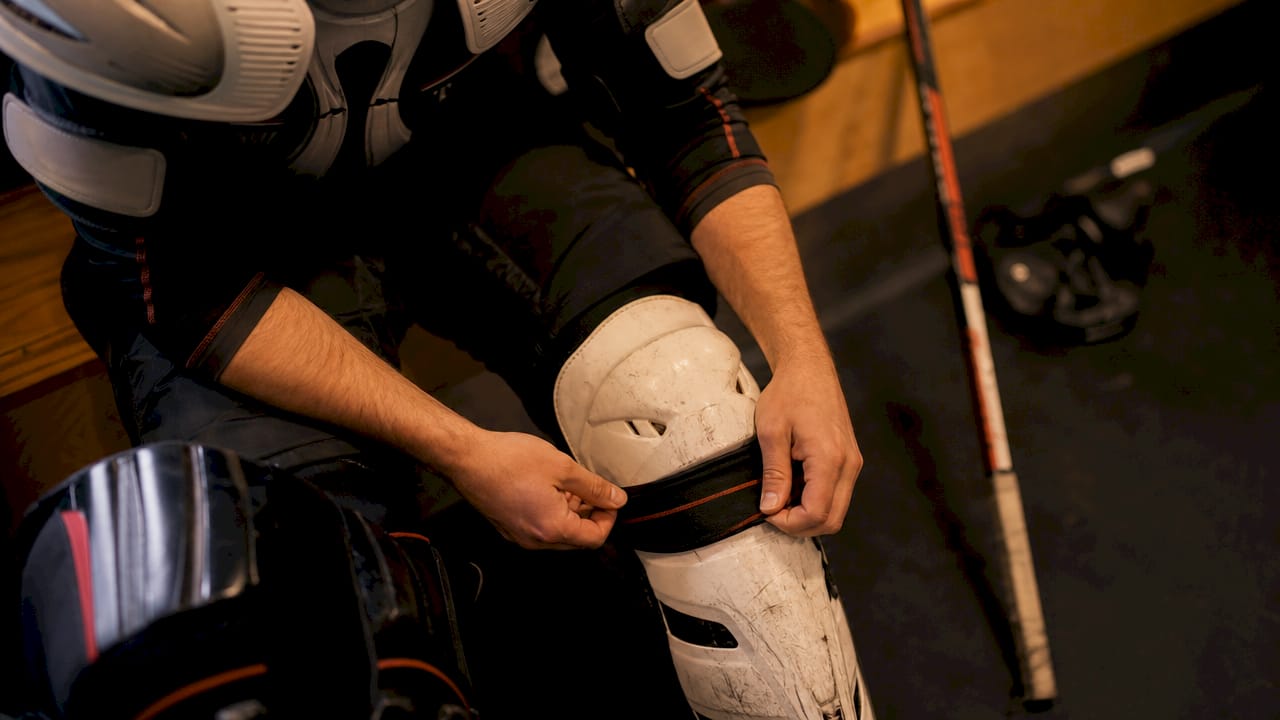
The biomechanical argument is equally strong. Poorly fitted gear causes players to adjust their movement, reducing speed and efficiency. A shin guard that slides forces you to skate more upright. Gloves that are too large reduce stick feel and slow your release. Every compensation your body makes to work around bad gear is energy stolen from your actual game.
Key protective items where fit is non-negotiable:
- Helmet: Must be HECC-certified and sized so it does not rock front to back or side to side
- Mouthguard: Reduces dental and concussion risk; custom-fitted versions offer the best protection
- Shoulder pads: Should cover the collarbone and deltoid without restricting arm movement
- Shin guards: Must cover the full knee cap and sit flush against the leg without rotating
- Skates: Sized using a Brannock Device with one thin sock for maximum energy transfer and stability
Pro Tip: When trying on skates, wear the thinnest sock you plan to play in. Buying skates “to grow into” creates dangerous gaps and kills your power transfer on every stride.
Pro-stock vs. retail gear: which is worth it for beer league?
Pro-stock gear is manufactured to the same durability and construction standards used for professional teams, but sold without the retail branding markup. Retail gear, by contrast, is engineered primarily to be lightweight and visually appealing on store shelves. For a player skating once or twice a week in a beer league, that distinction matters a great deal.
Retail prices rise annually, while pro-stock offers similar or better quality at lower cost for players at that frequency. Many adult players spend heavily on the lightest retail sticks, only to snap them within a season. Pro-stock sticks use reinforced construction that holds up far longer under the physical demands of recreational play.
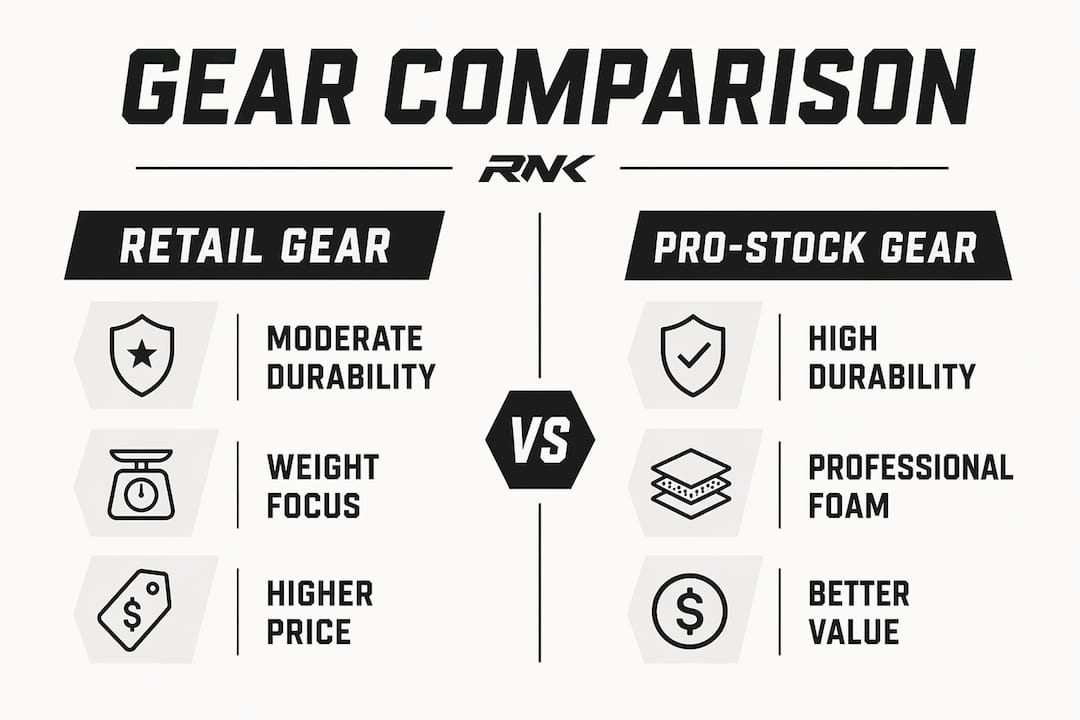
Pro-stock gloves break in faster and feature reinforced materials that hold up better under frequent beer league play than lightweight retail versions. The palm stitching is heavier, the foam padding is denser, and the cuff construction resists the wear that comes from stick handling and board battles. For a player who wants gear that feels broken in by week three and still performs in year three, pro-stock gloves are the clear choice.
| Category | Retail gear | Pro-stock gear |
|---|---|---|
| Durability | Moderate; prioritizes weight reduction | High; built for consistent, repeated use |
| Price | Higher retail markup | Lower cost for comparable quality |
| Performance | Excellent for elite skill levels | Reliable and consistent for recreational play |
| Break-in time | Longer; stiffer materials | Faster; materials conform quickly |
| Best for | Players who prioritize weight and brand | Players who prioritize value and longevity |
Pro Tip: Pro-stock protective pads, especially shoulder and shin guards, often use the same foam and shell as professional equipment. Check reputable hockey gear resellers for pro-stock options before buying retail at full price.
Gloves, sticks, and protective pads are the three areas where pro-stock most clearly outperforms retail for beer league players. Skates are the one category where a quality retail fit often wins, simply because pro-stock skates are built for a specific player’s foot and may not match yours.
How to select and maintain gear for recreational hockey
Skates are the foundation of every movement on ice. Experienced beer league players consistently rank skates as the single most important gear investment. A well-fitted skate transfers power directly from your leg to the blade, improves your edges, and reduces ankle fatigue over a full game. Skimping here costs you more in performance than any other gear decision.
For protective equipment, never compromise on helmets, mouthguards, shoulder pads, and shin guards. These items absorb the impacts that cause the injuries that end seasons. You can afford to be flexible on elbow pads and base layers, where the risk and performance impact are lower, but the core protective items demand proper fit and certification.
Maintenance is where most beer league players lose money without realizing it. Gear that is never aired out grows bacteria, breaks down foam padding faster, and smells bad enough to affect your enjoyment of the game. Regular cleaning and airing of gear, especially gloves and helmets, prevents odors and bacteria growth while prolonging gear life.
Follow this buying and maintenance process to get the most from your equipment:
- Measure your feet accurately using a Brannock Device at a hockey shop, wearing the sock thickness you plan to skate in
- Try on helmets in person and confirm zero front-to-back or side-to-side movement before purchasing
- Check certification labels on helmets for HECC approval before buying any used or discounted option
- Fit shoulder and shin guards over your base layer, not over street clothes, to simulate real game conditions
- Air out all gear after every skate by hanging it in a ventilated space rather than leaving it in your bag
- Wipe down helmet interiors and glove palms weekly with a mild antibacterial spray
- Inspect skate blades before each session and sharpen them every 10–15 hours of ice time for consistent edge performance
- Replace foam padding in helmets every three to five years, even if the shell looks intact
Check Rnkapparel’s hockey apparel size guide for additional guidance on sizing apparel to complement your protective gear setup.
Common myths about recreational hockey equipment
The biggest myth in beer league hockey is that elite, top-of-the-line pro gear makes you a better player. Professional-level gear marginally benefits players with elite skills. Recreational players gain the most from well-fitted, reliable equipment instead. A $400 retail stick does not improve your wrist shot if your skates are two sizes too large and your gloves restrict your grip.
Several other misconceptions regularly cost beer league players money and safety:
- “Expensive equals safe.” Price does not determine protection. A $60 HECC-certified helmet protects better than a $200 uncertified one.
- “I can wear a visor instead of a cage.” Visors protect eyes but leave the lower face exposed. Most recreational leagues and safety organizations recommend full cages for adult players who are not former elite-level athletes.
- “Gear that fits tight will loosen up.” Skates and helmets should fit correctly from day one. Waiting for them to break in to the right size means skating in unsafe equipment in the meantime.
- “Lighter gear is always better.” Weight savings matter at the professional level. For a beer league player, durability and fit outperform weight reduction every time.
- “Used gear is always a bad idea.” Used gear from a reputable source can be excellent value, provided you verify HECC certification on helmets and inspect all foam padding for compression damage.
Comfort and confidence matter more than chasing the lightest or flashiest equipment on the market. The custom gear myths article from Rnkapparel covers similar ground for apparel, and the same logic applies to protective equipment.
Key Takeaways
Proper fit and certification matter more than price when selecting beer league hockey gear, and pro-stock options deliver better durability and value for players skating once or twice a week.
| Point | Details |
|---|---|
| Fit beats price | Correctly fitted gear protects better and improves performance regardless of cost. |
| Certification is non-negotiable | HECC-certified helmets and ISO 10256-1:2024 compliant gear set the safety baseline. |
| Pro-stock wins on value | Pro-stock gloves, sticks, and pads outlast retail versions for recreational play frequency. |
| Skates are the top investment | Well-fitted skates improve every aspect of movement and deserve the largest share of your budget. |
| Maintenance extends gear life | Airing out and cleaning gear after every skate prevents bacteria growth and foam breakdown. |
What I’ve learned after years watching beer league players gear up
The players I see struggle most on ice are not the ones with the cheapest gear. They are the ones wearing gear that does not fit. A guy in a $500 retail kit with a helmet that wobbles and skates a size too big will always be outplayed by someone in a well-fitted pro-stock setup that cost half as much.
The confidence piece is real and it is underrated. When you know your shin guards are not going to rotate on a block, you actually block shots. When your helmet feels locked in, you go into the corners without bracing for impact. That mental shift shows up in your game immediately, and no amount of expensive equipment replaces it.
The long-term cost argument also holds up. I have watched players burn through two or three sets of retail gloves in the time a pro-stock pair lasts a full season and a half. The math is not complicated. Spend slightly more upfront on durable gear, maintain it properly, and you spend less over three years than the player who buys cheap and replaces constantly.
My honest advice: spend your real money on skates and your helmet. Get pro-stock gloves and pads. Be flexible on base layers and elbow pads. And stop chasing the lightest stick on the market. The beer league is won by players who are comfortable, confident, and protected. Not by players with the most expensive gear bag.
— Eric
Gear up off the ice with Rnkapparel
Your protective gear handles the ice. Rnkapparel handles everything else. The brand’s hockey graphic t-shirts are built for players who want to rep their team and their sport away from the rink, with custom options for logos, names, and numbers. The hockey accessories collection covers hats, add-ons, and finishing touches that pull a team’s look together. Whether you are building team spirit for your beer league squad or just want apparel that fits a hockey player’s lifestyle, Rnkapparel offers customizable options across hoodies, tees, and training wear for players across the US and Canada.
FAQ
What is the minimum safety gear required for beer league hockey?
Most adult recreational leagues require a HECC-certified helmet with a cage or visor, gloves, shin guards, shoulder pads, and skates. A mouthguard is strongly recommended even when not mandated.
Is pro-stock gear worth it for a once-a-week beer league player?
Pro-stock gear offers better durability and value for players skating one to two times per week, particularly for gloves, sticks, and pads that see repeated physical contact.
How often should I sharpen my hockey skates?
Sharpen skate blades every 10–15 hours of ice time to maintain consistent edge performance. Dull edges reduce your ability to turn, stop, and accelerate efficiently.
Can I use a visor instead of a cage in beer league?
Visors protect your eyes but leave the lower face exposed to sticks and pucks. Most safety organizations and recreational leagues recommend full cages for adult players who did not compete at an elite level.
How do I know if my helmet fits correctly?
A correctly fitted helmet does not move front to back or side to side when you push on it. It should sit level on your head, cover the forehead, and carry a visible HECC certification label.
Recommended
- Hockey Apparel Youth: A Complete Guide - Hockey Apparel Youth Players Wear 2025 | Comfort, Performance, Customization – RNK Apparel Co.
- The Ultimate Guide to Hockey Parent Apparel: Style, Comfort, and Rink – RNK Apparel Co.
- Custom Hockey Apparel for Small Teams: The 2026 Buying Guide – RNK Apparel Co.
- Best Hockey Tournament Apparel Ideas for 2026: Gear That Builds Confidence – RNK Apparel Co.
